Vietnamese crab exporter
Advertisement

Are US, Israel on same page when it comes to Iran war aims? Experts answer

On day 11 of the US-Iran conflict, Israeli spokesperson David Mensah confirmed from Jerusalem that military objectives focus on neutralising Iran's nuclear threat and degrading its ballistic missile capabilities. While Israel reports being ahead of schedule, Iranian commanders refuse a ceasefire, vowing retaliation with high-payload missiles and cluster warheads.

President Trump has indicated a potential intensification of military action if oil tankers are targeted, as global energy prices rise following damage to oil infrastructure. Former Ambassador Michael Herzog and Lieutenant General DP Pandey analysed the degradation of Iranian air defences and the multi-tiered systems protecting Israel.

The conflict has triggered fuel crises in Bangladesh and Pakistan, though Indian supplies remain stable. Iranian President Massoud Pezeshkian maintains a stance of national resilience despite ongoing strikes. Additionally, the World Health Organisation has issued warnings regarding health risks in Tehran caused by toxic compounds released from targeted oil facilities. India First examines these shifting war aims, military strategies, and the resulting impact on global energy security.

Read More

VIDEOS FROM OTHER SECTIONS

LATEST VIDEOS

Regime Change Row: Sanjay Jha, Charu Pragya, Yashvardhan Azad Debate Protests

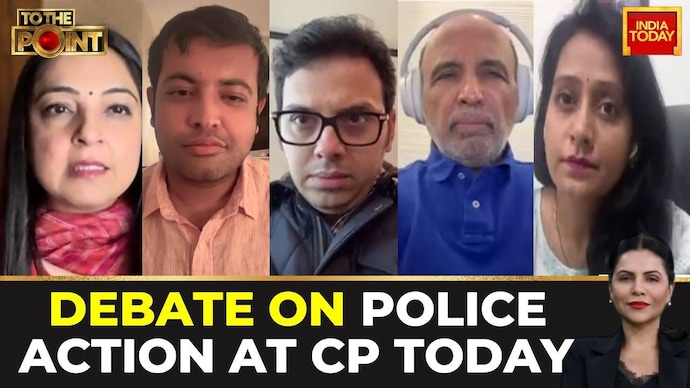
A panel discussion features political leaders and analysts debating police action, preventive detentions, and street demonstrations in central Delhi, including Connaught Place, following the denotification of Jantar Mantar. The debate focuses on the preventive custody of Citizens for Justice and Peace leaders under Section 163 of the Bharatiya Nagarik Suraksha Sanhita. Pranav Dhawan asserts that the movement operated within constitutional parameters, while Bharatiya Janata Party national spokesperson Charu Pragya defends law enforcement measures, citing barricade breaches, obstruction of duty, and defiance at a denotified site. Congress spokesperson Bhavya Narasimhamurthy addresses opposition solidarity, and political analysts Sanjay Jha and Rajat Sethi examine protest management, designated demonstration guidelines, and student agitations. Panelists further assess remarks by Prashant Bhushan concerning regime change, debating the boundaries between constitutional dissent, democratic rights, and unlawful assembly across Delhi and Bangalore, while underscoring that political regime transitions occur through the electoral process and electronic voting machines.
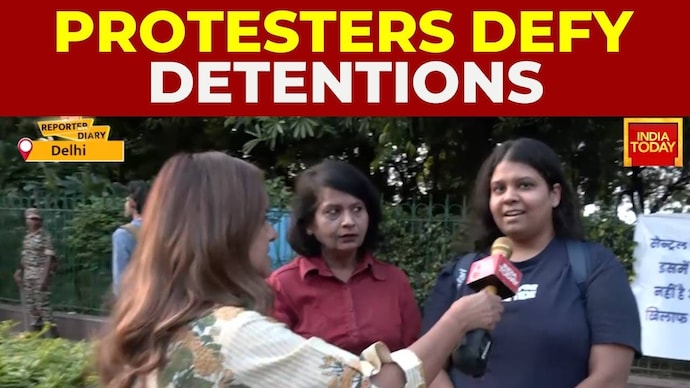
Delhi Agitation: Mother-Daughter Duo Join Silent Protest, Condemn Corruption and Detentions

A large-scale peaceful demonstration in Delhi witnessed substantial security deployment, police barricades, and traffic controls as citizens gathered on the streets. Among the demonstrators, a mother and daughter duo from Shalimar Bagh, Garima and Annapurna, voiced their concerns regarding governance, corruption, unemployment, and paper leaks. Garima, an entrepreneur, shared that she and her mother had been detained multiple times since the movement began in June, emphasizing that the youth are committed to continuing a silent movement regardless of leadership detentions. Annapurna compared the fight against internal corruption to the historic freedom struggle, calling for strict accountability and systemic reform rather than single resignations. Highlighting preventive detentions of agitation figures like Dipke, protesters affirmed that detentions and official curbs would not extinguish public resolve, expressing confidence that more citizens across generations will join to raise their voices peacefully.

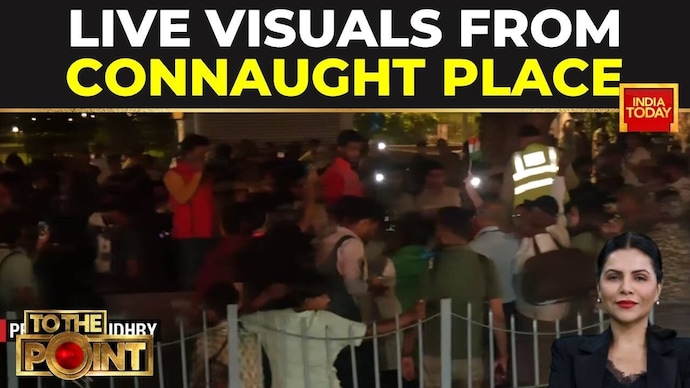
Inner Circle Fortified, Paramilitary Deployed And Detentions Amid Tricolour Protest Call

Security measures have intensified around the inner circle, with detention vans and buses stationed on site as paramilitary forces attempt to manage gathering crowds. Whistles are being blown by personnel to drown out demonstration sounds as groups arrive in clutches, leading to potential face-offs and further detentions. Following a clarion call by the Kokrajhar Janata Party to bring in the tricolour, security forces have fortified the inner circle while protests continue right outside the perimeter.

advertisement

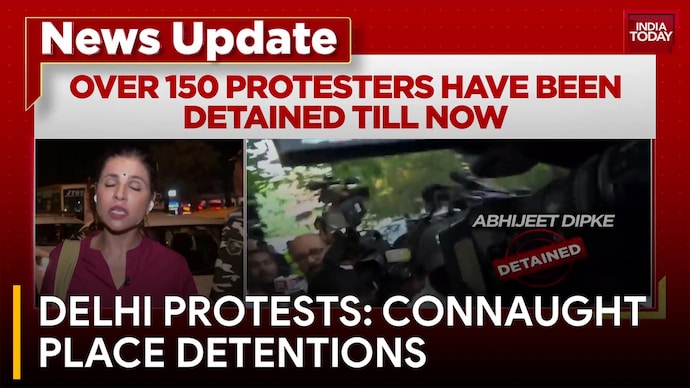
Delhi Protests: 150 Detained Near Connaught Place, CJP Defends Right To Protest

Delhi Police and paramilitary forces detained approximately 150 protesters outside Connaught Place's inner circle, preventing demonstrators from entering to unfurl the national flag. A CJP spokesperson acknowledged the leadership's preventive detention as a setback but insisted the movement remains resilient across multiple leadership tiers in smaller towns. Addressing government curbs, the spokesperson cited the Supreme Court's 2018 MKSS ruling, stating that authorities cannot abruptly denotify Jantar Mantar as a designated protest site.