
Vietnamese crab exporter
Advertisement

Nepal accuses China of delaying flood warning. Did Beijing foul? Panel debates

A massive flash flood in Nepal, triggered by an ice and rock avalanche and glacial lake outburst in Tibet, has caused severe damage across the Rasuwa, Dhading, Nuwakot, and Chitwan districts along the Bhote Koshi River and Rasuwagadhi Valley. The disaster has resulted in at least 360 reported deaths, with hundreds of people missing, including over 280 Indian citizens comprising Kailash-Mansarovar pilgrims and tourists from Tamil Nadu, Andhra Pradesh, Maharashtra, Uttar Pradesh, and West Bengal.

Rescue operations involving the Nepal Army, police, and security agencies are utilizing helicopters to evacuate survivors, including trapped hydropower tunnel workers. Nepal Prime Minister Pushpa Kamal Dahal inspected Nuwakot to review rescue, search, and medical relief efforts. Diplomatic tensions have emerged as Nepal claims Beijing failed to issue an early warning, an assertion China denies. Experts cite global heating, climate change, and underground hydropower construction as contributing factors. Authorities warn of ongoing downstream flood risks over the next 72 hours due to a natural dam on the Bhote Koshi River.

Read More

VIDEOS FROM OTHER SECTIONS

LATEST VIDEOS

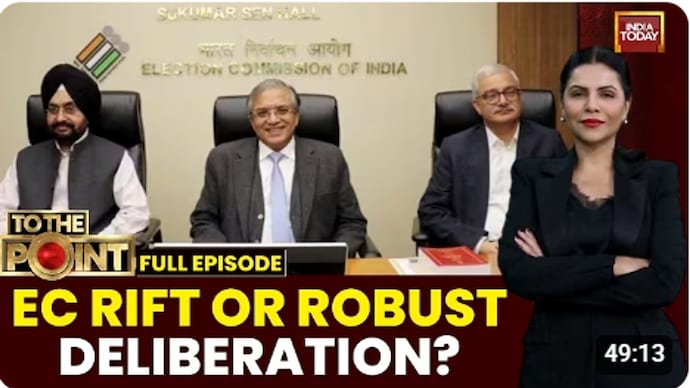
EC rift over SIR takes centre stage, LSR students raise safety concerns after minor's rape

A political controversy has erupted following reports of 14 internal objections raised by Election Commissioners Sukhbir Singh Sandhu and Vivek Joshi over decisions involving Form 6 voter registration, electoral database centralisation, software concerns in Goa, and voter restoration appeals in West Bengal. While the Election Commission stated that internal deliberations represent institutional checks and balances, the Opposition demanded the resignation and arrest of Chief Election Commissioner Gyanesh Kumar, and the BJP defended the process as democratic functioning. In Delhi, students and alumni of Lady Shri Ram College protested to demand improved street lighting, CCTV surveillance, functional pink booths, and enhanced policing following an alleged gang rape at Aastha Kunj Park and an encounter near the campus. Additionally, Tamil Nadu witnessed a political confrontation between TVK and DMK over an alleged sexual assault case involving granite baron R Veeramani.

TVK vs DMK over Veeramani POCSO probe, Election Commission rift controversy in focus

In Tamil Nadu, authorities continue the investigation into granite baron R Veeramani over minor sexual assault allegations, conducting premises raids, tracing financial transactions, and seizing electronic devices following recent arrests. Political parties debate administrative delays in earlier probes as widespread power outages lead Chief Minister Vijay to inspect the Tamil Nadu Electricity Board headquarters. In Karnataka, the Bharatiya Janata Party stages demonstrations demanding the resignation of Chief Minister DK Shivakumar over a finance department circular regarding unbudgeted schemes. In Kerala, Chief Minister VD Satheesan responds to opposition claims concerning ministerial overseas travel and chartered flights. Additionally, the bulletin details reported procedural differences within the Election Commission over voter roll processes, campus security protests at Delhi's Lady Shri Ram College, External Affairs Minister Dr S Jaishankar's bilateral meeting with US Secretary of State Marco Rubio at the United Nations General Assembly, US President Donald Trump's UNGA speech on Iran, and weightlifter Mirabai Chanu's Asian Games medal victory.

What were the objections raised by Election Commissioners over SIR in 10 months?

A political controversy has erupted over revelations that Election Commissioners Sukhbir Singh Sandhu and Vivek Joshi recorded 14 objections over 10 months during the Special Intensive Revision (SIR) exercise. The concerns included changes to Form Six for new voter registration, access to digital databases and voter deletions in West Bengal and Goa. The Opposition has demanded accountability and accused Chief Election Commissioner Gyanesh Kumar of acting autocratically. The Election Commission, however, said decisions were taken unanimously after internal checks and balances. The BJP defended the poll panel, saying differences during deliberations reflect democratic decision-making. Former CEC OP Rawat and Congress leader Abhishek Manu Singhvi have debated the constitutional and operational framework of the Election Commission.

advertisement

Abhishek Manu Singhvi: 'Dissent Inside the EC Means That You Suffer the Fate of Lavasa'

Congress leader and Member of Parliament Abhishek Manu Singhvi targeted the Election Commission of India over alleged internal suppression of dissenting views by election commissioners. Singhvi cited the 1995 Supreme Court judgment establishing that the Chief Election Commissioner is first among equals within a collegiate body governed by majority rule. Referring to fourteen written objections recorded by Election Commissioners Sukhbir Singh Sandhu and Vivek Joshi over ten months, Singhvi alleged that decisions are being labelled unanimous after dissents are overridden without replies. Singhvi stated, "Dissent inside the EC means that you suffer the fate of Lavasa. Dissent inside the EC means that you are roadrolled." He argued that two out of three commissioners constitute a majority and described the administrative handling of disagreements as an internal bulldozer overriding colleagues. Questioning procedural changes regarding voter forms and access restrictions for Electoral Registration Officers, Singhvi argued that ignoring written dissent undermines transparency and constitutional decision-making.