Vietnamese crab exporter
Advertisement

Govt move on UPI payments sparks fierce 'Modi tax' vs 'jhooth ki goonj' debate

A revised merchant discount rate framework will apply to select Unified Payments Interface merchant transactions above 2,000 rupees starting 15 October, while person-to-person transfers and payments under the threshold remain free. High-value transactions will attract an MDR of 0.4% capped at 300 rupees per transaction, alongside flat rates for specific sectors like fuel and railways.

The announcement has triggered sharp political disagreement, with the Congress labeling the charge a burden on digital payments and questioning its timing during the festive season. The Bharatiya Janata Party defended the policy, clarifying that 96% of small-ticket transactions remain completely unaffected and free for everyday users. Economists and analysts debate whether businesses will absorb the cost or pass it on to consumers, alongside discussions on digital infrastructure funding.

Read More

VIDEOS FROM OTHER SECTIONS

LATEST VIDEOS

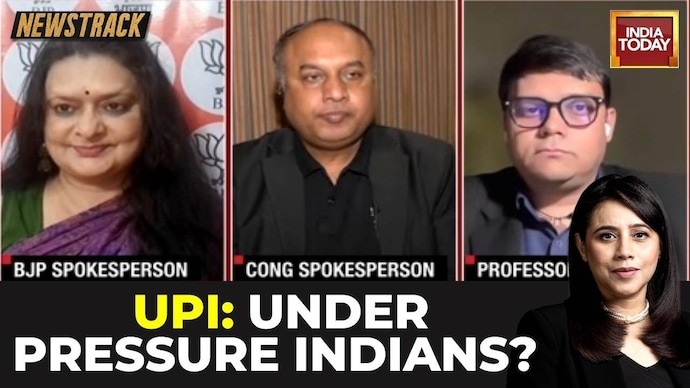
UPI Merchant Fee Debate: Sanju Verma, Brijesh Kalappa & Deepanshu Mohan

A debate on the proposed merchant discount rate (MDR) levy on Unified Payments Interface (UPI) transactions above Rs 2,000 sparked sharp exchanges between BJP National Spokesperson Sanju Verma, Congress National Spokesperson Brijesh Kalappa, and economist Deepanshu Mohan. Defending the move, Sanju Verma argued that UPI remains free for peer-to-peer and sub-Rs 2,000 payments, noting that '96% of UPI transactions are below the rupee 2,000 category, which is completely free' with fees capped at Rs 300 for higher merchant transactions. Brijesh Kalappa countered that the levy encourages system dishonesty and burdens common users, calling it counterproductive to digital adoption. Professor Deepanshu Mohan cautioned that the policy undermines UPI's character as a digital public good and functions as an indirect consumption tax that could drive users back to cash. Verma dismissed the criticism, arguing UPI remains far more affordable than commercial credit cards.
UPI Merchant Charges to Kick in Above ₹2,000 From Oct 15; Consumers Unaffected

A revised Merchant Discount Rate (MDR) framework for select UPI merchant payments above 2,000 rupees will come into effect from October 15. All transactions up to 2,000 rupees and peer-to-peer transfers will remain free. For payments above 2,000 rupees, merchants in sectors such as railways and fuel will pay a flat fee of five rupees, while other merchant transactions will attract a 0.4 per cent charge capped at 300 rupees. While consumers will not face direct charges, questions remain over whether merchants will absorb costs or pass them on. The government will also create a dedicated fund to upgrade digital payment infrastructure for small vendors.

Political Row Erupts Over New UPI Rule as Opposition and Centre Clash Over MDR Charges

A new Unified Payments Interface (UPI) notification has sparked a political clash between the central government and the opposition over the digital payments ecosystem. The opposition has criticised the 0.4 per cent Merchant Discount Rate (MDR) on UPI transactions exceeding 2,000 rupees, alleging that citizens are being taxed for adopting cashless payments and accusing the government of giving in to external pressure. In response, the ruling party maintains that person-to-person UPI transactions remain completely free and that the common man will not face any additional financial burden.

advertisement

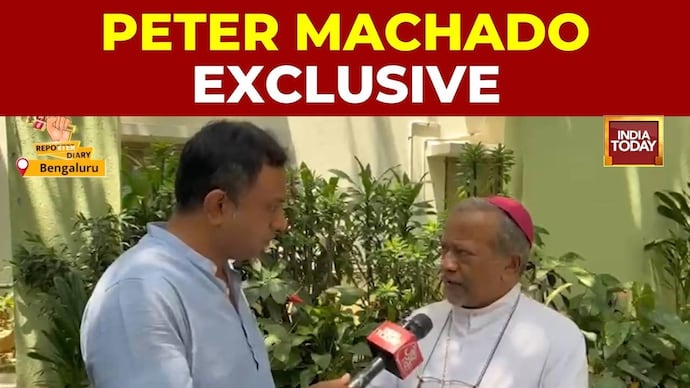
Bishop Peter Machado to India Today: 'Repeal This Bill' as Promised

In an interview with India Today, Bishop Peter Machado discussed his meeting with AICC President Mallikarjun Kharge regarding pressing demands of the Christian community in Karnataka. Machado highlighted that the delegation urged the state government to repeal the anti-conversion bill enacted under the previous BJP administration, noting that Congress had promised the repeal in its election manifesto. Pointing out that the ruling party now holds the required majority in the upper house, he urged the government to fulfill its commitment to gain the confidence of minorities. Machado also requested a distinct 1% reservation quota for Christians, explaining that the community currently struggles to secure government employment and benefits under the broader 3B category. He remarked, "Give us another separate bracket itself and give us 1% so that we will be satisfied."