Vietnamese crab exporter
Advertisement

Gen Z demands political representation, rejects caste voting: PSE C-Voter survey

A C-Voter snap poll broadcast on Political Stock Exchange outlines the political priorities and perceptions of Indian youth and Gen Z voters aged 18 to 35. Following protests at Jantar Mantar in Delhi and Jaipal Singh Munda Stadium in Ranchi, the survey indicates that 53 percent of respondents prioritise employment, education, and healthcare over corruption, inflation, and infrastructure. Issue-based decision-making guides 33.3 percent of voters, while 58.7 percent report a generational disconnect from current political parties, and 75 percent seek increased youth representation in active politics. Furthermore, 49.3 percent state that social media plays a major role in shaping their political views.

The data shows 48.2 percent reject caste-based voting, nearly 50 percent consider nationalism an important voting factor, and six out of ten emphasise candidates' educational qualifications. Panellists, including political analysts and party representatives, analysed the findings, discussing bread-and-butter issues, social media influence, leadership disconnect, and the evolving aspirations of young voters across the country.

Read More

VIDEOS FROM OTHER SECTIONS

LATEST VIDEOS

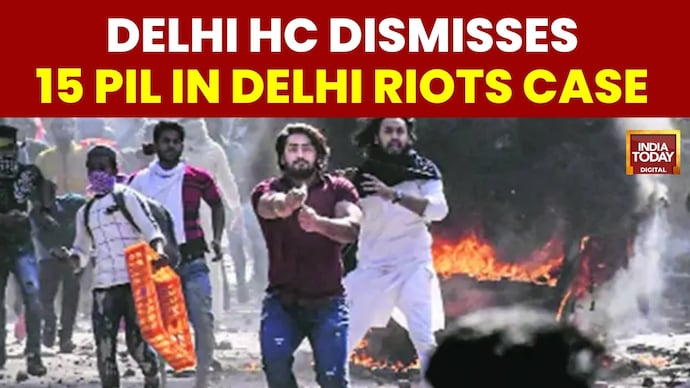
Delhi High Court Dismisses 2020 Riots Hate Speech Pleas Seeking FIRs

The Delhi High Court has dismissed fifteen public interest litigations related to the 2020 Delhi riots and alleged hate speech. The petitions had sought the registration of First Information Reports and an investigation by a special investigation team into speeches linked to communal violence and protests. The bench dismissed the matters across two lists in a brief hearing, bringing an end to the proceedings that had been pending since 2020. A detailed written order is awaited.

India-EU Trade Pact, Strategic Autonomy & Employment Generation in Focus

A panel discussion addressed the strategic and economic significance of the European Union-India Free Trade Agreement amid global geopolitical shifts and trade weaponisation. Panellists noted that the trade pact aims to cut four billion euros in tariffs, offer the potential to double bilateral trade, and promote economic diversification and cooperation. The discussion examined transatlantic relations, United States trade pressures, subsidies from China, and the growing imperative for Europe to pursue strategic autonomy alongside increased defence spending. The conversation also highlighted the Indo-French strategic partnership between Prime Minister Narendra Modi and President Emmanuel Macron. Addressing negotiations, Indian Finance Minister Nirmala Sitharaman observed that India's procurement of Russian oil did not derail trade talks, noting the absence of legislative hurdles comparable to the US Lindsey Graham bill. She highlighted that the agreement will directly benefit India's labour-intensive export sectors—including textiles, footwear, toys, and small and medium enterprises—thereby boosting employment and expanding market access for women and Indian workers.

India Open to Trade Deals, 'Tariff Has Become Weaponised': Nirmala Sitharaman

Speaking on trade negotiations and agreements, Union Minister Nirmala Sitharaman highlighted India's strategic approach to bilateral trade pacts while navigating global trade pressures. Addressing discussions surrounding the proposed India-EU trade pact, termed the mother of all deals, Sitharaman noted that the agreement covers two billion people and a quarter of global GDP, with both sides opening more than 90% of tariff lines and value while safeguarding sensitive agricultural sectors. Remarking on broader global tensions, she stated that 'tariff has become weaponised' instead of serving merely as an instrument of negotiation within established frameworks. Regarding ongoing talks with the United States, Sitharaman pointed out that negotiations remain rigorous, with both sides navigating an existing trade balance that is in India's favour. She also highlighted the exponentially growing trade imbalance with China since 2014, emphasising that despite severe discrepancies, resolving trade imbalances ultimately requires structured negotiation and mutual give-and-take rather than unilateral weaponisation of tariffs.

advertisement

Supreme Court To Hear Pleas Against CEC Gyanesh Kumar Amid Special Intensive Revision Row

The Supreme Court is set to hear a batch of petitions seeking the suspension of Chief Election Commissioner Gyanesh Kumar alongside challenges to decisions taken by the poll panel without the approval of fellow election commissioners. The development comes as Supreme Court judge Justice Ujjal Bhuyan highlighted the primacy of voting rights in democracy, stating that no authority or court is above the Constitution. He stated that the wholesale disenfranchisement of citizens violates Articles 14 and 326, warning that citizens cannot be reduced to second-class status. Welcoming the remarks, the Congress party stated that the observations expose the actions of the Election Commission.