Vietnamese crab exporter
Advertisement

Statecraft With Geeta Mohan: Why Is Trump Poking China And Pakistan Through India?

US Ambassador to India Sergio Gor has made a striking remark on Jammu and Kashmir, calling it an “important part of India” during his visit to Srinagar. But is this merely diplomatic language, or does it signal a subtle shift in Washington’s approach to Kashmir?

The timing is what makes the story more intriguing. After visiting Jammu and Kashmir, Gor travelled to Ladakh — India’s strategically sensitive frontier with China. His visit comes against the backdrop of the India-China border standoff, renewed diplomatic engagement between New Delhi and Beijing, and Washington’s growing strategic partnership with India.

And there could be another major flashpoint. Gor is expected to meet the Dalai Lama in Leh, a move that could deeply anger Beijing. For China, Tibet remains a major sovereignty issue and the Dalai Lama remains a highly sensitive figure.

With Donald Trump and Xi Jinping expected to meet in Washington in September, could Gor’s moves complicate the atmosphere before the summit?

Is Washington sending simultaneous messages to Pakistan and China? Has America’s Kashmir language changed? And is Ladakh becoming another strategic pressure point in the US-China rivalry?

Watch the full analysis to understand what Sergio Gor’s Kashmir and Ladakh moves could mean for India, Pakistan, China and the Trump-Xi relationship.
 

Read More

VIDEOS FROM OTHER SECTIONS

LATEST VIDEOS

The News Today: Krishnamurthy Subramanian & Santosh Mehrotra On UPI Levy

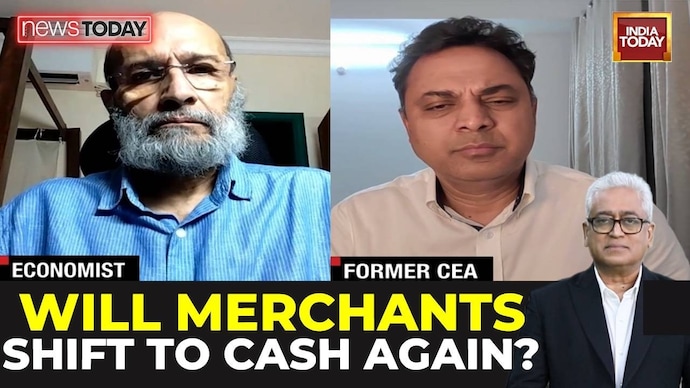
In this edition of The News Today, anchor Rajdeep Sardesai leads a crucial discussion examining the government's UPI merchant discount rate levy. Joining the panel are Dr Krishnamurthy Subramanian, former Chief Economic Advisor to the Government of India, and Professor Santosh Mehrotra, Visiting Professor at the University of Bath. Professor Mehrotra argues against continuous taxpayer subsidies for digital payments, advocating instead that transaction costs should be fairly apportioned between banks, multinational platforms, and merchants. Meanwhile, Dr Krishnamurthy Subramanian warns that imposing an ad valorem transaction tax fails to align with UPI mechanics and risks driving small merchants back to cash transactions. He underlines that UPI should primarily serve as an engine for credit creation to generate income for banking infrastructure and technology investments rather than imposing friction on digital commerce. The panellists also assess whether merchants will ultimately pass these costs onto consumers and analyse the broader economic ramifications of altering the fee structure for digital payments.
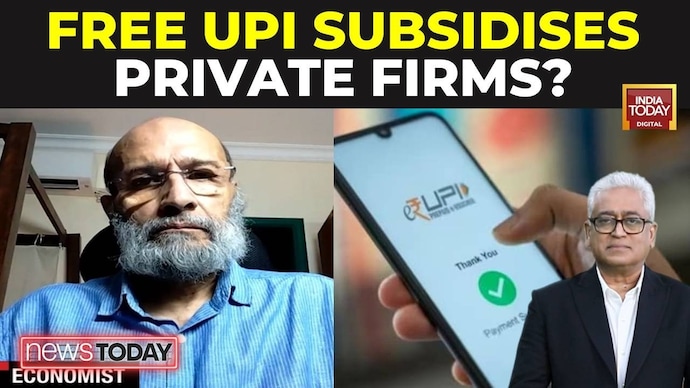
UPI Payment System: 'Someone has to bear the cost', says Santosh Mehrotra

During a discussion on the UPI payment system, economist Santosh Mehrotra addressed the debate over merchant transaction charges and government subsidies. Mehrotra noted that the government has been subsidising merchants to the tune of 2,000 crore rupees annually using taxpayer money, arguing that public funds should not cover these expenses indefinitely. He stated that the cost of UPI operations should instead be apportioned among the three primary commercial beneficiaries: banks, platform owners, and merchants, pointing out that banks generate substantial annual profits. While acknowledging the risk that merchants might eventually pass on a portion of the 0.4 per cent charge to consumers, he emphasised that small merchants alone should not carry the entire burden. Mehrotra remarked, 'Someone has to bear the cost,' urging the government to act as a regulator to distribute the financial burden across all stakeholders. Additionally, he discussed concerns regarding foreign pressure on digital payment systems and ongoing trade deal negotiations.

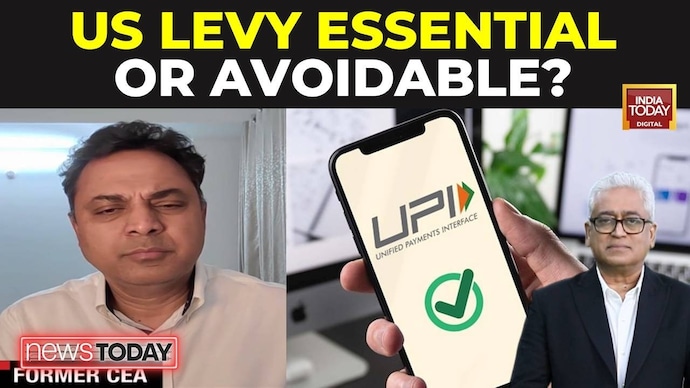
MDR on UPI Payments: Krishnamurthy Subramanian

Former Chief Economic Advisor Krishnamurthy Subramanian shares his perspective on the government's merchant discount rate (MDR) policy for UPI payments. Discussing UPI's role as a sovereign public good, he cautions against ad valorem transaction taxes and notes that merchants might shift back to cash transactions, incurring implicit opportunity costs. Instead of taxing transactions, he emphasizes utilizing the platform to drive credit creation in the economy. Subramanian points out that India's private credit-to-GDP ratio is around 60%, compared to the global average of 150%, offering massive scope for expansion. 'Utilize this for credit creation,' he asserts, explaining that interest income can sustainably fund infrastructure, technology, and cybersecurity needs.

advertisement

Sameer Nigam on UPI MDR: 'We Don't Want Subsidies From The Government'

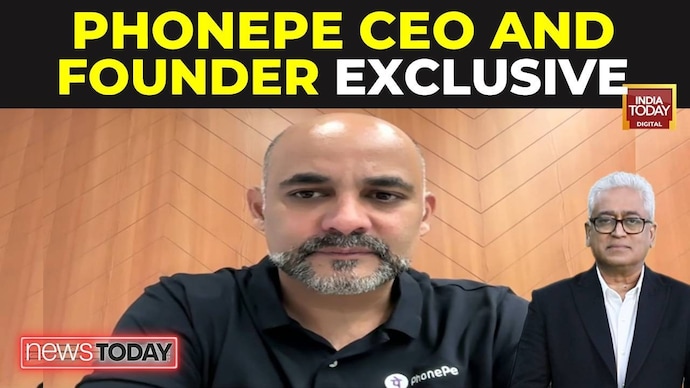
In an interview with Rajdeep Sardesai, PhonePe Co-founder and CEO Sameer Nigam shared his perspective on the government's decision to introduce a 0.4% Merchant Discount Rate (MDR) on UPI transactions above Rs 2,000. Defending the move, Nigam stated, "We don't want subsidies from the government. We stand on our own feet." He explained that the notion that digital payments cannot expand with an MDR is unfounded, remarking, "It was a myth to begin with that MDR had to be free for payments to take off." Nigam highlighted that 95% to 96% of peer-to-merchant transactions fall below the Rs 2,000 threshold and essential categories such as petrol, utilities, and insurance have flat fee caps. He dismissed concerns that merchants will pass charges onto consumers, emphasizing that UPI still offers the lowest MDR globally.