
Nasa's Swift space telescope has crashed on Earth, US Space Force confirms

After nearly two decades studying the universe, the spacecraft arrived at its unusual and final chapter. Here is why the Swift Telescope crashed.
 Last UpdatedNov 5, 2026 10:37 IST
 Published by
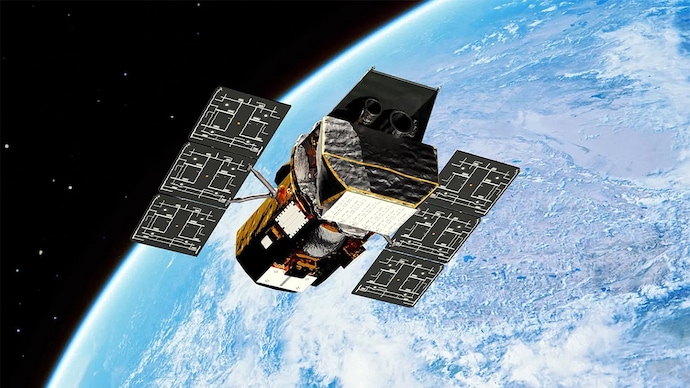
Nasa's Neil Gehrels Swift Observatory, which has spent more than two decades studying some of the universe's most powerful explosions, fell back to Earth at around 6:09 pm IST on Wednesday, November 4.
Nasa confirmed that Swift reentered the Earth's atmosphere over the North Sumatra region of Indonesia.
The 1,450-kg space telescope ended its mission after atmospheric drag, intensified by recent solar activity, caused it to lose altitude rapidly.
The US Space Force had earlier predicted that Swift would re-enter Earth's atmosphere at around 2 pm IST on November 4, although the timing was expected to vary by as much as 11 hours.
Most of the spacecraft was likely to burn up during its descent, but some parts may have survived and reached the ground, Nasa noted in a an update.
WHY IS NASA'S SWIFT TELESCOPE CRASHING?
Launched in November 2004, Swift was originally designed for a two-year mission to study gamma-ray bursts, extremely powerful explosions in space. It went on to operate for almost 22 years, observing black holes, exploding stars, comets and other cosmic objects.
The problem began when increased solar activity heated and expanded Earth's upper atmosphere, increasing the drag experienced by satellites in low Earth orbit. This slowed Swift down and gradually pulled it closer to Earth.
Without enough power to push itself back into a higher orbit, the observatory continued losing altitude.
By October 20, it had reached approximately 275 km above Earth and could no longer compensate for the increased drag.
HOW A MISSION TO SAVE SWIFT FAILED
Nasa had launched an ambitious effort to rescue the observatory by sending a commercial spacecraft called Link, developed by Katalyst Space, to attach itself to Swift and push it into a higher orbit.
Link launched in July 2026, but the spacecraft encountered intermittent communication losses and problems controlling its orientation after reaching space.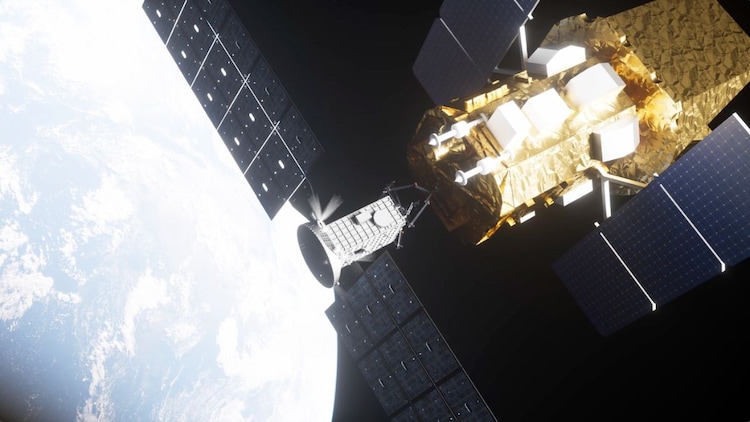
Following troubleshooting, Nasa and Katalyst abandoned the planned docking and orbit-boost attempt.
“From the beginning, this was a high-risk, high-reward mission,” said Shawn Domagal-Goldman, Nasa's Astrophysics Division director.
Although the rescue attempt did not succeed, it provided valuable data and insights for future satellite-servicing missions.
No one was harmed during the crash, keeping in line with Nasa's risk estimation of getting harmed at approximately one in 2,100.
Now, after decades of service and unravelling the mysteries of the worlds far away, Swift is back home.