
What open source information tells us about health of Chandrayaan-2's Vikram lander

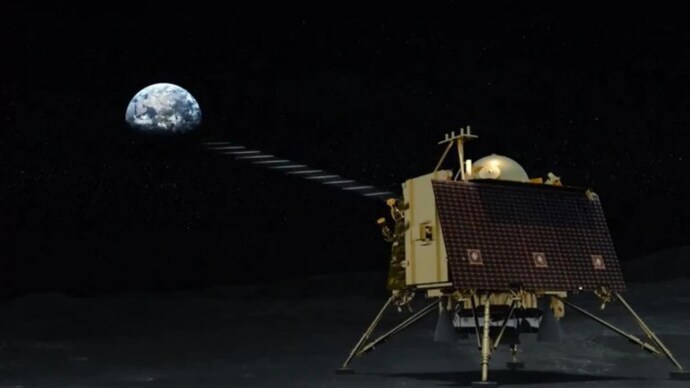
Earlier this month, Isro lost contact with Chandrayaan-2's lander Vikram and has been making all efforts to reestablish communication. Apart from Isro, Nasa observatories in the United States and Australia have been trying to establish communication with Chandrayaan-2's lander and orbiter.
 Last UpdatedFeb 7, 2022 10:16 IST
 Published by
The Indian Space Research Organisation (Isro) has been making every effort to establish contact with Chandrayaan-2's Vikram lander which lost contact with mission control before its scheduled soft landing on the Moon.
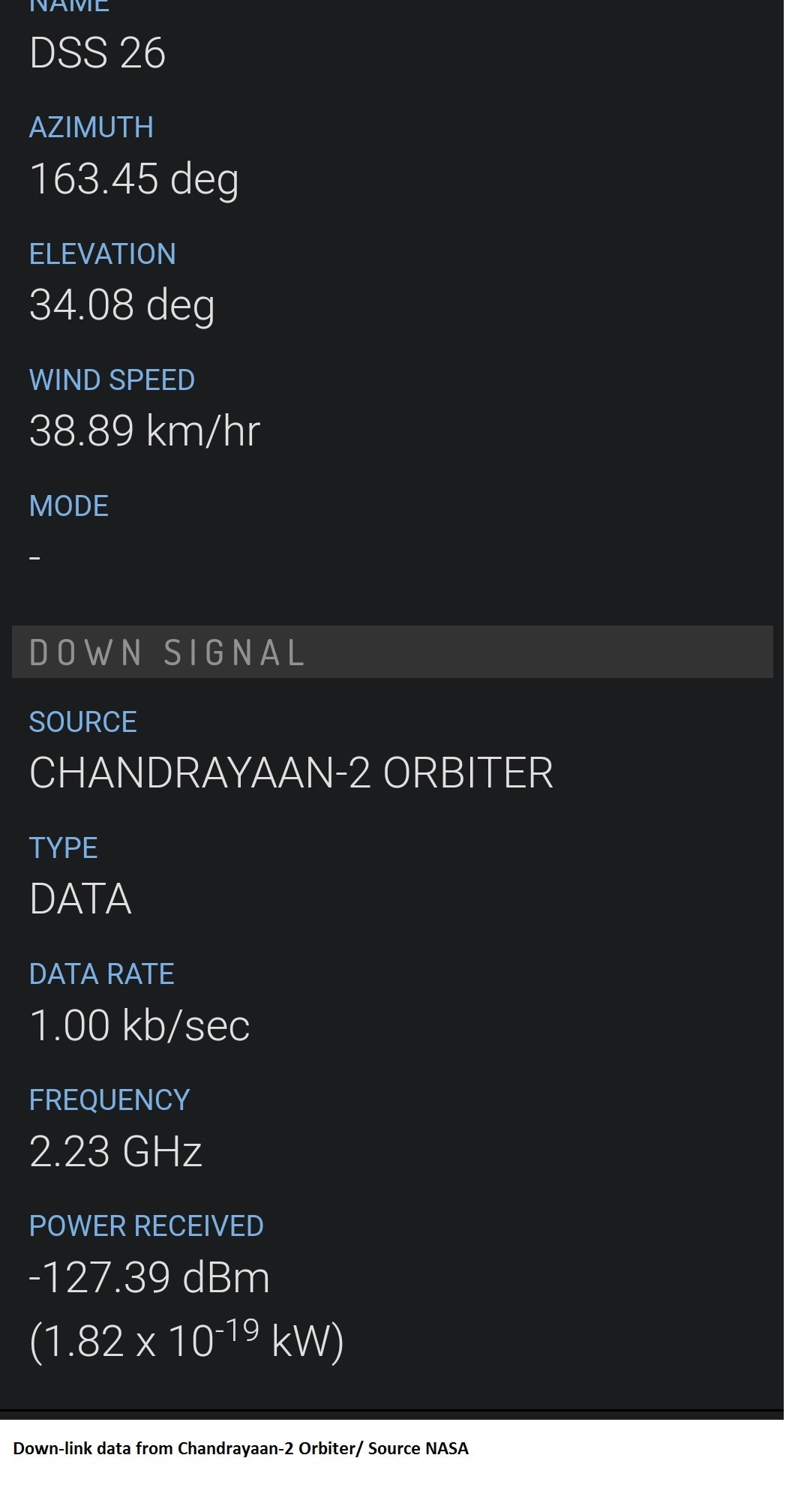
While there is no official word from Isro about any developments over past two days, the open platform of Nasa's Deep Space Network (DSN) has been showing how Nasa observatories in the United States and Australia have been trying to establish communication with Chandrayaan-2's lander and orbiter.
Managed by the Jet Propulsion Laboratory (JPL) of California Institute of Technology, the DSN shows live up-link and down-link between an observatory and a spacecraft.
Date- September 11
Place- Goldstone Observatory, USA
Time - 1:00 PM to 5:00 PM IST
The DSN showed first attempts to establish contact between the Goldstone Observatory in the Mojave Desert near California and Chandrayaan-2's orbiter and lander Vikram.
The network identifies the orbiter with codename 'CH2O' and the lander with codename 'CH2L'. The initial phase showed an attempted up-link communication between the observatory and Vikram Lander.
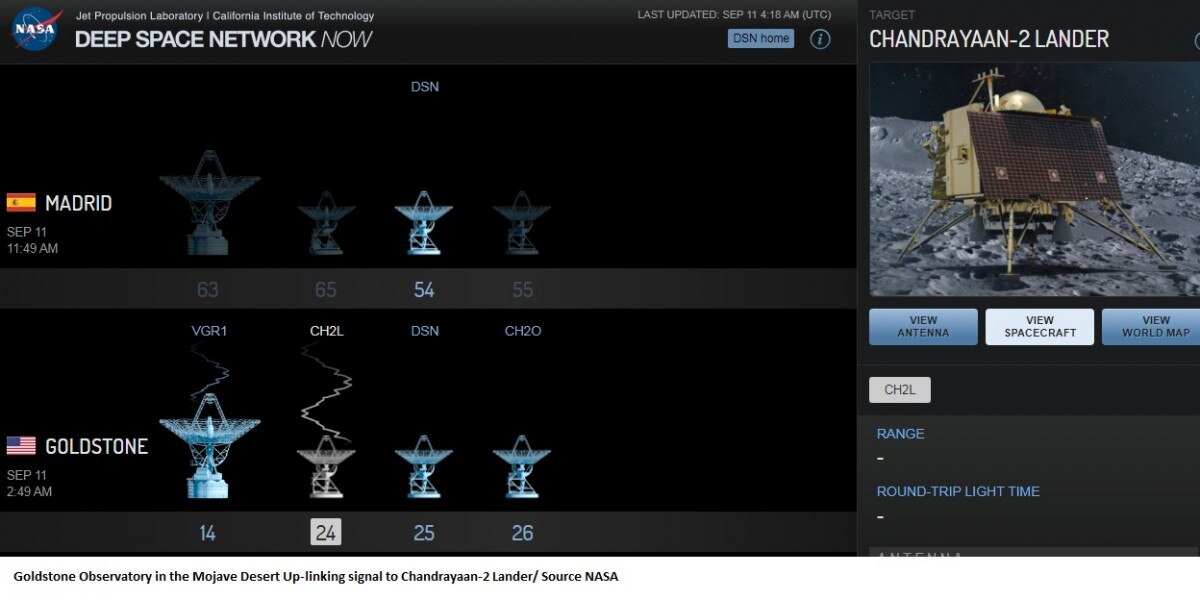
Moments later, an up-link signal was visible from the Goldstone antenna and the Chandrayaan-2 orbiter on the network.
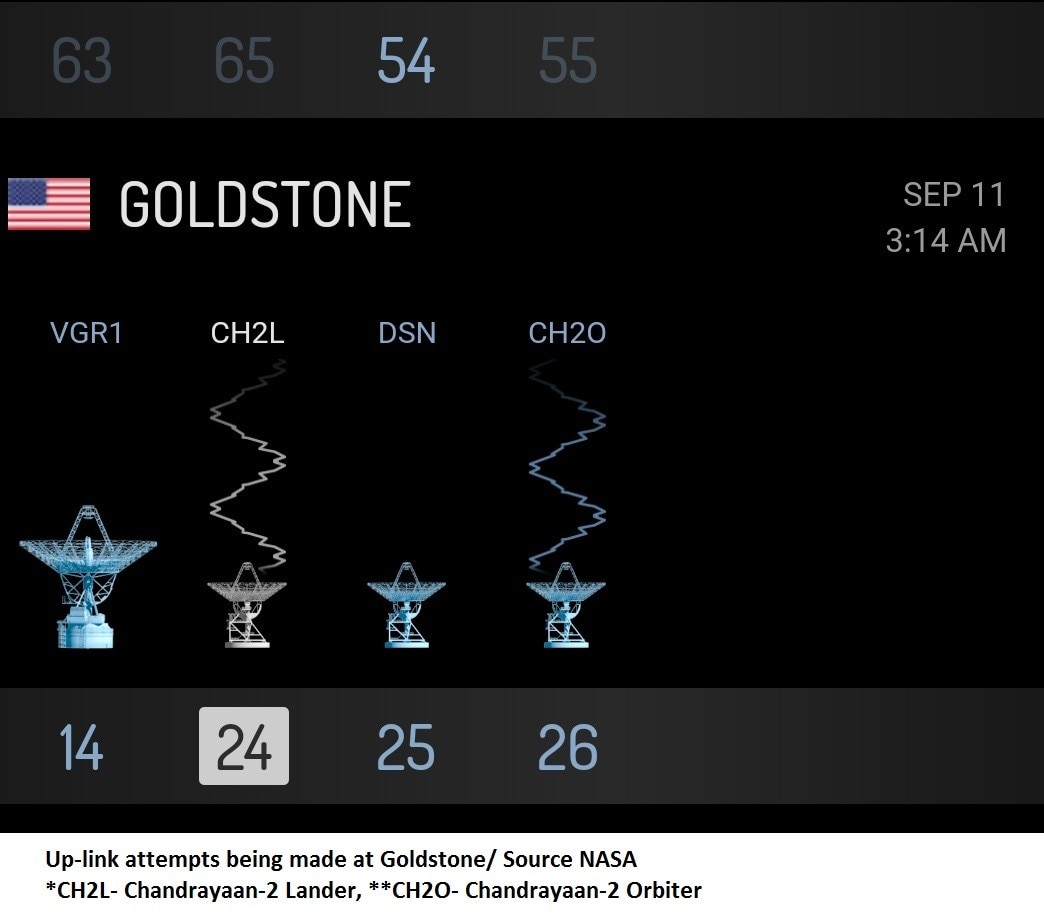
While the network clearly showed a successful communication (both up-link and down-link) with Chandrayaan-2 orbiter, there was no visible down-link communication with the lander.
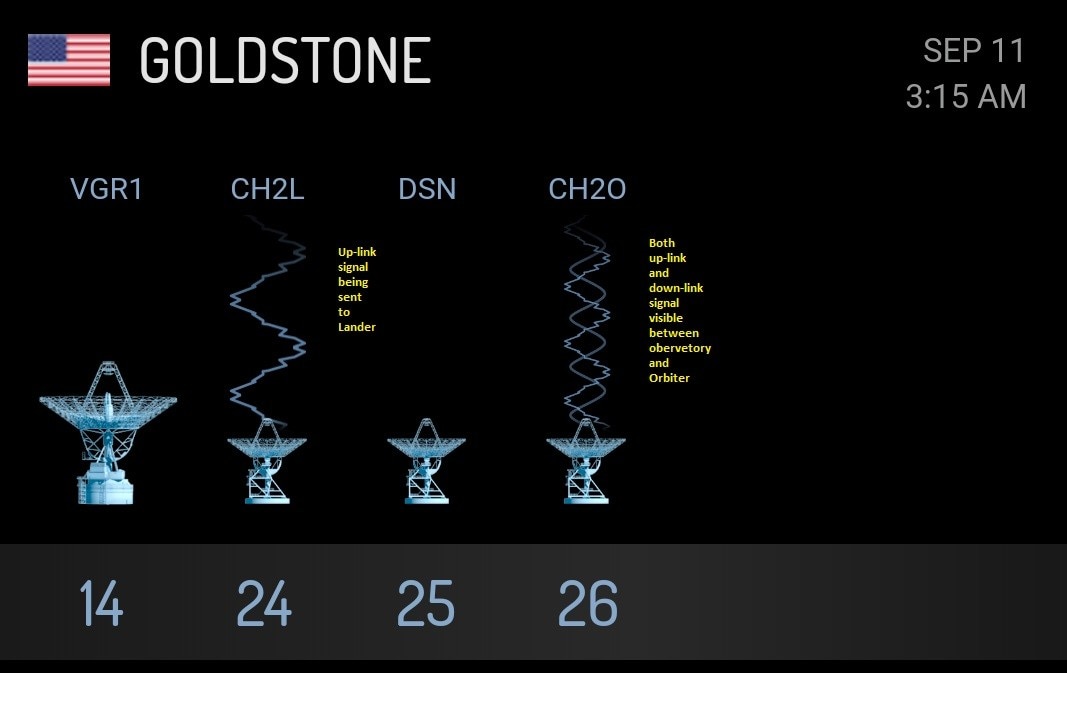
The four-hour-long exercise showed no visible signs of a successful communication with the lander. However, some data was visibly down-linked from Chandrayaan-2's orbiter.
Date September 12
Place- Tidbinbilla Deep Space Tracking Station, Canberra, Australia
Time - 2:30 PM to 6:00 PM IST
On Thursday, action shifted to Canberra, Australia where the Canberra Deep Space Communication earth station was seen attempting communication with the lander and the orbiter of Chandrayaan-2.
The network showed up-link attempts to the lander Vikram by Canberra Deep Space Communication Complex.

The network data shows that the exercise lasted for about three and a half hours. No down-link from the lander was visible on the network, indicating an unsuccessful communication.

Meanwhile Isro in a statement said that a delegation from the California Institute of Technology (CalTech) visited Isro headquarters on Wednesday.
Nasa's DSN is managed by the Jet Propulsion Laboratory(JPL) of CalTech. According to Isro, the delegation included Professor David Tirrell, Provost, CalTech and General Larry James, Deputy Director of JPL.
While we wait for an official statement from Isro, there are no visible signs of communication with the Vikram lander on Nasa's deep space network so far.
Ankit Kumar (a.k.a. Ankiit Koomar) – Editor, Open-Source Investigations, India Today TV & Aaj Tak
Ankit Kumar is the Editor of Open-Source Investigations (OSINT) and Visual Investigations at India Today TV and Aaj Tak. A two-time JournalismAI fellow with the London School of Economics (LSE), Ankit’s work lies at the intersection of investigative journalism and emerging digital tools as well as use of Artificial Intelligence (AI) in journalism. He has pioneered South Asia’s first dedicated OSINT journalism team, bringing cutting-edge technology into the newsroom.
His investigative reports have made national headlines and even been debated in the Indian Parliament. He was the first journalist to uncover the common link between middlemen networks in two of India’s most controversial defence deals—the VVIP AgustaWestland Chopper Deal and the Rafale Jet Deal . His reports have been frequently cited by both the Prime Minister and opposition leaders, shaping public discourse on key national security matters.
Ankit’s deep-dive investigation into the Indian Air Force’s Balakot Airstrikes was the first to feature key eyewitness accounts from the ground.
Following his report, a UK-based dubious news portal that propagated false claims of large-scale EVM fraud in India was shut down. His stories cover a wide spectrum—from finance, business, and cybersecurity to disinformation, artificial intelligence (AI), and emerging global threats.
His work has been recognized globally, with the Global Investigative Journalism Network (GIJN) listing his reporting among the year’s top investigative stories.
🔹 Connect with him: @AnkiitKoomar on X / LinkedIn
📩 Email: [email protected]
READ MORE