
Major landslide hits Sikkim: Science behind why the region keeps slipping

With more heavy rain forecast in Sikkim, the latest Rimbi landslide highlights the region's persistent slope instability.
 Last UpdatedSep 25, 2026 11:46 IST
  Published by
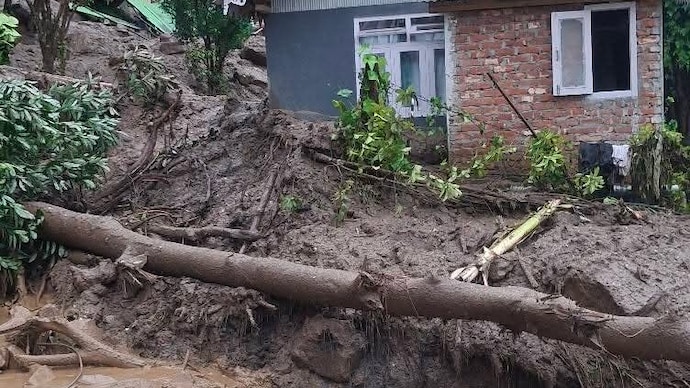
A major landslide struck Rimbi village in West Sikkim late Thursday night, sending mud, rocks and debris towards inhabited areas and damaging several houses.
The landslide occurred in the Yuksom-Tashiding area of Gyalshing district after continuous rainfall. Several structures were damaged, including government quarters belonging to the Power Department. No casualties have been reported so far.
What's more worrying is that the latest landslide is not an isolated event.
Rimbi and neighbouring Singlitam have been dealing with persistent slope instability since August, prompting the question of why is this part of Sikkim is so vulnerable to landslides?
WHY DOES RIMBI KEEP SEEING LANDSLIDES?
Rain is the immediate trigger behind many landslides in the region.
When water infiltrates soil and fractured rock, it can increase water pressure within the ground and reduce the forces holding a slope together. On steep terrain, that can cause soil and rock to move downhill.
Research on Sikkim has identified rainfall, slope, geology, drainage and soil among the major factors controlling landslide susceptibility.
Sikkim's Himalayan landscape further adds to the problem.
The region has steep, rugged terrain and complex geology shaped by active tectonic processes. Studies have found that rainfall is a major trigger for landslides in parts of the Sikkim Himalaya, while geology and terrain determine how susceptible individual slopes are to failure.
The area has seen repeated slope movement since August.
On August 15, the Sikkim government said 30 households at Rimbi and eight at Singlitam, involving more than 150 residents in all, fell within the affected zone.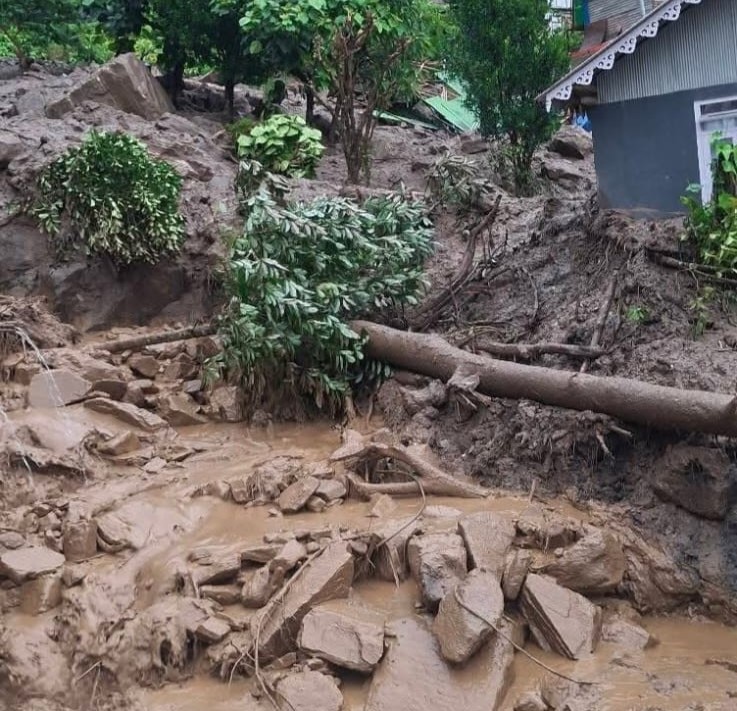
The situation worsened after heavy rainfall and flooding on September 14.
28 houses involving 128 people were evacuated from vulnerable parts of Rimbi and shifted to the Rimbi Gram Panchayat Kendra as a precaution, according to the Sikkim State Disaster Management Authority
IS THE SITUATION STILL CONCERNING?
Once a slope has already been disturbed, further rainfall can increase the possibility of additional movement.
At Rimbi, authorities have specifically warned that accumulated debris and changes in water flow could cause further damage during rain.
That risk remains relevant as IMD has forecast very heavy rain in Sikkim on September 25 and heavy rain on September 26.
Chief Minister Prem Singh Tamang took to social media to promise his support and urge vigilance. Tamang said he was "deeply saddened and concerned" by the situation in Rimbi and said the government stood with the affected people.
He directed the authorities to remain on high alert, closely monitor the situation and take necessary measures for public safety.
With rainfall continuing, officials are assessing the damage and monitoring the already unstable area for further slope movement.