
SpaceX's Starship Super Heavy to launch tonight: What to expect at lift-off?
After an unexpected last-second setback, SpaceX is ready for another attempt with Starship. Here's everything you need to know before the countdown begins, including how Starship might help humans reach Moon and Mars.
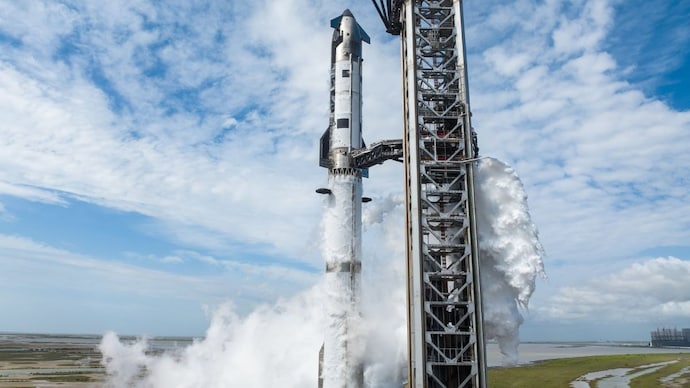

SpaceX is set to make another attempt to launch Starship Flight 13 tonight after a last-second abort delayed the mission last week.
Liftoff is currently scheduled for 4:15 am IST on Friday, July 24, with a 90-minute launch window from the company's Starbase facility in Texas, US.
The test flight is a crucial step in the development of Starship, the world's largest and most powerful rocket, which SpaceX hopes will eventually carry astronauts to the Moon under Nasa's Artemis programme and, later, transport humans to Mars.
WHY IS SPACEX'S FLIGHT 13 IMPORTANT?
This will be the 13th integrated test flight of the Starship-Super Heavy launch system and the second test of the upgraded Version 3 (V3) vehicle.
One of the mission's biggest objectives is to deploy 20 simulated Starlink Version 3 satellites, marking the first payload demonstration for the new-generation Starship.
The satellites are designed to re-enter Earth's atmosphere rather than remain in orbit.
Engineers will also evaluate improvements to both the Super Heavy booster and the upper-stage Starship.
After stage separation, the booster is expected to make a controlled descent and splash down in the Gulf of Mexico, while Starship will continue on a suborbital trajectory before splashing down in the Indian Ocean after a flight lasting just over an hour.
WHY WAS SPACEX'S FLIGHT 13 DELAYED?
The mission was originally scheduled for July 16, but the countdown was halted less than a second before liftoff after several of the Super Heavy booster's 33 Raptor engines failed to ignite properly.
SpaceX's automated safety system immediately aborted the launch, preventing the rocket from leaving the pad.
Soon after, CEO Elon Musk said two Raptor engines would be replaced before another attempt, while the company completed additional inspections.
REACHING MOON AND MARS
Although Flight 13 is an uncrewed test, it is an important milestone for SpaceX's long-term ambitions.
Nasa has selected a modified version of Starship as the Human Landing System (HLS) for future Artemis missions, which aim to return astronauts to the Moon for the first time since 1972.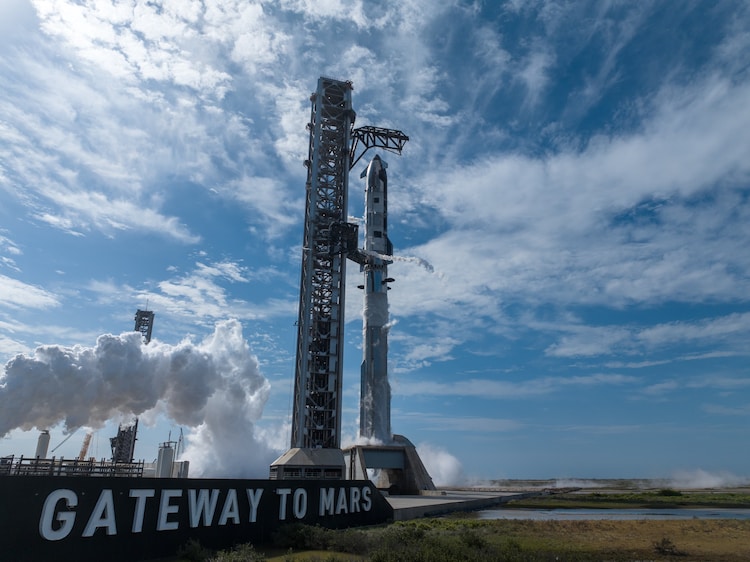
Every Starship test helps engineers validate critical systems, including propulsion, stage separation, heat shielding and controlled re-entry.
Success tonight would move SpaceX a step closer to routine heavy-lift launches, lunar landings and, eventually, crewed missions to Mars.
SpaceX is expected to begin its official live webcast about 30 minutes before liftoff, with millions expected to tune in worldwide as the company attempts another milestone flight.