
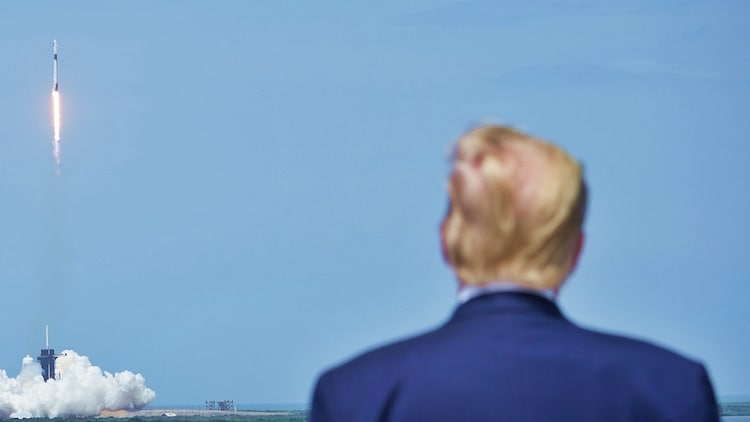
Weapons in space: Pentagon's landmark admission as US braces for war beyond Earth

The United States has publicly confirmed that it has deployed an on-orbit weapon. The disclosure highlights how future conflicts could target satellites that underpin modern military operations.
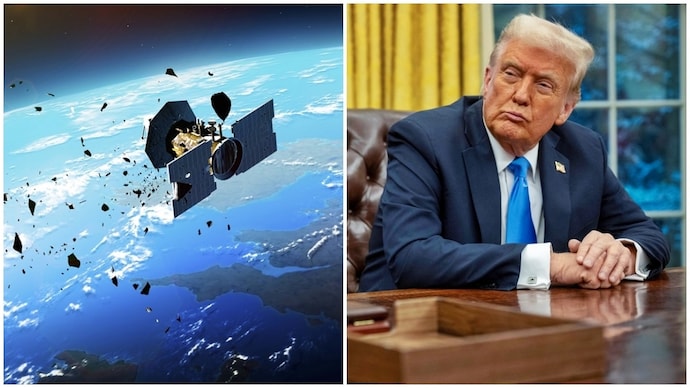
US has previously accused Russia of deploying a satellite potentially capable of attacking other spacecraft. (Photo: Reuters)
New Delhi,Sep 15, 2026 23:45 IST Last UpdatedSep 15, 2026 23:45 IST
 Published byEdited bySonali Verma
Last UpdatedSep 15, 2026 23:45 IST Published bySibu Kumar Tripathi
Sep 15, 2026 13:18 ISTEdited bySonali VermaThe United States has publicly acknowledged that it has weapons in orbit - a landmark admission that offers the clearest indication yet of how Washington is preparing for a future conflict that could begin not on land, sea or in the air, but hundreds of kilometres above Earth.
US Air Force Secretary Troy Meink made the disclosure on Monday at the Air, Space and Cyber Conference near Washington, saying the US has “on-orbit space control weapons” capable of defending American forces against hostile action.
The Pentagon has not revealed what the weapons are, when they were deployed or exactly what they can do.
But the admission itself is significant.
A US Space Command official on Tuesday described the disclosure as a “landmark” moment in the growing militarisation of space, saying the capabilities are aimed at ensuring deterrence does not fail - and that the US is prepared to use them if it does.
“The acknowledgment of these space-control capabilities is fundamental to ensuring that we prevent deterrence from failing,” Richard Palmer, director of the Capability and Resource Integration Directorate at US Space Command, said at a space defence conference in Paris.
He added that US and allied forces, as well as their economies, depend heavily on space.
“The bottom line is that our joint force and our allied forces require space. Our economies require space,” Palmer said.
He declined to provide details about the weapons.
WHY SPACE HAS BECOME A BATTLEFIELD
The reason is simple: modern warfare is deeply dependent on satellites.
GPS navigation, secure military communications, missile-warning systems, surveillance, intelligence gathering and battlefield coordination all rely on spacecraft orbiting Earth.
Take those satellites out of action, and an enemy could potentially disrupt the systems that allow a modern military to see, communicate and operate.
That has turned space from a support environment into a potential battlefield.
For decades, satellites were largely viewed as assets that provided services to forces on Earth. But militaries are increasingly developing ways to attack, disable, deceive or interfere with spacecraft.
These include jamming satellite signals, using lasers to interfere with sensors, attacking ground-control stations and potentially manoeuvring spacecraft close enough to threaten or capture other satellites.
In a major conflict, targeting an enemy's satellites could therefore become one of the first moves.
US, CHINA AND RUSSIA PREPARE FOR SPACE WAR
The US admission comes amid growing concern in Washington over the space capabilities of China and Russia.
The head of US Space Command has warned that adversaries are developing ways to deny the US access to critical space systems and reduce the effectiveness of American military operations.
US officials have also warned that American space assets could be targeted early in a conflict.
That has pushed Washington towards a more active “space control” posture — one that goes beyond simply protecting US satellites.
The US Space Force, established in 2019, defines space control in terms of capabilities that can disrupt, degrade and, if necessary, destroy an adversary's space systems.
The latest disclosure suggests that at least some of those capabilities are now deployed in orbit.
WHAT ABOUT THE OUTER SPACE TREATY?
The existence of weapons in space does not automatically mean the US is violating international law.
The 1967 Outer Space Treaty prohibits countries from placing weapons of mass destruction in orbit around Earth. It does not impose a blanket ban on every conventional weapon or military system in space.
That distinction has left room for countries to develop technologies designed to interfere with or disable enemy satellites without necessarily crossing the treaty's central prohibition.
The challenge is that such capabilities could make space increasingly difficult to control.
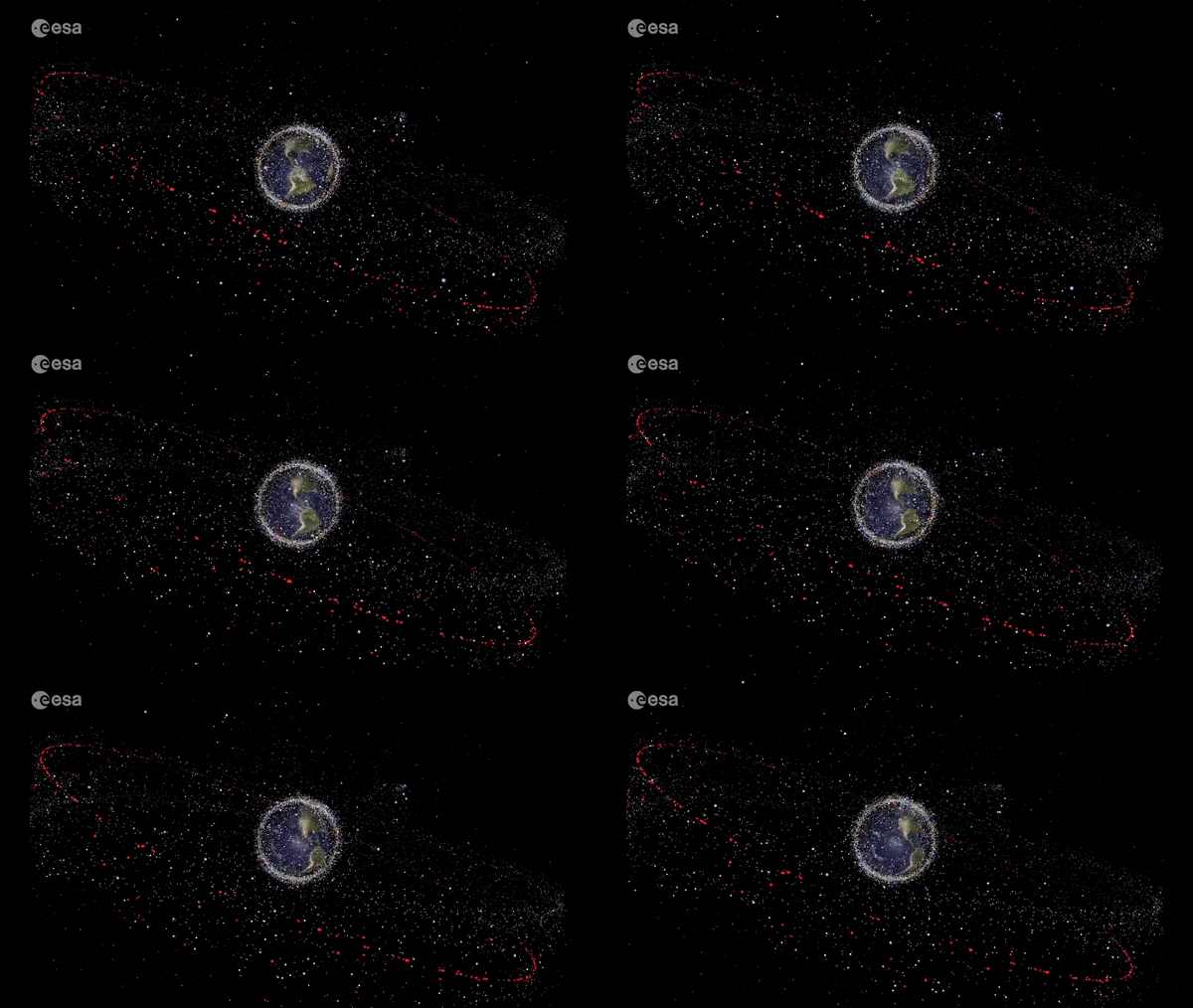
A destructive attack on a satellite can create debris travelling at extremely high speeds, potentially threatening other spacecraft — including satellites belonging to countries that are not involved in the conflict.
GERMANY ALSO BUILDS UP SPACE DEFENCES
The US is not alone in preparing for a more contested space environment.
Germany has announced a €35-billion ($40-billion) military space spending plan aimed at countering growing threats from adversaries.
German Space Command chief Major General Michael Traut has said Berlin plans to invest in intelligence-gathering satellites, sensors and systems capable of disrupting hostile spacecraft.
Germany says it will not deploy destructive weapons in orbit that could create dangerous debris. Instead, it is looking at non-kinetic options such as jamming, lasers and attacks on ground-control infrastructure.
THE US IS ALREADY PRACTISING
Washington has also been testing how its forces would operate in a contested space environment.
The US recently conducted the Apollo Maneuvers, a major orbital exercise involving satellites operating across multiple orbits, along with international and commercial partners.
US Space Command described it as its largest such exercise, both in the number of spacecraft involved and the types of manoeuvres carried out.
The message from Washington is becoming increasingly clear: space is no longer simply where military satellites operate.
It is a domain that major powers believe they may have to fight to control.
And with the US now publicly acknowledging that it already has weapons in orbit, the next major battlefield may be closer to Earth than ever — yet hundreds or thousands of kilometres above it.
- Ends
With inputs from Reuters