Vietnamese crab exporter
Advertisement

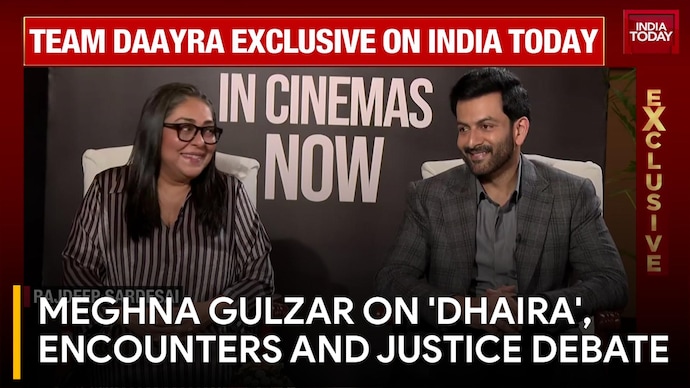
Meghna Gulzar to India Today: 'Hesitating to Talk About It Is Not Going to Make It Go Away'

In an exclusive conversation on India Today, filmmaker Meghna Gulzar and actor Prithviraj Sukumaran discussed their film Dhaira and its exploration of uncomfortable societal questions surrounding crimes against women, judicial delays, and extrajudicial encounter killings. Reflecting on public outrage and the growing demand for instant justice, Meghna Gulzar noted, "Hesitating to talk about it is not going to make it go away." Addressing the dilemma between the rule of law and vigilante justice, she clarified that her intent was not to advocate encounter culture, stating, "I don't believe that we need to become a banana republic and that our police should become trigger-happy." Prithviraj Sukumaran explained his character Raman as an argument reflecting societal frustration with an overburdened judicial system facing millions of pending cases. Gulzar highlighted how the narrative confronts moral gray zones, juvenile justice laws post-Nirbhaya, and the complex reality of justice delivery in India today.

Instant Justice, Extrajudicial Killings And The Rule Of Law In Indian Cinema

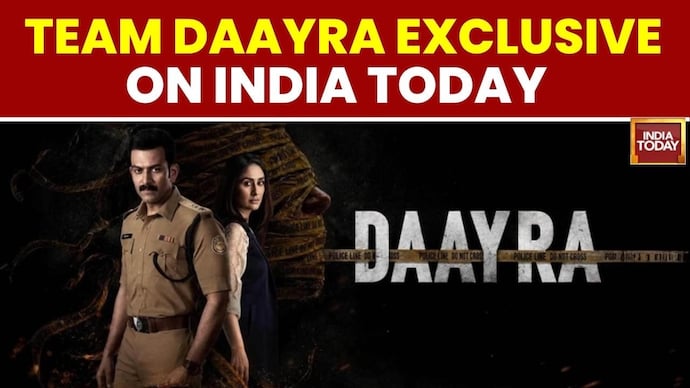
In this India Today Special conversation, filmmaker Meghna Gulzar and actor Prithviraj Sukumaran discuss their film Daayra, addressing thematic complexities surrounding sexual assault cases, extrajudicial encounter killings, and growing public disillusionment with the criminal justice system. The discussion explores how systemic bottlenecks and an overburdened judiciary with millions of pending cases lead to public frustration, often driving societal support for immediate retribution and police encounters over constitutional due process. Reflecting on landmark events such as the 2012 Nirbhaya case and the 2019 Hyderabad police encounter, the creators dissect the moral conflicts faced by law enforcement and citizens alike. Prithviraj Sukumaran elaborates on his role as DCP Raman, explaining how the narrative juxtaposes violent crimes against women with retaliatory police actions to prompt societal dialogue without validating vigilantism or offering simplistic moral conclusions. Additionally, Meghna Gulzar highlights the civic function of cinema in confronting uncomfortable social realities rather than relying on standard commercial tropes. The panel also covers casting decisions, the shifting dynamics between theatrical exhibition and digital streaming platforms, and the increasing convergence between regional and mainstream Indian film industries.

advertisement

Ji Chang-wook, Son Ye-jin, Nana Talk The Scandal, Pansori, Indian cinema | Excl

In an exclusive conversation with India Today, stars of Netflix series The Scandal speak about the historial K-drama. Ji Chang-wook discusses how pansori became part of the production and compares its storytelling role with musical elements in Indian cinema. Son Ye-jin opens up about playing Lady Cho, a complex and independent woman navigating the rigid social structures of the Joseon era.

advertisement

Row Over Kerala Film Festival As 31 Films Await Clearance From I&B Ministry

A controversy has emerged over the Kerala International Film Festival as 31 films await censor exemption and clearance from the Union Ministry of Information and Broadcasting. Out of 347 films submitted for festival screening, 316 films have received clearance, while 31 short films have neither been approved nor rejected without any reasons cited by the ministry. The Kerala Film Academy has reached out to the ministry regarding the pending permissions. With the documentary and short film festival scheduled to commence soon, state authorities plan to write to the central ministry again to seek clarification and clearance for the remaining films.

Hanuman Ansh Box Office Success, Neem Karoli Baba Film & Next Tulsidas Project

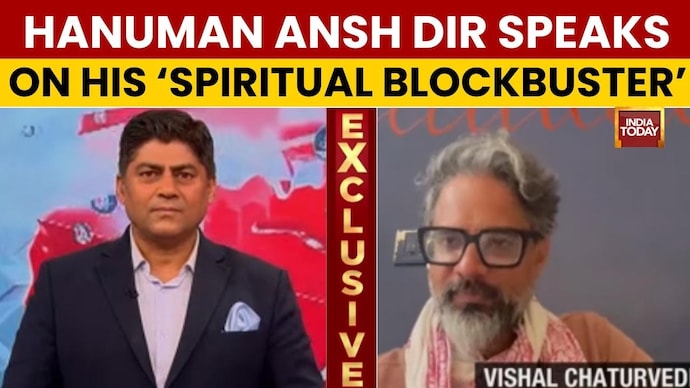
A special broadcast highlights the box office run of the devotional film Hanuman Ansh, made on a budget of about two crore rupees, which crossed 231 crore rupees in India net collection and over 272.9 crore rupees in India gross by day 40. The film's director, Dr Vishal Chaturvedi, discussed how word-of-mouth publicity, spiritual devotion, and audience support across generations propelled the film after opening to just 10 lakh rupees. Chaturvedi detailed his spiritual inspiration drawn from Neem Karoli Baba at Kainchi Dham, which shaped the movie's narrative and music, including Bundelkhand folk traditions. Addressing the refusal by major streaming services, he expressed disappointment over the initial rejection of Neem Karoli Baba's story, noting the saint's global influence on figures like Steve Jobs and Mark Zuckerberg. Chaturvedi also emphasised the immense potential of clean, family-oriented cinema rooted in Indian civilization and culture, and shared plans for his upcoming project focusing on Goswami Tulsidas.

advertisement

Debate on Katrina Kaif Trolling: Tara Deshpande, Sanjana Galrani

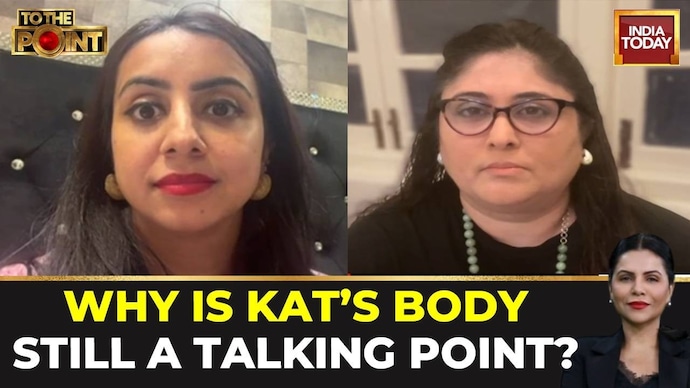
In this discussion show, the panel examines the ongoing online narrative and commentary surrounding actor Katrina Kaif's appearance. The anchor questions the tendency of social media users and commentators to provide biological or postpartum explanations for a woman's weight, highlighting that defending women with medical excuses merely reinforces societal beauty standards. Panelist and author-actor Tara Deshpande emphasizes that women's physical appearance is 'nobody's business' and criticizes the culture of body shaming as an expression of self-loathing, noting that scrutiny around women's bodies is deeply rooted and unacceptable. Actor and philanthropist Sanjana Galrani reflects on her personal experiences dealing with postpartum weight changes in the film industry, asserting that trollers must respect personal boundaries. The panelists conclude that women in the public eye should not be subjected to perpetual scrutiny over their looks.

Katrina Kaif Faces Online Trolling Over Appearance, Age And Body Shaming

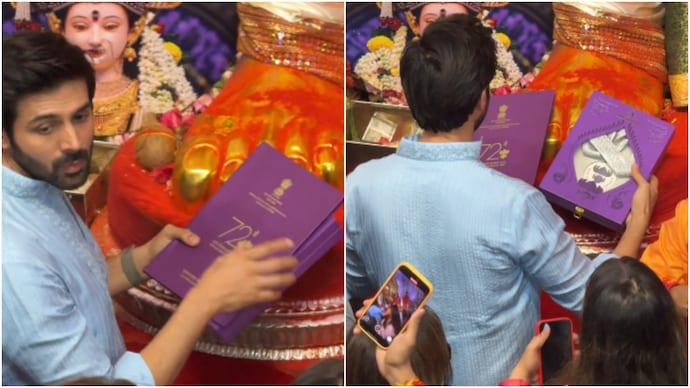
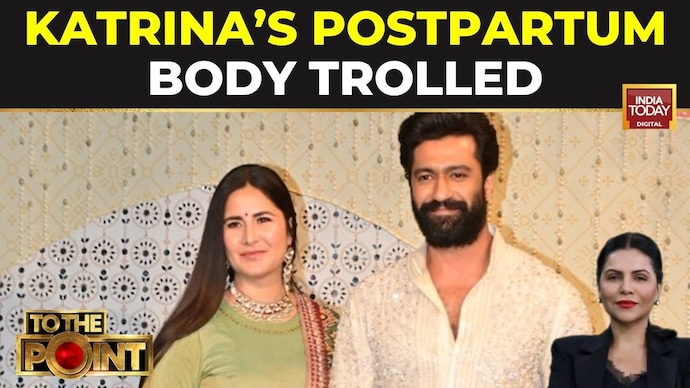
Actor Katrina Kaif has faced a barrage of online comments regarding her appearance, weight, and visible changes following her public appearance with husband Vicky Kaushal at an Ambani Ganesh Chaturthi celebration. Fans quickly defended the actor, pointing out that she is forty and a new mother who does not need to adhere to arbitrary beauty standards. The report notes that several prominent women in the public eye, including Aishwarya Rai, Sonam Kapoor, Sonakshi Sinha, and Huma Qureshi, have repeatedly faced scrutiny, harsh critiques, and body policing over natural ageing, physical weight shifts, and postpartum body changes.

advertisement

Kareena Kapoor visits Sanjay Leela Bhansali's house decades after fallout. Video

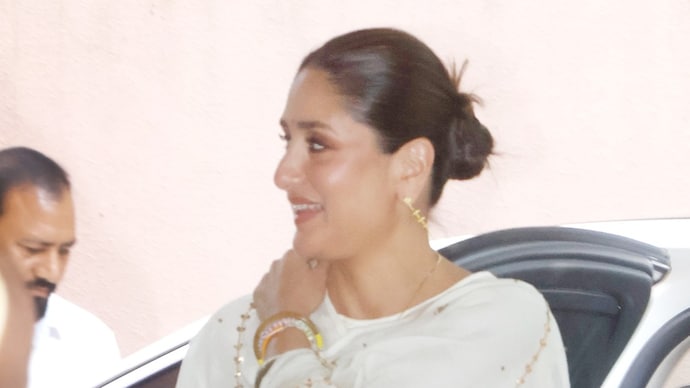
Could Kareena Kapoor Khan and Sanjay Leela Bhansali be ready to bury the hatchet? The actor was seen at the filmmaker's Mumbai residence on Tuesday, decades after their reported fallout. Her visit comes amid reports that Bhansali has approached Kareena for the female lead in his upcoming film with Dhanush, potentially bringing the two together professionally for the first time.

India Today Karnataka Roundtable: 'Ninety Percent Of The Story Rest On The Writing', Says Saptami Gowda

At the India Today Karnataka Roundtable, actors Aashika Ranganath and Saptami Gowda discussed the evolution, achievements, and untapped potential of the Kannada film industry, commonly known as Sandalwood. Reflecting on global hits like Kantara and upcoming projects like Toxic, both actors emphasized that rooted cultural authenticity defines Sandalwood. Saptami Gowda highlighted scriptwriting as the core of filmmaking success, remarking, 'ninety percent of the story or movies rest on the writing,' while advocating for better respect and due diligence for writers. Addressing industry challenges, they pointed out the issue of pay disparity between male and female actors, calling for higher remuneration for female leads while noting positive shifts toward progressive female-led roles. Both actors also shared recommendations of classic and modern Kannada movies, highlighting Sandalwood's rich history and audience support.

advertisement

'It's Not For The Faint-Hearted': Madhubanti Bagchi On Music Career

In an interview, playback singer and composer Madhubanti Bagchi discussed her career journey, musical versatility, and initial hesitation regarding song remakes. She shared her reservations about recreating Usha Uthup's song 'Ramba Ho' for the film soundtrack of 'Dhurandhar'. Reflecting on her professional challenges, Bagchi noted the uncertainties of pursuing a career in the arts, stating, "It's not for the faint-hearted. You can do everything right and still not make it." She recounted a crucial turning point in 2017 when she considered quitting music to pursue a regular job after completing her M.Tech degree. An unexpected recording call from Oscar-winning composer M.M. Keeravani prompted her to relocate from Kolkata and continue her musical career. Bagchi also explained how classical Hindustani vocal training underpins her ability to sing diverse genres ranging from semi-classical thumris like 'Nazarya Ki Maari' in 'Heeramandi' to upbeat dance tracks.

'I Feel I Choose Basic Women': Taapsee Pannu

At the India Today Women Summit, actor and producer Taapsee Pannu discussed her career, her upcoming action thriller film Gandhari, and key issues facing the film industry. Pannu shared details about Gandhari, her sixth collaboration with writer Kanika Dhillon, describing the project as an emotional story centered on a mother fighting to protect her abducted daughter. Addressing the gender pay gap in Indian cinema, she highlighted budget constraints for female-led projects, noting that an entire film's budget often equals the salary of a single male actor. She also reflected on her film Thappad and the personal stories women shared with her following its release. pannu explained her approach to roles, stating she portrays relatable characters rather than black-and-white figures. Additionally, she discussed her decision to keep her personal life private, her perspective on independent women in cinema, and handling failure through lessons learned from sports. Remarking on her outspoken reputation, Pannu suggested her autobiography title should be "I am difficult."

advertisement

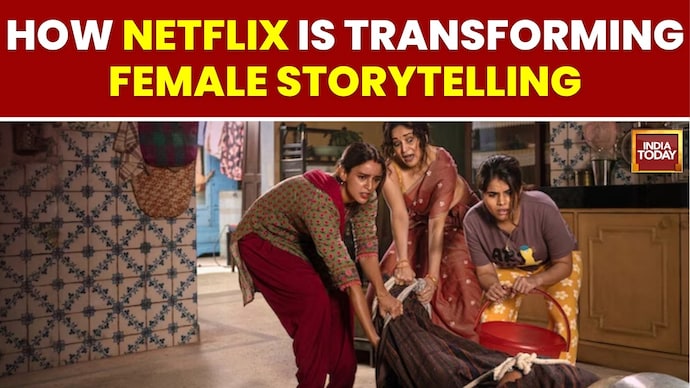
Netflix Drives Female-Led Films, Evolving Narratives And Bold Creative Choices

The discussion highlights how streaming platforms are transforming women-led narratives and breaking traditional storytelling archetypes in Indian entertainment. Focusing on creative freedom given to creators, the conversation details how recent film releases subvert conventional tropes by presenting nuanced, flawed, and authentic female protagonists rather than idealized figures. While theatrical releases face challenges with women-centric projects, streaming services offer a dedicated space for bold, specific, and unconventional stories to thrive. The narrative strategy emphasizes sensitivity, diverse perspectives, and meaningful agency for women characters both in front of and behind the camera. Additionally, leadership dynamics at streaming major Netflix India showcase the impact of women executives driving content decisions, fostering collaboration, and creating opportunities for inclusive filmmaking.

Load More