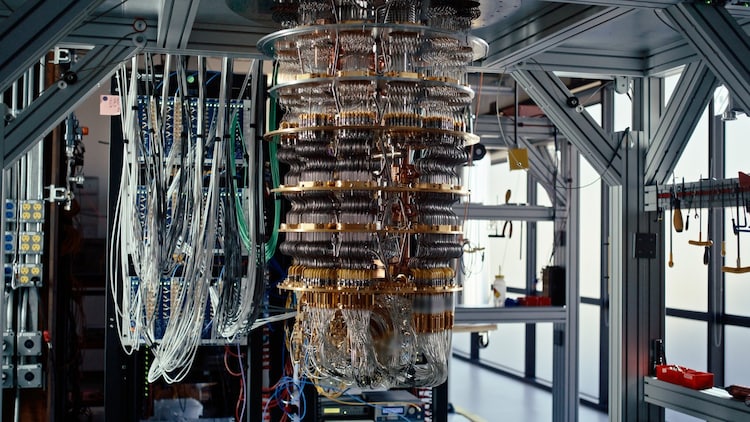
Quantum computers are coming, Andhra Pradesh wants to be first in India to host them

Quantum computers are coming, as seen by the efforts companies like Google and IBM are making, and Andhra Pradesh is aiming to ride the wave. The state hopes that Amravati would be to quantum computing what Hyderabad is to cloud computing.
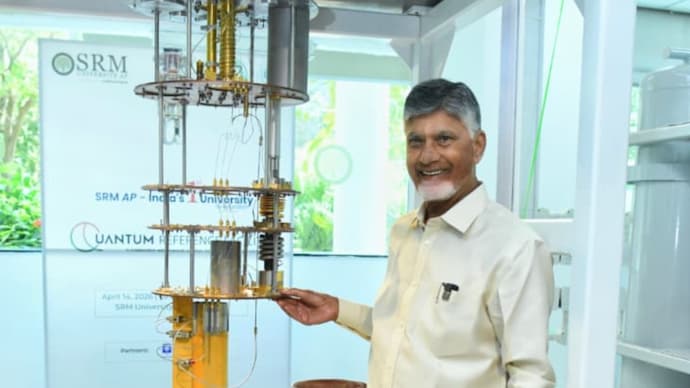
N Chandrababu Naidu shows off quantum computing in works at Amaravati.
New Delhi,Apr 15, 2026 15:07 IST Last UpdatedApr 15, 2026 15:07 IST
 Published by
Last UpdatedApr 15, 2026 15:07 IST Published byAnkita Garg
Apr 15, 2026 15:07 ISTA few decades ago, India's tech story quietly changed one city. Offices came up, global companies arrived, and Hyderabad slowly became part of the global IT map, just when the tech companies were pushing ahead with cloud computing and tech outsourcing. Today, a similar kind of dream is being dreamt again in Andhra Pradesh. But this time the subject is far more complex than software or outsourcing. It is about quantum computing. And the city is different too. It is Amravati.
Unlike AI tools or smartphones that people use every day, quantum computers feel distant. They currently exist inside controlled labs, running experiments that even the most powerful supercomputers cannot handle. These are early days though governments and big tech companies are treating quantum computing as the next serious leap in technology.
The race India doesn’t want to miss
India has also started investing in this direction. Under the National Quantum Mission, the government has set aside around Rs 6,000 crore to build capability in quantum computers. The aim is not just research papers, but working systems, trained people, and hardware that can be built inside the country.
In the middle of this national effort, Andhra Pradesh is trying to get ahead of the curve. The state has announced a plan to build a “Quantum Valley” in Amaravati by 2031. This is envisioned as a dedicated space where quantum research and hardware development can grow together.
The latest in the efforts is the Amravati Quantum Reference Facility (AQRF), which opened on April 14. Inside the facility, there are Amaravati 1S and Amaravati 1Q, which will help researchers understand, develop and test quantum computer technologies. Chief Minister N Chandrababu Naidu calls the AQRF unique and the first in India.
While India doesn’t have a functional and powerful quantum computer that can match the kind of machines that Google, IBM and some Chinese entities have managed to build, the hope is that AQRF will enable "the validation, benchmarking, and certification of quantum components under real operating conditions."
"April 14 marks the birth anniversary of Dr B R Ambedkar. Babasaheb believed that education is the true tool of liberation," Naidu said as he inaugurated AQRF. “It is also World Quantum Day. We honour his vision by bringing quantum computing within reach of every Indian student, researcher, and startup, ensuring that no Indian is denied access to the frontiers of human knowledge.”
Setting up Amravati for frontier tech
The AQRF is part of a bigger plan, the one where Naidu wants to recreate what he achieved with Hyderabad earlier.
Years ago, he helped Hyderabad ride a new wave of tech — cloud computing and a boom in SaaS. Now, ruling a separate state — and which doesn’t have Hyderabad in it — he is hoping to transform another city. This time, his sights are set on Amravati, the capital of the new state. But instead of chasing existing technologies like Saas and cloud computing, Naidu is again betting on the next big thing.
In a post on X in 2025, he wrote, “We want Andhra Pradesh to lead advancements in Quantum Technology, securing a first-mover advantage in this transformative field. Taking a step in that direction, we are setting up a task force and working on a plan to create a Quantum Valley.”
To provide the initial stimulus as well as buzz for the project he even made a headline-grabbing announcement. Earlier in January, Naidu announced that any researcher who gets a Nobel Prize in physics by working on a quantum project in Andhra Pradesh would receive Rs 100 crore (around $12 billion) from the government.
The Quantum Valley, as the way things stand at the moment, is a planned 50-acre campus in Amaravati, where research institutes, startups, and industry partners can work side by side.

This effort is also tied closely to India’s National Quantum Mission. Institutions like DRDO, IISc, and TIFR have already been part of early collaborations to support research and system building. In 2025, Andhra Pradesh also brought in partnerships with IBM, Tata Consultancy Services, and Larsen & Toubro for a planned 133-qubit quantum system that will be part of the upcoming setup.
Challenges remain
While the dream is big and there is a promising start, challenges do remain. Amravati and Naidu might strike it big, just the way Hyderabad once did. Yet, some caution is also warranted at this early stage.
Cloud computing and SaaS were built on top of existing and well-proven technologies. Quantum computing, on the other hand, is still a lab-based technology. While the concept of quantum computers cannot be denied, their viability and commercialisation are years away.
The quantum computers are finicky and fragile beings, requiring exotic materials and expensive technologies. Even small heat changes or background noise can disturb qubits, forcing systems to operate at temperatures close to absolute zero. Building and maintaining such environments is difficult, expensive, and still controlled by a small group of global suppliers.
The bigger challenge, though, is people. Quantum computing is not one subject — it sits at the confluence of physics, engineering, and computer science. Building a workforce that understands all of this takes time, training, and constant exposure to real systems.
In other words, the way things are at the moment, any place that is not Silicon Valley may find it difficult to gather enough capital and expertise to create workable and viable quantum computers.
The Andhra government likely understands this. It is taking a number of steps to help Amravati turn into a quantum computing hub. For example, it is planning large skilling programmes and partnerships with companies and institutions. It has already engaged with more than 40 organisations to build support for the ecosystem. The government has also reached out to industry leaders, including IBM CEO Arvind Krishna, to discuss the state’s plan for quantum computing.
"Andhra Pradesh will be a leader in shaping the future of quantum technology," Naidu said in January. “We have already taken significant steps through our plans for a Quantum Valley and large-scale skilling initiatives, aimed at building a strong and supportive quantum ecosystem.”
In other words, the dreams are big and Naidu is taking his chance, just the way he once did for Hyderabad. Whether the dream comes true or not will be visible in Amaravati in the next decade.
- Ends