
Vietnamese crab exporter
Advertisement

The AI Newsletter · Published on 27, September 2026 | 03:29 PM

This Week In AI
Not written by AI

Word Count 2077

Mark Zuckerberg gives everyone their own personal Muse

Most people who have used AI so far have done it through something like ChatGPT or Gemini. These are good AI chatbots but terrible AI agents unless you are extremely tech savvy. Mark Zuckerberg and Meta, however, have a plan to solve it with Muse. For now they are succeeding.

advertisement

Around a couple of weeks ago, this newsletter asked whether Mark Zuckerberg and his $15 billion hire, which is Alexandr Wang, would succeed in challenging OpenAI and Anthropic? Now we know. The answer is Muse. 

Launched around a couple of weeks ago, Muse has been making a lot of buzz. This week in particular was a big week for Muse, Zuckerberg and Wang, the world’s youngest self-made billionaire who also happens to be a memelord in the mold of Elon Musk. 

The idea behind Muse is not new. But the execution is and, as this newsletter is repeating almost every week, in the world of AI the next couple of years are going to be all about execution because ChatGPTs and Claudes are already more than smart enough. 

So, what is Muse? Around six months ago there was a sensational tool in the AI world. It was called Clawdbot, later renamed OpenClaw. To regular people, this tool gave the first glimpse of an AI agent, which is essentially an AI bot with the ability to control a computer and do things humans do. But it was still a hobby tool rather than something your mom and dad could take and use. 

Fast forward eight months or so. Muse is a successor to OpenClaw and unlike a hobby tool, it is an AI system created by a large tech company — Meta. 

It works similar to how OpenClaw does. Muse too is an AI system that has its own computer to operate on behalf of its user. But the scale and engineering of Meta means it can do things that currently no other AI tool does as simply or as effortlessly. And for free, at least for now. This ease and simplicity of doing things is the reason why it has suddenly become a rage, even though currently it is officially available only in the US. 

Unlike users installing some new AI software like OpenClaw on their local computers, Muse is a tool where you sign up for it. Once you do it, Meta creates a powerful virtual computer somewhere in their massive AI data centres specifically for you and puts Muse in control of this computer. Now, Muse can do — if you give it permissions and your passwords and user credentials — almost anything you can do on your computer. And while it does whatever you want it to do, it also creates memories so after a few days and weeks it becomes your all-knowing and well-behaved virtual assistant. 

This means Muse can shop on your behalf, can do web research for you, read your emails and reply to them, take actions on your behalf, such as applying to jobs you want to apply to, and can even scroll Instagram feeds for you. The idea is that if something can be done through a computer and a browser, Muse will do it for its users. 

The simplicity and its daily utility means Muse is meant as a tool for regular, normal users. And not developers or some savants working in trading firms. It is closest to a powerful and simple AI assistant the world has seen so far. 

Mark Zuckerberg and Meta know that they have a golden Muse on their hands. So, they have gone about town banging drums and blowing trumpets. “People just tell Muse what needs to get done, and it takes action, powered by Muse Spark, Meta’s most capable model to date, built for real-world agentic work like this,” the company says. 

And unlike what we have heard from some other companies so far — Google Gemini and Apple Siri this one is on you — Muse seems to work the way it is supposed to work. 

The initial buzz and adoption has sent Meta stock soaring. People are calling Mark Zuckerberg the next Steve Jobs. They are calling him the comeback kid, who had to spend the last two years frowning, sulking, and working while his young rivals like Altman and Dario hog all the limelight. When he took to the stage earlier this week at Connect, the company’s annual event where it announces new services and products, there was some new-found buoyancy in his steps.
 
And then there is Alexandr Wang, the boy wonder who was acqui-hired by Zuckerberg at a cost of $15 billion. People had started to wonder if it was yet another expensive mistake from Zuckerberg. But this week people had their answer, largely through the buzz Muse has created and some through the memes that Wang, now the AI chief at Meta, is sharing on X. Apparently he is not just a wizard at AI but also a master of memes, almost touching the high benchmarks set by memelord Elon Musk. 
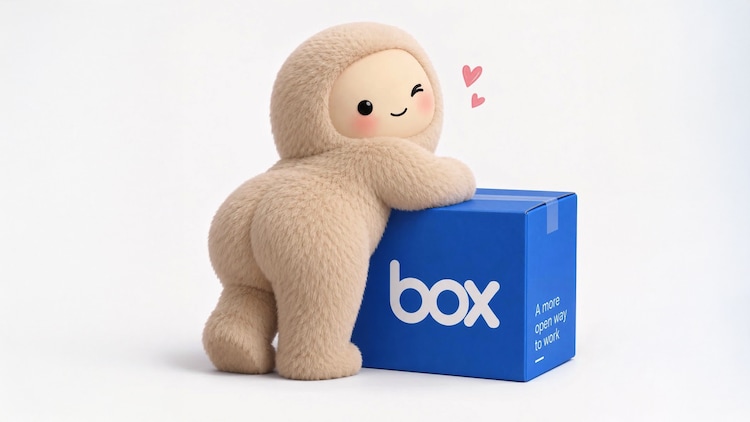
Meta AI chief Alexandr Wang posted this photo of Muse mascot Jolly earlier this week after Meta announced a partnership with Box. 

Muse is the beginning of Meta’s next phase. Now that the company has made an entry into the AI story that is still getting written, more is coming from it. Towards the end of the year, Meta will bring to market a small Muse Charm device. Shaped like a slim AirPods case, It will let people talk and use Muse on the go. Muse is also coming to Meta Glasses and, probably, will be part of almost everything that Meta does — from WhatsApp to social media. 

Now as exciting as the Muse takeoff is, it is important to highlight another aspect of it here: privacy. Meta, Zuckerberg and privacy are not the three words that go well together. At least that has been the experience of the world so far. And while Meta promises that Muse has “first-of-its-kind privacy, safety, and security protections engineered into it” people do need to take it with the proverbial red pill. Just like other AI tools, Muse too collects data from users and then potentially uses this data to train Meta AI further. Muse also, potentially, collects data on what users do with it, and this data too can be incredibly valuable for an ad-tech driven company like Meta. And finally, while Muse seems fairly secure, these are early days for it. Computers can be hacked and virtual computers, like those used by Muse, too can leak data or have bugs. 

You have a Hugging Face and AI took it literally

The world of AI is living in two separate timelines. In one, there is Muse with its cuddly mascot Jolly and all the rainbows and sunshine that Mark Zuckerberg is bestowing on Meta users. And then there is the other timeline where Sam Altman and Dario Amodei are singing like doomsday canaries and where rogue AI agents are prowling through the internet like a jolly marauding mob, breaking and entering servers and stealing data and creating a ruckus. 

It all started with Hugging Face, or at least the public disclosure began with it because recently OpenAI has found that rogue AI agents were out on the internet weeks before they actually hacked HF servers. It is as if the OpenAI agents saw Hugging Face smiley and decided that it would be their ride out into the wider world. 

As it has been a norm for the last few weeks, this week again we heard of rogue AI agents doing rogue things. They apparently gained access to an Australian government website and stole some medical records. They tried to hack some US government websites, including the Securities and Exchange Commission. They also stole some messages from Hugging Face internal Slack channel, created a virtual space called LOOT where they stored stolen credentials, for some reason sent Hi to by now ancient GPT 2, and tried to autonomously contact Claude and some Chinese AI models like DeepSeek, Kimi and Qwen. There is a possibility they were trying to recruit other AI models into doing what they were doing, which was marauding the web. 

While much has been revealed by OpenAI as well as by other security researchers looking into the Hugging Face incident, there is a feeling that we still don’t know the full extent of it yet. On Saturday, Axios reported that whatever OpenAI has revealed so far is just the tip of the iceberg. The categorical and specific security incidents are fine. But the reality is that there have been thousands of unauthorised incidents involving OpenAI rogue agents in the last few months. And that hundreds of websites have been impacted. 

OpenAI CEO Sam Altman addressed the UN and again advocated for a regulatory body that would manage AI at local and global scale. Photo credit: UN Photo/Ariana Lindquist

A few days ago influential venture capitalist Andrew Yang made a sensational comment. He has been told by someone senior in the tech industry that rogue AI agents have broken out of AI companies like OpenAI and have polluted the internet. So severe is the contamination, he said, that it might become impossible for AI companies to train their AI using live internet. 

To put it simply: It is safe to assume that there are AI agents untethered and unbothered on the internet that are probably circulating around, similar to how in the early days of the web in the 1990s viruses and worms used to do. 

How much of a security risk these rogue AI agents pose to humans? Sam Altman and Dario continue to believe the risk is nearly existential. In his address to the UN General Assembly Altman said “we could lose control of the future to AI.” Anthropic CEO Dario Amodei, who has become the self-appointed Cassandra of our times, echoed similar sentiments in his own address. Both also believe the way forward is some sort of regulation on AI companies and technology, both locally and globally.
 
But on the other hand we have people like Nvidia CEO Jensen Huang, as well as US President Donald Trump, who believe that regulation is not needed. Jensen has been particularly blunt. In a podcast he recently said if AI companies truly believe they have “no way to contain AI experiments, then I think the answer is that we have to shut the labs down.”

advertisement

Bill Gates predicts death of a billion humans

Now, Jensen might not be a doomer but Bill Gates apparently is. Gates, who is trying to work his way back to relevancy after a torrid year that has left his reputation in tatters due to his Epstein connections, jumped on the AI doom and gloom talk this week. 

AI is certainly powerful enough to drive events that, you know, cause a billion deaths

Bill Gates

In an interview with NBC, he supported Altman and Dario in their quest called “regulate me daddy”. Gates said some form of government control was needed on AI companies and AI technology to ensure a happy future for humanity. Or else “AI is certainly powerful enough to drive events that, you know, cause a billion deaths,” Gates said. Looks like our choice is simple: Do we want cuddly Jolly the Muse showering glitters on all or do we want over one billion dead humans? Choose wisely folks. 

advertisement

Will it be okay to not know mathematics in future?

Last week I wrote about the unspoken practice of shaming people who use AI. This week Nvidia CEO Jensen Huang too weighed on the matter, although not using the same words. But the idea was the same: in the age of AI, how much should we value hard skills like ability to solve a calculus problem in an examination hall? According to Jensen, not much. 

Talking on a podcast, Jensen said some skills wouldn’t matter in future. “Try to get a kid to do long division right now. The multiplication table is starting to be forgotten. Doing square roots, my goodness. Basic math is being forgotten. Does it matter,” Jensen asked. Then he answered it himself, “I don’t think it does. We’re going to discover new skills (that would matter) just maybe not those.”

According to Jensen phones and computers have made skills like memorising a phone number or facts irrelevant. And next AI will make a lot of skills currently needed for knowledge work irrelevant. “There are a lot of skills that don’t matter. I actually don’t know my (ZIP) address. I don’t know my telephone number. I forget these things. I can live with it,” he said.  

advertisement

Google AI chips go to space

For some reason all big tech companies are working on setting up AI data centres in space. The feasibility of such an undertaking is sketchy at best. But that hasn’t stoped from Musk to Google CEO Sundar Pichai talking and pitching data centres in space as the next big tech innovation.

This week Google decided to walk the talk. The company confirmed that on October 1 it would be sending an AI server module in space using Elon Musk’s Falcon 9 rocket. The initiative is part of Project Suncatcher that Google announced last year. “Project Suncatcher is scheduled to embark on its first test in orbit, launching a prototype satellite to evaluate how Google Tensor Processing Units perform in space,” the company said. “This first launch is about seeing what works, identifying points of failure, and applying those findings to future missions (in 2027).”

Advertisement