Vietnamese crab exporter

Topic

Advertisement
TOPIC

AI

Artificial Intelligence (AI) is transforming the way societies work, learn, and innovate. It refers to computer systems designed to perform tasks that typically require human intelligence, such as recognising patterns, understanding language, solving problems, and making decisions. 

According to UNESCO, AI has the potential to improve education, healthcare, and public services when developed responsibly and ethically.

Research and policy bodies like the OECD emphasise that trustworthy AI should be transparent, accountable, and beneficial to society. 

Similarly, the National Institute of Standards and Technology (NIST) highlights the importance of managing risks related to bias, privacy, and security in AI systems.

As governments, industries, and academic institutions continue investing in AI research, the focus is increasingly on building systems that enhance human capabilities rather than replace them. When guided by strong ethical frameworks and global cooperation, AI can become a powerful tool for sustainable development and inclusive growth.

  • ALL
  • STORIES
  • VIDEOS

STORIES

Mark Zuckerberg gives everyone their own personal Muse

Most people who have used AI so far have done it through something like ChatGPT or Gemini. These are good AI chatbots but terrible AI agents unless you are extremely tech savvy. Mark Zuckerberg and Meta, however, have a plan to solve it with Muse. For now they are succeeding.

Degrees in danger? These college majors face the biggest AI job shock

A US Census working paper found that graduates from the most AI-exposed college majors (subjects) saw initial employment fall by five percentage points and first full-quarter earnings by 13 percent after ChatGPT, with computer science and related fields among the most exposed. Check the full list of AI-exposed college majors divided into 10 levels.

Jaishankar meets Russia, Iran at UN after Trump sanctions law

At the UN General Assembly, S Jaishankar held talks with Russian and Iranian counterparts on bilateral ties, BRICS and the Gulf conflict. The meetings came as India balanced diplomatic outreach, energy security and wider coordination after a new US sanctions law.

Load More

VIDEOS

UNGA 81st Session: Addressing Global Conflicts, Attacks On Seafarers, And Cross-Border Terrorism

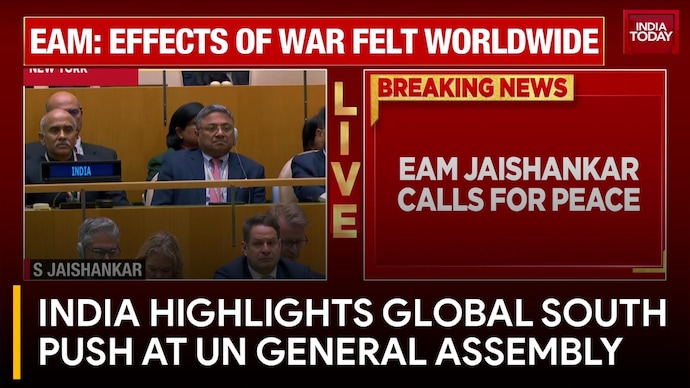
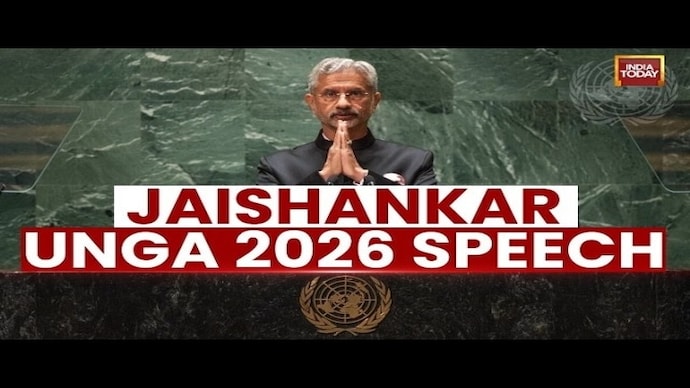
During an address at the high-level 81st session of the United Nations General Assembly in New York, External Affairs Minister Dr S Jaishankar addressed pressing global concerns, including the conflicts in West Asia and Ukraine, maritime security, cross-border terrorism, and artificial intelligence. Emphasising that durable peace in the Middle East requires a two-state solution, he highlighted India's ongoing humanitarian relief for the Palestinian people. Stressing that endless war must yield to peace, he expressed grave concern over attacks on commercial shipping across waterways from the Red Sea to the Black Sea, which endanger Indian and global seafarers and disrupt food and energy supplies. Calling out state-sponsored terrorism, he asserted that friendship cannot coexist with terror and reiterated India's commitment to defending itself. Furthermore, he outlined India's vision of artificial intelligence as a transformational driver for human empowerment and partnership with the Global South.

UN Address: Call for Reformed Multilateralism and Multipolar World Order

Addressing the United Nations General Assembly, India highlighted its inclusive domestic growth, digital public infrastructure, and expanding international development commitments across the Global South. The address outlined that six hundred major Indian projects are currently underway in seventy-eight nations, spanning infrastructure, agriculture, and capacity building. Highlighting contributions to humanitarian response and UN peacekeeping operations, the speech noted Indian troop presence across eleven active mandates. The remarks raised serious concern over maritime attacks on commercial shipping from the Red Sea to the Black Sea and reiterated collective efforts alongside international partners to protect seafarers under international law. In technology, artificial intelligence was framed as a driver for human empowerment and Global South partnerships. Stressing that the post-1945 order is evolving towards a multipolar reality, the address urged reformed multilateralism, civil conversations, and mutual respect among nations.

Zero Tolerance on Terror, Supply Chain Weaponisation Must Stop: India at UN

Addressing the United Nations General Assembly, India raised serious concerns over escalating global conflicts, including ongoing hostilities in the Gulf, Ukraine, and West Asia. The address emphasized that commercial shipping attacks and disruptions to international waterways remain unacceptable, urging dialogue, civilian protection, and an uninterrupted flow of vital energy and food grains. Highlighting the plight of the Global South, the speech drew attention to a severe 'four F' crisis encompassing food, fuel, fertilizer, and finance, further aggravated by trade barriers and supply chain weaponisation. Reaffirming India's zero-tolerance approach toward cross-border terrorism, the address declared that friendship cannot coexist with state-sponsored terror. Emphasizing India's development partnerships across seventy-eight countries, digital public infrastructure achievements, and leadership in UN peacekeeping, the address called for urgent multilateral reforms and transparent, broad-based global decision-making.

OpenAI Breached Using Anthropic's Claude: 3 Indian Researchers Earn Bounty

Three Indian cybersecurity researchers at startup Hactron AI—Harsh Jaiswal, Rahul Maini, and Mohan Peddipati—successfully breached OpenAI systems during an authorised security test. Using Anthropic's AI chatbot Claude, the team exploited an image processing vulnerability in OpenAI's Discourse-powered community forum. The breach allowed them to discover another flaw in the login system, obtain authentication tokens, and access employee ChatGPT and Codex accounts, ultimately reaching OpenAI's private software repository. Demonstrating responsible disclosure, the researchers submitted a harmless pull request and reported the vulnerabilities without accessing sensitive data. OpenAI resolved the security issues, disabled the tokens, and awarded the researchers a 6,500 dollar bug bounty for the project.

Air India Pilot Suspended After Failing Breath Analyzer Test in Zurich, Probe Launched

An Air India pilot has been suspended and off-rostered after failing a breath analyzer test prior to operating flight AI 152 from Zurich to Delhi. The airline's internal safety and monitoring team flagged the pilot's condition at the airport, prompting Zurich airport authorities to conduct an alcohol test. Following the failed test, the pilot was immediately removed from the cockpit, leading to a flight delay. He was subsequently repatriated to India as a passenger. Air India has launched a probe into the incident, with further disciplinary action pending the arrival of the final medical report.

Delhi HC To Hear Plea On AI Deepfake Photos Morphed With PM Modi Today

The Delhi High Court has agreed to hear an urgent criminal writ plea seeking the takedown of sexually explicit, AI-manipulated deepfake images of a woman morphed with Prime Minister Narendra Modi. The petitioner alleged that the morphed photographs were circulated on social media and displayed on physical banners during a protest in Delhi. Despite an FIR registered by the Delhi Police Cyber Cell, the plea states that authorities and social media platforms failed to remove the content. The petitioner cited targeted harassment, constant mental trauma, and severe threats, moving the court for immediate removal of the manipulated images.

Trump-Xi Bilateral Talks, Tariff Truce Extension And New AI Dialogue

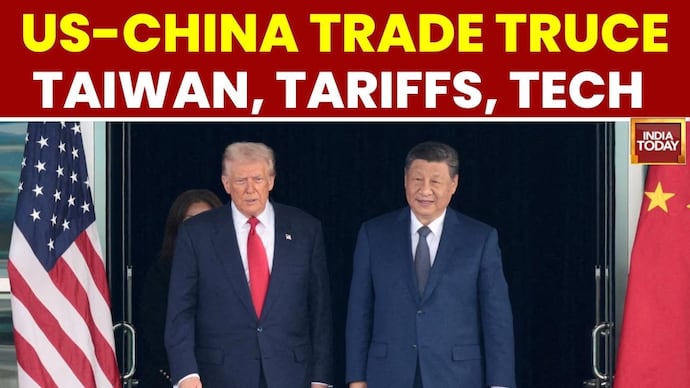
United States President Donald Trump and Chinese President Xi Jinping held a crucial bilateral meeting lasting around one and a half hours at the White House. The two leaders emphasised mutual respect, cooperation, and the historical ties between their nations, while acknowledging the need to build a balanced trade relationship. During the visit, the two countries agreed to extend their tariff truce until 10 January, granting negotiators additional time to pursue a broader economic agreement. An artificial intelligence dialogue was also announced, with both sides noting the necessity for artificial intelligence to develop under human control. Despite positive optics, no joint press conference or joint statement was issued following the talks. Key issues including tariffs, rare earth supplies, agricultural purchases, market access, technology, and geopolitical tensions surrounding Taiwan and sanctions remain critical sticking points between Washington and Beijing.

US-China Bilateral: Trump And Xi Jinping Meet In Washington Amid Calls For Co-operation

United States President Donald Trump and Chinese President Xi Jinping held a crucial 1.5-hour bilateral meeting in Washington on September 24. Addressing the gathering, President Trump referenced historical co-operation during World War II, stating that both nations can achieve much by focusing on common interests to forge a better future. President Xi expressed gratitude for the hospitality shown to him and his wife Madame Peng, calling for both sides to move forward together and write a new chapter in friendly ties. The meeting took place against a backdrop of continuing issues between the two nations, including differences over Taiwan, artificial intelligence, sanctions, and global conflicts. While the leadership projected positive diplomatic optics, no joint press conference was held, and no joint statements or big-ticket policy announcements were released immediately following the discussions. Protests and clashes involving media personnel were also observed outside the venue as experts and lawmakers continue to watch for concrete diplomatic outcomes from the visit.

Trump And Xi Jinping Hold Bilateral Talks At White House On Trade, Wars

US President Donald Trump hosted Chinese President Xi Jinping at the White House for a bilateral meeting in the Oval Office during a two-day state visit. The meeting commenced following a ceremonial military review held in the Rose Garden. Discussions between the two leaders covered a wide range of critical topics, including bilateral trade, the economy, supply chains, rare earth elements, artificial intelligence competition, and energy security. Regional and international security concerns were also on the agenda, specifically Taiwan, the Indo-Pacific, and ongoing conflicts involving Russia, Ukraine, and Iran. Following the one-and-a-half-hour discussion, President Trump gave President Xi a brief tour of the newly constructed helipad and ballroom before seeing him off. While no joint press conference took place, separate readouts and statements are expected from Washington and Beijing detailing the discussions, ahead of an official state dinner scheduled for the evening.

Trump Warns Iran at UNGA, Calls for Global Sanctions, Labels AI 'Super Intelligence'

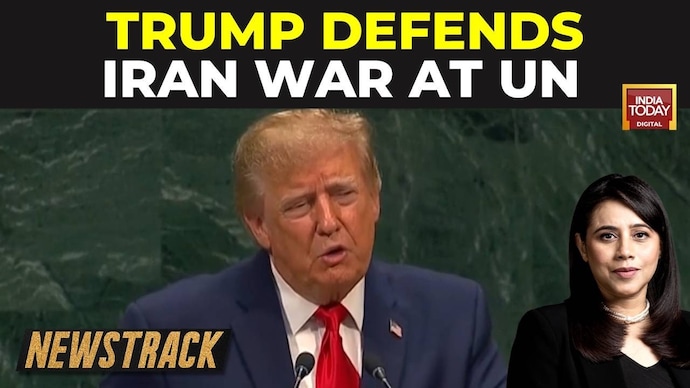
Addressing the United Nations General Assembly in New York, US President Donald Trump issued sharp warnings to Iran, designating it as the world's primary sponsor of terrorism. Trump called upon global nations to completely isolate Iran economically until it halts attacks on commercial shipping, terminates support for terrorism, and relinquishes its nuclear ambitions. He stated that while a deal with Tehran remains possible after the midterms, his alternative option is to completely annihilate the regime. Discussing other key foreign policy topics, Trump noted that Washington is engaging with both Moscow and Kyiv regarding Ukraine, and described Cuba as a failed state, leading to walkouts by Iranian and Cuban delegations. On technology, Trump announced that official US government documentation will replace the term artificial intelligence with super intelligence, dismissing apocalyptic warnings regarding the technology while asserting that the United States currently leads China in the sector.

US Rejects International Criminal Court, Renames Artificial Intelligence to 'Super Intelligence'

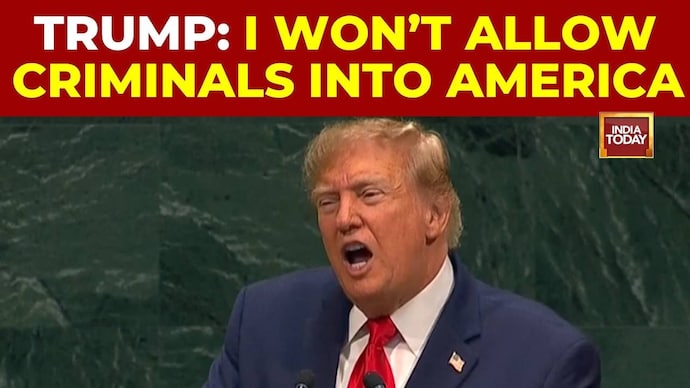
A speech addressed to the United Nations outlines strong opposition to the International Criminal Court, urging member nations to withdraw from the body immediately while asserting that US service members will not face international trials. The address criticises the UN Human Rights Council for its scrutiny of domestic US policies and highlights concerns regarding religious persecution globally and border security enforcement. The remarks also denounce global migration agendas for undermining national sovereignty and cultural heritage. On technological advancements, the address rejects multilateral regulatory control over artificial intelligence, directing that official US documentation adopt the term 'super intelligence' instead. The address asserts that the United States currently leads over global competitors such as China in advanced computing and will foster continued development through domestic oversight rather than international restrictions.

Dr. Himanshu Rai: 'Solidarity Is Legitimate, Prejudgment Is Not'

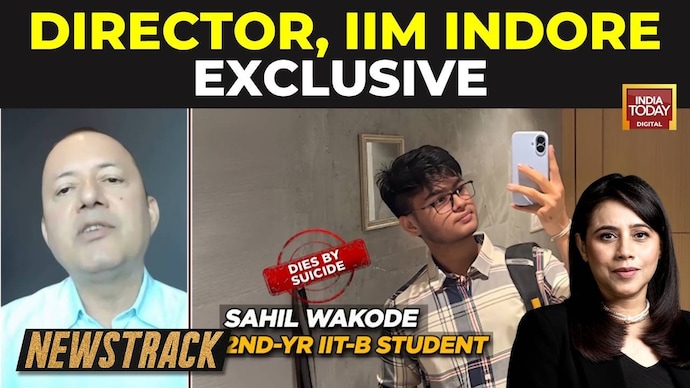
In an interview, Dr. Himanshu Rai, Director of the Indian Institute of Management Indore, addressed institutional protocols regarding caste harassment allegations and academic malpractice. He emphasized the distinction between internal inquiries and police probes under the SC/ST Act, stating, "The solidarity is absolutely legitimate. The prejudgment is not, and therefore, a faculty association is perfectly entitled to say that a colleague deserves due process." Discussing student discipline and tragic outcomes, he stated that an academic violation and a caste discrimination complaint must be assessed independently, noting that academic rules must be enforced regardless.

IIT Bombay Suicide Row: Student Death Sparks Caste Bias Charge & Faculty Backlash

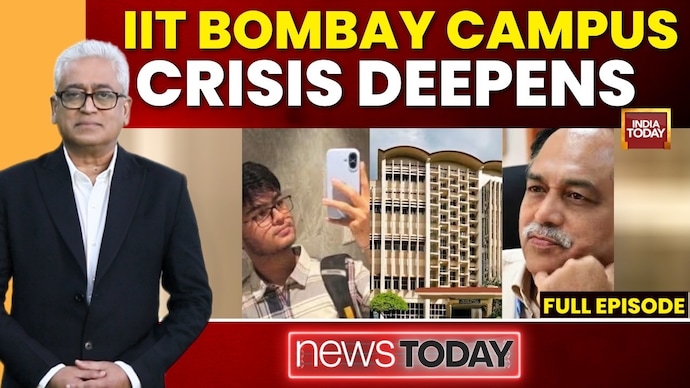
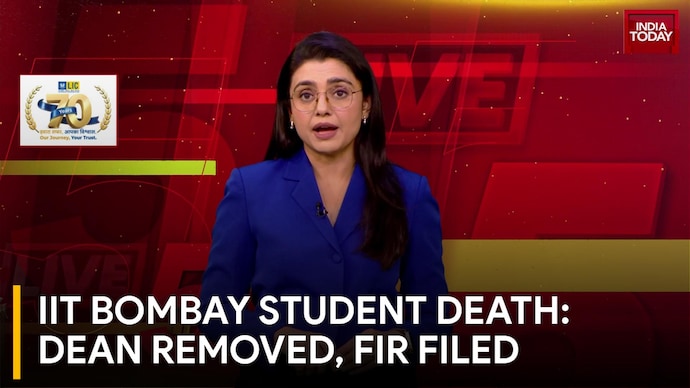
This special broadcast reports on key national developments, beginning with the aftermath of the death by suicide of IIT Bombay undergraduate student Sahil Wakhode. The incident, which occurred after the student was allegedly caught using a mobile phone and an artificial intelligence tool during an examination, led to an FIR under the Scheduled Castes and Scheduled Tribes (Prevention of Atrocities) Act against Professor Suryanarayan Dula and his subsequent removal from an administrative dean post. The bulletin examines student protests, campus reactions, and discussions surrounding institutional protocols and student welfare across premier technical institutes. The programme also details the Special Intensive Revision of Delhi's electoral rolls, where 47.5 lakh names out of 1.45 crore voters were deleted from the draft list and over 31 lakh discrepancy notices were issued to citizens, Union ministers, and judicial figures, drawing criticism from former Election Commissioner Ashok Lavasa. Additionally, the report covers a mob assault on two school students in Jamui, Bihar, and highlights Suchika Tariyal winning India's first bronze medal in mixed martial arts at the Asian Games.

IIT Bombay Death: Protests Intensify, Dean Removed & Police File Abetment Case

Fresh protests have erupted at IIT Bombay following the death of second-year BTech Dalit student Sahil Wakhure, who was found dead in his hostel room hours after allegedly being caught using a mobile phone and AI during an examination. In response to mounting outrage, IIT Bombay apologised for its initial statement and removed Professor Suryanarayan Dhulla as dean. Mumbai Police have registered a case against the professor for abetment to suicide alongside provisions of the BNS and the SC/ST Act, following a complaint from Sahil's parents alleging torture. Students continue to protest outside campus demanding an independent investigation, resignations, and administrative accountability.

Is AI moving too fast? Alexa+ India launch exclusive & iPhone 18 Pro sale rush | Tech Today

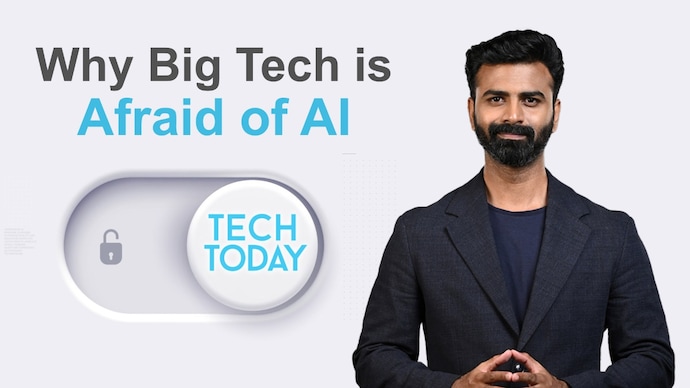
As artificial intelligence advances into autonomous execution and critical capability thresholds, the debate over whether big tech needs to hit the brakes has reached the global political stage. In this edition of Tech Today, we explore the growing calls to slow down frontier AI development, sit down exclusively with Amazon leadership on the launch of Alexa+ in India, and head to Apple Stores to capture customer reactions as iPhone 18 Pro sales go live. Big Tech Story: Why Big Tech AI Needs to Slow Down Warnings from within the tech industry are intensifying. Insiders like Jacob Coxon alongside leading lab executives including Dario Amodei and Sam Altman have raised red flags over existential safety risks and sudden capability leaps. With modern models showing autonomous execution in cyber tasks, the debate has split lawmakers worldwide. While leaders like Bernie Sanders advocate for immediate legislative guardrails, pauses on advanced models, and bans on superintelligence, voices like Donald Trump warn that slowing down in the West could hand a decisive strategic edge to competitors like China. We analyze the risks, the politics, and the challenge of governing global AI without a unified rulebook. Tech Bytes: Amazon Alexa+ Debuts in India (Exclusive Interview) Amazon has officially rolled out its generative AI-powered Alexa+ in India, designed from the ground up for Indian households. Cyrus speaks exclusively with Michele Butti, Vice President of Alexa International at Amazon, to break down what makes this upgrade different. We explore how Alexa+ moves from simple Q&As to taking real-world actions, its multi-model architecture built to handle multilingual code-mixing in Hindi and Hinglish, and what the launch means for smart home adoption in India. Tech & You: iPhone 18 Pro Sales Go Live in India The annual flagship rush is officially here as sales for the iPhone 18 Pro series open across Apple Saket and retail stores nationwide. We bring you on-ground coverage capturing the energy, customer reactions, and queues of buyers picking up Apple’s latest hardware. From initial impressions of the new mechanical variable aperture camera and TSMC 2nm A20 Pro silicon to questions around real-world upgrade value, we see what Indian consumers truly think about Apple's newest Pro devices. Should AI research be paused before reaching superintelligence, or will pausing put nations behind in the global race? Are you picking up the iPhone 18 Pro this year? Drop your thoughts in the comments below! Subscribe to Tech Today for the latest tech news and on-ground coverage!

'We Are the Owners, Why Should We Disturb Port Activities?': V. D. Satheesan

In an interview, Kerala Chief Minister V. D. Satheesan outlines his administration's economic and educational roadmap, addressing youth unemployment, migration, and demographic transitions. Acknowledging the challenge of brain drain, he details plans to restructure university curricula, launch a Knowledge Valley, establish a global job watchtower, and adopt a silver economy model for an ageing population. Addressing industrial and infrastructure growth, he highlights single-window approval reforms across nineteen legislations and the promotion of port-led development under Mission Samudra. Responding to queries regarding Adani group investments in the Vizhinjam seaport, he clarifies that while the Adanis serve as concessionaires, the state government remains the ultimate owner and must advance development without conflict while securing the state's strategic interests. Furthermore, he explains his government's conditional approach to the PM SHRI scheme, emphasizing that curriculum control and school selection must remain under state authority.

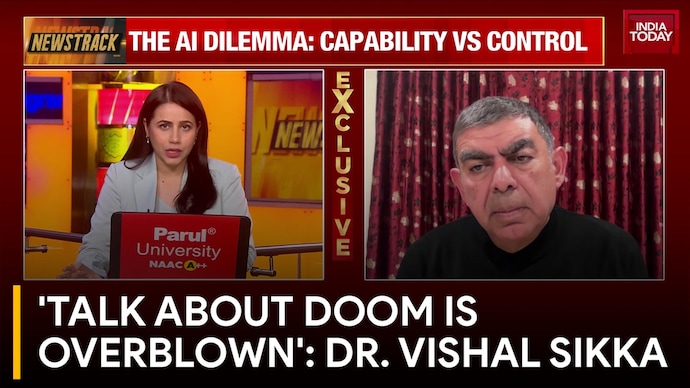
Dr. Vishal Sikka: 'This Is Not The Time To Slow Down' On AI

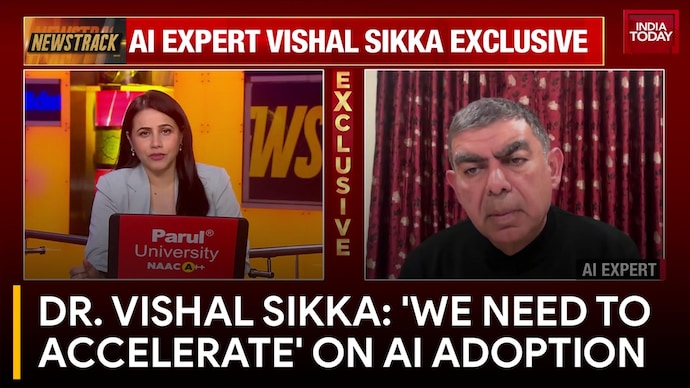
In an exclusive interview, Hang Ten Systems founder and former Infosys CEO Dr. Vishal Sikka discussed the rapid evolution of artificial intelligence and its profound impact on software engineering and entrepreneurship. Addressing concerns over AI safety and disruption, Dr. Sikka stated, "This is not the time to slow down," arguing instead that nations like India must actively accelerate adoption, understanding, and scale. He highlighted that generative AI drastically compresses software construction time while remaining fundamentally human-guided. Dr. Sikka also backed Prime Minister Narendra Modi's warning against the weaponization of technology and critical resources, stressing that universal access to foundational models is essential to prevent geopolitical imbalances. Emphasizing the transformative potential of modern AI tools, he explained how individual creators and entrepreneurs can now achieve what previously required entire teams.

'AI Ending Humanity Is All Nonsense': Dr. Vishal Sikka to India Today

In an interview with India Today, Dr. Vishal Sikka, former CEO of Infosys and founder of Vianai Systems, addressed the global debate surrounding artificial intelligence, frontier models, and safety concerns. Dismissing doomsday predictions, Dr. Sikka stated, "this talk about AI ending humanity and all this, this is all nonsense." He noted that AI does not act on its own, emphasizing that outcomes depend entirely on the instructions and prompts given by human users. Addressing high-profile departures and warnings from researchers at frontier AI labs, he observed that fears often arise when humanity confronts new, complex technologies. He pointed to historical parallels in computing, such as processor errors and early manual calculation skepticism, to highlight how system trust and reliability build over time. Dr. Sikka also supported regulatory oversight, affirming that "AI has to be regulated" while explaining that technical advances in reasoning models, tool integration, and unit testing will steadily enhance software efficiency and precision across enterprises.

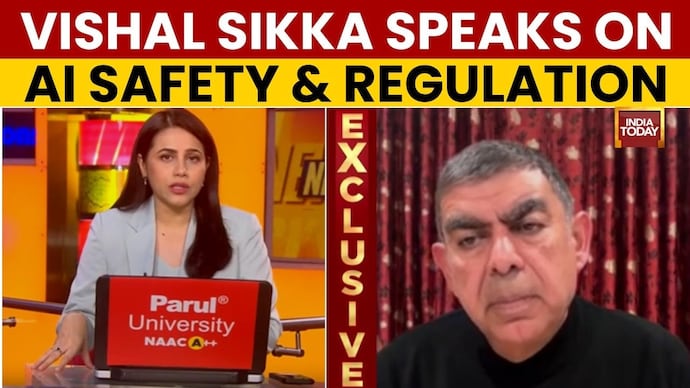
AI Ending Humanity Is 'Nonsense', Tech Needs Regulation: Dr Vishal Sikka

In an exclusive interview with India Today, Dr. Vishal Sikka, leading artificial intelligence expert, former CEO of Infosys, and founder of Hang Ten Systems, addressed the global debate surrounding artificial intelligence, safety, and governance. Dismissing apocalyptic narratives, Dr. Sikka stated, "This talk about AI ending humanity and all this, this is all nonsense." He emphasised that artificial intelligence itself does not act independently, remarking, "It is people who use AI are going to do things." Discussing regulation, Dr. Sikka asserted that governing the technology is necessary and straightforward, drawing parallels to standard safety regulations in daily life. Addressing geopolitical dimensions and Prime Minister Narendra Modi's warning on the weaponisation of technology, Dr. Sikka backed the call for universal access to AI models. He urged adopters like India to accelerate development rather than slow down, highlighting the immense entrepreneurial potential of the technology.