How AI will predict air quality in and around Mumbai
A France-based company has been roped in for a project that would eventually be extended across Maharashtra

Have you noticed the air feeling thick or dusty sometimes? Or seen the haze in the morning? That’s what the Air Quality Index, or AQI, is all about. It’s just a number that tells us how clean or dirty the air is. Think of it as a score: the higher the number, the worse the air.
The AQI looks at things floating around in the air that can harm us like dust, smoke, tiny particles called PM2.5, ozone, and carbon monoxide. PM2.5 is the sneaky one. It’s so tiny it can go deep into your lungs, even into your blood. That’s why on some days, just breathing can feel a little risky.
The number also tells you how careful to should be. On a “good” day, you can go outside, jog, or let kids play freely. On a “moderate” day, some people, like older folks, kids, or anyone with asthma, might need to slow down. On a “poor” day, even healthy people can feel irritated eyes, scratchy throats, or a cough. And if the AQI is really bad, “severe,” it’s a warning. Staying indoors is smart, or at least wearing a mask if you must go out.
Checking the AQI each day is simple. You don’t need to understand every chemical or number. Just knowing the number can help you decide whether to open windows, go for a run, or take it easy. Little choices like this protect your lungs, your heart, and your overall health.
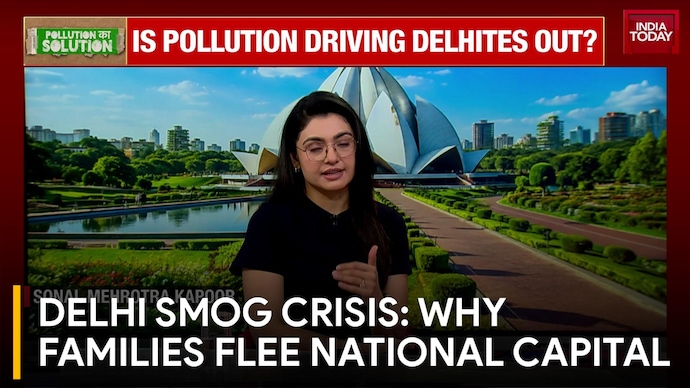
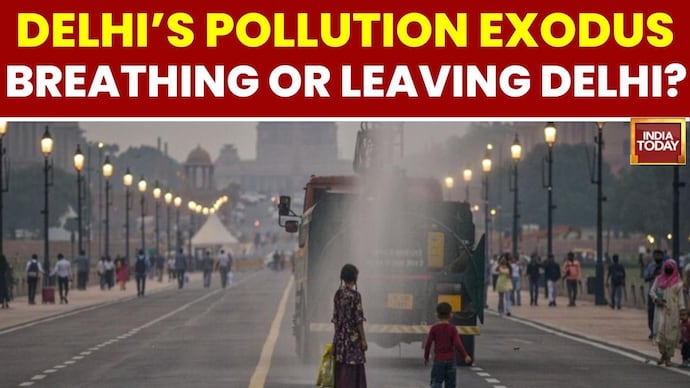
A special broadcast of Pollution Ka Solution examines the escalating air pollution crisis across major urban centres, focusing on Delhi NCR and Mumbai, where hazardous Air Quality Index levels and winter toxic smog are creating an influx of pollution refugees. Residents and professionals, including Bharat Singh Kanwal, former advocate Prashant Kalra, and fashion designer Anuradha Prasad Dhawan, detail abandoning their careers and homes to relocate to destinations like Bengaluru and Goa after severe pediatric respiratory emergencies, persistent asthma, and health complications forced their departure. The discussion highlights broader urban systemic issues such as deficient waste management, unchecked deforestation, and rising cancer and respiratory burdens among children and senior citizens, with lifestyle expert Luke Coutinho noting that dietary adjustments cannot reverse cellular lung damage caused by toxic exposure. Panellists address policy implementation challenges surrounding the National Clean Air Programme and Graded Response Action Plan, calling for year-round interstate governance, strict environmental compliance accountability, and civic participation to counter urban air quality deterioration.
A special broadcast of Pollution Ka Solution focuses on India's escalating air pollution crisis, examining the emerging phenomenon of pollution refugees leaving major urban centres such as Delhi NCR and Mumbai due to severe winter air quality and hazardous air quality index levels. Former residents share firsthand accounts of relocating to cities like Bengaluru and Goa to protect their families from toxic smog, chronic breathlessness, pediatric respiratory issues, and severe sinusitis. The panel discusses persistent governance and environmental challenges, including inter-agency coordination gaps, administrative lapses, tree felling, and ineffective waste management, particularly landfill emissions and the absence of waste segregation at source. In the health discussion, lifestyle coach Luke Coutinho details the physiological toll of prolonged exposure to toxic air, warning about irreversible cellular damage, compromised lung capacity in newborns and senior citizens, and heightened risks of severe conditions like COPD. The programme emphasizes the urgency of transparent environmental audits, strict regulatory enforcement, and sustained public policy interventions to tackle hazardous air pollution and safeguard public health.
A special episode of 'Pollution Ka Solution' explores innovations designed to combat severe air pollution in Delhi's hotspots. The report highlights the German-engineered Filter Cube technology developed by Mann+Hummel and introduced in India through MRH Technologies Private Limited. According to MRH Technologies Director Rajan Handa, the solution uses forced air circulation and specialized multi-layered filtration to capture road dust, particulate matter, and hazardous gases like NO2 and SO2. Validated in testing at IIT Delhi, the system achieved a 60 to 70 percent reduction in localized pollution levels. Priyanka Manocha of MRH Technologies explains that each intelligent unit delivers approximately 17,500 cubic metres of clean air per hour, equivalent to the volume of a cricket stadium. The automated devices feature rain sensors, customizable night modes, and centralized dashboards to monitor air quality performance across multiple urban zones.
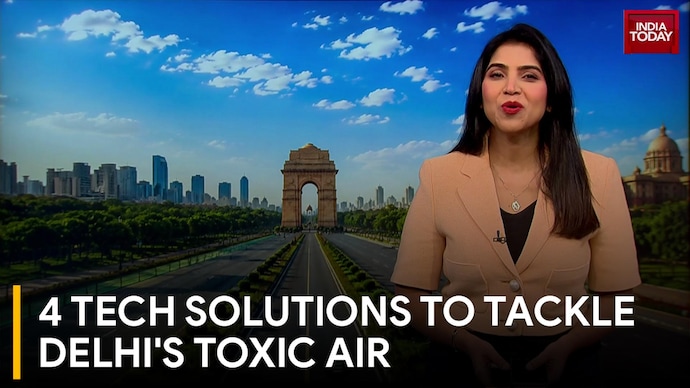
The India Today Pollution Ka Solution special report examines four technological innovations aimed at tackling severe air pollution in Delhi's hotspots.
A special report examines four technological innovations aimed at tackling severe air pollution in Delhi's hotspots. The first solution features Mann+Hummel's Filter Cube technology, brought to India by MRH Technologies, which claims a 60 to 70 percent reduction in particulate matter and harmful gases. The second innovation is Human Technologies' Ambient Purification System, an outdoor filterless wind-tunnel design built to settle heavier particulate matter without frequent maintenance. The third system, developed by Shudh Vayu Technology, is a vehicle-mounted retrofit air purifier that harnesses kinetic energy while driving to capture particulate matter without using electricity. Lastly, Aeroboz, in partnership with IIT Kanpur, presents a bus rooftop 'wind panel' combining electrostatic filtration with solar and wind energy generation. Together, these technologies offer scalable outdoor interventions to mitigate toxic air exposure across urban transport, schools, and crowded public zones.
A special broadcast of 'Pollution ka Solution' explores innovative technologies to combat air quality crises across Delhi's pollution hotspots. The episode highlights tested solutions, including German filtration giant Mann+Hummel's Filter Cube, brought to India via MRH Technologies. Tested previously in Stuttgart, Germany, and validated by IIT Delhi during peak pollution months, the forced air circulation device filters road dust, smoke, NO2, and SO2, achieving a 60 to 70 percent reduction in localized pollution. The system delivers approximately 17,500 cubic metres of clean air per hour to establish clean air zones, featuring automated rain sensors, night mode energy conservation, and centralised dashboard monitoring. Representatives emphasized the necessity of public-private participation and deployable, real-world solutions over theoretical experiments to safeguard citizen health, protect children from severe toxic exposure, and address development-induced particulate emissions across high-risk urban areas.
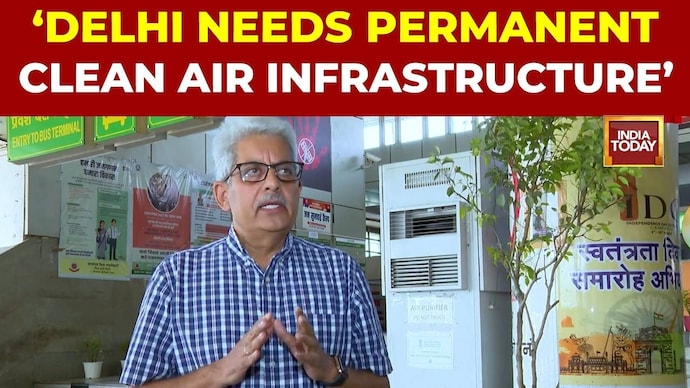
Rajiv Janan, Founder and Managing Director of Human Dust Technologies, outlined the need for permanent infrastructure to tackle Delhi's air pollution and reduce public exposure. Highlighting the scale of fuel consumption across the capital, he explained the working of the Ambient Purification System, a filterless outdoor air purification technology. The system operates on physics principles to separate heavier particulate matter such as PM 2.5 and PM 10 from the air stream using wind tunnel design and velocity reduction, allowing particles to agglomerate and settle naturally without maintenance issues or filter choking.
MRH Technologies Private Limited, in partnership with German multinational Mann+Hummel, has introduced the Filter Cube air filtration technology in India to tackle severe air pollution. According to company representatives, infrastructure development contributes significantly to air pollution, requiring active public-private participation rather than relying solely on government action. The Filter Cube operates via forced air circulation, capturing road dust, smoke, and harmful gases such as nitrogen dioxide and sulphur dioxide. Validated during a trial by IIT Delhi between September and November 2024, the equipment demonstrated a 60 to 70 percent reduction in pollution levels. Designed in Germany and manufactured and assembled in India, each unit delivers approximately 17,500 cubic metres of clean air per hour. The automated system features weather sensors that turn off the device during rain, an energy-saving night mode, and a centralised dashboard providing real-time performance data across city zones.
A special report analyses Delhi's persistent air quality crisis by comparing it with international clean air transformations in London, Los Angeles, Paris, and Beijing. While London tackled coal emissions through landmark legislation, Los Angeles tightened vehicular and industrial norms, Paris reshaped urban mobility, and Beijing enforced strict industrial mandates, Delhi faces a distinct, multi-source challenge. Factors including vehicular emissions, regional stubble burning, year-round construction dust, and geographic trapping complicate the capital's crisis. Unlike temporary interventions such as the odd-even scheme or seasonal Graded Response Action Plan measures, experts emphasise the need for permanent, year-round infrastructure and solutions designed specifically for Delhi's unique environmental and socioeconomic landscape.
This special 5ive Live news bulletin covers major national, political, technological, and environmental developments. The broadcast reports on the Supreme Court reviewing mandatory front-of-package warning labels proposed by the Food Safety and Standards Authority of India (FSSAI) for packaged foods high in sugar, salt, and saturated fat amid industry concerns over regulatory thresholds.
This news bulletin reports on major political, civic, legal, technology, and environmental developments across India. In Punjab, a political controversy has unfolded following the death of Gulzar Singh after his confrontation with Finance Minister Harpal Cheema over the state's drug crisis, leading opposition parties to demand Cheema's resignation and the BJP to announce its Nasha Mukt Punjab Yatra. In Delhi's Satya Niketan, student residents face disruptions following a fatal building collapse as accommodation operators fled the area. Meanwhile, the Supreme Court is hearing petitions regarding mandatory front-of-package nutritional labelling for packaged foods high in sugar, salt, and saturated fat, with advocate Rajiv Shankar Dwivedi citing international regulatory standards. The broadcast also covers the launch, specifications, and public response to Apple's foldable iPhone Duo, an artificial intelligence recreation of a 1980s newsroom, and medical warnings under the Pollution Ka Solution campaign regarding Delhi air quality.
India Today's Pollution Ka Solution campaign showcases groundbreaking grassroots innovations aimed at tackling Delhi's severe air pollution. Innovators have presented solutions targeting various sources of pollution, including non-exhaust particulate emissions, vehicle idling, and roadside hotspots. Highlights include a tyre particle collector proposed by student Anvi Singh, Mirza Arif's Pollred device designed to capture road and tyre dust on buses, and Axel One's Atmos Pole deployed at Rajghat as a solar-powered multi-functional air-cleaning street light. Additionally, Ecosystem Private Limited founders Prathiraj Kumar and Sumit Pawar introduced Pawan 3, a multi-layer HEPA filtration device designed for traffic signals and roadside hotspots. Young entrepreneurs Siddhant Kumar Nishad and Tejas from Matiyari Technology Private Limited also presented their indigenous microalgae-based air purification system, currently deployed at Anand Vihar ISBT, which absorbs carbon dioxide and generates oxygen through photosynthesis.
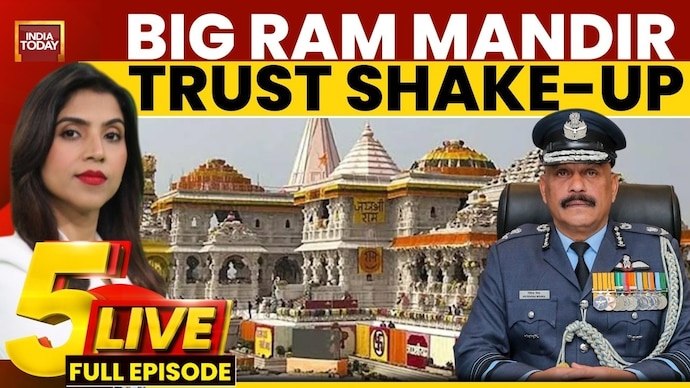
The Shri Ram Janmabhoomi Teerth Kshetra Trust has announced the appointment of retired Air Marshal Jitendra Mishra as its first Chief Executive Officer, alongside inducting new trustees Mahesh Bhagchandka, Madan Mohan Pandey, and Dr. Nirmala Yadav, with Swami Govind Dev Giri named General Secretary. Meanwhile, the Bombay High Court ordered a Central Bureau of Investigation probe into the death of Disha Salian, citing procedural lapses and unverified postmortem findings in the initial police investigation. In Nepal, search and rescue operations continue following floods that caused over 1,100 casualties in Nuwakot and Rasuwa, with India deploying tunnel rescue specialists, aircraft, and 5.5 tonnes of medical aid, while actor Sonu Sood pledged 15 crore rupees for relief infrastructure. Additionally, Ecosystem Private Limited founders Pratiraj Kumar and Sumit Pawar installed the 'Pawan 3' outdoor air purification device in Delhi's Kirti Nagar under the 'Pollution Ka Solution' initiative to combat PM2.5 and PM10 levels.
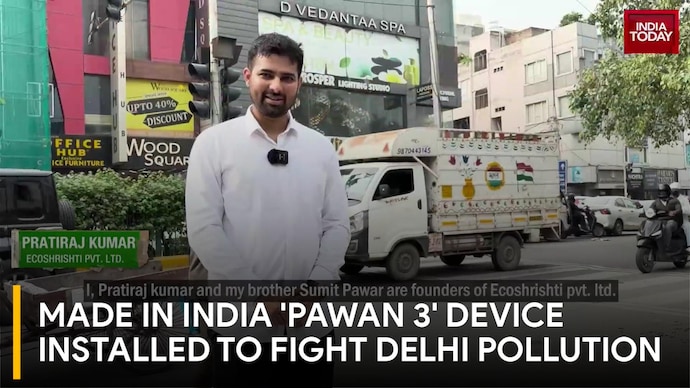
Ecosystem Private Limited founders Pratiraj Kumar and Sumit Pawar have introduced 'Pawan 3', an on-ground air purification innovation designed to combat outdoor air pollution at hotspots and roadside dividers. Developed as a 'Made in India and Made for India' solution, the device is built to withstand Indian climate conditions, featuring anti-theft and weather-resistant designs. The system utilises a high suction mechanism, multilayer filtration, HEPA filters, and an integrated cooling and heating unit to purify air, reducing AQI, PM 2.5, and PM 10 levels. While the earlier 'Pawan 1' device demonstrated over a 29 percent reduction in Kolhapur, Maharashtra, the founders project that 'Pawan 3' could achieve more than a 40 percent reduction. Currently installed in Kirti Nagar, Delhi, the electricity-powered unit has been operating for three months. The initiative was highlighted as part of the 'Pollution Ka Solution' campaign launched by the India Today network and the Delhi government to scale innovative ground-level anti-pollution solutions.
Delhi Environment Minister Mahendra Singh Sirsa and Delhi Chief Minister Rekha Gupta outlined government initiatives to combat air pollution at the India Today Group's 'Pollution Ka Solution' event. Minister Sirsa detailed waste management efforts, reporting that Delhi processes up to 15,000 metric tons of daily waste and 35,000 metric tons of legacy waste, with over 70 acres of landfill reclaimed. Inspections of 12,000 industrial units led to the sealing of 2,200 non-compliant factories. Annual average PM2.5 levels decreased by 7.7 percent, while PM10 levels dropped by 7.1 percent. Chief Minister Gupta highlighted a 15,000 crore rupee EV policy targeting charging infrastructure, battery recycling, and a transition to 100 percent electric government vehicles. Construction dust monitoring relies on AI-enabled digital cameras for properties exceeding 500 square metres. Additional measures include a 70 lakh tree plantation drive, forest notification for the ridge area, and regional cooperation on stubble burning. Medical and innovation experts also addressed pediatric health risks and Gen Z solutions.
The India Today Group has launched its 'Solution for Pollution' initiative, introducing an expert jury panel dedicated to finding scalable, cost-effective, and practical solutions for Delhi's severe air pollution. India Today Group Vice Chairperson Kalli Purie highlighted the campaign's evolution from merely reporting on pollution every winter to becoming an active part of the solution, urging young minds and Gen Z to submit innovative ideas. She emphasized the ambition to reduce Delhi's Air Quality Index (AQI) to manageable levels and restore the city's winter charm. The panel includes IIT Kanpur Director Manendra Agarwal, who stressed that viable solutions must perform at scale and remain affordable to succeed outside laboratory settings. DPCC official Naresh Priyadarshini noted a significant shift from passive reporting to actionable ground solutions backed by active government drive. Additionally, Indian Academy of Pediatrics President Dr. Neela Mohan called for turning air quality awareness into a public movement while offering health guidance to parents.
Delhi's Environment Minister addressed the city's complex pollution challenges at an event hosted with India Today Group. Highlighting major sources including vehicular emissions, construction dust, and massive landfill sites, the Minister detailed waste management efforts, noting that over 70 acres of land have been reclaimed from landfill mountains. The Minister presented data indicating a 7.7 percent drop in annual average PM 2.5 levels, a 7.1 percent reduction in annual PM 10 levels, and a 3.87 percent decrease in average AQI. Addressing public questions, he explained that funds allocated for cloud seeding were provided to IIT Kanpur for research. Furthermore, authorities inspected 12,000 unauthorized industrial units in outer Delhi, sealing over 2,200 non-compliant factories. Emphasizing that long-term air quality improvement takes time, he highlighted inter-state coordination under the Union Environment Ministry and invited young innovators to submit solutions to help clean Delhi's air.
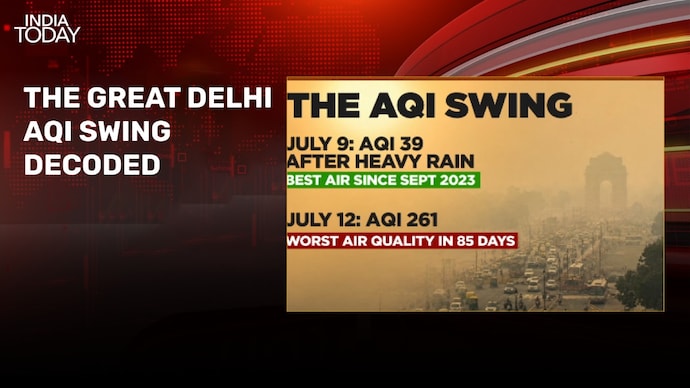
Delhi's AQI went from 39 on 9 July (after 72 mm of rain) to 261 on 12 July. This spike occurred because when rain stops, high humidity and gusty winds of 20-25 km/h kick up dust from roads and construction sites.
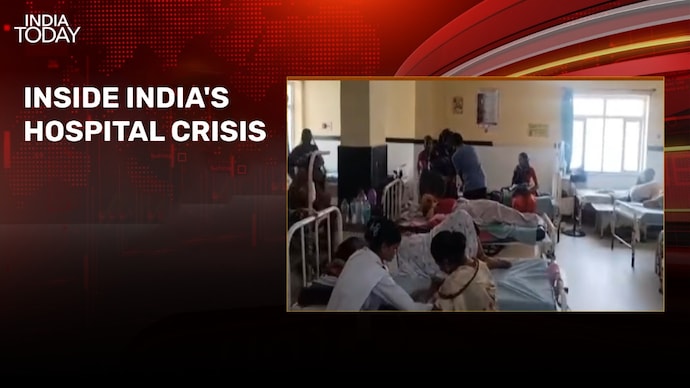
In Rajasthan, eighteen maternal deaths in government hospitals since May have prompted a five-day prenatal screening campaign.
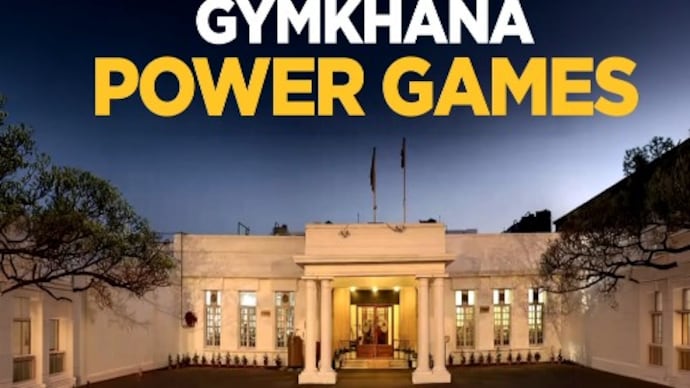
The big focus of this episode of 5 Live is on the central government's eviction notice issued to the Delhi Gymkhana Club, asking it to vacate the 27.3-acre Lutyens premises by June 5.