Vietnamese crab exporter

Topic

Advertisement
TOPIC

Article 370

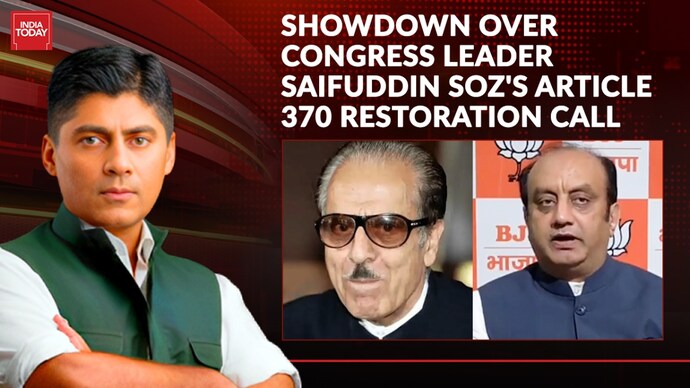
Article 370, included in the Constitution on October 17, 1949, gave special status and exempted Jammu and Kashmir from the Indian Constitution (except Article 1 and Article 370 itself) and gave the state the power to draft its own Constitution, a state flag and autonomy over the internal administration.

The law of citizenship, ownership of property and fundamental rights of the residents of J&K were different from the residents living in the rest of India. Parliament needed the state government's approval for applying laws in the state — except in cases of defence, foreign affairs, finance and communications. Furthermore, the Centre had no power to declare a financial emergency in J&K. Article 370 also restricted citizens from other states to buy property.

On August 5, 2019, the Indian government revoked Jammu and Kashmir's special status granted under Article 370. It also paved the way to it being split into two union territories - Jammu and Kashmir and Ladakh.

The revocation of Article 370 was accompanied by the deployment of thousands of security forces to curb any violence, cutting off of communication lines in the Kashmir Valley (which were restored in a gradual manner after five months). Several Kashmiri politicians were also taken into house custody.

  • ALL
  • STORIES
  • VIDEOS

STORIES

President Murmu confers Best Actress National Award on Yami Gautam for Article 370

President Droupadi Murmu conferred Yami Gautam with her maiden National Film Award for Best Actress for her lead performance as intelligence officer Zooni Haksar in Article 370 at Ekta Nagar. The landmark honour — for which she stood as the sole recipient — anchored a major double victory as the political thriller was also crowned Best Feature Film.

By 2029, 21 NDA-ruled states will have Uniform Civil Code: Amit Shah

Union Home Minister Amit Shah said he was confident that the Uniform Civil Code (UCC) would be implemented in all 21 NDA-ruled states before 2029. Shah said the UCC had already been introduced in several states and would be expanded to all NDA-ruled states before the next Lok Sabha election.

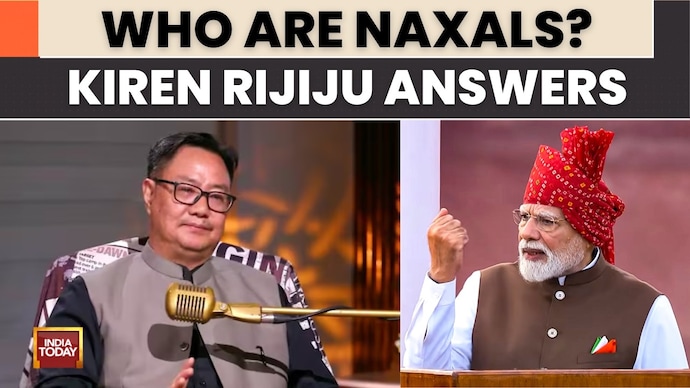
Who qualifies as a Dimaagi Naxal? Rijiju draws line between dissent and separatism

Kiren Rijiju clarified PM Modi’s “Dimaagi Naxals” remark, saying critics of the government should not be automatically labelled as such. He identified four categories, including those supporting separatism, Maoist ideology, calls to cut the Siliguri Corridor and opposition to development projects, which he said could undermine India’s growth and integrity.

Load More

VIDEOS

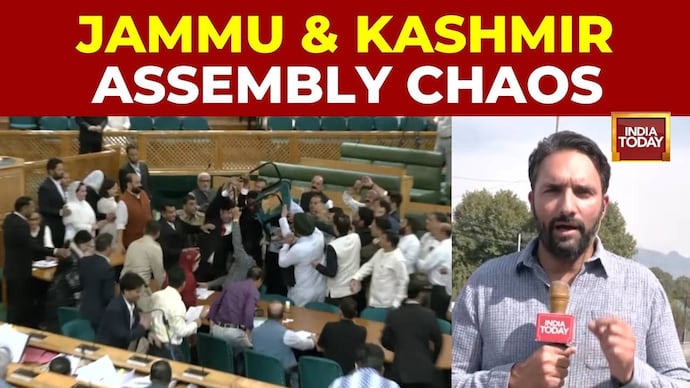
NC Statehood Move Sparks Assembly Ruckus As BJP Opposes Autonomy Reference

The Jammu and Kashmir Assembly witnessed intense uproar and sloganeering after the National Conference moved a resolution seeking the restoration of statehood from the Government of India. The move sparked sharp protests from Bharatiya Janata Party legislators over references to an earlier autonomy resolution from 2000. BJP MLAs entered the well of the House, raised objections, and tore copies of the resolution, forcing an adjournment. Speaking on the floor protests, National Conference leader Tanvir Sadiq dismissed allegations that the resolution was anti-national or deliberately provocative. Sadiq clarified that the fresh draft does not supersede previous resolutions but specifically urges the restoration of statehood. He urged opposition members to participate in a democratic debate inside the Assembly rather than disrupt proceedings. Sadiq further asserted that the BJP's opposition reveals their reluctance to support statehood for Jammu and Kashmir.

PM Narendra Modi 76th Birthday, Seva Sankalp Abhiyan and SEMICON India Launch

As Prime Minister Narendra Modi turns 76, celebrations and public service programmes are taking place across India, from Delhi to Gujarat and his parliamentary constituency of Varanasi. The Prime Minister is launching the fifth edition of the SEMICON India event in the national capital, while the Bharatiya Janata Party has initiated the month-long Seva Sankalp Abhiyan and urged citizens to light an Ashirwad ka Diya. Key political leaders, including Union Home Minister Amit Shah and National Democratic Alliance allies, participate in major events such as the Vadnagar to Varanasi bike yatra and cleanliness drives. The broadcast highlights Prime Minister Narendra Modi's 25 years in public life since assuming office as Gujarat Chief Minister in 2001, tracing landmark governance milestones from welfare schemes and Make in India to digital infrastructure expansion and the Viksit Bharat 2047 roadmap.

2029 UCC Deadline Set For BJP-Ruled States As NDA Allies Voice Differences

The Bharatiya Janata Party has set a 2029 deadline to roll out the Uniform Civil Code across all party and National Democratic Alliance ruled states. Positioned as a major ideological goal following the abrogation of Article 370, the proposed civil code includes common laws on marriage, divorce, inheritance, and succession across religions. However, the push has exposed internal differences within the alliance. While allies like the Telugu Desam Party, Shiv Sena, and Hindustani Awam Morcha have offered support, the Janata Dal United has opposed its rollout in Bihar, and Lok Janshakti Party leader Chirag Paswan has demanded wider public consultations before deciding.

India Overcomes Reactive Panipat Syndrome With Proactive Defence Policy

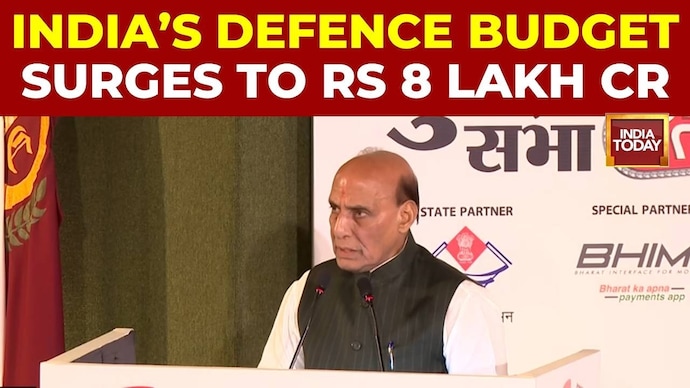
India has transitioned from a historically reactive defence posture, previously termed the Panipat syndrome, to a proactive national security framework. The nation gained entry into the Missile Technology Control Regime in 2016, enabling the extended operational range of BrahMos missiles. Indigenous defence production has expanded from approximately Rs 40,000 crore under the previous administration to Rs 1.80 lakh crore, alongside defence exports reaching Rs 38,500 crore across more than 100 nations. Modern military hardware inducted includes the Akashteer air defence control system, Pinaka rocket launchers, Astra missiles, Tejas fighter jets, and the aircraft carrier INS Vikrant. The national defence budget increased from Rs 2.5 lakh crore to nearly Rs 8 lakh crore over the past twelve years, while border infrastructure funding grew by 400 percent. In addition, initiatives such as the repeal of Article 370 and multilateral leadership in the International Solar Alliance, G7 dialogues, and the G20 New Delhi Leaders Declaration reflect expanding strategic and civilisational influence globally.

BJP & NC Face-Off In Srinagar; Protests Staged Over Power Tariffs, Statehood & Governance

High political drama unfolded in Jammu and Kashmir as the Bharatiya Janata Party and the National Conference staged counter-protests in Srinagar. The BJP launched a mega demonstration from Lal Chowk planning to march towards the Civil Secretariat, accusing Chief Minister Omar Abdullah of failing to provide basic governance, raising electricity tariffs, and neglecting unemployment. Simultaneously, National Conference leaders and cadres assembled in the Rajbagh area to march towards the BJP office, reiterating demands for the restoration of Article 370, statehood, and constitutional guarantees. Both political demonstrations led to barricades, restricted vehicular movement, and heavy police deployment across Srinagar to maintain law and order. Security forces prevented the BJP march to the Secretariat and halted NC workers marching towards the BJP office, prompting both sides to stage sit-in protests.

Defining Naxals, Article 370 Mindset & Stalling Growth | Political Debate

In a news interaction, the discussion centers on defining who constitutes Naxal elements or anti-national mindsets in the country. Key criteria highlighted include supporting separatist sentiments related to Article 370, disobeying the Constitution of India, advocating the disruption of territorial integrity such as cutting off the Northeast region, and attempting to stall national economic growth by delaying development projects. The conversation addresses social media campaigns regarding opposition leaders and clarifies that non-adherence to constitutional and developmental goals defines these concerns rather than general political opposition. Furthermore, the exchange touches upon ministerial duties, working with leadership to serve the nation, and contrasting past practices of political leaders taking foreign summer holidays with continuous service toward national progress. The discourse emphasizes constitutional compliance, economic development, and dedication to national responsibility.

Trump-Xi summit and emerging defence alliances reshape geopolitics

Statecraft with Geeta Mohan explores two major geopolitical developments that could reshape the global strategic landscape. The show examines the upcoming Donald Trump–Xi Jinping summit, asking whether rising sanctions, tensions over trade, AI, Taiwan and rare earths can be managed through diplomacy or if the meeting is merely a pause before deeper confrontation.

Article 370: Congress' new playbook? Experts weigh in

This episode of India First examines major geopolitical and domestic developments. The show begins with the dispute surrounding a mosque located inside the Kolkata airport premises, where the state government has restricted access citing security concerns and expansion plans, drawing opposition from religious leaders.

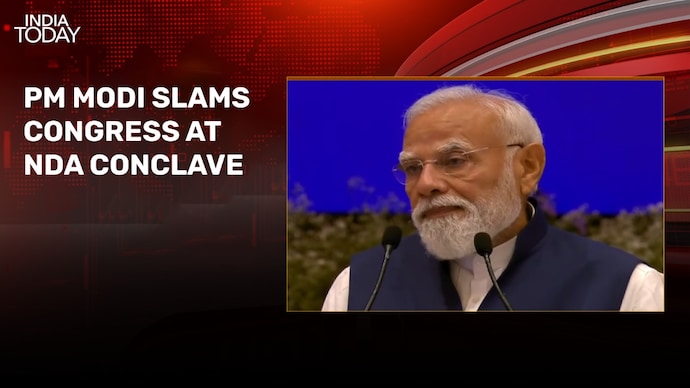
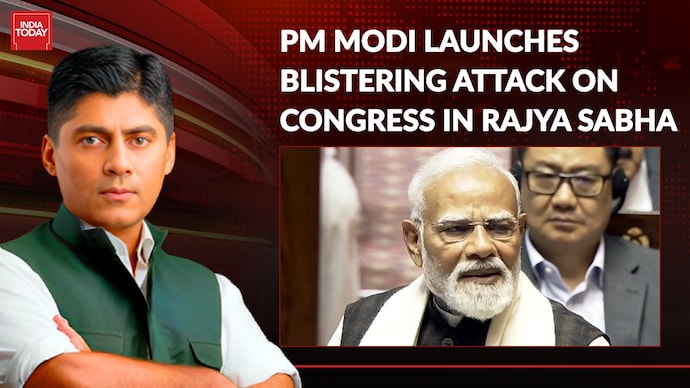
PM Modi slams Congress with 'Hindu growth rate' jibe

Prime Minister Narendra Modi, who addressed the NDA leaders in Delhi after becoming India's longest-serving elected Prime Minister, launched a scathing attack on the Congress, accusing it of pushing India into "helplessness, misery and an inferiority complex".

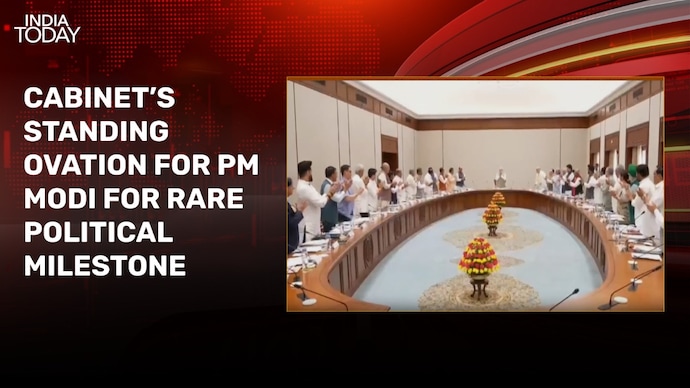
Watch: Cabinet's standing ovation for PM Modi as he surpasses Nehru's milestone

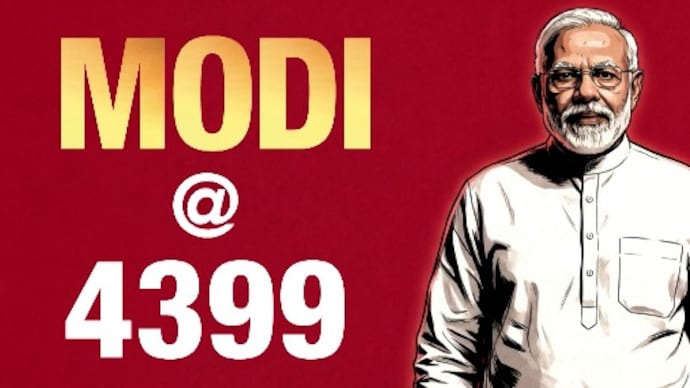
The Union Cabinet passed a resolution and gave a standing ovation to Prime Minister Narendra Modi for becoming the longest-serving elected head of the government over three consecutive terms. The Prime Minister completed 4,399 consecutive days in office, surpassing the previous record of 4,398 uninterrupted days held by the first Prime Minister of India, Jawaharlal Nehru, since the first general elections in 1952.

Mood Of The Nation 2026: Rajdeep Sardesai Analyses Rahul Gandhi's Ratings And NDA's Dominance

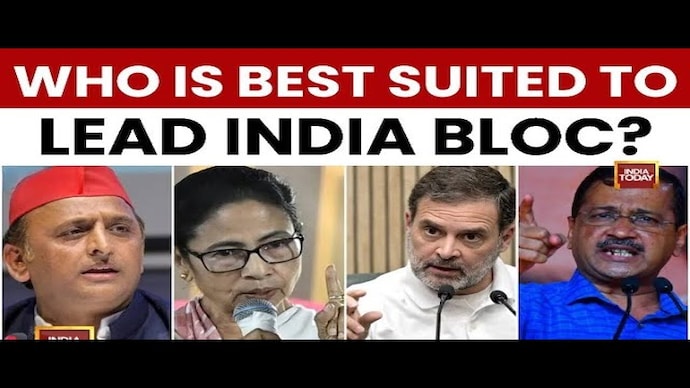
This Special Report, led by Rajdeep Sardesai and Preeti Choudhry, analyzes the January 2026 'Mood of the Nation' poll featuring over 125,000 respondents. The survey projects a significant victory for the NDA with 352 seats, while the BJP alone is projected at 287 seats. Data indicates the NDA is returning with an increased vote share and seat share. The program evaluates Rahul Gandhi’s performance as Leader of the Opposition, noting a 44% positive rating despite a slight decline since August 2025. Panellists Yashwant Deshmukh and Raj Chengappa discuss election freebies, noting 50% of the public opposes doles while 44% believe the Election Commission should intervene. Analysis shows Prime Minister Narendra Modi’s popularity remains stable despite concerns regarding unemployment and price rises. Political stability is now cited as the government's primary success over the Ram Temple or Article 370. While a majority believe Congress should lead the opposition, 62% of respondents identify the party as the weakest link within the India bloc.

Rajdeep Sardesai Analyzes Why 'Brand Modi' Outshines Opposition Despite Unemployment Concerns

On this Special Report, Rajdeep Sardesai leads a panel discussion on the latest 'Mood of the Nation' poll findings. Sardesai highlights a significant shift in public perception, noting, 'For the first time, we are seeing political stability as the number one achievement' of the NDA government, surpassing previous milestones like Article 370. The discussion explores the paradox of high concern for unemployment and inflation alongside rising trust in Prime Minister Narendra Modi's leadership. Panelists Raj Chengappa and Yashwant Deshmukh contribute insights on how targeted welfare schemes and a fragmented opposition bolster the NDA's position. The program further examines the 'Goldilocks period' of the Indian economy, characterized by low inflation and high growth, and how this contributes to the Prime Minister's enduring popularity. The analysis concludes that despite economic challenges, the electorate views the current leadership as a symbol of resilience and stability in a period of global turmoil.

Preeti Choudhry Reports On India's 77th Republic Day And 'Operation Sindoor' Theme

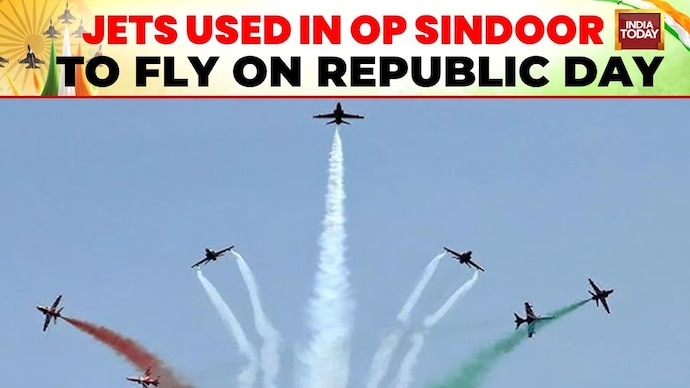
On this Special Report, anchor Preeti Choudhry discusses the celebrations of India's 77th Republic Day. The programme highlights the central theme of 'Vande Mataram' and the significant military influence of 'Operation Sindoor' on this year's parade. Preeti Choudhry notes, 'It's just eight months after Operation Sindoor,' describing it as a defining 21st-century military action that marked a strategic shift in India's policy against Pakistan-sponsored terrorism. The bulletin details the upcoming aerial fly-past featuring Sukhoi-30s and Rafales in a special formation. Reporters Ashraf Wani from Lal Chowk, Srinagar, and Aman Bhardwaj from Chandigarh provide ground updates on local celebrations and security. The discussion covers the abrogation of Article 370's impact on Kashmir's celebrations and Chandigarh's first-ever tableau representation in the national parade, featuring its war memorial. The report captures the national sentiment of pride and the display of sophisticated weaponry used in recent operations.

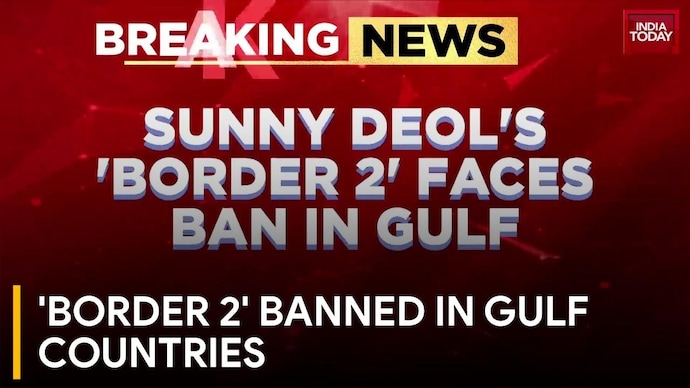
Sunny Deol's 'Border 2' Banned In Gulf Countries Over 'Anti-Pakistan' Narrative

This news report details the ban on the Sunny Deol starrer 'Border 2' in Gulf countries including Dubai and Kuwait. The speaker notes that the film is being 'perceived as anti-park by Gulf countries' and follows a trend where films presenting an Indian narrative face restrictions. The report highlights that despite the trailer receiving an 'extremely good response' and the film releasing across India today with positive word of mouth, makers were unsuccessful in their talks with Gulf officials. The bulletin draws parallels with previous films like 'Dhurandar', 'Article 370', and the 'Tiger' franchise, which faced similar bans in the region due to their themes involving Pakistan. While the film is described as looking 'absolutely amazing on screen' by the reporter, it will not see the light of day in the Gulf market.