3-day nationwide bank strike deferred after talks, panel to examine all Saturdays as holidays
The joint committee will consider declaring the remaining Saturdays bank holidays, examine alternatives and consult stakeholders, including customers.

Banks are financial institutions that provide essential services such as accepting deposits, offering loans, facilitating payments, and safeguarding money. They play a central role in the economy by channeling savings into productive investments and supporting individuals, businesses, and governments with credit and financial solutions.
Banks offer a wide range of products, including savings and current accounts, fixed deposits, personal and business loans, credit cards, and digital banking services. With the growth of online and mobile banking, customers can now manage their finances, make payments, and access services quickly and securely.
A strong banking system promotes financial inclusion, economic growth, and stability. Understanding how banks work helps individuals make better decisions about saving, borrowing, and managing money efficiently.
A morning business bulletin covers key financial developments, policy updates, and corporate events. The central government has clarified that there is no proposal to rethink Merchant Discount Rate on the Unified Payments Interface, nor is there any proposal to exempt fuel from it, while efforts with the Indian Banks' Association are being explored to ensure costs are not passed to consumers. In corporate updates, Tata Sons has rejected Noel Tata's objections to the reappointment of N. Chandrasekaran, citing majority board validity and legal opinions from former Chief Justice of India U. U. Lalit and former Supreme Court Judge B. N. Srikrishna ahead of shareholder ratification. Meanwhile, domestic stock indices opened mildly lower with the Nifty near 23,054, amid fluctuations in IT and banking shares alongside commentary on Insurance Regulatory and Development Authority of India consultation proposals. Additionally, the bulletin touches upon Union Commerce Minister Piyush Goyal's remarks on trade pact negotiations and a high-profile dinner hosted in Washington.
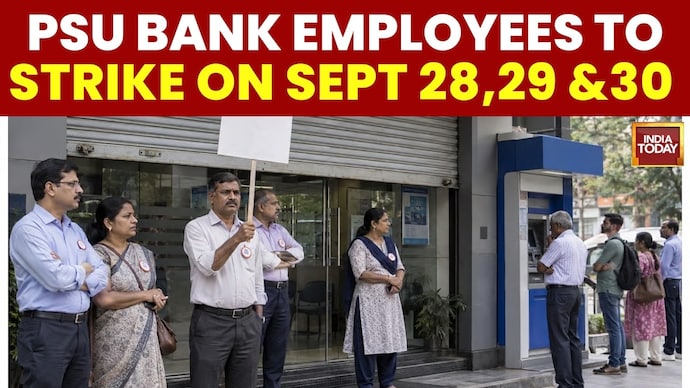
Public Sector Undertaking (PSU) banks in India may remain shut for five consecutive days from September 26 to September 30 due to a three-day nationwide strike called by bank employee unions, combined with the regular weekend closure on fourth Saturday and Sunday. The key demands raised by the bank unions include the implementation of a five-day working week and the complete withdrawal of the Performance-Linked Incentive (PLI) scheme. Customers have been advised to complete essential branch-related work, including cash deposits, cash withdrawals, cheque clearances, and loan processing, before September 25 to avoid disruptions. While physical bank branches will remain closed during the strike period, digital channels such as ATMs, UPI transactions, internet banking, and mobile banking services are expected to remain functional. The government is currently holding discussions with stakeholder associations, urging them to reconsider the proposed strike.
Indian equity markets opened range-bound amid expanding geopolitical tensions in West Asia and a busy week in the primary markets. Global crude refining dynamics face disruptions following drone attacks on Russian refineries and escalating strikes involving the Houthis. Discussion highlights that domestic liquidity is partially diverted towards numerous IPO listings, including the mega National Stock Exchange listing, even as Indian refining capacities remain vital globally. Meanwhile, the boardroom dispute at Tata Sons draws legal scrutiny as Tata Trusts questions the reappointment process of Chairman N. Chandrasekaran. Market analysts note that while elevated wholesale inflation and global rate hikes pose margin pressures for corporates, domestic credit growth and government-backed industrial infrastructure present solid opportunities across sectors such as private banks, telecom, and capital goods.
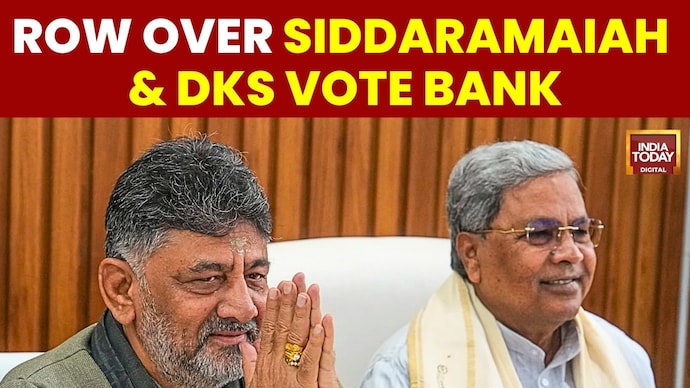
A political debate has reignited within the Karnataka Congress following remarks by party legislator K. N. Rajanna regarding the state leadership and community vote banks. The MLA stated that if Siddaramaiah is strong, the Congress party is strong, while questioning Deputy Chief Minister D. K. Shivakumar's ability to mobilize significant Vokkaliga community votes compared to senior leaders like H. D. Deve Gowda. The comments have drawn criticism from within the party, sparking fresh discussions over factional dynamics and vote bank influence in Karnataka politics.
A political buzz has erupted in Karnataka after Congress MLA K.N. Rajanna made remarks regarding the vote banks of Siddaramaiah and Chief Minister DK Shivakumar. The MLA claimed that Congress is strong if Siddaramaiah is strong, highlighting his support base while questioning DK Shivakumar's pull among Vokkaliga voters. The comments have reignited discussions surrounding internal factionalism and vote-mobilising power within the Karnataka Congress, with discussions focusing on the community equations and political support garnered by key state leaders.
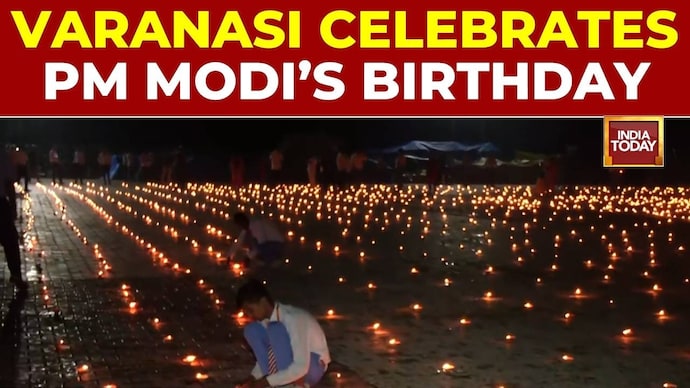
Varanasi marked the birthday of Prime Minister Narendra Modi with grand celebrations along the banks of the Ganga. Scores of earthen lamps were lit at Namo Ghat, Dashashwamedh Ghat, and Assi Ghat, resembling a Deepotsav. Students and local residents gathered to participate in the lamp lighting ceremonies alongside the special Ganga Aarti. The occasion also witnessed a bike rally under the Seva Sankalp Abhiyan heading from Varanasi to Gujarat. Political leaders, including Uttar Pradesh Chief Minister Yogi Adityanath and Defence Minister Rajnath Singh, took part in events displaying NDA strength ahead of upcoming elections.
Grand celebrations are underway on the banks of the River Hooghly in Kolkata to mark the 76th birthday of Prime Minister Narendra Modi. West Bengal government departments have organised events featuring illuminated barges, traditional boats, laser light shows, a fire show, and the lighting of approximately one lakh electric diyas despite heavy rains in the city. The event also highlights the Prime Minister completing 25 years in public service on October 7, while emphasising double-engine growth and public expectations from the administration.
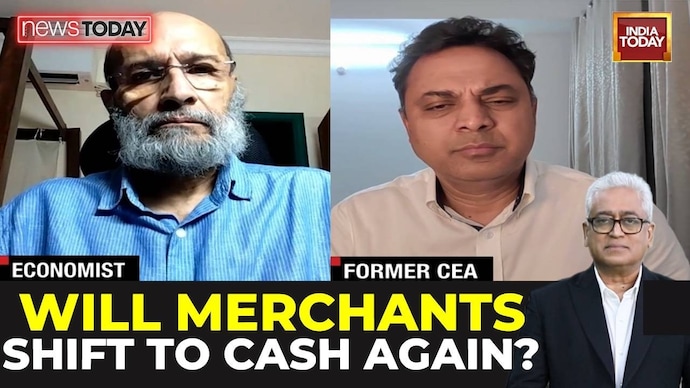
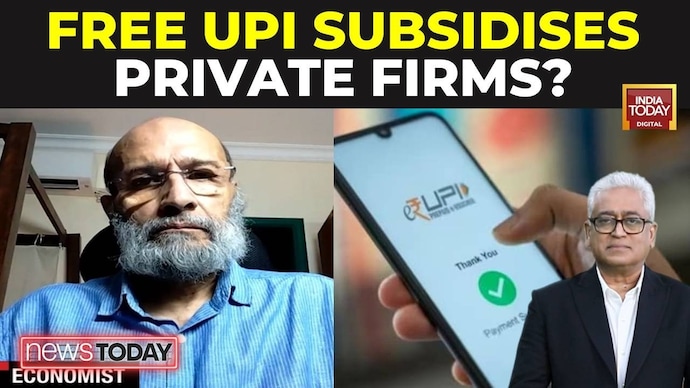
In this edition of The News Today, anchor Rajdeep Sardesai leads a crucial discussion examining the government's UPI merchant discount rate levy. Joining the panel are Dr Krishnamurthy Subramanian, former Chief Economic Advisor to the Government of India, and Professor Santosh Mehrotra, Visiting Professor at the University of Bath. Professor Mehrotra argues against continuous taxpayer subsidies for digital payments, advocating instead that transaction costs should be fairly apportioned between banks, multinational platforms, and merchants. Meanwhile, Dr Krishnamurthy Subramanian warns that imposing an ad valorem transaction tax fails to align with UPI mechanics and risks driving small merchants back to cash transactions. He underlines that UPI should primarily serve as an engine for credit creation to generate income for banking infrastructure and technology investments rather than imposing friction on digital commerce. The panellists also assess whether merchants will ultimately pass these costs onto consumers and analyse the broader economic ramifications of altering the fee structure for digital payments.
During a discussion on the UPI payment system, economist Santosh Mehrotra addressed the debate over merchant transaction charges and government subsidies. Mehrotra noted that the government has been subsidising merchants to the tune of 2,000 crore rupees annually using taxpayer money, arguing that public funds should not cover these expenses indefinitely. He stated that the cost of UPI operations should instead be apportioned among the three primary commercial beneficiaries: banks, platform owners, and merchants, pointing out that banks generate substantial annual profits. While acknowledging the risk that merchants might eventually pass on a portion of the 0.4 per cent charge to consumers, he emphasised that small merchants alone should not carry the entire burden. Mehrotra remarked, 'Someone has to bear the cost,' urging the government to act as a regulator to distribute the financial burden across all stakeholders. Additionally, he discussed concerns regarding foreign pressure on digital payment systems and ongoing trade deal negotiations.
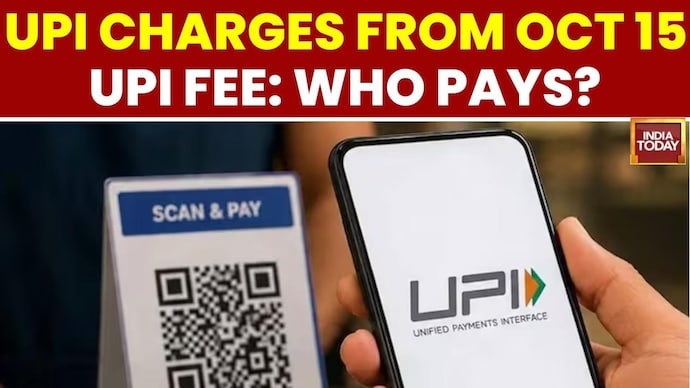
Starting October 15, mid and large-sized merchants will be subject to a 0.4 percent Merchant Discount Rate on UPI transactions above 2,000 rupees, capped at 300 rupees for payments exceeding 75,000 rupees. The fee is strictly payable by merchants, with banks and the NPCI advising that costs must not be passed onto consumers. Person-to-person transfers and merchant transactions up to 2,000 rupees remain entirely free, alongside exemptions for small vendors receiving up to 1 lakh rupees monthly. Flat charges apply to essential services, while capital market payments attract a 0.02 percent fee. The collected revenue will be distributed across payer banks, merchant banks, UPI apps, and payment service providers.
A merchant fee of 0.4% has been announced on UPI transactions above 2,000 rupees, with the charge on high-value transactions capped at 300 rupees. A flat fee of 5 rupees applies to transactions above 2,000 rupees in categories such as railways and fuel, while small merchants earning 1 lakh rupees a month remain exempt. The Merchant Discount Rate is payable by merchants to banks rather than ordinary consumers making person-to-person or retail payments. The move aims to make the UPI system financially sustainable and ease costs for banks and payment aggregators following a surge to 24 billion monthly transactions. Addressing concerns over merchants potentially passing charges to consumers, the report highlights the need for official grievance mechanisms and awareness.
The central government has formally notified a change under the Payment and Settlement Systems Act, barring banks and payment system providers from imposing direct or indirect charges on Unified Payments Interface (UPI) transactions up to 2,000 rupees. The decision ensures no fee, levy, or additional charge applies to making or receiving payments within this limit. The government has also prohibited charges on RuPay debit card payments and kept person-to-person UPI transfers free. While individual transactions remain exempt from extra costs, merchant discount rates may apply to large entities with high turnover for transactions exceeding 2,000 rupees.
Ladakh is hosting the Sakasa Festival, a first-of-its-kind wellness event organised at a high altitude along the banks of the Indus River. Combining electronic music, yoga, wellness expert sessions, and local art and culture, the alcohol-free festival caters to people seeking relief and rejuvenation from stressful daily routines. Attendees and performers, including DJ Sheryl, noted a growing trend among the younger generation prioritising health and holistic wellness over conventional alcohol-focused gatherings, paving the way for more detox-focused festivals across the country.
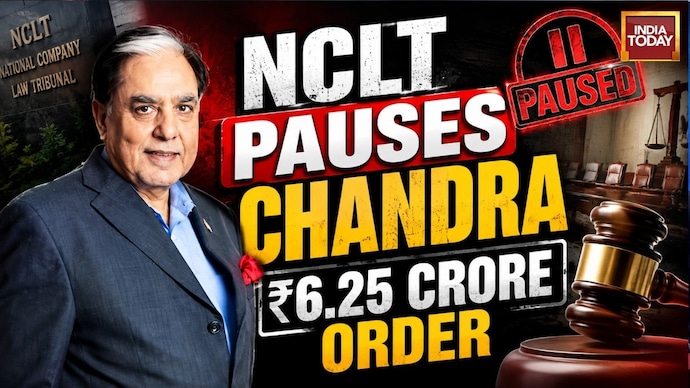
A five-member special bench of the National Company Law Tribunal has stayed its August 25 order in the personal insolvency case against Subhash Chandra. The previous three-member bench had partly approved a settlement of 6.5 crore rupees against claims exceeding 22,000 crore rupees, prompting objections from banks and public sector undertakings including LIC, Canara Bank, and Union Bank of India. The tribunal observed that the earlier verdict lacked an actionable majority opinion under Section 419(5) and acknowledged concerns regarding voting by related-party creditors. With the stay in place, Subhash Chandra cannot sell, alienate, or dispose of assets while the bench re-examines the matter after hearing all financial creditors.
The National Company Law Tribunal cleared a debt resolution plan allowing Essel Group founder Subhash Chandra to settle creditor claims of about 22,000 crore rupees by paying 6.5 crore rupees. The decision represents a 99.97% haircut for lenders and a recovery of just 0.03%. Major institutions including LIC Housing Finance, HDFC Bank, Axis Bank, Canara Bank, RBL Bank, and Union Bank of India objected to the plan. Opposition leader Rahul Gandhi criticised the tribunal following the approval. Subhash Chandra rejected the criticism, stating he acted only as a personal guarantor and that claims against him were misrepresented.
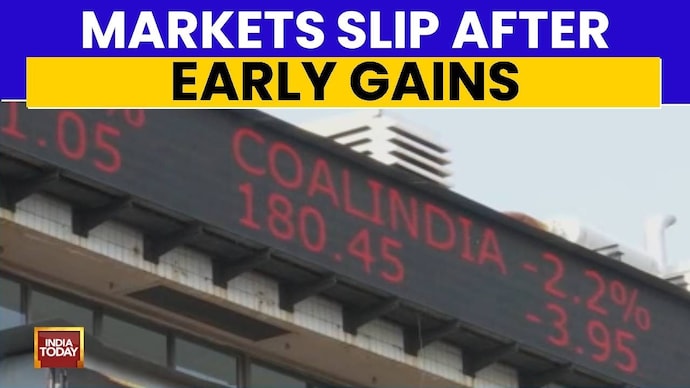
On the Business Today Show with Sakshi Batra, stock markets turned volatile as the Nifty slipped below the 24,100 mark to end 116 points lower at 24,090, while the Sensex dropped 250 points to trade near 77,200. Broad-market weakness persisted despite strong NVIDIA results, while Hyundai announced plans to launch or refresh over 100 models by 2030 to compete with Toyota and Chinese rivals. Market guest Abhishek Basumallik noted that the Indian stock market is taking a breather following the earnings season and highlighted structural strength in private banks due to historic low NPAs. Reporting on health concerns, Neetu Chandra Sharma detailed a sudden shortage of swine flu medication oseltamivir in Delhi NCR due to low past inventories after a spike in H1N1 cases. Additionally, JSW MG Motor India Director Parth Jindal discussed the launch of the Hector Tomahawk plug-in hybrid, dubbed internally as the 'diesel killer'. Finally, Commerce Minister Piyush Goyal spoke exclusively to India Today on strengthening India-Japan ties, citing a 7 lakh crore rupee investment commitment.
This episode of the Business Today Show features anchor Sakshi Batra tracking the closing market action on Dalal Street as the Sensex declines toward 77,300 and the Nifty settles above 24,200. Heavy selling pressure in banking and IT stocks impacts market sentiment, while metals and real estate show gains. ICICI Direct Head of Research Pankaj Pandey analyzes market trends and Nifty movements amid rising crude oil prices and shifting US bond yields. The program covers government proposals to cap private airport acquisitions in future privatization auctions to mitigate market concentration. Skyways Air Services launches its 583 crore rupees initial public offering (IPO), with Chairman and Managing Director Yashpal Sharma explaining air cargo growth strategies during West Asia geopolitical disruptions. Analyst Pankaj Bakre evaluates investment options across logistics, hotels, tata steel, titan, vedanta aluminium, entertainment, food delivery, and public sector unit banks including State Bank of India. Additionally, reporter Ashutosh reports on sugar price dynamics following statements from the Indian Sugar Manufacturers' Association.
A new sucker technology introduced by the Krishi Vigyan Kendra extension unit of SKUAST in Bandipora is transforming lotus stem (nadru) cultivation across Kashmir Valley. The initiative aims to overcome traditional harvesting difficulties in deep lakes and restore production lost in natural water bodies like Wular Lake since 2014. Farmers in Wular bank areas, previously suffering crop losses due to flooding and lodging in rice fields, are converting waterlogged wastelands into profitable lotus stem plots. Agricultural experts report success with initial demonstration farms, projecting yields up to 10 quintals per kanal and earnings of 40,000 to 50,000 rupees per kanal for farmers. Beyond raw vegetable sales, the technology offers post-harvest opportunities such as lotus stem chips, French fries, and flour, encouraging local youth toward agricultural entrepreneurship and crop diversification.
The Nifty snapped its seven-day losing streak, surging 150 points to near 24,250, while the Sensex jumped 600 points near 77,500. All sectors traded in the green, led by banks, IT, and real estate stocks. Easing global bond yields, foreign institutional investments, and a strengthening rupee supported the market recovery. Sugar stocks like Balrampur Chini rallied over 18% after the government reduced inventory limits to 15 days from September 1. Gold finance stocks Manappuram Finance and Muthoot Finance gained up to 4% as gold hit a two-month high. Meanwhile, a Chinese court sentenced Evergrande founder Hui Ka Yan to life imprisonment over fundraising fraud and property default liabilities exceeding $300 billion. Elon Musk's Starlink reapplied for regulatory approval from InSpace to launch a satellite internet network of nearly 30,000 satellites in India. Additionally, IRDAI and healthcare industry leaders are working to address medical inflation running at 8 to 10%.
In this episode of 5 Live, watch the exclusive interview of the 19-year-old ethical hacker who hacked and exposed critical security flaws in CBSE's new digital evaluation system.