Vietnamese crab exporter

Topic

Advertisement
TOPIC

Chandrababu Naidu

Chandrababu Naidu was born on April 20, 1950, in Andhra Pradesh’s Tirupati district. He was born to Nara Kharjura Naidu and his wife Amanamma in an agricultural family. He has a brother, Nara Ramamurthy Naidu and two younger sisters.

At the age of 25, he joined the Indian Youth Congress and became the president of its local chapter in Pulicherla. He became a supporter of Sanjay Gandhi after the emergency was imposed in 1975. At 28, he became MLA for the Chandragiri constituency.

In the same year, he was appointed as the minister for cinematography in T. Anjaiah's government, becoming the youngest MLA and minister in Andhra Pradesh at the time.

As the cinematography minister, he had close ties to the popular Telugu cinema star, NT Rama Rao. He later married Rao’s second daughter, Bhuvaneswari.

NT Rama Rao formed the Telugu Desam Party in 1982 and Chandrababu Naidu, who was in Congress at the time, was defeated by a TDP candidate in the 1983 assembly polls.

After the TDP reversed its policy of not admitting candidates who contested against it in the 1983 elections, Chandrababu Naidu, who joined the party, was inducted at the second annual TDP convention.

After Naidu drubbed a coup attempt by Bhaskara Rao, Naidu appointed him as the in-charge of the farmers' council established by his government. He was later made the general secretary of the party.

Ironically, Naibu became CM in 1995 by organising a coup against Rama Rao. In 1999, he led the TDP to its second win in the state assembly. However, he lost to the Indian National Congress in 2004 and 2009.

Naidu returned to power as the CM in 2014 and introduced many welfare schemes and irrigation projects. His party lost the 2019 general elections to the YSR led by Jagan Mohan Reddy and he was elected as the leader of the opposition.

  • ALL
  • STORIES
  • VIDEOS

STORIES

Drivers, plumbers evaluated govt exams? Naidu alleges exam anarchy under YSRCP

Andhra Pradesh CM N Chandrababu Naidu alleged serious irregularities in the Group-1 examination conducted under the previous YSRCP government, citing forensic and CFSL findings. He claimed plumbers, drivers and other unauthorised personnel evaluated papers, while 718 of 734 answer scripts had alterations. Naidu said the alleged lapses undermined the examination’s credibility and fairness.

Load More

VIDEOS

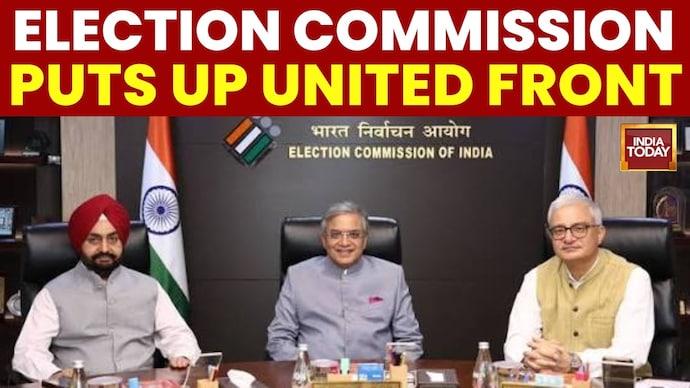
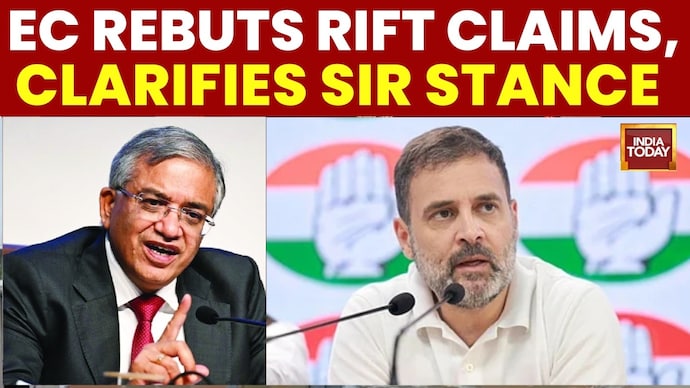
Election Commission Rebuts Rift Claims, Clarifies Unanimous Decisions on SIR

The Election Commission of India held an internal meeting with Chief Election Commissioner Gyanesh Kumar and Election Commissioners Sukhbir Singh Sandhu and Vivek Joshi following reports that commissioners objected fourteen times to decisions regarding the Special Intensive Revision. Addressing concerns over its decision-making, the poll body stated that internal discussions and differences should not be confused with final decisions, clarifying that all major Special Intensive Revision orders were passed unanimously. The Commission affirmed that statutory Form 6 was not altered, noting that an additional declaration was required alongside it. It highlighted that 2.73 crore young voters were enrolled since 2025 and reaffirmed that ECI Net preserves role-based statutory powers for field officers. Furthermore, the Commission addressed communications involving the Cabinet Secretary, clarifying they pertained to an officer on deputation rather than policy or information technology matters. The body also noted measures for vulnerable electors, online verification options to prevent mandatory personal appearances before Electoral Registration Officers, and deadline extensions in Delhi and Maharashtra.

Election Commission Rebuts Rift Claims, Extends SIR Deadlines In Delhi And Maharashtra

The Election Commission of India has addressed claims regarding internal rifts among its commissioners, issuing a clarification that all major decisions concerning the Special Intensive Revision (SIR) were approved unanimously by Chief Election Commissioner Gyanesh Kumar, Sukhbir Singh Sandhu, and Vivek Joshi. Following a full commission meeting, the poll body maintained that internal discussions and objections did not override final institutional decisions, confirming that statutory Form 6 remained unchanged and was merely accompanied by Annexure D. The Commission also announced deadline extensions for filing claims under SIR, setting October 30 for Delhi and October 12 for Maharashtra, alongside booth level officer house visits in Goa. While opposition parties raised concerns over Form 6 amendments and voter deletions, the Bharatiya Janata Party and National Democratic Alliance partners, including the Telugu Desam Party and Janata Dal (United), backed the poll body, stating that the clarification affirms the credibility of constitutional bodies.

Election Commission Denies Rift Over SIR; Political War Continues

The Election Commission of India held an internal meeting with Chief Election Commissioner Gyanesh Kumar and Election Commissioners Sukhbir Singh Sandhu and Vivek Joshi amid allegations of internal differences. The poll body issued a clarification stating that all key decisions regarding the Special Intensive Revision process were taken unanimously by consensus and were deemed legally valid by the Supreme Court of India. The Bharatiya Janata Party and Andhra Pradesh Chief Minister N. Chandrababu Naidu supported the clarification, while opposition voices raised concerns regarding form amendments and deletions.

Chandrababu Naidu Backs Election Commission Over Revision of Electoral Rolls

Telugu Desam Party leader N. Chandrababu Naidu has defended the Election Commission of India following a unanimous clarification issued by Chief Election Commissioner Gyanesh Kumar alongside Election Commissioners S.S. Sandhu and Vivek Joshi. Quoting his public statement, the bulletin noted that Naidu affirmed the clarification puts to rest misconceptions regarding the special intensive revision of electoral rolls, which he stated are taken collectively in adherence to established protocols. Naidu emphasised that attempts to undermine global confidence in India's electoral framework for political gains are unfortunate, stressing that leadership requires accepting outcomes with humility and upholding institutional respect.

PM Birthday Celebrations Across Nation, SemiconIndia Launch And Month-Long Seva Abhiyan Kick-Off

Nationwide celebrations marked the Prime Minister's birthday, spanning events across Gujarat, New Delhi, Varanasi, and several states. In the national capital, the fifth edition of the SemiconIndia event was launched to coincide with the occasion. Across the country, the Bharatiya Janata Party commenced a month-long Seva Sankalp Abhiyan focusing on public service initiatives, including blood donation drives, cleanliness campaigns, and welfare outreach. Several political leaders and NDA allies participated in commemorative programmes, flagging off bike rallies from Vadnagar to Varanasi and conducting special prayers for the Prime Minister's long life and health. Citizens were urged to participate in the evening 'Ashirwad ka Diya' initiative by lighting lamps in homes and public spaces. Key state-level welfare announcements, including the second phase of the Deendayal Lado Lakshmi scheme, were launched to support women's financial empowerment. Leaders highlighted the collective national vision of achieving a developed nation status by 2047, praising the Prime Minister's decisive governance and long public service journey.

PM Modi's 76th Birthday: Month-Long Seva Abhiyan, SemiCon India Launch & Mega Events

Across the country, celebrations are underway to mark Prime Minister Narendra Modi's 76th birthday, spanning Delhi, Gujarat, and his parliamentary constituency Varanasi. Key events include the launch of the fifth edition of the SemiCon India event in the national capital and the commencement of the month-long Seva Abhiyan focused on public service activities. In Varanasi, NDA allies including Andhra Pradesh Chief Minister Chandrababu Naidu and Chirag Paswan are participating in celebrations, alongside a bike yatra flagged off by Rajnath Singh and the Uttar Pradesh Chief Minister. Meanwhile, Home Minister Amit Shah is flagging off a bike yatra from Vadnagar to Varanasi and joining cleanliness and Aashirwad Ka Diya events, marking 25 years of the Prime Minister's public service.

PM Narendra Modi 76th Birthday, Seva Sankalp Abhiyan and SEMICON India Launch

As Prime Minister Narendra Modi turns 76, celebrations and public service programmes are taking place across India, from Delhi to Gujarat and his parliamentary constituency of Varanasi. The Prime Minister is launching the fifth edition of the SEMICON India event in the national capital, while the Bharatiya Janata Party has initiated the month-long Seva Sankalp Abhiyan and urged citizens to light an Ashirwad ka Diya. Key political leaders, including Union Home Minister Amit Shah and National Democratic Alliance allies, participate in major events such as the Vadnagar to Varanasi bike yatra and cleanliness drives. The broadcast highlights Prime Minister Narendra Modi's 25 years in public life since assuming office as Gujarat Chief Minister in 2001, tracing landmark governance milestones from welfare schemes and Make in India to digital infrastructure expansion and the Viksit Bharat 2047 roadmap.

India Today: Sanjeevi Sadagopan, Rangaraj Pandey and R. Kannan

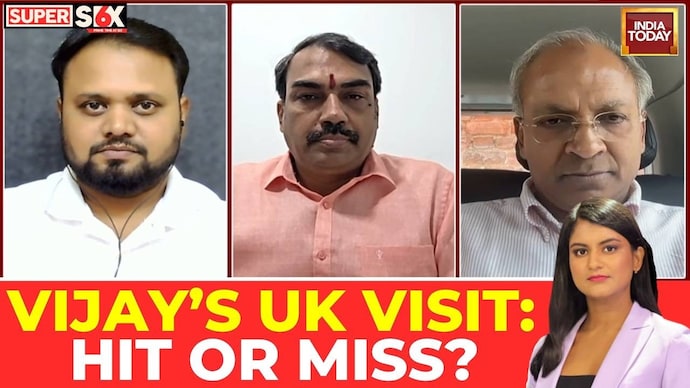
A panel of political analysts and commentators, including Sanjeevi Sadagopan, Rangaraj Pandey, and R. Kannan, examine Tamil Nadu Chief Minister Vijay's official visit to London. The discussion focuses on evaluating whether the trip successfully secured foreign direct investments or merely generated optical headlines and fan engagements. Panelists note that the ₹15,000 crore investment agreements involved companies already present in India and question the lack of a transparent official schedule. As Rangaraj Pandey observed regarding the investment outcome, 'I would call this is not neither a failure nor a success, and it's a tie.' The debate further delves into the government's communication strategy, administrative priorities, and comparisons with neighbouring states in attracting global corporate investment.

Godavari-Cauvery River Linking Plan: Route Details, State Concerns & Key Hurdles Explained

The proposal to link the Godavari and Cauvery rivers faces complex political and legal hurdles among southern states. Andhra Pradesh Chief Minister N Chandrababu Naidu has advocated linking the Godavari with the Cauvery by tapping surplus river water flowing into the Bay of Bengal and diverting it to drought-prone regions, proposing a route starting at Polavaram and seeking national project status. Under the Central government's National River Linking Project blueprint, the route begins at Inchampally in Telangana and passes through Nagarjuna Sagar and Somasila before reaching the Grand Anicut in Tamil Nadu. However, interstate disagreements persist. Telangana questions how surplus water is calculated, raising concerns over downstream diversions impacting its needs. Karnataka insists any extra Cauvery inflows cannot solely benefit Tamil Nadu and demands its own share be protected. Tamil Nadu seeks additional water without compromising existing river entitlements. Upstream states including Chhattisgarh, Odisha, and Maharashtra also hold stakes, leaving a consensus among stakeholders elusive.

Protest Cases Dropped, Parandur Airport Row & Growing 'Vijay For PM' Buzz

This special news broadcast reports on major political and civic developments across the country. In Tamil Nadu, Chief Minister Vijay announced the withdrawal of protest-related cases filed against farmers and teachers between May 2021 and April 2026, including agitations concerning the Sipcot and Parandur airport projects, as discussions continue over Thamizhaga Vettri Kazhagam positioning Vijay as a Prime Ministerial candidate for 2029 amid friction with the Congress, DMK, BJP, and AIADMK. In Ayodhya, former Air Marshal Jitendra Mishra has been appointed the first Chief Executive Officer of the Shri Ram Janmbhoomi Teerth Kshetra Trust. In Kerala, remarks by cleric Kanthapuram A. P. Abu Bakar Musliyar regarding women in public spaces drew political condemnation. In Telangana, BRS leader K. T. Rama Rao criticised Chief Minister Revanth Reddy over interstate river water sharing, while in Andhra Pradesh, an anti-malaria drive in Polavaram led to the death of a child and multiple hospitalisations.

Telangana-Andhra Water War Escalates Over Godavari & Krishna River Dispute

A political row has escalated between Telangana and Andhra Pradesh over the sharing of Godavari and Krishna river waters amid drought-like conditions in both states. KT Rama Rao launched a sharp attack regarding the surrender of Telangana's water share and project permissions during river management board meetings. Meanwhile, Andhra Pradesh Chief Minister N. Chandrababu Naidu has been advocating for the Godavari-Cauvery river interlinking project to resolve water issues across southern India, alongside initiatives to route river water to Uttarandhra regions including Anakapalli, Visakhapatnam, and Srikakulam.

7-Year-Old Tribal Girl Dies, 53 Villagers Fall Ill After Malaria Pill Drive in Andhra

A seven-year-old tribal girl, identified as Madhavi Jamuna, died and 53 other villagers, including 47 children, were hospitalised following an anti-malaria drive in Andhra Pradesh's Polavaram district. Health officials administered chloroquine tablets as a preemptive measure after regional malaria cases were reported, triggering severe allergic reactions among recipients. Polavaram District Collector K. Dinesh Kumar confirmed the fatality and noted that authorities are continuously monitoring the affected individuals, whose conditions are currently stable. Andhra Pradesh Chief Minister Nara Chandrababu Naidu took stock of the situation and ordered an inquiry to determine whether the incident resulted from dosage negligence, faulty administration, or procurement discrepancies.

Godavari-Cauvery River Linking Push, Inter-State Water Disputes And South India Water Crisis

Andhra Pradesh Chief Minister Chandrababu Naidu has renewed the push to link the Godavari and Cauvery rivers to address recurring water shortages in southern states. The proposal aims to transfer surplus Godavari water to water-stressed regions across Andhra Pradesh, Tamil Nadu, and Karnataka. Scaled-down versions of the plan envisage transferring approximately 140 to 150 TMC of water annually to provide irrigation across several lakh hectares, drinking water for millions, and potential hydropower generation. However, achieving inter-state consensus remains a significant hurdle. Upstream and riparian states, including Telangana, Karnataka, Tamil Nadu, Chhattisgarh, Odisha, and Maharashtra, have raised concerns regarding water rights, diversion points, and actual surplus availability. Environmental experts also cite challenges such as transmission losses, climate change impacts on rainfall patterns, and ecological effects on river deltas and fisheries.

Over 280 Indians Missing In Nepal Floods; Southern States Launch Rescue Ops, Helplines

Flash floods in Nepal have disrupted communication networks and severed key road links, leaving over 280 Indian nationals untraceable and scores stranded, including pilgrims traveling for the Kailash Mansarovar Yatra. Multiple southern and eastern Indian states—including Tamil Nadu, Telangana, Kerala, Andhra Pradesh, Karnataka, West Bengal, and Uttar Pradesh—have initiated emergency relief operations, deploying cabinet ministers and senior officials to Delhi and Nepal while establishing dedicated helpline numbers for anxious families. The Ministry of External Affairs, alongside local embassies and disaster management authorities, is coordinating rescue operations, logistics, and exit routes through Tibet to facilitate safe repatriation. Simultaneously, political discussions have surfaced in Tamil Nadu following statements by TVK leaders projecting party founder Vijay as a future prime ministerial candidate. DMK leaders criticized the projection, emphasizing the need to focus on local governance commitments. The political commentary aligns with findings from the India Today Mood of the Nation survey, which highlighted Vijay's standing in prime ministerial preferences and sparked debate among political analysts regarding future election dynamics and potential alliance strategies.

Amit Shah chairs South zonal meet: Delimitation, water sharing, rail links in focus

First images have emerged from the Southern Zonal Council meeting chaired by Union Home Minister Amit Shah alongside key southern chief ministers and union territory representatives. Discussions focused on crucial interstate concerns including delimitation, water sharing, trade, and transport connectivity. Andhra Pradesh Chief Minister N. Chandrababu Naidu highlighted the need for improved rail infrastructure and bullet train links between southern capital cities. Meanwhile, state leaders raised strong concerns over delimitation, emphasizing that southern states must not lose parliamentary representation. Issues surrounding fiscal federalism, Cauvery water distribution, and interstate coordination against drug abuse were also addressed during the meeting.

Rizwan Arshad Terms Delimitation 'Unfair', Warns South May Become 'Tax Slaves' At Southern CMs Meet

A special regional report highlights major political, economic, and civic developments across Southern Indian states. At the Southern Chief Ministers' meeting chaired by the Union Home Minister in Mahabalipuram, Karnataka Food and Civil Supplies Minister Rizwan Arshad criticized the proposed delimitation exercise. Arshad endorsed Karnataka Deputy Chief Minister DK Shivakumar's resolution to freeze Lok Sabha seats at 543 based on the 1971 census, raising concerns over reduced tax devolution despite Southern states contributing 33 percent to India's GDP. Representatives from Tamil Nadu, Kerala, Telangana, and Andhra Pradesh addressed critical state priorities, including inter-state water disputes over the Cauvery and Mekedatu rivers, NEET, and federal fund allocation. In Tamil Nadu, the state government clarified an administrative error regarding student protest circulars. Meanwhile, in Bengaluru, an engineer created an artificial intelligence app to report potholes to civic authorities. In Andhra Pradesh, political controversy emerged over alleged examination irregularities under the previous YSRCP regime, while Telangana's Nalgonda police arrested two juveniles in connection with a local murder investigation.