Vietnamese crab exporter

Topic

Advertisement
TOPIC

Covid-19

Covid-19, also known as the coronavirus disease 2019, is an infectious disease caused by the novel coronavirus SARS-CoV-2. First identified in Wuhan, China, in December 2019, it rapidly evolved into a global pandemic, profoundly impacting health, economies, and daily life worldwide.

The virus primarily spreads through respiratory droplets when an infected person coughs, sneezes, or talks. It can also spread by touching surfaces contaminated with the virus and then touching the face. Covid-19 presents a wide range of symptoms, varying from mild to severe. Common symptoms include fever, cough, fatigue, loss of taste or smell, and difficulty breathing. Severe cases can lead to pneumonia, multi-organ failure, and death, particularly in older adults and those with underlying health conditions.

In response to the pandemic, governments worldwide implemented measures such as lockdowns, social distancing, mask mandates, and travel restrictions to slow the spread. These measures, while effective in controlling the virus, had significant social and economic repercussions.

Vaccines have been a crucial tool in combating Covid-19. Developed at an unprecedented speed, these vaccines have proven effective in reducing infection rates, severity of symptoms, and mortality. However, vaccine distribution has been uneven globally, with low-income countries facing significant challenges in accessing sufficient doses.

The pandemic has also accelerated innovation in healthcare, with telemedicine and remote working becoming more prevalent. It highlighted the importance of public health infrastructure and the need for global cooperation in health emergencies.

Covid-19 has had a profound and lasting impact on global society. It has changed how people live, work, and interact, underscoring the importance of preparedness and adaptability in the face of such challenges. The pandemic's evolution continues to be closely monitored, with new variants and ongoing vaccination efforts shaping the global response.

  • ALL
  • STORIES
  • VIDEOS

STORIES

IIT Kharagpur grad cracks 14 government exams after missing placements in Covid

When the Covid-19 pandemic disrupted campus placements, IIT Kharagpur graduate Lomada Nagendra Sai had to abandon his IT career plans. After three years of preparation, repeated failures and nearly 30 competitive exams, he secured selection in 14 Central government recruitments, proving persistence can outlast even the toughest setbacks.

Load More

VIDEOS

PM Modi Pushed '33% Reservation For Women': Smriti Irani

In an interview with India Today, Bharatiya Janata Party National General Secretary and former Union Minister Smriti Irani reflected on Prime Minister Narendra Modi's 25 years of public service in governance. Discussing his leadership and policy initiatives, she highlighted key achievements such as the Pradhan Mantri Jan Dhan Yojana, Mission Mangalam, Ujjwala Yojana, and Vaccine Maitri during the COVID-19 pandemic. Irani emphasized Modi's commitment to women's empowerment, pointing out the landmark 33% parliamentary and legislative reservation for women. She remarked, "The greatest strength, what I perceive it to be of the Prime Minister is that he's so focused on achieving national goals," noting his work ethic centered around Seva, Sambad, and Samanvaya, and his determination in steering the country toward Viksit Bharat by 2047.

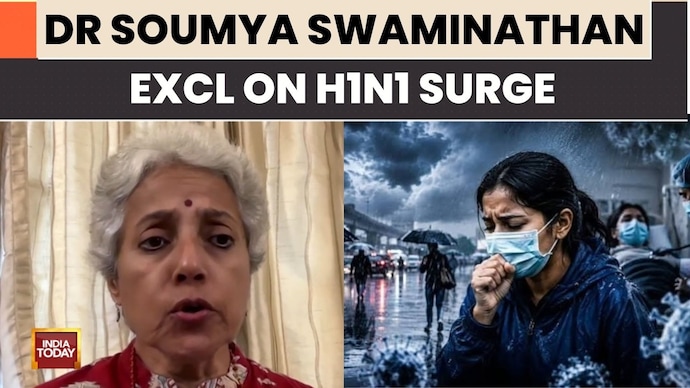
H1N1 Cases Surge In India: Dr Soumya Swaminathan On Flu Strains, Testing & Vaccine Precautions

Speaking on the rising H1N1 cases across India, former World Health Organization Chief Scientist and pediatrician Dr. Soumya Swaminathan clarified that the surge is part of a regular seasonal outbreak of respiratory viral infections, exacerbated by increased testing and surveillance. She highlighted that genomic sequencing shows no major antigenic shift in the circulating strain compared to previous years, reassuring that panic is unnecessary. Dr. Swaminathan emphasized that seasonal influenza remains a serious public health concern, particularly for vulnerable groups such as young children, pregnant women, the elderly, and individuals with underlying health conditions. She cautioned against the improper and casual use of antibiotics and antivirals, warning that self-medication fuels antimicrobial resistance. Advising on preventive measures, she recommended flu vaccination for high-risk populations, wearing masks in crowded spaces, practicing hand hygiene, ensuring proper indoor ventilation, and staying home when feeling unwell to curb transmission.

Surge In H1N1 Cases Reported Across India As Experts Advise Precaution And Timely Vaccination

India is witnessing a significant surge in H1N1 influenza cases during the monsoon season, with transmission levels higher than in previous years. Environmental factors such as increased humidity and monsoon rainfall in parts of central and northern India allow the virus to survive longer and spread rapidly, especially where overcrowding occurs. While the virus strain remains similar to previous years, seasonal antigenic drift contributes to heightened infectivity. A large majority of cases remain mild and manageable through symptomatic treatment, though official case counts may reflect an underestimation as many individuals with mild symptoms avoid RTPCR testing. Preventive measures include strictly isolating sick children from schools, practicing cough etiquette, maintaining hand hygiene, wearing masks in crowded spaces, and taking annual influenza vaccines to reduce hospitalization risks. Medical experts recommend the Southern Hemisphere flu vaccine in April or May for optimal protection prior to monsoon peaks.

H1N1 Swine Flu Testing Guidelines, Symptoms To Watch For And Adult Immunisation Need Explained

A detailed medical discussion highlights the critical aspects of managing H1N1 swine flu, including symptoms, testing protocols, and treatment strategies. Early testing is recommended for high-risk individuals experiencing persistent fever, cough, sore throat, chest tightness, or breathlessness to enable timely administration of antiviral drugs like oseltamivir (Tamiflu). Since RT-PCR test results can take two to three days, empirical treatment may be considered for severe cases or high-risk patients with family history during surges. Warning signs of severe illness include high fever lasting over four to five days, dizziness, vomiting, dehydration, and rapid breathing in children. The discussion emphasizes the need for an adult or life course immunisation program to protect vulnerable populations, pregnant women, and travellers from vaccine-preventable respiratory infections. Furthermore, the expert clarifies differences between H1N1 influenza and COVID-19, reassuring that India's healthcare infrastructure, surveillance, and public awareness are well-prepared to handle seasonal surges without cause for panic.

Congress Attacks PM Modi, BJP Counters CWC Label, Flashpoints On NEET And Vande Mataram Escalate

A political war of words has erupted between the Congress and the Bharatiya Janata Party following the Congress Working Committee meeting. The Congress mounted a direct attack on Prime Minister Narendra Modi, alleging that his political standing has weakened due to key national issues such as the COVID-19 pandemic response, NEET examination irregularities, and paper leaks. Party leaders emphasized that the opposition has continuously questioned the government on matters including alleged Ram Mandir donation embezzlement and the Vande Mataram singing row. In response, the Bharatiya Janata Party countered by calling the CWC the Congress Whitewash Committee, accusing the opposition of refusing to acknowledge its own political mistakes. Congress spokesperson Abhishek Dubey further asserted that criticisms from various public figures reflect dissatisfaction with government policies. Both parties continue to clash over parliamentary functioning, policy decisions, and national priorities.

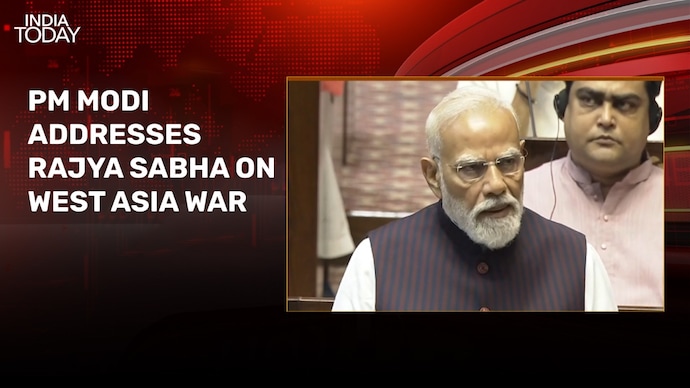
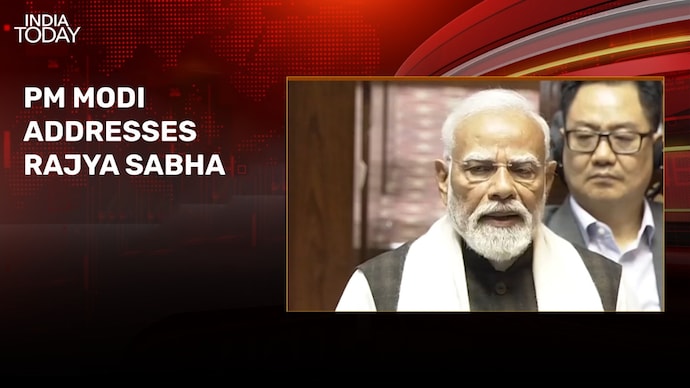
World moving towards a new world order: PM Modi in Rajya Sabha

In this address, Prime Minister Narendra Modi outlines India's trajectory towards becoming a developed nation, emphasizing that the country has reached a decisive stage in its journey. He highlights that 'The world is moving very fast towards a new world order,' with India positioned as a reliable 'Vishwa Mitra' or global friend. The Prime Minister notes that while many developed nations are aging, India’s strength lies in its youthful population and significant talent pool. He contrasts the current economic stability—characterized by high growth and low inflation—with the previous 'Fragile Five' status, noting India's progress toward becoming the world's third-largest economy. Modi also mentions recent 'future-ready' trade deals, including significant negotiations with the European Union, and asserts India's role as a leading voice for the Global South on the international stage.

L. Murugan Slams DMK: 'Stalin Family Always Talks About A Separate Nation'

On this Special Report, the focus is on the intensifying political confrontation between the BJP and the DMK in Tamil Nadu. Union Minister L. Murugan has launched a scathing attack on Chief Minister M.K. Stalin and Deputy Chief Minister Udhayanidhi Stalin, accusing them of promoting separatist sentiments. Murugan stated, 'In Tamil Nadu, the Udai Nidhi Stalin and the Stalin family always talk about the separate nation, separate country, separate state, and language.' He further contrasted this with Prime Minister Narendra Modi’s efforts to promote Tamil culture through initiatives like the Kasi Tamil Sangamam. The transcript also highlights Udhayanidhi Stalin’s counter-allegations against the Centre, where he accused the Modi government of 'grave mismanagement' during the COVID-19 pandemic and criticized the alleged imposition of Hindi in the state. This report explores the escalating 'Aryan vs Dravidian' narrative and the sharp ideological divide ahead of the upcoming polls.

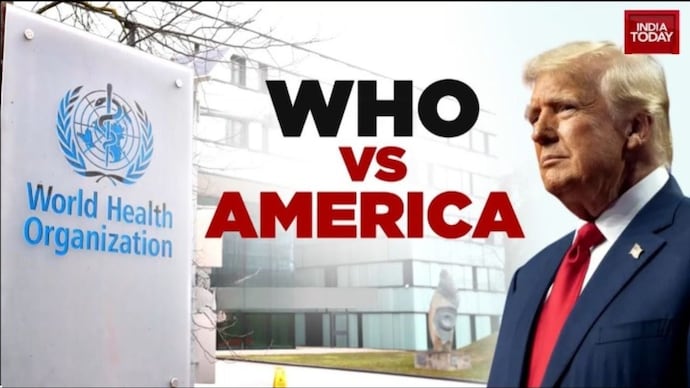
Donald Trump Halts WHO Funding Over Alleged Mismanagement And Lack Of Accountability

On this Special Report, India Today’s Sneha Mordani examines the United States' decision to exit the World Health Organization (WHO), a move that threatens to reshape global public health. The decision follows years of allegations regarding political interference and the WHO's handling of the pandemic origins. Donald Trump stated, 'I'm instructing my administration to halt funding of the World Health Organization while a review is conducted to assess the World Health Organization's role in severely mismanaging and covering up the spread of the coronavirus.' The report highlights that the US, as the largest funder, contributes between 400 million and 500 million dollars annually compared to China's 40 million dollars. The administration has cited a failure to act quickly during crises, lack of transparency, and bureaucratic inefficiency as primary reasons for the withdrawal. While the WHO denies these accusations, asserting it operates based on science and international cooperation, the exit marks a significant shift in international power politics and health governance.

Donald Trump: 'We Are Poised To Have An Economy Like No Other' In The United States

On this special report, US President Donald Trump discusses the resilience of the American economy and the challenges posed by unexpected global events. Reflecting on his previous term, Trump stated, 'We are poised to have an economy like no other, not only in this country, but anywhere.' He detailed the sudden impact of the COVID-19 pandemic, which he claimed originated in Wuhan, and defended his administration's response through Operation Warp Speed, describing it as a phenomenal military and logistical feat. Trump emphasized that while some economic shocks are unavoidable, wars can be prevented through intelligent leadership. He also referenced discussions with Scott Bessent regarding current economic projections, suggesting that the United States is positioned for unprecedented growth. The President concluded by highlighting that the stock market's recovery during his tenure was a significant achievement despite the global suffering caused by the pandemic.

Delimitation 2026: Southern States Fear Loss of Parliamentary Seats After Census Delay

In this explainer, the focus is on the delimitation exercise scheduled for 2026 and the concerns it has raised among southern states. The Unidentified speaker details how the process, which fixes the number of Lok Sabha and assembly seats based on population, was frozen after the 1971 census to encourage population control. With the freeze ending and the census delayed due to Covid-19, projections mentioned in the report suggest southern states like Tamil Nadu and Kerala could lose significant representation, while northern states like Uttar Pradesh and Bihar could gain seats. The segment notes that Chief Ministers like MK Stalin have sought unity to oppose this, while Home Minister Amit Shah has issued clarifications.

UK Health Crisis: H3N2 'Super Flu' Strain Drives Daily Hospital Admissions To 3,100

In this news bulletin, an Unidentified speaker reports on a severe health crisis unfolding in the United Kingdom ahead of the Christmas season. A sharp surge in influenza cases, driven by the H3N2 'super flu' strain, is placing unprecedented pressure on hospitals. Health authorities have reported more than 3,100 flu-related hospital admissions daily, a level not seen since the COVID-19 pandemic. The outbreak is linked to the fast spread of a specific H3N2 sub-clade, which has arrived earlier and stronger than in typical seasons. Officials are urging vaccination and caution as healthcare services struggle to cope with the rising demand.

Dr. Arvind Kumar: ‘Black Deposits’ on Teen Lungs Contradict Minister Kirti Vardhan Singh’s Pollution Claim

In a special report on India's air pollution crisis, Union Minister of State for Environment Kirti Vardhan Singh stated in Parliament that a direct link between air quality and lung diseases has not been firmly established. Countering this, Dr. Arvind Kumar, Chairman, Institute of Chest Surgery at Medanta, presents alarming evidence of "black deposits" on the lungs of teenagers and non-smokers. Dr. Kumar cites a study of 4,000 children in Delhi NCR, revealing that 60% reported respiratory symptoms and one-third had spirometry-proven asthma. He warns that lung cancer, once a smoker's disease, is now prevalent among non-smokers and women, urging a national health emergency response similar to COVID-19.

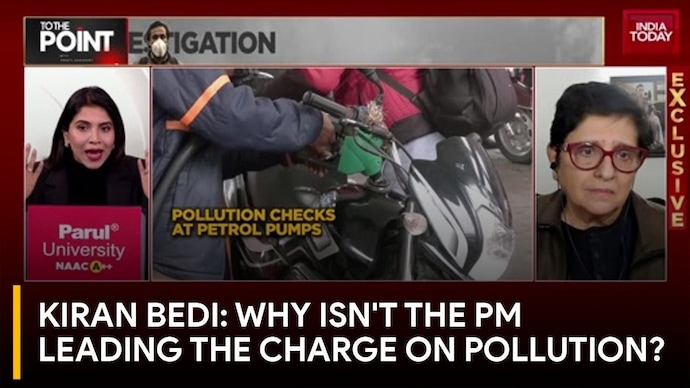
Kiran Bedi On Pollution Crisis: 'What Stops The Honourable Prime Minister To Address The Nation?'

Former Puducherry Lieutenant Governor and social activist Kiran Bedi addresses the severe air pollution crisis gripping the NCR, questioning the central government's silence. In this special report, Bedi asks, 'What stops the Honourable Prime Minister to address the nation? Because the pollution and health is a national issue.' She criticises the 'deficiency of work culture in governance' and proposes a holistic solution called 'EOCM', a four-member team in each area comprising an elected representative, an appointed officer, a cop, and the media to ensure accountability through surprise checks. Bedi also calls for the Union Environment Minister to convene regular meetings with the chief ministers of the five NCR states, stressing that this is a national health emergency that requires leadership on the scale of the COVID-19 response.

Supreme Court Backs Farmers On Stubble Burning, Questions Authorities On Delhi Pollution Plan

On this Special Report, the focus is on the Supreme Court's hearing regarding the severe air pollution in Delhi-NCR. The top court has questioned the Commission for Air Quality Management (CAQM) on its action plan, noting that previous measures have failed to make an impact on the ground. Addressing the blame often placed on farmers, the court stated that the 'issue of stubble burning cannot and should not become a political issue or a question of ego.' The bench observed that stubble burning occurred during the COVID-19 pandemic as well, yet the skies were blue, suggesting other factors like transportation are significant contributors. The court emphasized the need to sensitize farmers and provide them with machines to manage crop residue rather than merely assigning blame.

Kiran Bedi On Delhi's Pollution Crisis: 'Why Is The Prime Minister Not Leading The Charge?'

Former Puducherry Lieutenant Governor Dr. Kiran Bedi speaks on Delhi's severe air pollution crisis, urging Prime Minister Narendra Modi to lead a coordinated response similar to the handling of the COVID-19 pandemic. Explaining her changed stance on the need for the Prime Minister's intervention, Bedi states, 'I had to be a sufferer, a victim, to get the pinch'. She suggests the formation of a group of ministers, including the Union Home Minister, to ensure enforcement that the current Commission for Air Quality Management lacks. Bedi calls the current crisis a 'desperate situation' and notes her personal experience as a Delhi resident for the past two and a half years prompted her to speak out, contrasting it with her time in Pondicherry in 2017 when she did not feel the direct impact of the pollution.