Sensex ends 315 points higher, Nifty above 23,100; Axis Bank up 3%
The Sensex closed at 73,895.74, up 315.20 points or 0.43%, while the Nifty 50 gained 77.40 points or 0.34% to end at 23,140.50.
Crude oil is one of the most important commodities in the global economy, powering transportation, industry and energy systems across the world. It is refined into fuels such as petrol, diesel, aviation turbine fuel and liquefied petroleum gas (LPG), making it central to daily economic activity. Because oil is traded globally, its prices are influenced by geopolitical tensions, supply disruptions, production decisions by major exporters and shifts in global demand. For countries like India that import most of their crude oil, price changes can affect inflation, fuel costs and the broader economy. This topic page tracks crude oil prices, market trends, geopolitical developments and their impact on businesses and consumers.
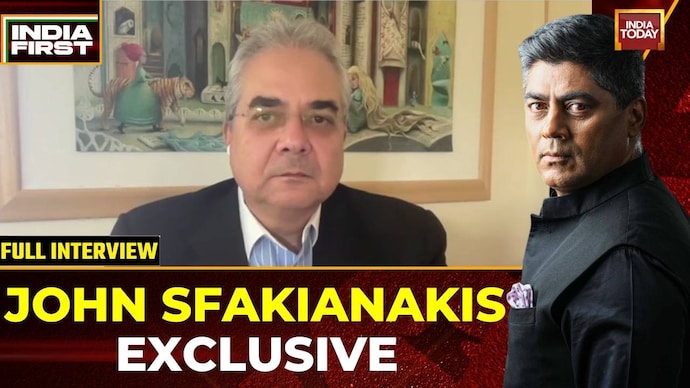
In an interview on Chakravyuh, Dr. John Sfakianakis, Chief Economist of the Gulf Research Center, analysed the escalating geopolitical and economic crisis across West Asia.
A morning business bulletin covers key financial developments, policy updates, and corporate events. The central government has clarified that there is no proposal to rethink Merchant Discount Rate on the Unified Payments Interface, nor is there any proposal to exempt fuel from it, while efforts with the Indian Banks' Association are being explored to ensure costs are not passed to consumers. In corporate updates, Tata Sons has rejected Noel Tata's objections to the reappointment of N. Chandrasekaran, citing majority board validity and legal opinions from former Chief Justice of India U. U. Lalit and former Supreme Court Judge B. N. Srikrishna ahead of shareholder ratification. Meanwhile, domestic stock indices opened mildly lower with the Nifty near 23,054, amid fluctuations in IT and banking shares alongside commentary on Insurance Regulatory and Development Authority of India consultation proposals. Additionally, the bulletin touches upon Union Commerce Minister Piyush Goyal's remarks on trade pact negotiations and a high-profile dinner hosted in Washington.
Indian benchmark indices opened lower, with the Nifty declining around two hundred points and slipping towards 23,200 levels amid rising crude oil prices and spiking US Treasury and domestic bond yields. Financial and banking counters led the losses across sectors, while insurance stocks witnessed severe selling following draft consultation proposals by the insurance regulator to tighten commission caps from financial year 2028. PB Fintech, Turtlemint, Max Financial, and ICICI Prudential Life recorded sharp cuts in early trade. Meanwhile, primary market activity remained in focus with anticipation surrounding the National Stock Exchange listing, even as recent entrants like Hero Motors and SS Retail traded higher. In another development, the Food Safety and Standards Authority of India initiated penal action against major quick-commerce and delivery platforms, including Amazon, Swiggy Instamart, BigBasket, Flipkart India, and Zepto, citing non-compliance, misleading claims, and listings of prohibited food articles.
External Affairs Minister S. Jaishankar met US Secretary of State Marco Rubio on the margins of the 81st session of the United Nations General Assembly. The two leaders discussed developments in the Middle East and addressed proposed sanctions targeting nations that engage in economic trade with Russia or Iran. The US State Department affirmed Washington's readiness to assist regional partners with energy security challenges. Crucial concerns surround the Russia and Iran Sanctions Act, which seeks to target Russian oil and gas revenues while authorising tariffs of up to 100% on major buyers, potentially impacting countries like India and China. India has stressed that such measures could strain bilateral relations, especially given its significant energy dependence. In August, Russian oil accounted for 45% of India's oil imports at 2.1 million barrels per day, following a record 2.82 million barrels per day in July. High-level engagements between both nations are set to continue in the coming months.
In an interview with India Today, John Sfakianakis, Chief Economist and Head of Economic Research at the Gulf Research Center and Associate Fellow at Chatham House, analyzed the feasibility of the India-Middle East-Europe Economic Corridor (IMEC) and mounting Middle East tensions. Evaluating the corridor, Sfakianakis noted, "IMEC can help the Strait of Hormuz, but it cannot replace the Strait of Hormuz." He highlighted major political, diplomatic, and infrastructural hurdles facing the project, pointing out that Saudi Arabia and Israel lack diplomatic ties and that the Arabian Peninsula currently lacks cross-border rail links. Addressing regional geopolitical friction, he explained that Saudi Arabia maintains a two-state solution for Palestine as a prerequisite for normalized ties with Israel. Sfakianakis also warned of broader economic ramifications from persistent conflicts involving Iran, Russia, and the United States, stressing that rising inflation remains the primary threat confronting global economies.
External Affairs Minister S. Jaishankar raised serious concerns with US Secretary of State Marco Rubio regarding a US Senate sanctions bill aimed at Russia and Iran. The proposed legislation empowers US President Donald Trump to impose tariffs of up to 100 percent on the top buyers of Russian oil and gas, directly impacting India and China. While Indian refiners imported roughly 45 percent of their crude from Russia in August, Indian officials highlight that these imports stabilise global energy markets. The tariff tensions unfold alongside preparations for Chinese President Xi Jinping's official visit to the United States.
Amid escalating crude oil rates driven by West Asia tensions, government sources have confirmed that no price hike is being planned for petrol and diesel. With global crude prices expected to remain volatile, the government is prioritising energy security and may subsidise oil marketing companies to absorb price pressures rather than passing them on to consumers. To mitigate supply disruptions around Iranian sectors, plans are underway to diversify crude procurement to Iraq and Saudi Arabia while maintaining Russian crude imports. Oil marketing companies currently face under-recoveries of Rs 20 to 25 per litre for diesel and Rs 5 to 10 per litre for petrol.
On the Business Today Show, host Sakshi Batra tracks Dalal Street closing action alongside key corporate developments. Top global rating agencies, including S&P, Fitch, ADB, and Moody's, have raised India's FY27 economic growth projections to around 7%, triggering a rally across domestic equities. Sensex and Nifty closed firmly higher, led by gains in metals, real estate, FMCG, and PSU banking stocks. Market expert Abhishek Basumallick discusses how global rating revisions impact sentiment, the influence of elevated crude oil prices hovering near 100 dollars a barrel, and investment opportunities in the metals and consumption sectors. Additionally, the broadcast reveals that no retail petrol or diesel price hikes are planned by the Indian government despite rising crude volatility. The report also highlights corporate updates, including Airtel Money's planned London Stock Exchange listing, Microsoft job cuts across Xbox teams, and significant single-day moves in shares of Whirlpool India and Optiemus Infracom ahead of the upcoming National Stock Exchange listing.
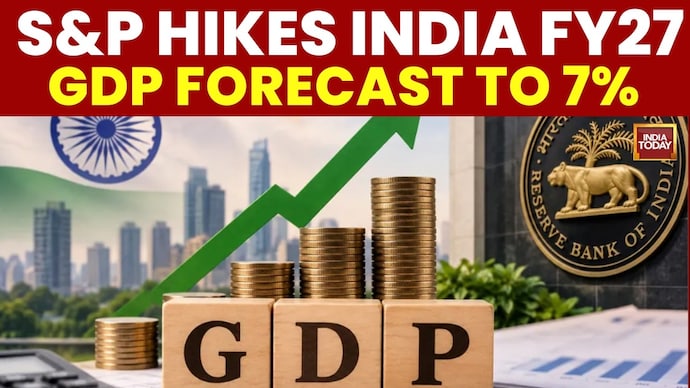
S&P Global Ratings has raised India's GDP growth forecast for financial year 2026-27 by 40 basis points to 7.0 per cent, revising its previous projection of 6.6 per cent upward. The rating agency cited robust industrial activity, healthy domestic consumption, strong goods exports, and accelerating government investment during the first quarter as primary drivers for the revision. Economists at S&P Global also project the Reserve Bank of India's rate-setting panel to hike the repo rate by 25 basis points to 5.50 per cent. The revised projection exceeds the Reserve Bank of India's estimate of 6.7 per cent and matches forecasts from agencies like Moody's. Analysts noted that India continues to maintain economic resilience despite external headwinds, including geopolitical conflicts in West Asia, the Russia-Ukraine war, global trade tariffs, and elevated crude oil prices.
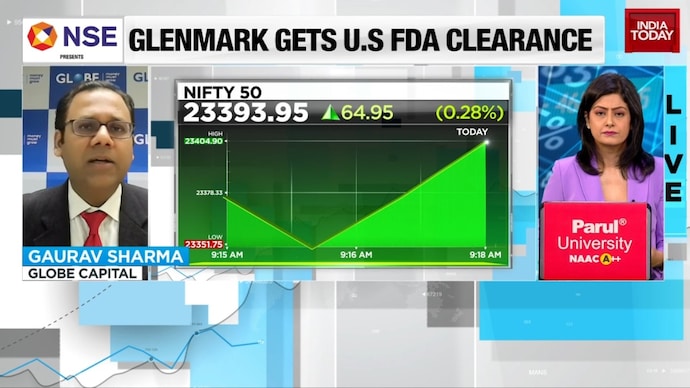
Indian equity markets opened on a steady note above 23,400 levels, supported by gains in financial and banking stocks alongside broad-based sector participation. S&P raised India's FY27 GDP growth forecast by 40 basis points to 7 per cent, citing robust industrial activity, strong exports, and government spending, while projecting a repo rate hike by the Reserve Bank of India. Meanwhile, the Supreme Court raised serious concerns over the significant gap between the price to retailer (PTR) and the maximum retail price (MRP) of essential and life-saving medicines, questioning why more drugs are not covered under the drug price control order. Pharma companies, represented in court, cited research and development alongside marketing expenses for the variance in pricing. Additionally, global geopolitical developments remained in focus as Donald Trump highlighted sweeping tariff authorities and expressed support for the India-Middle East-Europe Economic Corridor.
A speech delivered at the United Nations General Assembly addressed major international foreign policy challenges, focusing primarily on the Islamic Republic of Iran, the Russia-Ukraine conflict, and broader geopolitical developments. The address called for the complete economic isolation of Iran until it abandons its nuclear ambitions and ceases regional hostility, while leaving open the possibility of a negotiated agreement following the United States midterm elections. The speech also outlined potential enforcement actions concerning Russian energy exports, specifically mentioning the possible use of the Lindsey Graham sanctions bill to impose significant tariffs on countries importing oil from Russia, including India and China. Additionally, the address covered global security concerns, categorising Western hemisphere cartels alongside terror outfits, highlighting strategic interests in Greenland, and noting upcoming bilateral meetings at the White House.
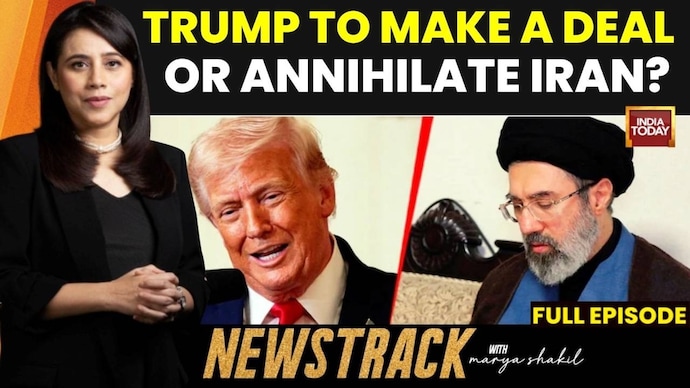
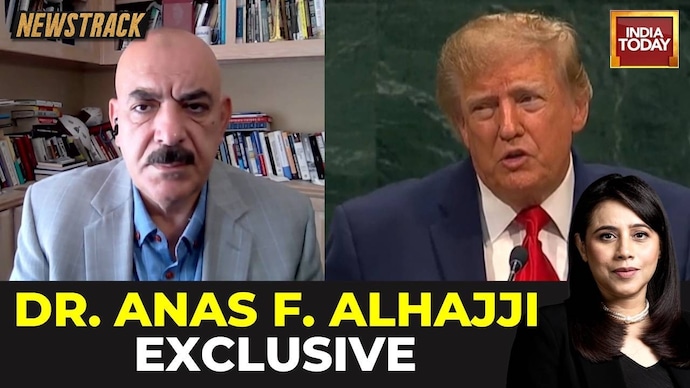
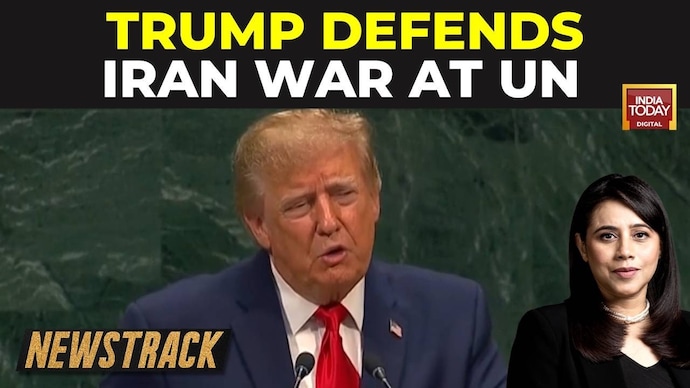
During an address at the United Nations General Assembly, US President Donald Trump issued sharp warnings against Iran, calling it the primary sponsor of terror and presenting a choice between a post-midterm deal or complete annihilation. Trump also called for global economic isolation of Tehran and advocated renaming artificial intelligence to super intelligence in official records. Evaluating the global fallout on News Track, energy expert Dr Anas Alhaj explained that crude supplies remain sufficient while refinery bottlenecks have triggered a severe international diesel and petroleum product crunch. He noted that India has managed its crude reserves effectively through discounted Russian supplies despite tariff threats. Former Indian Ambassador to the United States Meera Shankar highlighted that Trump's remarks targeted domestic US audiences, noting that India must navigate complex regional dynamics by balancing ties with Iran, Gulf nations, Israel, and the United States while accelerating its transition towards non-fossil fuel energy.
In an exclusive interview, former Indian Ambassador to the United States Meera Shankar analyzed US foreign policy moves and their implications for India's strategic and energy security. Assessing US threats concerning Iran, Shankar highlighted the geopolitical challenges facing New Delhi, stating, "It puts India in a very difficult spot because so much of our oil imports have come from the Gulf." She emphasized the urgency of diversifying energy sources and accelerating the transition to a non-fossil fuel economy through renewables and electrification. Shankar also examined the address delivered at the United Nations General Assembly, noting it was tailored primarily to a domestic audience. Highlighting India's strategic ties across the Gulf, Russia, Central Asia, and the United States, she affirmed that New Delhi will continue to make independent calculations based on its own national interests.
In an exclusive interview with India Today, energy markets expert Dr. Anas Alhajji analyzed the global energy landscape, Hormuz Strait tensions, and the impact of geopolitical developments on India. Dr. Alhajji clarified that current market disruptions stem from refined products rather than crude oil, stating, 'The crisis is in diesel. That's where the crisis is.' He dismissed rhetoric surrounding US President Donald Trump's remarks at the United Nations, asserting that market fundamentals remain detached from political speeches. Evaluating India's strategic response, Dr. Alhajji highlighted how New Delhi successfully replenished its inventories by importing discounted Russian crude, in contrast to Japan's slower recovery under G7 restrictions. He noted that while Indian refiners face high margins because global refineries are maxed out, India faces unique challenges in liquefied petroleum gas supplies due to shifts in Saudi Arabian production. Additionally, he emphasized that US tariff legislation with a 180-day grace period would not severely disrupt Indian refinery operations.
Addressing the United Nations General Assembly in New York, US President Donald Trump issued sharp warnings to Iran, designating it as the world's primary sponsor of terrorism. Trump called upon global nations to completely isolate Iran economically until it halts attacks on commercial shipping, terminates support for terrorism, and relinquishes its nuclear ambitions. He stated that while a deal with Tehran remains possible after the midterms, his alternative option is to completely annihilate the regime. Discussing other key foreign policy topics, Trump noted that Washington is engaging with both Moscow and Kyiv regarding Ukraine, and described Cuba as a failed state, leading to walkouts by Iranian and Cuban delegations. On technology, Trump announced that official US government documentation will replace the term artificial intelligence with super intelligence, dismissing apocalyptic warnings regarding the technology while asserting that the United States currently leads China in the sector.
In this edition of the Business Today Show, anchor Sakshi Batra details major corporate, financial, and regulatory developments. Union Finance Minister Nirmala Sitharaman emphasised the importance of corporate governance and separating ownership from management in family-run businesses, urging companies to engage constructively with regulators rather than resorting immediately to litigation. In the aviation sector, Civil Aviation Minister Ram Mohan Naidu highlighted how rising Aviation Turbine Fuel costs amid the West Asia conflict are pushing up festive season airfares, reiterating the government's push for greater airline competition. Telecom regulator TRAI introduced new rules mandating separate voice and SMS-only packages to benefit over 20 crore non-data users across India. Market expert Avinash Gurakshakar shared insights on equity market volatility, mid-cap strategies, IT stocks, and aviation market dynamics. Additionally, Uttar Pradesh Principal Secretary Alok Kumar outlined progress on the 3,700 crore rupees India Chip semiconductor OSAT manufacturing facility.
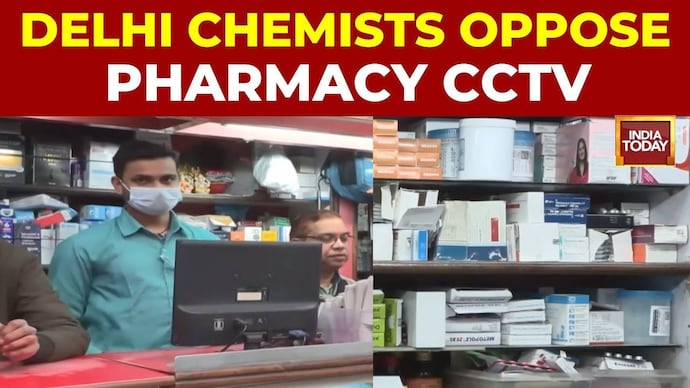
On The Business Today Show, anchor Sakshi Batra details closing market developments as the Nifty and Sensex rebound following six consecutive weeks of losses, with the Nifty closing above 23,400 points supported by gains in FMCG, real estate, and pharmaceutical stocks. ICICI Direct Head of Research Pankaj Pandey provides analysis on crude oil pricing trends, banking sector valuations, and pharmaceutical Schedule M compliance. The report reviews India's 15% export growth over the initial five months of the fiscal year amid geopolitical tensions, pending free trade agreements with the UK and EU, and potential adjustments to Russian crude oil imports under US sanctions. Additionally, the broadcast highlights Starbucks signing an MoU to open its first overseas Global Capability Centre in Chennai to create 800 technology jobs, opposition by the All India Organisation of Chemists and Druggists to mandatory pharmacy CCTV surveillance, and primary market forecasts estimating 1.5 trillion dollars in IPO market capitalization additions.
Indian equity markets opened range-bound amid expanding geopolitical tensions in West Asia and a busy week in the primary markets. Global crude refining dynamics face disruptions following drone attacks on Russian refineries and escalating strikes involving the Houthis. Discussion highlights that domestic liquidity is partially diverted towards numerous IPO listings, including the mega National Stock Exchange listing, even as Indian refining capacities remain vital globally. Meanwhile, the boardroom dispute at Tata Sons draws legal scrutiny as Tata Trusts questions the reappointment process of Chairman N. Chandrasekaran. Market analysts note that while elevated wholesale inflation and global rate hikes pose margin pressures for corporates, domestic credit growth and government-backed industrial infrastructure present solid opportunities across sectors such as private banks, telecom, and capital goods.
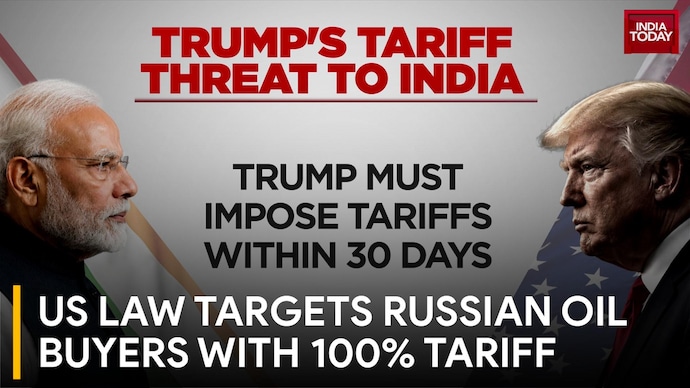
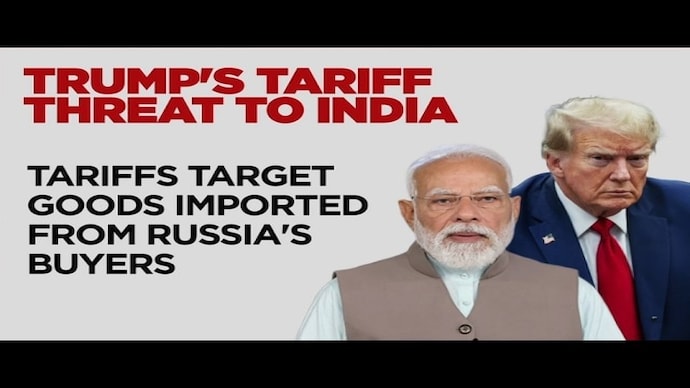
A newly signed United States sanctions law grants the administration authority to impose tariffs of up to 100% on imports from the five largest buyers of Russian crude oil and natural gas within 30 days. Although India and China are major purchasers, the legislation does not name specific nations or define how top importers will be calculated. In response, India has maintained that national interest and energy security for its 1.4 billion citizens remain paramount through diversified energy sourcing. New Delhi highlighted the potential impact on bilateral ties and global energy markets, reiterating its commitment to taking all necessary measures to protect domestic economic interests.
United States President Donald Trump has signed a new Russia sanctions bill into law, granting the administration authority to impose tariffs of up to 100% on goods imported from the top five buyers of Russian crude oil and natural gas within 30 days. The legislation covers major importers such as India and China, as well as countries aiding sanctions evasion. While the law grants significant executive discretion regarding implementation, the White House must notify Congress prior to removing any tariffs. The move comes ahead of high-level diplomatic engagements, including planned talks with Chinese President Xi Jinping and Ukrainian President Volodymyr Zelenskyy, aiming to exert pressure regarding the Russia-Ukraine war. For India, a leading purchaser of Russian crude, the law introduces new variables amid ongoing bilateral trade negotiations, where officials indicate substantial progress on an agreement ahead of scheduled ministerial discussions.