Vietnamese crab exporter

Topic

Advertisement
TOPIC

Delhi NCR Pollution

Delhi and the National Capital Region (NCR) are bracing themselves for worsening air quality as pollution shoots up exponentially with the onset of winter. The Central Pollution Control Board (CPCB) has submitted that many locations in Delhi clocked PM2.5 concentrations well over 400 micrograms per cubic metre, well above the safety limit of 60 micrograms.

Experts attribute the spurt in pollution to a mix of reasons, ranging from stubble burning in neighboring states to emissions from vehicles, construction dust, and industrial pollutants. Smoother winds and lower temperatures keep pollutants near the ground, resulting in smog and poor visibility.

The health agencies have cautioned that continued exposure leads to respiratory issues, eye irritation, and other conditions, especially for children, the aged, and people with underlying conditions. Most schools have issued warnings to minimize outdoor activities, and hospitals have seen a rise in patients suffering from breathing complications.

The government of Delhi has requested citizens to utilize public transport, air purifiers, and masks wherever they can. Restricting construction activities, encouraging odd-even traffic regulations, and promoting cleaner fuels are being implemented to reduce emissions.

Environmentalists emphasize the need for long-term solutions like enforcing tighter industrial emission standards, ecologically sustainable urban planning, and regional collaboration to avoid stubble burning to tackle the crisis.

While residents track real-time air quality levels on phone apps, officials remain keen to promote awareness and compliance. The city is in for a tough winter, with pollution control measures becoming all the more imperative.

  • ALL
  • STORIES
  • VIDEOS

STORIES

The fires we stopped counting

This is the third in a three-part story. The institute that counts India's stubble fires added a line to its bulletins this year: satellites do not record fires lit when nothing is overhead. September 15 was the first time it appeared in a paddy season, the season that produced the 93 per cent fall everyone quotes.

Anti-pollution curbs under GRAP-1 imposed in Delhi as AQI turns poor in May

The CAQM said that the region's air quality index (AQI) is expected to remain in the poor category in the 'coming days.' GRAP-1 measures include a ban on the use of coal and firewood as fuel in tandoors in hotels, restaurants, and open eateries, and restricted use of diesel generators, allowed only in emergency or essential situations.

Load More

VIDEOS

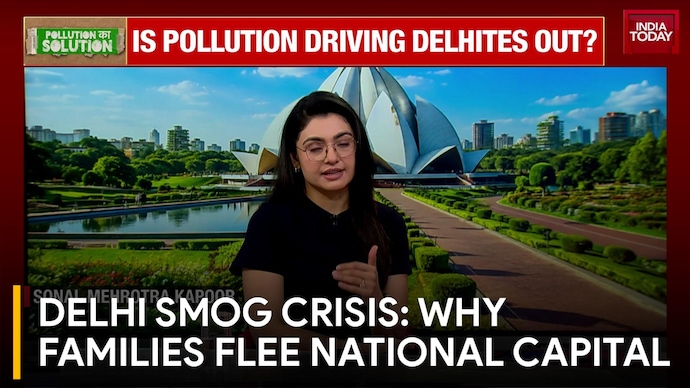
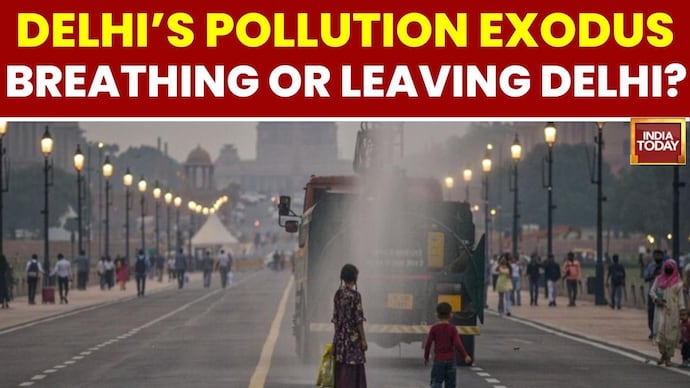
Delhi Air Quality Crisis: Pollution Refugees Relocate, Swap Careers to Escape Smog

A special broadcast of Pollution Ka Solution examines the escalating air pollution crisis across major urban centres, focusing on Delhi NCR and Mumbai, where hazardous Air Quality Index levels and winter toxic smog are creating an influx of pollution refugees. Residents and professionals, including Bharat Singh Kanwal, former advocate Prashant Kalra, and fashion designer Anuradha Prasad Dhawan, detail abandoning their careers and homes to relocate to destinations like Bengaluru and Goa after severe pediatric respiratory emergencies, persistent asthma, and health complications forced their departure. The discussion highlights broader urban systemic issues such as deficient waste management, unchecked deforestation, and rising cancer and respiratory burdens among children and senior citizens, with lifestyle expert Luke Coutinho noting that dietary adjustments cannot reverse cellular lung damage caused by toxic exposure. Panellists address policy implementation challenges surrounding the National Clean Air Programme and Graded Response Action Plan, calling for year-round interstate governance, strict environmental compliance accountability, and civic participation to counter urban air quality deterioration.

Delhi Air Quality Crisis: Pollution Refugees Relocate As Severe AQI Triggers Health Woes

A special broadcast of Pollution Ka Solution focuses on India's escalating air pollution crisis, examining the emerging phenomenon of pollution refugees leaving major urban centres such as Delhi NCR and Mumbai due to severe winter air quality and hazardous air quality index levels. Former residents share firsthand accounts of relocating to cities like Bengaluru and Goa to protect their families from toxic smog, chronic breathlessness, pediatric respiratory issues, and severe sinusitis. The panel discusses persistent governance and environmental challenges, including inter-agency coordination gaps, administrative lapses, tree felling, and ineffective waste management, particularly landfill emissions and the absence of waste segregation at source. In the health discussion, lifestyle coach Luke Coutinho details the physiological toll of prolonged exposure to toxic air, warning about irreversible cellular damage, compromised lung capacity in newborns and senior citizens, and heightened risks of severe conditions like COPD. The programme emphasizes the urgency of transparent environmental audits, strict regulatory enforcement, and sustained public policy interventions to tackle hazardous air pollution and safeguard public health.

Delhi Air Crisis, German Filter Cubes and Tech Innovations to Tackle Smog

A special episode of 'Pollution Ka Solution' explores innovations designed to combat severe air pollution in Delhi's hotspots. The report highlights the German-engineered Filter Cube technology developed by Mann+Hummel and introduced in India through MRH Technologies Private Limited. According to MRH Technologies Director Rajan Handa, the solution uses forced air circulation and specialized multi-layered filtration to capture road dust, particulate matter, and hazardous gases like NO2 and SO2. Validated in testing at IIT Delhi, the system achieved a 60 to 70 percent reduction in localized pollution levels. Priyanka Manocha of MRH Technologies explains that each intelligent unit delivers approximately 17,500 cubic metres of clean air per hour, equivalent to the volume of a cricket stadium. The automated devices feature rain sensors, customizable night modes, and centralized dashboards to monitor air quality performance across multiple urban zones.

Delhi Air Pollution Crisis: MRH Technologies Unveils German Tech Filter Cube for Clean Air Zones

MRH Technologies Private Limited, in partnership with German multinational Mann+Hummel, has introduced the Filter Cube air filtration technology in India to tackle severe air pollution. According to company representatives, infrastructure development contributes significantly to air pollution, requiring active public-private participation rather than relying solely on government action. The Filter Cube operates via forced air circulation, capturing road dust, smoke, and harmful gases such as nitrogen dioxide and sulphur dioxide. Validated during a trial by IIT Delhi between September and November 2024, the equipment demonstrated a 60 to 70 percent reduction in pollution levels. Designed in Germany and manufactured and assembled in India, each unit delivers approximately 17,500 cubic metres of clean air per hour. The automated system features weather sensors that turn off the device during rain, an energy-saving night mode, and a centralised dashboard providing real-time performance data across city zones.

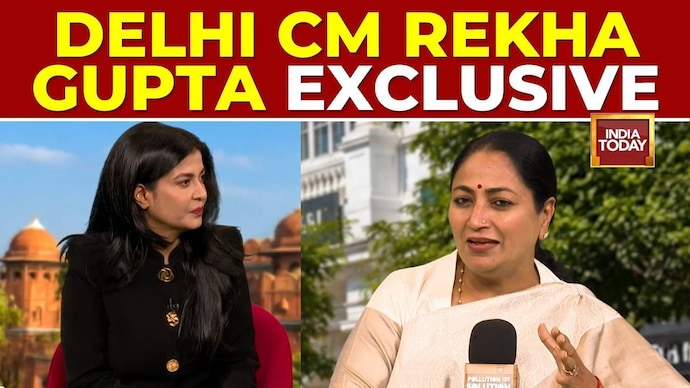
Delhi CM Rekha Gupta Unveils EV Policy, Dust Monitoring & Stubble Plan To Curb Pollution

Delhi Environment Minister Mahendra Singh Sirsa and Delhi Chief Minister Rekha Gupta outlined government initiatives to combat air pollution at the India Today Group's 'Pollution Ka Solution' event. Minister Sirsa detailed waste management efforts, reporting that Delhi processes up to 15,000 metric tons of daily waste and 35,000 metric tons of legacy waste, with over 70 acres of landfill reclaimed. Inspections of 12,000 industrial units led to the sealing of 2,200 non-compliant factories. Annual average PM2.5 levels decreased by 7.7 percent, while PM10 levels dropped by 7.1 percent. Chief Minister Gupta highlighted a 15,000 crore rupee EV policy targeting charging infrastructure, battery recycling, and a transition to 100 percent electric government vehicles. Construction dust monitoring relies on AI-enabled digital cameras for properties exceeding 500 square metres. Additional measures include a 70 lakh tree plantation drive, forest notification for the ridge area, and regional cooperation on stubble burning. Medical and innovation experts also addressed pediatric health risks and Gen Z solutions.

Delhi CM Rekha Gupta Plans 100% EV Push, AI Construction Monitoring And Work From Home Mandate

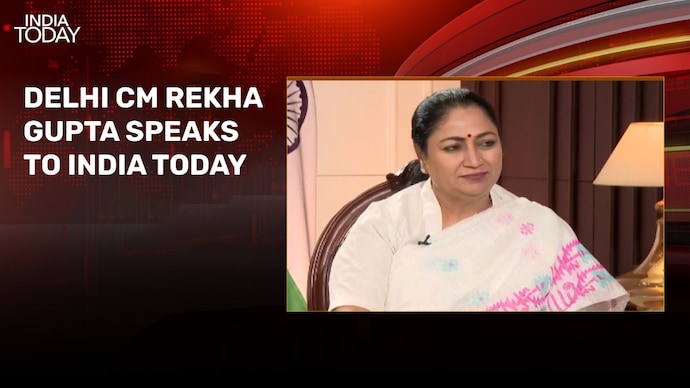
At an India Today Group event for the Pollution Ka Solution campaign, Delhi Chief Minister Rekha Gupta discussed her government's comprehensive strategy to combat air pollution in the national capital. Highlighting a scientific roadmap adopted over her tenure, she outlined key initiatives including a 15,000 crore rupee EV policy focused on incentives, scrapping, and infrastructure development. She clarified that future government vehicle purchases will be 100 percent electric. To address construction dust, the government introduced AI-driven monitoring cameras linked to a command center via a dust portal for properties over 500 square meters. The plan also incorporates mandatory 50 percent work-from-home measures, a winter action plan from November to January, and a mass plantation drive targeting 70 lakh saplings. Regarding stubble burning, Chief Minister Gupta emphasized regional coordination with neighboring states including Haryana, Uttar Pradesh, Rajasthan, and Punjab to implement a common minimum agenda and tackle open burning across Delhi NCR.

Delhi Waste Reclaim, AQI Drop & Industrial Sealing: Environment Minister Details Pollution Plan

Delhi's Environment Minister addressed the city's complex pollution challenges at an event hosted with India Today Group. Highlighting major sources including vehicular emissions, construction dust, and massive landfill sites, the Minister detailed waste management efforts, noting that over 70 acres of land have been reclaimed from landfill mountains. The Minister presented data indicating a 7.7 percent drop in annual average PM 2.5 levels, a 7.1 percent reduction in annual PM 10 levels, and a 3.87 percent decrease in average AQI. Addressing public questions, he explained that funds allocated for cloud seeding were provided to IIT Kanpur for research. Furthermore, authorities inspected 12,000 unauthorized industrial units in outer Delhi, sealing over 2,200 non-compliant factories. Emphasizing that long-term air quality improvement takes time, he highlighted inter-state coordination under the Union Environment Ministry and invited young innovators to submit solutions to help clean Delhi's air.

5ive Live: Mamata vs Suvendu in Bhabanipur, Bengal awaits high-voltage faceoff

West Bengal Chief Minister Mamata Banerjee is set to face a major political challenge from Leader of Opposition Suvendu Adhikari of the BJP in the Bhabanipur constituency in south Kolkata, a seat considered her political stronghold. The contest follows Adhikari’s narrow 2021 victory over Banerjee in Nandigram by about 1,900 votes.

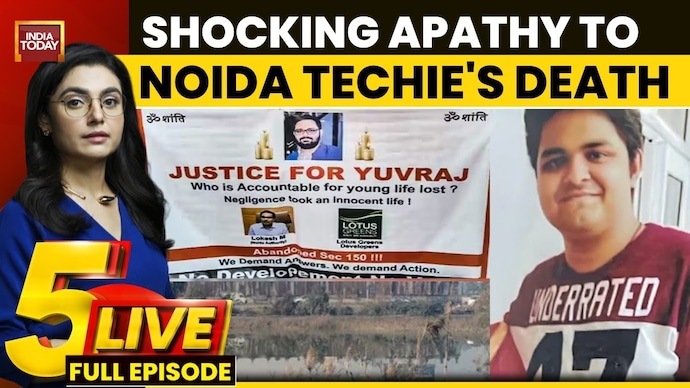
Sonal Mehrotra Kapoor Reports: 'This Was Murder, Not An Accident' In Noida Drowning Case

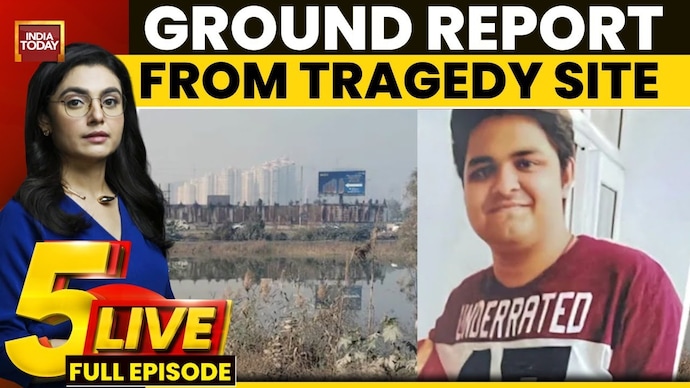
This India Today Special Report, led by Sonal Mehrotra Kapoor, investigates the death of 27-year-old Yuvraj Mehta in Noida’s Sector 150. Mehta drowned after his vehicle plunged into a 30-foot water-filled ditch at a stalled construction site managed by MZ Wishtown. The investigation details a six-hour rescue delay and a lack of essential equipment despite the victim’s emergency calls. The site lacked barricades, reflectors, and streetlights, leading to the arrest of builder Abhay Kumar and the removal of the Noida Authority CEO following Chief Minister Yogi Adityanath's intervention. The report examines systemic failures and the Allahabad High Court’s observations on corruption within the Sports City project. Additionally, the broadcast covers global updates from Davos, including Indian CEOs meeting US President Donald Trump and European Union discussions regarding a Free Trade Agreement with India. Finally, the report notes the revocation of GRAP Stage IV measures in Delhi-NCR as regional air quality levels showed marginal improvement.

Delhi-NCR Air Quality Improves: GRAP 4 Restrictions Lifted, AQI Still Very Poor

On this news bulletin, the focus is on the improving air quality in the National Capital Region. India Today correspondent Sushant Mehra reports that the Commission for Air Quality Management (CAQM) has revoked Stage 4 of the Graded Response Action Plan (GRAP) across Delhi-NCR. Sushant Mehra notes that 'the air quality index in Delhi right now is around 375, in the very poor category', leading to the decision to ease the strictest curbs. While Stage 4 measures, which were imposed when the AQI breached the 400 mark, have been removed, restrictions under Stages 1, 2, and 3 will remain in force to manage pollution levels. The report highlights that the slight improvement in air quality is attributed to better weather conditions, including sunlight and wind movement, providing much-needed relief to the residents of the national capital.

TVK Chief Vijay Questioned by CBI Over Karur Stampede Case

On this Special Report, host Sonal Mehrotra Kapoor examines the death of Yuvraj, a software professional who drowned after his vehicle plunged into an unmarked construction pit in Noida Sector 150. The investigation highlights a 90-minute rescue delay and questions the Noida Authority regarding the absence of barricades despite an 8,732 crore budget. Former Urban Development Secretary Sudhir Krishna discusses the lack of SDRF preparedness. The program also covers the CBI questioning of TVK chief Vijay concerning the Karur stampede, focusing on event delays and organizational violations. Vijay denies legal breaches, attributing the incident to police lapses. Further reports address India's pollution crisis as Danish shuttler Mia Blichfeldt withdraws from the India Open due to Delhi's air quality. The broadcast concludes with the Indian cricket team's ODI series loss to New Zealand and a health emergency in Madhya Pradesh, where contaminated water is linked to a Guillain-Barre Syndrome outbreak, prompting a World Health Organization probe into local public health failures.

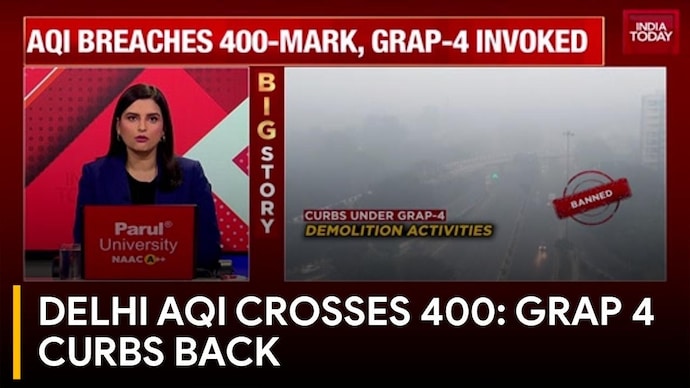
Delhi Air Quality Turns Severe As AQI Crosses 400 Mark; GRAP Stage 4 Curbs Re-imposed

The National Capital has once again turned into a 'gas chamber' as air quality plummeted into the severe category, with the AQI breaching the 400 mark. In response to the spiralling pollution levels, the Commission for Air Quality Management has re-imposed Stage 4 of the Graded Response Action Plan (GRAP) across the National Capital Region. This move triggers the toughest anti-pollution curbs, including a complete halt on all construction and demolition activities. Under these restrictions, vehicles below BS 6 emission norms are barred from entering Delhi, and there is a total ban on diesel trucks, except those carrying essential goods. The report highlights that only BS 6 compliant vehicles are permitted entry as authorities scramble to control the deteriorating environmental conditions. The re-imposition of these stringent measures reflects the critical nature of the pollution crisis currently affecting Delhi and its surrounding areas.

GRAP Stage 4 Reimposed In Delhi-NCR As AQI Crosses 400 Mark Into Severe Category

On this news report, the focus is on the deteriorating air quality in the Delhi-NCR region, which has led to the reimposition of Stage 4 of the Graded Response Action Plan (GRAP). The air quality index (AQI) in the national capital has surged past the 400 mark, entering the 'severe' category, with PM 2.5 levels reaching 428 and exceeding 450 in several areas. The unidentified speaker notes that 'Curbs will include a complete ban on construction and demolition activities' and a ban on the entry of non-BS6 diesel trucks. The Commission for Air Quality Management (CAQM) has also ordered all schools to shift to hybrid mode to protect students. These emergency measures will remain in place until pollution levels subside to Stage 2 or 3. The sudden spike in pollution is attributed to recent changes in weather conditions across the region.

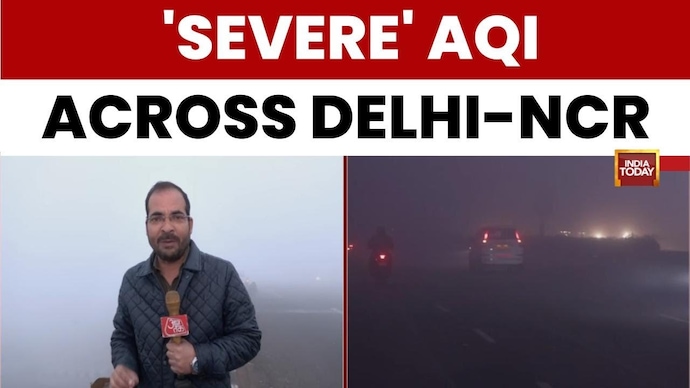
Delhi Weather News: GRAP 3 Curbs Reimposed As Cold Wave And Fog Grip Delhi NCR

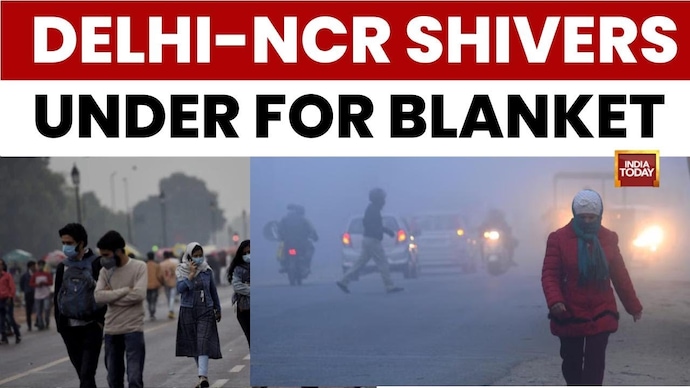
On this Special Report, Shreya Chatterjee highlights the severe weather and pollution crisis currently gripping the National Capital Region. Delhi NCR is facing a 'triple attack' of dense fog, a biting cold wave, and deteriorating air quality, which has prompted the Commission for Air Quality Management to reimpose Stage 3 restrictions under the Graded Response Action Plan (GRAP). Shreya Chatterjee notes that 'the air quality has also come down to deteriorate again to severe category' following a brief period of relief. The programme features ground updates from correspondent Anmol Bali at Anand Vihar, where visibility remains significantly impacted. With minimum temperatures dropping to around 6 degrees Celsius, the city continues to face harsh winter conditions that have disrupted daily life and traffic. The report explores the impact of these conditions and the enforcement of GRAP 3 measures to curb rising pollution levels across the capital.

Delhi Weather Update: IMD Issues Yellow Alert For Fog; Air Quality Deteriorates To GRAP 3 Levels

This news bulletin provides a critical weather and pollution update for the Delhi NCR region. The National Capital is currently shrouded in a thick blanket of fog, which has significantly impacted travel, leading to the cancellation and delay of several flights and trains. The India Meteorological Department (IMD) has issued a yellow alert as visibility remains poor in the early hours. The speaker notes that 'until the wind speed picks up the fog Situation might not improve.' In addition to the weather challenges, air quality has deteriorated further, prompting the reimposition of GRAP 3 measures. Residents are advised to monitor travel schedules closely as temperatures remain low and the air quality index continues to decline after a brief period of relief. The report emphasizes the dual challenge of dense fog and soaring pollution levels affecting the region.

Supreme Court Pulls Up CAQM Over Pollution Crisis: 'Stop Blaming Farmers For Stubble Burning'

In this news report, India Today's Srishti Ojha details the Supreme Court's strong observations regarding the pollution crisis in Delhi NCR. The top court pulled up the Commission for Air Quality Management (CAQM), stating that the agency 'does not appear to be in any hurry' to identify the causes of worsening Air Quality Index (AQI) or find long-term solutions. The Court directed the agency to shortlist experts to bring solutions before the public. Crucially, the Supreme Court observed that 'we need to stop blaming farmers' entirely for stubble burning, emphasizing that objective solutions must be found. The report highlights the need for a phased approach to tackle the environmental challenge.

Delhi Pollution: CAQM Revokes GRAP-3 and GRAP-4 Curbs as AQI Improves to 234; Amit Bharadwaj Reports

In a significant relief for Delhi-NCR, the Commission for Air Quality Management (CAQM) has revoked GRAP Stage 3 and 4 restrictions with immediate effect. India Today's Amit Bharadwaj reports that the decision followed a dip in the Air Quality Index (AQI) to 234, attributed to improved wind speeds rather than agency efforts. The revocation lifts bans on construction activities and BS-3 petrol and BS-4 diesel vehicles. However, the anchor and Bharadwaj question the urgency of removing curbs compared to their enforcement, warning that toxicity could return if wind speeds drop.