Cops intercept suspicious car in Telangana, find Rs 1.38 crore in demonetised currency
Telangana Police arrested eight people in Kazipet and seized demonetised Rs 500 and Rs 1,000 notes worth Rs 1.38 crore during a vehicle check.

Demonetisation is defined as the act of removing the legal tender status of currency units. This can occur when the national currency is changed. It can really affect the economy of a country if undertaken suddenly and without warning. This is so because it directly affects the medium of exchange in economic transactions.
Most of the countries across the globe have used Demonetisation at some point and it is done to control situations such as inflation and to boost the economy. In November 2016, the Indian government banned the high denomination notes of Rs 1000 and Rs 500 as a move to curb counterfeiting and money laundering.
On November 9, Indian Prime Minister Narendra Modi orchestrated his plans of a denomination to uproot the problems of corruption, black money, and counterfeiting in India. His decision to scrap all the notes of Rs 1000 and Rs 500 made it to headlines all over the world, attracting both positive and negative comments.
About 86 per cent of the currency in circulation became invalid by midnight. The three main objectives of the demonetisation were fighting black money, fake notes and creating a cashless economy by pushing digital transactions.
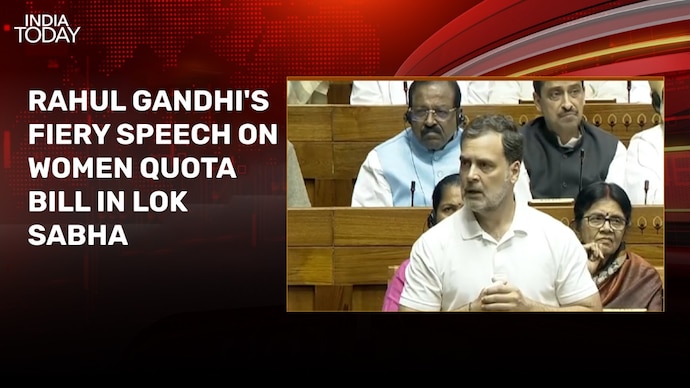
Leader of Opposition Rahul Gandhi said the constitution amendment bill has nothing to do with women's reservation but is an attempt by the government to change the country's electoral map.
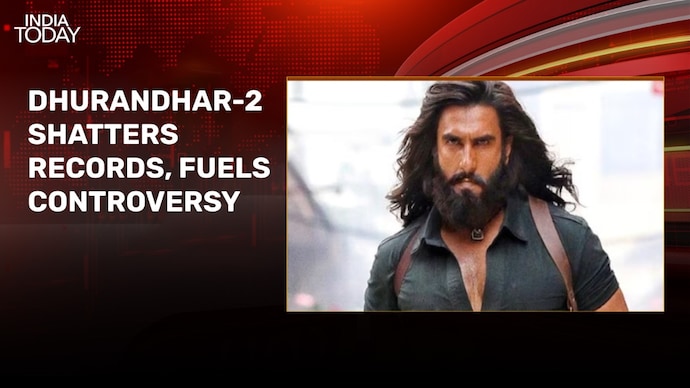
Dhurandhar 2, starring Ranveer Singh, has sparked political controversy, with opposition leaders accusing the filmmakers of promoting the ruling party's agenda.
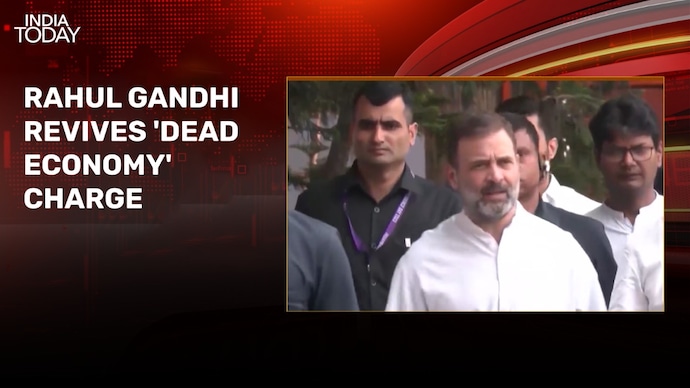
The top focus of this episode of To The Point is on Congress leader Rahul Gandhi’s 'dead economy' jibe.
This special report anchored by Akshita Nandagopal examines the political friction surrounding Congress leader Rahul Gandhi’s remarks on the Indian economy. Gandhi characterizes the current fiscal state as a dead economy, citing the impact of 50% US tariffs on Indian textiles under the Trump administration. The program features a debate between BJP’s RP Singh and Congress spokesperson Anshul Avijit regarding infrastructure spending, private investment, and poverty alleviation. Insights from the World Economic Forum in Davos include perspectives from economists like Geeta Gopinath on India’s growth trajectory and data transparency. Additionally, the report features NASA astronaut Sunita Williams reflecting on her 27-year career, her bond with Kalpana Chawla’s family, and the future of lunar exploration. The broadcast also covers the impact of heavy snowfall in Jammu, Kashmir, and Himachal Pradesh, which has disrupted flights and road connectivity. This comprehensive coverage bridges domestic economic policy, international trade relations with the United States, scientific milestones, and the logistical challenges posed by winter weather in northern India.
In the fifth and the final episode of India Today@50 detailing events from 2015 to 2025, Raj Chengappa, Group Editorial Director (Publishing), provides a comprehensive analysis of India under Prime Minister Narendra Modi's leadership from 2014.
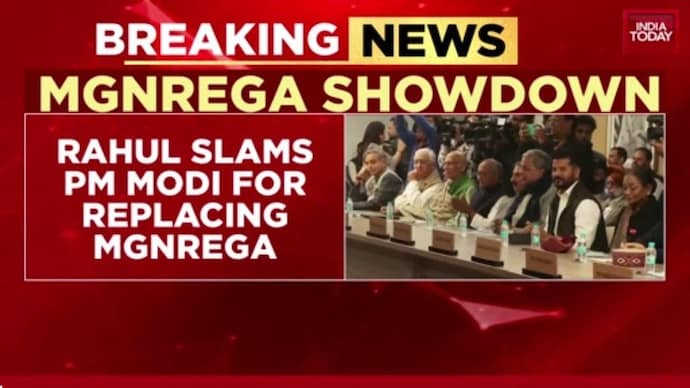
In this news bulletin, the focus is on the Congress Working Committee (CWC) meeting where 91 members took an oath to launch the 'Mandrega Abhiyan' (MGNREGA Bachao Abhiyan) from January 5, 2026. Rahul Gandhi launched a fresh attack on Prime Minister Narendra Modi and the central government, terming the new 'VB-G RAM G' law as 'arbitrary' and not in the best interest of the poor. The Congress has been protesting the name change and the funding pattern, specifically the '60-40 formula', which they claim is an attempt by the government to shirk responsibility. The report highlights the party's resolve to defend the rural employment scheme.
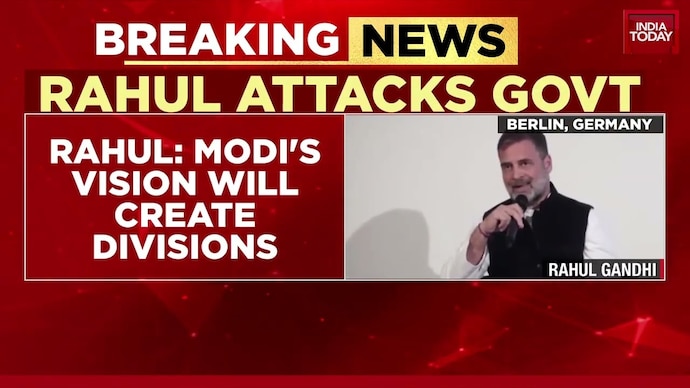
In a scathing attack on the Modi government from Berlin, Leader of Opposition Rahul Gandhi alleged that the BJP is proposing the 'elimination of the Indian Constitution'. Speaking at the Hertie School, Gandhi claimed that Prime Minister Narendra Modi's vision is creating divisions and that the Opposition is fighting 'captured institutions' rather than just a political party. He also criticised the government's economic policies, stating that demonetisation 'systematically destroyed' small and medium industries to favour a duopoly of 'Ambani and Adani'. India Today's Rahul Gautam reports on the potential political confrontation.
A significant controversy has erupted in Bihar over the Special Intensive Revision (SIR) of electoral rolls, a process that could be implemented nationwide. Activist Yogendra Yadav compared the exercise to demonetisation, stating it improperly shifts the burden of proof onto the voter. This has raised concerns about the potential disenfranchisement of 10-15% of the poorest populations, with women and marginalized communities most at risk. Former Chief Election Commissioner O.P. Rawat also highlighted the timing of the revision as a 'problem area'. A central issue is the role of Aadhaar; the Supreme Court has clarified it is a proof of identity but not of citizenship, domicile, or age. Yadav noted that out of 7.24 crore people in Bihar, only 987 objections concerning foreigners on the voter list were filed, with the BJP filing none, countering narratives of widespread illegal voters.
Rahul Gandhi, the leader of the opposition in the Lok Sabha, alleged that Prime Minister Modi killed the economy, citing the Modi-Adani relationship and failed demonetisation as reasons.
The opposition MVA on Sunday released its manifesto for the November 20 Maharashtra polls, promising free cervical cancer vaccines for girls aged 9 to 16 and two optional leave days for women employees during menstruation.
The Lok Sabha on Wednesday saw a heated exchange between Speaker Om Birla and Trinamool Congress MP Abhishek Banerjee. During the discussion over the Union Budget in the Lower House, he Trinamool MP started speaking about demonestisation and the now repealed three farm laws.
The Congress party released its mission statement for the Lok Sabha Elections -- The Nyay Patra -- on Friday. Focusing on five "pillars of justice", especially for women, youth, and farmers, the manifesto promises a legal guarantee for MSP, raising the 50 percent cap on reservations for SCs, STs, and OBCs, conducting a nationwide caste census, scrapping the Agnipath scheme, granting statehood to Jammu and Kashmir, and more. Notably, it also vowed reinvestigation into demonetisation and the electoral bond, as well as reinvestigation into the Rafale deal and the Pegasus spyware. Meanwhile, the BJP accused the Congress of peddling lies through the poll manifesto.
Congress leader Rahul Gandhi addressed a large crowd in the Mohana area of Gwalior city on the 50th day of his Bharat Jodo Nyay Yatra, launching an attack on the Central government and blaming it for growing unemployment in the country. "Today, in the last 40 years unemployment is the highest in the country. Do you know, India has double the unemployment as compared to Pakistan. Here 23 percent youth are unemployed, there (in Pakistan) it is 12 per cent, so in India, it is double (that of Pakistan). We have more unemployed youth than Bangladesh and Bhutan because Narendra Modi has finished small businesses by demonetisation and implementing GST," Rahul Gandhi said.
The Supreme Court delivered its judgment on the Centre’s 2016 demonetisation decision and said the notification cannot be struck down.
Senior Congress leader and former Union Finance Minister P Chidambaram shares his views on the Supreme Court's 4:1 majority verdict which upheld the government's 2016 decision to demonetise Rs 1,000 and Rs 500 denomination notes.
The Supreme Court holding the demonetisation decision as neither "flawed nor hasty" was on Monday hailed by the BJP as "historic" even as the Opposition contended that it is "misleading and wrong" to say the court has upheld the move.
The Supreme Court has upheld the decision of the Union government taken in 2016 to demonetise the currency notes of Rs 500 and Rs 1000 denominations. While dismissing a batch of pleas challenging the note ban, the Supreme Court said the decision could not be faulted just because the Centre initiated it. "The demonetisation exercise cannot be struck down on grounds of proportionality," the top court said.
The five-judge bench of the Supreme Court on Monday will be pronouncing its verdict on a batch of 58 petitions challenging the legal validity of the November 2016 demonetisation. The petitions have claimed that the due process required for the demonetisation was not followed, and the rights of Indian citizens were violated due to the arbitrary decision.
Individuals can start exchanging or depositing Rs 2,000 notes at banks from today. Here's all you need to know about the process.