Vietnamese crab exporter

Topic

Advertisement
TOPIC

Education Budget

The Education Budget outlines how the government plans to spend on schools, colleges, universities and skill development in the coming year. It highlights priorities such as classroom learning, teacher training, digital education and job-linked skills. The Budget affects students through scholarships and facilities, and institutions through funding and policy support. This page tracks key announcements, expert views and how Budget decisions impact learners, educators and the education system overall.

  • ALL
  • STORIES
  • VIDEOS

STORIES

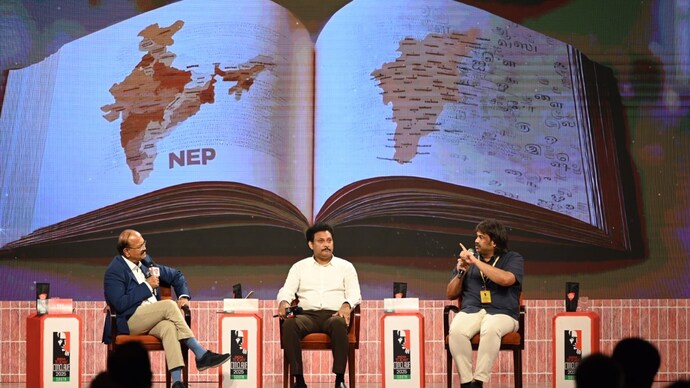
NEP at 6: Big spend, uneven gains in India's classrooms

India has now completed six years of NEP 2020. The policy, introduced to bring about a major overhaul of the education system, appears to have achieved some progress, but the amount of money spent has been enormous. Questions still remain over the future course of NEP 2020, as better infrastructure and many of the promised reforms are yet to materialise. Let's discuss.

Shandaar char saal: Bhagwant Mann presents Punjab's education reforms report card

Punjab CM Bhagwant Mann said his government’s four-year “education revolution” has boosted funding, improved infrastructure, ensured zero paper leaks, and delivered strong academic results, with new Schools of Eminence, large-scale teacher recruitment, global training, and higher student success in exams like JEE and NEET.

Karnataka to ban social media use for children under 16: CM Siddaramaiah

The Karnataka government plans to ban social media use for children under 16, amid rising concerns over smartphone addiction, online safety risks, and excessive screen exposure among young users. The announcement was made by Karnataka Chief Minister Siddaramaiah while he was presenting the 2026–27 state Budget on Friday.

Load More

VIDEOS

Political Row Erupts in Indore Over Rahul Gandhi's Remarks at Student Event as Mohan Yadav Hits Back

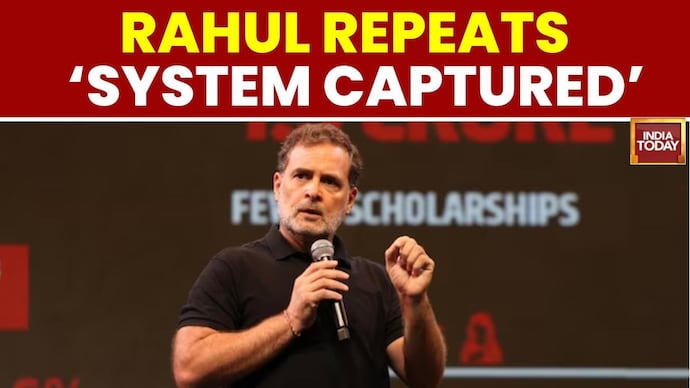
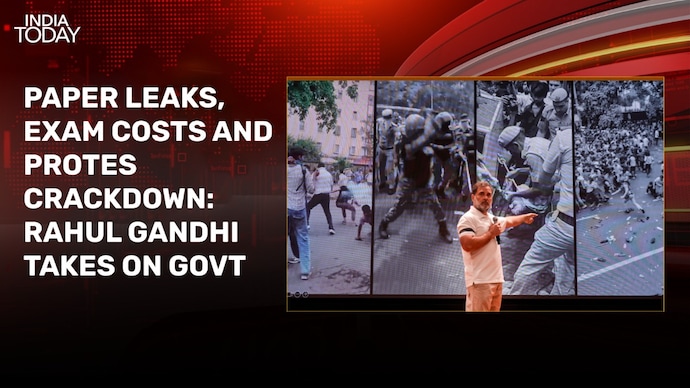
A major political row has erupted following Lok Sabha Leader of Opposition Rahul Gandhi's address at the 'Chhatro Ki Goonj' student interaction event in Indore. Criticising the central government and the education system, Rahul Gandhi alleged that the system prefers unquestioning followers over inquisitive students and claimed that funding for education has been significantly curtailed under the current dispensation. He further alleged institutional capture by the Bharatiya Janata Party and the Rashtriya Swayamsevak Sangh, stating that students across the country are facing intense pressure. Responding to the remarks, Madhya Pradesh Chief Minister Mohan Yadav rejected the allegations, terming the event an effort to mislead the public and spread falsehoods. Yadav accused the Congress party of lacking seriousness on youth issues and failing to support students historically. The exchange marks the latest flashpoint between the two parties surrounding student outreach initiatives.

ABVP Sweeps DUSU Polls, BJP-Congress Clash; Rahul Gandhi Targets Govt

The Akhil Bharatiya Vidyarthi Parishad (ABVP) registered a major victory in the Delhi University Students' Union (DUSU) elections, securing three of the four central panel positions, while the Congress-backed National Students' Union of India (NSUI) failed to win any central posts. The election outcome ignited a political row between the Bharatiya Janata Party and the Congress. The BJP credited the victory to youth faith in the vision of a developed India, while the Congress alleged counting irregularities and demanded an inquiry into malpractice. Concurrently, Congress leader Rahul Gandhi addressed students in Indore, alleging that the education system has been captured by the ruling establishment and that central education budget allocations have declined. The bulletin also features reactions from the newly elected DUSU panel members on campus safety and student welfare, alongside an independent candidate who secured a record-breaking victory.

Samrat Choudhary: 'यह बदला हुआ बिहार है'

In an interview, Bihar Chief Minister Samrat Choudhary presented his 150-day governance report card, highlighting achievements in education, industrial land allocation, and public grievance redressal. Choudhary stated that under his government, 700 model schools have been established catering to approximately 3.5 lakh students, supported by the 24/7 Vidyarthi Sathi application. He pointed out the launch of 211 degree colleges in a single day and noted that nearly 1,000 industrial units were provided land. Explaining Bihar's economic progress, he remarked, "यह बदला हुआ बिहार है," highlighting energy subsidies of ₹23,000 crore and 125 units of free electricity for over 1.9 crore families. Choudhary also detailed the Sahyog program, stating that over 8.5 lakh public grievances were received with a 96 percent resolution rate. Addressing the BJP's electoral loss in Bankipur, he acknowledged the public mandate and dismissed claims that it was a referendum on his leadership, maintaining that the NDA alliance holds a stable majority with 122 MLAs in Bihar.

SC Judge Flags Education Budget Cuts, Compares Kumbh Funds With Marathi Schools Closure

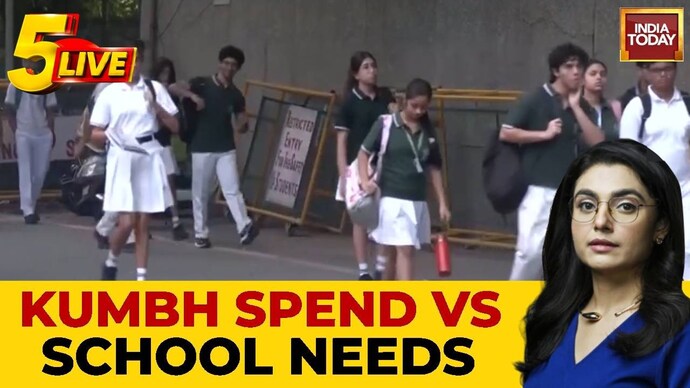
Supreme Court Justice Prasanna Varale highlighted concerns over the prioritization of public funds, drawing a comparison between the budget allocated for the upcoming Kumbh Mela in Nashik and the financial resources available for government schools. Speaking about the closure of Marathi-medium schools, Justice Varale noted that allocating even 0.1 percent of the projected 32,000 to 34,000 crore rupees Kumbh Mela expenditure—approximately 32 crore rupees—could have prevented the shutdown of around 100 to 125 Marathi-medium schools. He expressed concern regarding shrinking education budgets despite a rise in student enrollment, pointing to poor infrastructure and safety issues in rural and government institutions, including ashramshalas. Responding to the comments, reporter Anisha Mathur noted that statements made by judges at private events hold no legal bearing on the government. She further referenced prior court scrutiny where state governments cited budget constraints when questioned on underfunding for child protection, education, and women safety schemes, emphasizing that education accounts for less than 13 percent of the annual budget.

Yogi Govt Clears ₹604 Crore For UP Govt Schools To Upgrade Infrastructure & Connect With Gen Alpha

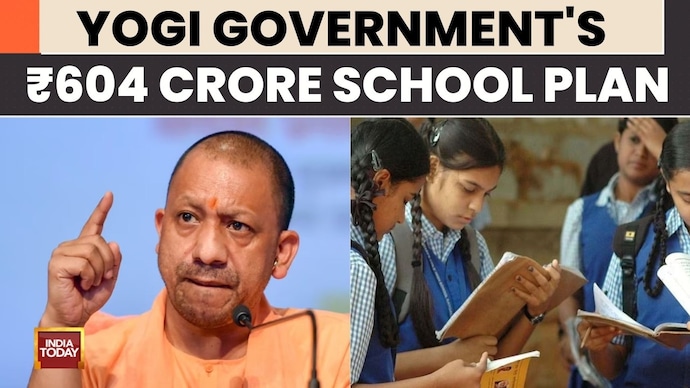
The Uttar Pradesh government led by Chief Minister Yogi Adityanath has allocated ₹604 crore to upgrade government schools as part of an initiative to connect with Generation Alpha students. The Basic Education Directorate has released ₹302 crore as the first installment. Under this plan, ₹344 crore has been allocated for 2,243 primary schools, with ₹172.26 crore released in the initial phase, translating to around ₹15.36 lakh per primary school. Additionally, ₹259.95 crore has been allotted to 883 upper primary schools, with ₹130 crore disbursed in the first installment. The funds will be utilized for repair, reconstruction, and upgrading infrastructure across rural and urban districts including Deoria, Maharajganj, and the Purvanchal region. Key improvements focus on enhancing classroom facilities, bus services, toilets, access roads, and establishing practical and AI learning environments for nearly 2.5 crore students. India Today correspondent Ashish Srivastava reported that ground-level works will commence immediately, with visible improvements expected within two to three months and full transformation within six months.

Cracks, Overcrowding & No Water: Ground Report Exposes Reality Of Punjab Govt Schools

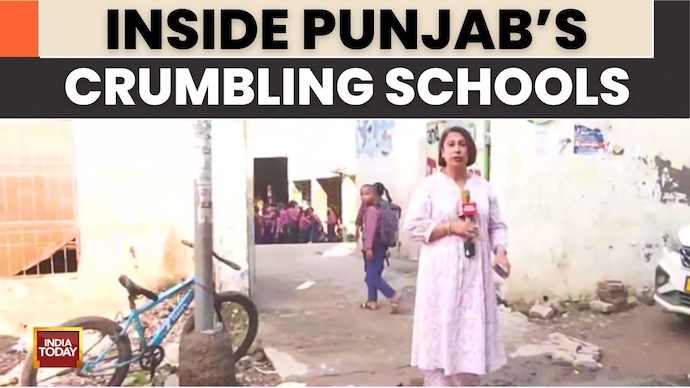
An India Today ground report reveals severe infrastructure failures in Punjab government primary schools, contrasting state government claims of having the nation's best education model. In Sohana near Chandigarh, a primary smart school designed for 250 to 300 students now houses nearly 600 children, forcing many to attend classes outdoors. Six classrooms have been declared unsafe due to deep wall cracks and rainwater seepage, while basic facilities like working water taps, filters, and electricity connections remain non-existent. A second building lacks proper power and water supply entirely, prompting the school to send an urgent request for 50 lakh rupees in development funds. In Sunam, Sangrur—part of Chief Minister Bhagwant Mann's former parliamentary constituency—classrooms are severely overcrowded, forcing teachers to merge multiple grades from pre-nursery to class five into single spaces and verandas. Parents and students highlight acute shortages of learning space and playgrounds, raising serious questions regarding the state's education administration.

Lok Sabha paper leak debate: Heated face-off between Priyanka Gandhi and Pralhad Joshi

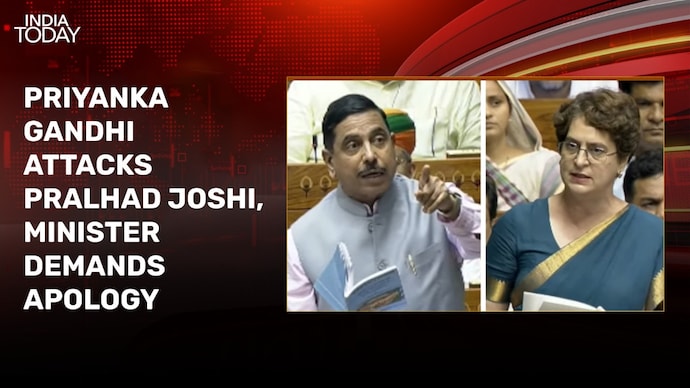
In Lok Sabha, Congress leader Priyanka Gandhi Vadra mounted a fierce attack on the government during a debate on the anti-paper leak bill, raising the plight of injured student protesters and alleging harsh police action involving tear gas, water cannons, and pellet guns. She questioned the government's accountability over repeated examination paper leaks affecting millions of students nationwide and criticized systemic failures within the education infrastructure. Gandhi further sparked severe uproar and opposition from treasury benches by making serious allegations against newly appointed Education Minister Prahlad Joshi regarding past controversial comments. Outside Parliament, Rahul Gandhi amplified the assault, accusing the Prime Minister of choosing a minister who defends rapists. Countering the allegations, BJP MP Tejasvi Surya defended the government's measures, emphasizing that high-powered committees, CBI probes, computer-based exam transitions, and stringent legislation are key steps toward permanently resolving examination malpractices.

Budget 2026: Focus On 'Reform Express' And Digital Transformation At Kartavya Bhawan

In this India Today special report, Maria Shakil leads coverage as Finance Minister Nirmala Sitharaman prepares to present her ninth Union Budget. For the first time in 75 years, the Finance Minister is expected to read 'Part B' of the budget speech in its entirety, focusing on custom reforms and deregulation. The government aims to balance CAPEX-led growth with consumption relief while emphasizing digital transformation through a tablet-based 'Bahi Khata' at the new Kartavya Bhawan. Key discussions include potential tweaks to the Security Transaction Tax (STT), recalibration of capital gains tax, and increased allocations for PM Awas Yojana and Ayushman Bharat. Union Minister Piyush Goyal provides insights into India's trade deal with the European Union. Analysts examine the 'K-shaped' economy, global headwinds, and the role of cooperative federalism in driving labor-intensive manufacturing. The program also highlights the participation of women in the budget drafting team to address household economic concerns ahead of crucial elections in five states.

Sanchita Mukherjee on Budget: 'The Tiger Lies Low When It Is Taking Aim'

On this broadcast, economist Sanchita Mukherjee analyses the expectations and strategic direction of the Union Budget. Mukherjee highlights the importance of fiscal consolidation and execution, stating, 'The tiger lies low, not in fear. The tiger lies low when it's taking in .' She emphasizes that while India's macroeconomic parameters remain pristine, the challenge lies in attracting FDI and translating education into productive skilling and job creation. The discussion covers the need for public-private partnerships to mitigate regulatory risks and the importance of simplifying execution to cut through red tape. Mukherjee also suggests enhancing agricultural productivity through credit guarantee schemes similar to the MSME sector and proposes aggressive asset and gold monetisation to fund urban infrastructure. The transcript further explores the role of women in the budget drafting team, including Finance Minister Nirmala Sitharaman and DEA Secretary Anuradha Thakur, noting how female participation influences social sector allocations and household budget concerns.

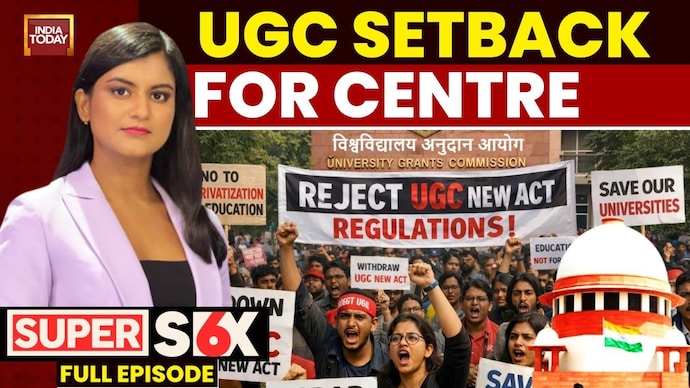
Akshita Nandagopal Reports: SC Stays UGC 2026 Equity Norms, Terms Them 'Prone To Misuse'

On this Special Report, anchor Akshita Nandagopal discusses the Supreme Court's significant decision to stay the University Grants Commission (UGC) 2026 equity regulations. The apex court described the new norms as 'prima facie vague and prone to misuse,' providing major relief to protesting students. During the hearing, the court expressed concerns that the regulations could lead to a societal divide, stating, 'Hope we don't divide campuses like America.' The programme explores the legal and political fallout of this 'judicial bombshell' on the central government, featuring insights from legal correspondent Srishti Ojha and ground reports from Delhi University. While the government faces a January 19 deadline to submit a detailed response, students remain divided; some fear the birth of 'reverse discrimination' while others advocate for clearer safeguards against historical caste-based exclusion. The report also touches upon the upcoming budget with a glimpse of an interview with Chief Economic Advisor V. Anantha Nageswaran regarding trade deals and the Indian rupee.

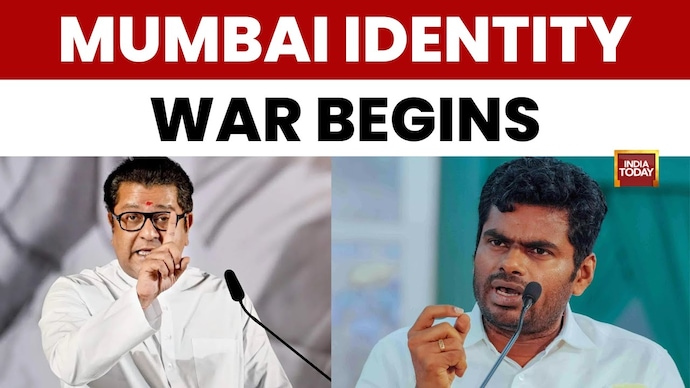
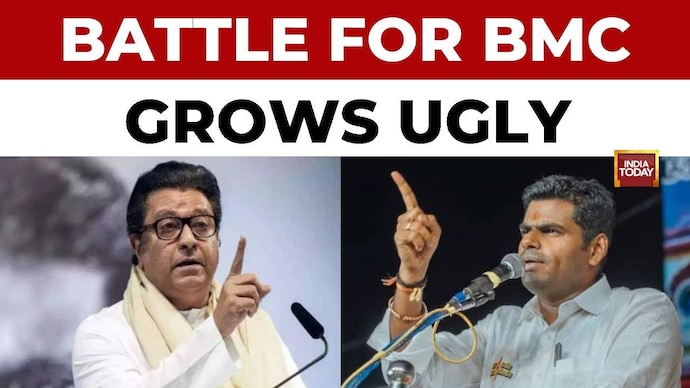
K. annamalai sparks row: 'bombay is not a maharashtra city, it is an international city'

This report covers the escalating political war in maharashtra over mumbai's identity. the row was triggered by bjp leader k. annamalai, who stated, 'because bombay is not a maharashtra city, it's an international city' while advocating for a 'triple engine sarkar' ahead of the bmc polls. maharashtra chief minister devendra fadnavis defended the remarks, claiming they were misconstrued, and hit back at uddhav thackeray and raj thackeray. fadnavis argued the conflict is about the political survival of the shiv sena (ubt) and mns rather than regional pride. he further pointed out that it was during uddhav thackeray's tenure that the cabinet approved teaching hindi and english in schools. meanwhile, uddhav thackeray mocked annamalai, warning of a public backlash in tamil nadu for such comments. the transcript highlights the sharp divide between the bjp and the thackeray cousins over the administration and cultural identity of india's financial capital.

Uddhav Thackeray and Raj Thackeray Slam K. Annamalai Over 'Mumbai Not in Maharashtra' Remark

This news report covers the escalating political confrontation in Maharashtra following remarks made by BJP leader K. Annamalai regarding Mumbai's identity. The controversy began when Annamalai stated, 'Mumbai is not a Maharashtra city, it is an international city,' triggering sharp reactions from MNS chief Raj Thackeray and Shiv Sena (UBT) chief Uddhav Thackeray. Raj Thackeray accused Deputy Chief Minister Devendra Fadnavis of lying to protect his colleague, while Uddhav Thackeray mocked Annamalai's electoral record in Tamil Nadu, calling him a 'zero'. In response, Devendra Fadnavis hit back, asserting that the upcoming BMC battle is about the political survival of the Thackeray brothers rather than Marathi identity. Fadnavis further countered Uddhav Thackeray by pointing out that it was during Thackeray’s tenure as Chief Minister that the cabinet approved the mandatory teaching of Hindi and English in schools. The report highlights the deepening rift between the Mahayuti alliance and the opposition over regional pride and administrative control of the Brihanmumbai Municipal Corporation.

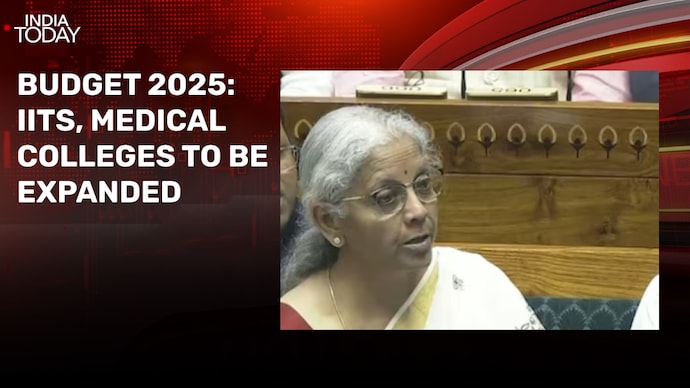
Budget 2025: IITs, medical colleges to get more seats

The government will expand infrastructure at five IITs established after 2014, creating space for 6,500 more students. Medical education will also see a significant boost, with 10,000 additional seats being added to medical colleges and hospitals nationwide.