When sugar daddy is scared...: Tehseen Poonawalla claims detention at E20 protest
Sunday’s incident marked the latest confrontation between Poonawalla and Delhi Police over his opposition to the E20 policy.

Ethanol is a plant-based alcohol produced by fermenting crops such as sugarcane, maize and damaged rice. In India, it is blended with petrol to create cleaner-burning fuel. The most common blend today is E20, which contains 20% ethanol and 80% petrol, and is now available at most fuel stations across the country.
The Ethanol Blended Petrol (EBP) programme is a key part of India's strategy to reduce dependence on imported crude oil, lower greenhouse gas emissions and support farmers by creating demand for agricultural produce. The government says the programme also helps cut the country's massive oil import bill while strengthening energy security. India's target of achieving 20% ethanol blending was met ahead of schedule, and policymakers are now exploring higher blending levels in the coming years.
The programme, however, has sparked debate. Some motorists and experts have raised concerns that E20 fuel could affect engine performance, fuel efficiency and older vehicles not designed for higher ethanol blends. The Ministry of Petroleum and Natural Gas has rejected these claims, calling them misinformation and maintaining that the rollout followed years of consultation with automakers, oil companies and other stakeholders.
The ethanol sector also faces new challenges. Rapid expansion in production capacity has created a surplus, with India estimated to have around 700 crore litres of excess capacity. Distilleries are now seeking permission to export ethanol to neighbouring countries such as Nepal, Bangladesh and Indonesia. As India pushes towards higher ethanol use, balancing environmental goals, energy security, vehicle compatibility and industry economics will remain central to the country's biofuel policy.
Surging crude oil prices triggered cautious market sentiment as Brent crude breached the 100 dollars per barrel mark and India's crude basket reached a four-month high of 108.99 dollars, driving the rupee down and pushing the Nifty index to settle at 23,431 after dropping nearly 200 points. The India VIX surged over six percent while real estate, IT, and financial stocks faced selling pressure, contrastingly balanced by gains in metal indices and Adani Group shares. In corporate developments, Adani Group planned a 2.5 billion dollar debt refinancing alongside a 9,800 crore rupee stake sale by Adani Airports, while the government evaluated a revised offer from Fairfax Financial Holdings for IDBI Bank's strategic disinvestment. Primary market activity accelerated with six initial public offerings opening simultaneously. Additionally, sugar export constraints persisted due to ethanol blending and El Nino risks, bilateral trade discussions between India and the United States continued over tariff structures and market access, commodity projections pointed toward gold reaching two lakh rupees per ten grams, and Apple prepared product updates in Cupertino for the iPhone 18 Pro.
In the latest Mood of the Nation (MOTN) poll discussion hosted by Rajdeep Sardesai on India Today, BJP spokesperson Sanju Varma, Congress leader Brajesh Kalappa, and C-Voter founder Yashwant Deshmukh debate the political numbers and shifting seat projections. Sanju Varma argues that the BJP's 39% standalone vote share arithmetically translates to 289 seats based on recent state election trajectories, asserting that the party efficiently converts vote share into winnable seats. Brajesh Kalappa counters that public perception is shifting against the government among youth aged 18 to 35 due to economic and political grievances. C-Voter's Yashwant Deshmukh highlights that removing BJP's gains in West Bengal reveals a broader decline across other states, stating, 'As per my experience, Rajdeep, this arguably is the biggest crisis time that the BJP is facing in the last 12 years of being in power.' Panelists evaluate whether seat drops signal a warning or temporary turbulence for the ruling party.
Join India Today for a debate on rising food inflation, particularly sugar and onion prices, ahead of the festive season. Congress National Spokesperson Pankhuri Pathak targeted the central government, alleging that while sugar prices rose by 40%, the government kept the country distracted with political debates. She remarked, 'The BJP doesn't have answers. It only has excuses.' Pathak questioned the diversion of sugarcane for ethanol production and India's shift from being a sugar exporter to an importer. Responding to the allegations, BJP National Media Co-convener Siddhartha Yadav stated that sugarcane diversion for ethanol was reduced from 12% to 9% and pointed out a 16% global surge in sugar prices. He highlighted government steps, including stock limits on sugar dealers and duty-free imports of raw sugar, to check hoarding and stabilize domestic prices.
Just ahead of the festive season, households face a fresh price pinch as onion retail prices jump from 35 rupees to 60-65 rupees a kilo in several markets, while sugar prices climb sharply to nearly 65 rupees a kilo. Lower supplies, a delayed kharif crop, and weather damage to the late rabi crop in Maharashtra are driving the onion price spike. The opposition has targeted the central government over rising essential commodity costs, low sugar stocks, and ethanol diversion. In response, the government has rejected the ethanol link, citing reduced global agricultural production, and released onion buffer stocks via the 'Kanda Express' to sell onions at 35 rupees per kilo through government outlets.
In an exclusive interview, agricultural economist Professor Ashok Gulati explained the factors behind the sharp rise in sugar prices ahead of India's festive season, pointing to lower production, declining opening stocks and the diversion of sugarcane towards ethanol blending. He criticised the government's delayed response, saying, "Government has miscalculated the shortage," and argued that measures such as reducing import duties should have been taken six to eight months earlier. Gulati also called for greater market-oriented liberalisation, futures trading and reduced political intervention in the sugar sector. The episode also touches upon key national and international developments, including Maharashtra's FDA suspending licences of nine Mumbai eateries over hygiene violations, a row over Telangana Chief Minister Revanth Reddy's US visit, and Tamil Nadu Chief Minister Vijay putting the proposed Parandur airport project on hold. Internationally, 21 former cricket captains, including Sunil Gavaskar and Kapil Dev, sought medical care for jailed former Pakistan PM Imran Khan.
This episode of The News Today details key national and international events. The Maharashtra Food and Drug Administration suspended licenses for nine Mumbai eateries, including five affiliated with the Mumbai Cricket Association, over hygiene violations. Sugar prices increased 30 to 40 percent to 62 rupees per kilogram ahead of the festive season, as agricultural economist Professor Ashok Gulati outlined factors including lower production, ethanol diversion, and import duties. Telangana Chief Minister Revanth Reddy criticized the Ministry of External Affairs for denying clearance for his United States tour, with former diplomat K.C. Singh and Congress leader Srinivas Reddy analyzing the federalism aspects. In Tamil Nadu, Chief Minister Vijay placed the proposed Parandur airport project on hold due to Airport Authority of India findings regarding wetlands and runway feasibility. Internationally, twenty-one former cricket captains, including Sunil Gavaskar and Kapil Dev, wrote to Pakistan Prime Minister Shehbaz Sharif requesting medical care for jailed former Prime Minister Imran Khan. Additionally, three newborns died following a fire at the Amravati District Women's Hospital neonatal intensive care unit.
A political confrontation erupted between the Congress and the Bharatiya Janata Party following remarks by Leader of Opposition Rahul Gandhi at the Chhatro Ki Goonj event in Pune. Gandhi criticised the Manusmriti and called for dismantling patriarchy and expanding women’s role in society. BJP leaders responded, with Uttar Pradesh Chief Minister Yogi Adityanath defending traditional values and party spokesperson Charu Pragya questioning the absence of women ministers in Congress governments in states such as Karnataka and Himachal Pradesh. Congress spokesperson Supriya Shrinate countered the criticism by condemning political sexism and questioning the rhetoric of opposition leaders. The discussions also covered economic concerns, particularly rising domestic sugar prices ahead of the festive season. Analysts and critics cited weather-related damage to sugarcane yields, global supply constraints, market hoarding and the diversion of sugar for ethanol production as contributing factors. The government has imposed stock limits on bulk consumers in an effort to stabilise retail prices.
Sugar prices in India have surged nearly 40% within a month, rising from 48 rupees per kilogram in July to 62 rupees, threatening to raise costs during the upcoming festive season. In response, the Modi government has decided to import sugar and capped stock limits for bulk buyers at 15 days to curb hoarding. While Maharashtra farmers claim they are not benefiting from the price rise, the government attributes the shortage to crop disease and water scarcity, denying that ethanol diversion caused the spike.
In a political debate on India Today anchored by Preeti, Congress spokesperson Supriya Shrinate and political analyst Rajat Sethi clashed over the recent surge in domestic sugar prices during the festive season. Rajat Sethi argued that the price hike is primarily driven by reduced sugarcane output following excessive rainfall in key producing states like Maharashtra, Karnataka, and Gujarat, alongside global supply shortages and speculative hoarding. He defended the government's ethanol blending program as a crucial buffer against international fuel supply risks. Countering his claims, Supriya Shrinate attributed the crisis to 'gross mismanagement' and a lack of central accountability. She highlighted that sugar prices rose by forty percent over three months and criticized the government for continuing exports despite low reserves. Shrinate further questioned the delayed policy response, noting that importing raw sugar at the peak of festivities like Raksha Bandhan and Diwali is a knee-jerk reaction that takes months to yield refined sugar.
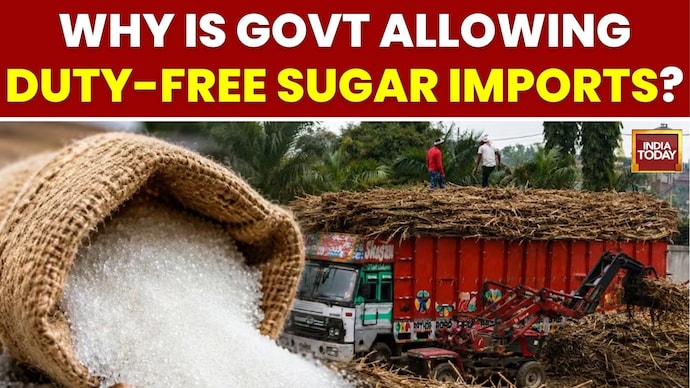
Sugar prices in India have witnessed a sharp surge from 44 rupees per kilo in May to nearly 65 rupees per kilo, triggering a political slugfest ahead of the festive season. Union Minister Pralhad Joshi stated that global weather damage, El Nino, and red rot disease have impacted sugar production. Despite the price rise, the Centre highlighted that sugarcane output rose to over 5,000 lakh tons in 2025-26, maintaining that domestic sugar supplies remain in surplus. To curb hoarding and speculation, the government announced a 15-day stock limit for bulk consumers using over 10 metric tons monthly, effective from September until November 30. The curbs apply to sweet shops, soft drinks manufacturers, food processors, and confectioneries. Additionally, 10 lakh tons of raw sugar will be imported duty-free, while exports remain restricted. Meanwhile, opposition parties, including the Congress and Aam Aadmi Party, attacked the central government over sugar stocks and sugarcane diversion for ethanol.
This episode of the Business Today Show features anchor Sakshi Batra tracking the closing market action on Dalal Street as the Sensex declines toward 77,300 and the Nifty settles above 24,200. Heavy selling pressure in banking and IT stocks impacts market sentiment, while metals and real estate show gains. ICICI Direct Head of Research Pankaj Pandey analyzes market trends and Nifty movements amid rising crude oil prices and shifting US bond yields. The program covers government proposals to cap private airport acquisitions in future privatization auctions to mitigate market concentration. Skyways Air Services launches its 583 crore rupees initial public offering (IPO), with Chairman and Managing Director Yashpal Sharma explaining air cargo growth strategies during West Asia geopolitical disruptions. Analyst Pankaj Bakre evaluates investment options across logistics, hotels, tata steel, titan, vedanta aluminium, entertainment, food delivery, and public sector unit banks including State Bank of India. Additionally, reporter Ashutosh reports on sugar price dynamics following statements from the Indian Sugar Manufacturers' Association.
Sugar prices in India have witnessed a sharp surge ahead of the festive season, climbing from around 44 rupees per kilo in May to nearly 55 to 65 rupees per kilo by late August, marking a sharp increase of up to 28 percent. The price shock has triggered a major political confrontation, with opposition leaders targeting the government over low sugar stocks and questioning the diversion of sugarcane towards ethanol production under the E20 policy. Critics allege that inflation is burdening the common citizen while sugarcane is being diverted for fuel. In response, the government has attributed the drop in production to red rot disease, El Nino, and rainfall deficits affecting agriculture globally. Official estimates state that despite production falls, domestic requirement stands at 280 lakh metric tons with surplus reserves available. To manage supply pressure and stabilize retail rates ahead of peak demand, measures including stock limits and sugar imports of around 10 lakh metric tons have been permitted.
Indian stock markets opened on a steady note with the Nifty hovering around the 24,285 to 24,290 level, while the Indian rupee traded near 95.64 against the US dollar. Expert market commentary indicated positive momentum driven by easing crude prices and global cues, alongside strong investor appetite in the primary market and upcoming IPOs. Meanwhile, domestic sugar prices witnessed a sharp surge, prompting the central government to initiate measures, including stock limits and temporary raw sugar imports, to ensure domestic availability ahead of the festive season. Union Food and Consumer Affairs Minister Pralhad Joshi stated that water scarcity caused by El Niño conditions and red rot disease impacted agricultural production. Analyst discussions noted that global sugar supply constraints, such as sugarcane diversion for ethanol in Brazil, contribute to the supply pressure. Sectoral movements showed gains across IT, auto, metals, and jewelry stocks, supported by expectations of strong consumer demand during the upcoming festive and wedding seasons.
A sharp rise in sugar prices from ₹48 to between ₹56 and ₹65 per kilo ahead of the festive season has triggered a political war in India. Congress President Mallikarjun Kharge targeted the Modi government over nine-year-low sugar stocks and demanded a review of the E20 ethanol blending policy, accusing the government of indifferent inflation management. Opposing the claims, Union Minister Pralhad Joshi cited red rot disease and El Nino for global agricultural declines while assuring that India maintains a surplus of 20 to 25 lakh tonnes against a 280 lakh tonne demand. In FY 2025-26, around 30 to 35 lakh metric tonnes of sugar was diverted for ethanol production from a gross output of 306 lakh metric tonnes.
Sugar prices have experienced a sharp fifteen point six percent surge in one month, rising from forty-eight rupees to nearly fifty-six rupees per kilogram ahead of the festive season. This price shock has triggered a political clash between opposition and ruling parties over falling sugar stocks and the diversion of sugarcane toward ethanol production under the E20 policy. Concerns have been raised regarding nine-year low sugar reserves and rising inflation affecting essential commodities. The central government attributes the reduced production to global factors, including red rot disease and water scarcity caused by El Nino. To stabilize prices, measures have been introduced, including stock caps, duty-free raw sugar imports, export bans, and physical mill verification checks.
Union Minister Pralhad Joshi addressed the recent increase in sugar prices, attributing reduced agricultural production to unexpected red rot disease and water scarcity caused by El Nino. Speaking on global and domestic agricultural declines, Joshi noted that India's sugar production fell short of the expected 330 to 340 lakh tons. Despite this drop, he assured that India currently holds a surplus of 20 to 25 lakh tons against a requirement of approximately 280 lakh tons. To manage upcoming festival demand, temporary measures including raw sugar imports have been initiated. The minister and government officials dismissed opposition claims blaming the ethanol blending policy for the sugar crisis, emphasizing that environmental factors and rain deficits exceeding ten percent in key producing states like Maharashtra and Uttar Pradesh caused the slowdown.
Sugar prices have surged by over 15 percent in a single month, rising from 48.18 rupees to 55.70 rupees a kilo ahead of the festive season. The government has denied that ethanol diversion is driving the spike, noting that sugar diversion for ethanol fell to nine percent and most ethanol is now produced from grains. Tighter supplies due to lower production, weather damage to sugarcane, global supply constraints, and building festive demand are contributing to the rise. To ease pressure, ten lakh metric tons of raw sugar will be imported duty-free, with crushing set to begin from October 15.
The opposition party has intensified its attack on the central government over rising sugar prices ahead of the upcoming festival season. Questions were raised regarding the low sugar stocks, price hikes, and ethanol production policy, questioning the government's self-reliance claims. In response, the government stated that there is no shortage of sugar and that measures are being taken to stabilize prices. The government is also importing sugar until October to manage supply and control costs before the festive celebrations begin.
Amid rising sugar prices ahead of the festive season, the government has permitted zero-duty imports of one million tonnes of raw sugar until October 31. While the Indian Sugar Mills Association states there is no shortage and stocks are adequate, retail prices have surged up to 65 rupees per kilo in parts of the country. A key driver of the price hike is the diversion of sugarcane output toward the government's ethanol blending program. To control the market, New Delhi has banned sugar exports until September 30 and imposed inventory limits on bulk consumers using over 10 metric tonnes monthly.
This episode of Five Live, presented by newsreader Sonali Mehrotra Kapur, covers major national and international developments.