Don’t know why they call them that: Putin’s swipe at G7 economies at BRICS meeting
Vladimir Putin called BRICS the world’s largest economic bloc and urged its members to deepen cooperation as the global order shifts.

The Group of Seven (G7) is an intergovernmental organization comprising seven of the world's largest advanced economies: Canada, France, Germany, Italy, Japan, the United Kingdom, and the United States. Established in the 1970s, the G7 was initially formed to address economic issues, but its agenda has since expanded to include a wide range of global challenges such as climate change, international security, and public health.
The G7 members share a commitment to democracy, market economies, and human rights. They hold annual summits where leaders discuss and coordinate policy on pressing international issues. These summits provide a platform for informal dialogue and foster collaboration on policies that shape global economic governance.
The G7's influence stems from the economic power and political clout of its members. Together, they represent a significant portion of global wealth, trade, and economic output. Despite criticism for its exclusivity and perceived Western bias, the G7 plays a crucial role in setting the agenda for broader international cooperation, often influencing the policies of larger, more inclusive groups like the G20.
Recent G7 priorities have included tackling the COVID-19 pandemic, promoting sustainable development, addressing climate change, and enhancing global security. The G7 continues to evolve, adapting to the dynamic challenges of the 21st century while striving to maintain international stability and prosperity.
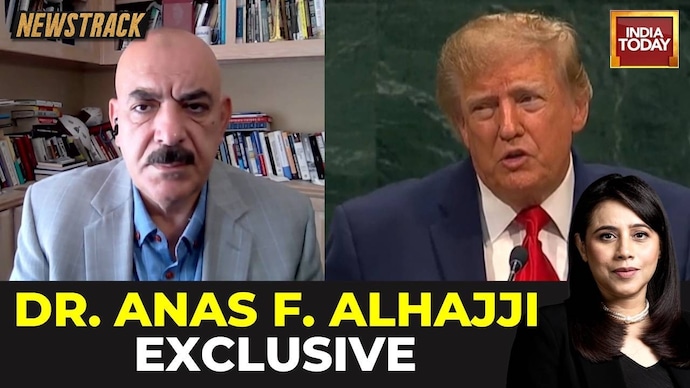
In an exclusive interview with India Today, energy markets expert Dr. Anas Alhajji analyzed the global energy landscape, Hormuz Strait tensions, and the impact of geopolitical developments on India. Dr. Alhajji clarified that current market disruptions stem from refined products rather than crude oil, stating, 'The crisis is in diesel. That's where the crisis is.' He dismissed rhetoric surrounding US President Donald Trump's remarks at the United Nations, asserting that market fundamentals remain detached from political speeches. Evaluating India's strategic response, Dr. Alhajji highlighted how New Delhi successfully replenished its inventories by importing discounted Russian crude, in contrast to Japan's slower recovery under G7 restrictions. He noted that while Indian refiners face high margins because global refineries are maxed out, India faces unique challenges in liquefied petroleum gas supplies due to shifts in Saudi Arabian production. Additionally, he emphasized that US tariff legislation with a 180-day grace period would not severely disrupt Indian refinery operations.
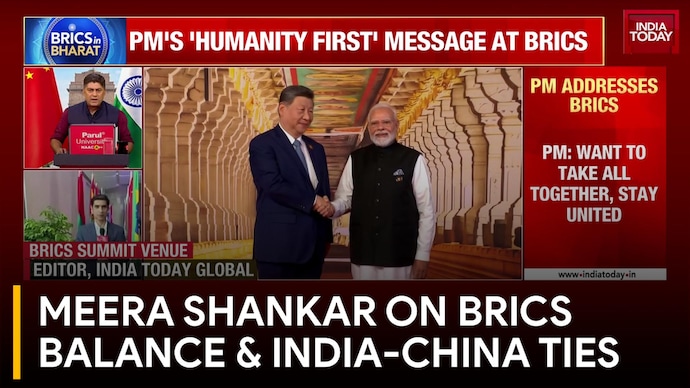
Former Indian Ambassador to the United States Meera Shankar shared her analysis of the BRICS Summit, India-China relations, and global geopolitical dynamics during an interview. Highlighting India's approach toward multilateral forums, Shankar stated, "we want BRICS to be a non-Western group rather than an anti-Western group." She explained that India must maintain a strategic balance to provide developing nations a stronger voice in global governance without enabling Chinese dominance. Shankar highlighted that BRICS members prefer local currency trade settlements rather than replacing the US dollar with the yuan. Addressing ties with Washington and Moscow, she noted that preserving strategic autonomy and securing energy needs remain essential for India. Ahead of bilateral talks between Prime Minister Narendra Modi and Chinese President Xi Jinping, Shankar pointed out that bilateral relations will stabilize significantly only if both sides achieve substantive progress on unresolved border disputes and address critical trade imbalances.
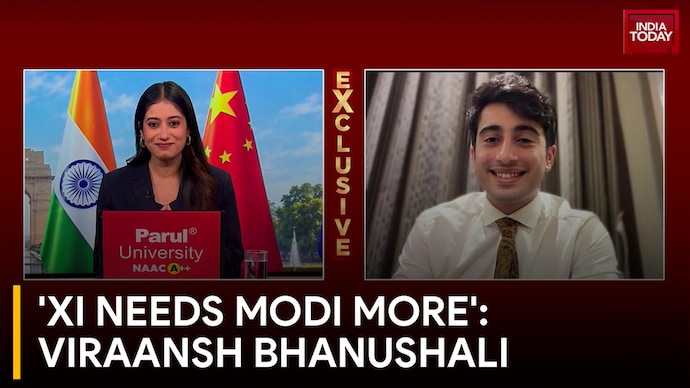
In an interview with India Today during the eighteenth BRICS summit in New Delhi, former Oxford Union chief of staff Viraansh Bhanushali shared perspectives on the evolving role of the BRICS bloc and India's position in global geopolitics. Discussing the summit's theme of resilience and sustainability amidst global tensions, Bhanushali stated that institutions rooted in Western dominance have failed the Global South, especially regarding the weaponization of the US dollar. He emphasized that "BRICS can be its own thing" and urged member nations to construct alternative institutional mechanisms for trade, technology sharing, and mobility rather than replicating Western models like the G7 or G20. On India-China relations and President Xi Jinping's visit to India, Bhanushali noted that mutual economic interdependence serves as a strategic factor, asserting that "Xi needs Modi more than Modi needs Xi at this point." He concluded by noting that rising global scrutiny of India reflects its growing international economic and geopolitical stature.
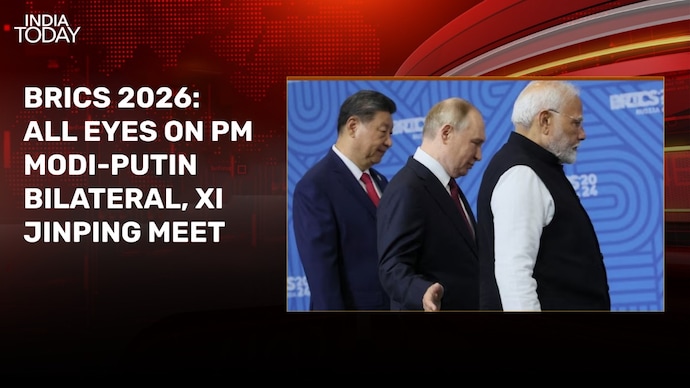
Prime Minister Narendra Modi and Russian President Vladimir Putin agreed to further strengthen India-Russia’s "special and privileged strategic partnership" during talks in New Delhi, with discussions covering energy, defence and regional conflicts.
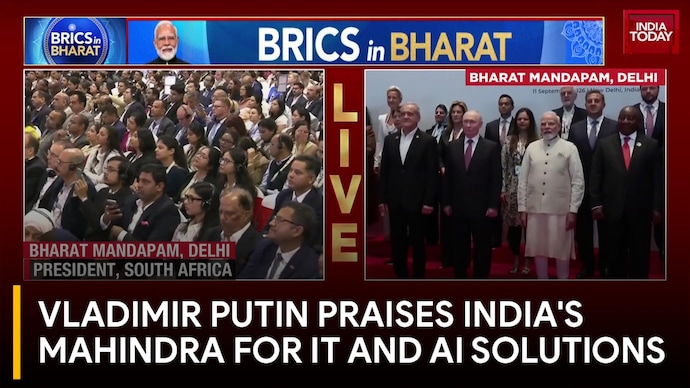
Addressing the BRICS business gathering, Russian President Vladimir Putin stated that emerging economies are replacing traditional global growth engines. Highlighting economic shifts, he noted that BRICS nations produced over 40% of global gross domestic product over the past five years compared to 29% from the G7, while accounting for more than half of world economic expansion. Putin highlighted business success stories across member countries, noting that 'Mahindra, a company from India, offers IT and AI-based solutions'. He remarked that 'more than 30,000 sanctions have been slapped on Russia', noting that the Russian economy grew by 10.3% across 2023 and 2024 while unemployment fell to 2.3%. Putin proposed establishing a new investment platform under the New Development Bank to secure private funding and support transport routes including the North South Transport Corridor
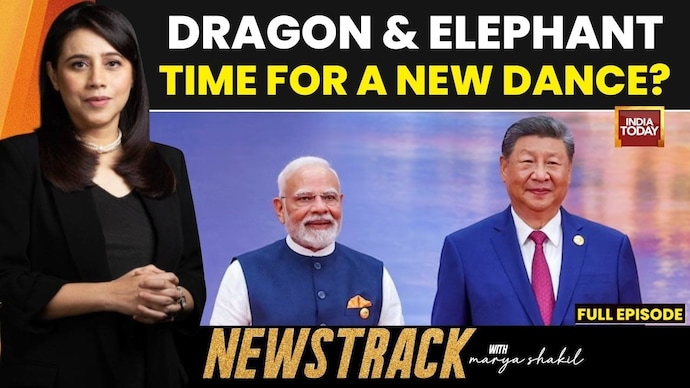
India is hosting the 18th BRICS Summit in New Delhi, bringing together leaders of major emerging economies representing the Global South. The summit marks Chinese President Xi Jinping's first visit to India in seven years. Prime Minister Narendra Modi is scheduled to hold bilateral meetings with Chinese President Xi Jinping and Russian President Vladimir Putin on the sidelines of the event. Key agenda items between India and China include boundary management along the Line of Actual Control, trade deficit concerns, and regional stability following recent core commander-level talks and diplomatic dialogues. Discussions with Russia focus on expanding bilateral trade, defense collaboration, technology sharing, and crude oil supplies. Across the expanded BRICS grouping, member nations are negotiating consensus on global conflicts, including the Russia-Ukraine war and developments in West Asia. The summit serves as a platform to address supply chain diversification, financial resilience, clean technology dependencies, and trade imbalances while reinforcing multipolarity in global governance.
India is hosting the 18th BRICS Summit in New Delhi, bringing together leaders of major emerging economies representing the Global South. The summit marks Chinese President Xi Jinping's first visit to India in seven years.
A panel of experts and journalists discuss the contemporary relevance of the expanded BRICS grouping and India's critical strategic role ahead of the summit in New Delhi. The debate addresses opposition questions regarding the utility of BRICS in an evolving multipolar world. Panelists emphasize that India acts as a bridge builder, maintaining essential partnerships with the United States while engaging powers like China and Russia. Key discussion points focus on the necessity of moving beyond declarations to deliver tangible economic outcomes, jobs, and financial solutions like local currency arrangements. The panelists examine the challenge of securing a consensus declaration among member nations with diverse geopolitical interests, resisting anti-Western characterizations, and preventing single-country dominance. They highlight that multilateral forums provide vital diplomatic bandwidth to navigate bilateral tensions and hedge against shifts in the global economic order.
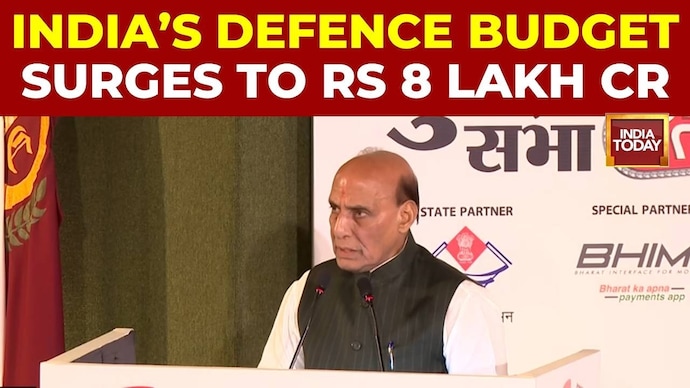
India has transitioned from a historically reactive defence posture, previously termed the Panipat syndrome, to a proactive national security framework. The nation gained entry into the Missile Technology Control Regime in 2016, enabling the extended operational range of BrahMos missiles. Indigenous defence production has expanded from approximately Rs 40,000 crore under the previous administration to Rs 1.80 lakh crore, alongside defence exports reaching Rs 38,500 crore across more than 100 nations. Modern military hardware inducted includes the Akashteer air defence control system, Pinaka rocket launchers, Astra missiles, Tejas fighter jets, and the aircraft carrier INS Vikrant. The national defence budget increased from Rs 2.5 lakh crore to nearly Rs 8 lakh crore over the past twelve years, while border infrastructure funding grew by 400 percent. In addition, initiatives such as the repeal of Article 370 and multilateral leadership in the International Solar Alliance, G7 dialogues, and the G20 New Delhi Leaders Declaration reflect expanding strategic and civilisational influence globally.
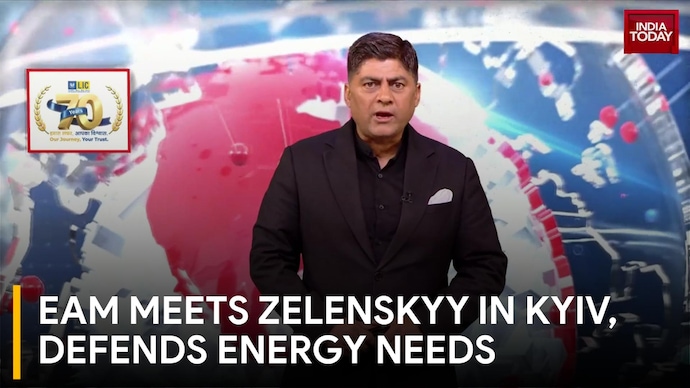
External Affairs Minister Dr S Jaishankar travelled to Kyiv and met Ukrainian President Volodymyr Zelenskyy and his team to discuss the ongoing Russia-Ukraine conflict. Addressing the media, the External Affairs Minister defended India's procurement of resources, stating that the challenges of providing energy for 1.4 billion people must be understood amidst a difficult global energy situation. He stated that the conflict will not be resolved by purchasing or withholding oil, minerals, metals, or fertilisers, but through dialogue, diplomacy, and negotiation. Reaffirming India's stance that this is not an era of war and solutions do not emerge from the battlefield, he echoed Prime Minister Narendra Modi's message that endless war must give way to the end of war. He also noted that India remains ready to assist if required. India Today journalists highlighted how Indian national interests remain paramount, while also discussing escalating tensions in Eurasian and West Asian conflict theatres, including risks faced by Indian seafarers in the Caspian Sea.
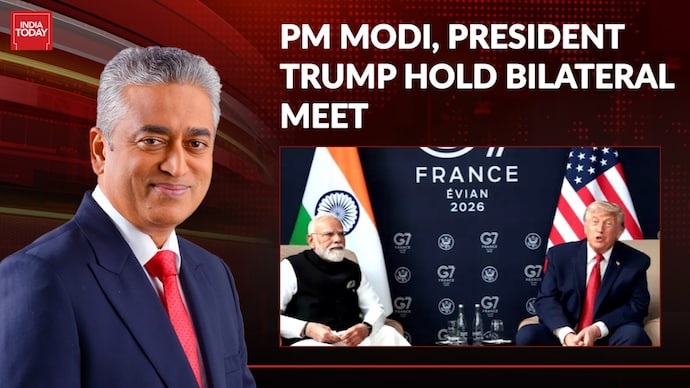
During the recent G7 Summit in Evian, the Indian Prime Minister and the US President engaged in bilateral discussions focusing on trade, tariffs, and defence cooperation.
Italian Prime Minister Giorgia Meloni slammed US President Donald Trump after he claimed she "begged" him for a photograph during the recent G7 summit.
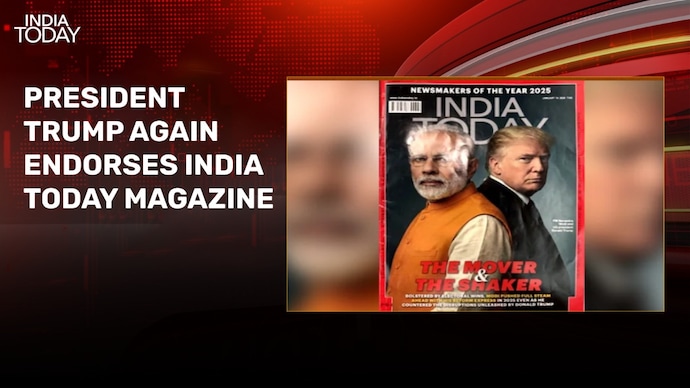
US President Donald Trump reshared India Today's 'Newsmakers of the Year 2025' magazine cover on his Truth Social platform, a day after he heaped praise on Prime Minister Narendra Modi on the sidelines of the G7 Summit in Evian-Les-Bains, France.
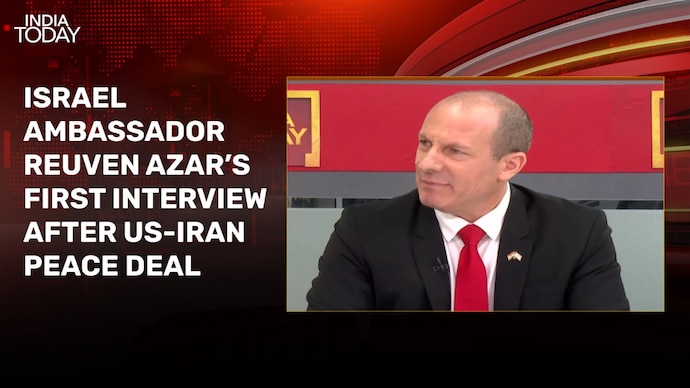
This broadcast covers international diplomatic developments, starting with the fourteen-point memorandum of understanding signed between the United States and Iran to address the conflict in West Asia. Israel has rejected this framework, refusing to withdraw military forces from southern Lebanon and continuing strikes due to security concerns.
This edition of Newstrack focusses on bilateral meetings between Prime Minister Modi and US President Donald Trump on the sidelines of the G7 Summit in Evian, France.
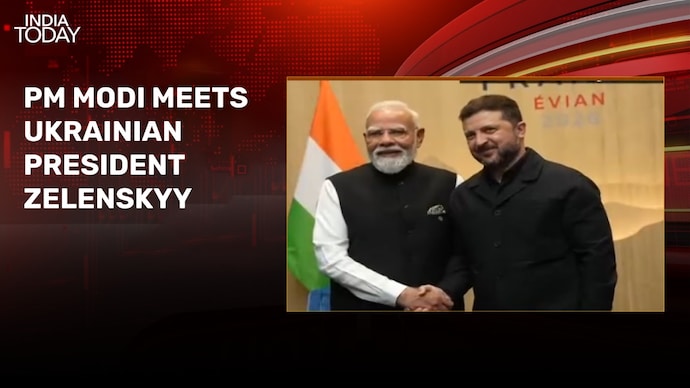
Prime Minister Narendra Modi on Wednesday held talks with Ukrainian President Volodymyr Zelenskyy on the sidelines of the G7 summit in the French commune of Evian-Les-Bains.
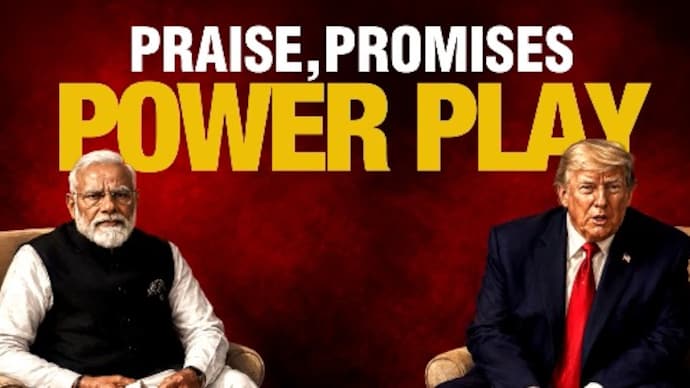
During the bilateral meeting on the sidelines of the G7 Summit in Evian, Prime Minister Narendra Modi and US President Donald Trump discussed the realignment of their strategic partnership.
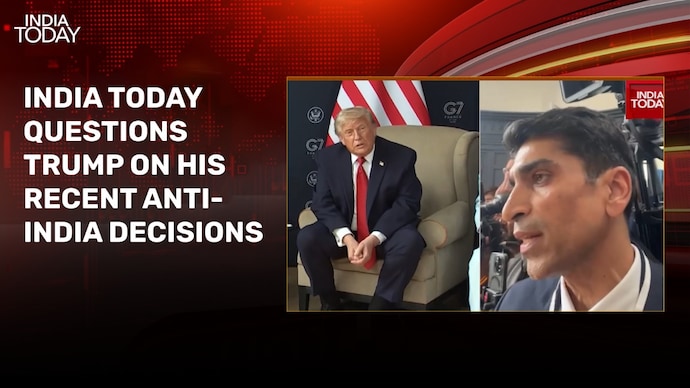
During a press interaction following a bilateral meeting with PM Modi, India Today's Pranay Upadhyaya confronted US President Donald Trump on his recent anti-India policy decisions that have caused concerns in India, despite past assurances of friendship.
Prime Minister Narendra Modi and US President Donald Trump on Wednesday held a bilateral meeting, their first face-to-face interaction since the West Asia conflict, on the sidelines of the G7 Summit in Evian-Les-Bains.
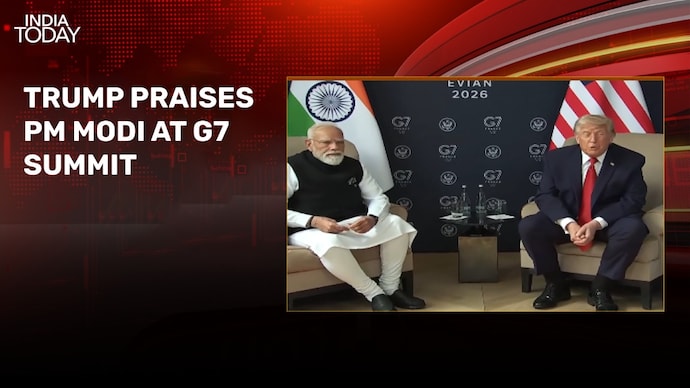
US President Donald Trump on Wednesday praised Prime Minister Narendra Modi as a "very tough negotiator" who is 'like an angel', as the two leaders met on the sidelines of the G7 Summit in Evian-Les-Bains.