Vietnamese crab exporter

Topic

Advertisement
TOPIC

GST

The Goods and Services Tax, better known as GST, was launched in India on July 1, 2017. It replaced a long list of central and state taxes with a single indirect tax system. The idea was to make it easier for businesses that earlier had to pay excise duty, service tax, VAT, and local levies, often on the same product.

Under GST, most goods and services are taxed in four main slabs: 5, 12, 18, and 28 percent. A handful of items, such as basic food grains, are exempt, while luxury goods and tobacco are charged at higher rates. The structure aimed to prevent the old problem of “tax on tax,” though for ordinary consumers, the effect has varied. Some household goods became cheaper, while others turned costlier.

The rollout was bumpy. Small traders and shopkeepers complained about the new online filing system, which many found difficult to use. Rate changes in the first year added more confusion. Even now, businesses regularly press for simpler filing and fewer slabs.

For the Centre and states, revenue sharing has been a constant subject of debate. States were promised compensation for losses, but the arrangement has faced stress, especially during the COVID-19 slowdown when GST collections dipped. Monthly revenues have recovered since 2021, with the government frequently reporting collections above ₹1.5 lakh crore.

Economists often describe GST as unfinished work. Supporters say it has created a more unified national market. Critics argue the compliance burden remains high and that too many items are still in the higher tax slabs. Eight years on, GST remains both a key reform and a continuing negotiation between the Centre, states, and businesses.

  • ALL
  • STORIES
  • VIDEOS

STORIES

Govt to monitor UPI MDR rollout, ensure merchants do not pass charges to consumers

The government will closely monitor the implementation of UPI MDR and work with payment aggregators to plug enforcement gaps and ensure merchants do not pass the additional cost on to consumers, government sources said, adding that the move is unlikely to trigger a significant rise in cash transactions or a decline in UPI usage.

CBI arrests IRS officer in Rs 40 lakh bribe case; court calls arrest illegal

The CBI arrested an IRS officer, a CGST superintendent and a private person in an alleged Rs 40 lakh bribery case involving a Rs 1.5 crore demand. However, the Thane Special Court held their arrests illegal, rejected further custodial interrogation and ordered their release on bonds, directing them to cooperate with the ongoing probe.

Load More

VIDEOS

PM Modi 76th Birthday, 25 Years in Public Life, Global Wishes and Key Milestones

A special broadcast reviews Prime Minister Narendra Modi's journey as he turns 76, marking 25 years in public life and his tenure as India's longest-serving elected Prime Minister. The report highlights India's economic ascent from the tenth to the fifth largest economy, structural reforms including the Goods and Services Tax, digital public infrastructure under the JAM trinity, and expansion in manufacturing through Production Linked Incentive schemes. Key welfare programs, such as the PM Awas Yojana, Jal Jeevan Mission, and Direct Benefit Transfer mechanism, are detailed alongside rapid infrastructural growth spanning Vande Bharat trains, national highways, and aviation under the UDAN scheme. The bulletin examines India's foreign policy approach, space milestones including Chandrayaan and Gaganyaan, and traditional service-oriented birthday initiatives, culminating in the launch of healthcare programs in Dhar, Madhya Pradesh. Global leaders, including Russian President Vladimir Putin and Italian Prime Minister Giorgia Meloni, extended birthday greetings commending India's rising international profile.

PM Narendra Modi Turns 76: 25 Years in Public Office, Global Impact & Vision for Viksit Bharat

Prime Minister Narendra Modi marked his 76th birthday, completing 25 years in public life as an elected leader. Taking office as Prime Minister in May 2014 after serving as Gujarat Chief Minister, his administration oversaw significant economic and policy transformations. India's economy expanded from tenth to fifth largest globally, supported by initiatives including the Goods and Services Tax, the JAM trinity, Unified Payments Interface, and production-linked incentives. Social welfare delivery expanded through direct benefit transfers alongside schemes such as PM Awas Yojana, Jal Jeevan Mission, Swachh Bharat Mission, and Ayushman Bharat. In infrastructure, the government rolled out Vande Bharat trains, expanded airports under the UDAN scheme, and developed the PM GatiShakti platform. On foreign policy, India hosted the G20 presidency, advanced space exploration through the Chandrayaan and Gaganyaan missions, and deepened ties across the Global South. Entering his third term, the administration addresses domestic coalition management, youth employment, and global trade dynamics while pursuing the Viksit Bharat framework.

PM Modi Turns 76: A Look at 25 Years in Public Life, 2014 Mandate, Economic Boom

Prime Minister Narendra Modi turned 76, marking 25 years in public life and his tenure as the longest-serving elected prime minister. From his 2014 victory where the BJP secured 282 seats and the NDA won 336 seats, Modi pledged the Gujarat development model for the country under the vision of 'Bharat ki vijay. Achhe din aane wale hain.' Over his tenure, India expanded from the tenth to the fifth largest global economy. Significant policy reforms include the Goods and Services Tax, the JAM trinity, UPI, and the PM Jan Dhan Yojana bringing over 50 crore citizens into formal banking. Welfare initiatives like PM Awas Yojana, Jal Jeevan Mission, Swachh Bharat Mission, and Ayushman Bharat alongside infrastructure drives like PM Gati Shakti, UDAN, and Vande Bharat trains spurred modernisation. Internationally, India showcased vaccine diplomacy, hosted the G20 presidency, and engaged at BRICS. Advances in space research include Chandrayaan and preparations for Gaganyaan with astronaut Shubhanshu Shukla.

US House Passes Russia-Iran Sanctions Bill; 100% Tariff Threat on India Crude; New Delhi Reacts

The United States House of Representatives has passed the Lindsey Graham Sanctioning Russia and Iran Act of 2026, sending legislation to President Donald Trump that enables tariffs of up to 100 percent on major buyers of Russian crude oil and natural gas, including India and China. In response, the Ministry of External Affairs affirmed India's commitment to securing energy supplies through diversified sources while communicating bilateral and market implications to US interlocutors. Amid geopolitical developments and Russian crude accounting for 51.1 percent of Indian oil imports in July 2026, Chief Economic Advisor Dr V Ananth Nageswaran and Union Minister Kiren Rijiju examined India's economic trajectory and governance roadmap toward Viksit Bharat by 2047. Discussion points included banking sector balance sheet reforms, capital expenditure expansion, the Production Linked Incentive scheme, trade agreements, and administrative strategies under Prime Minister Narendra Modi.

PM Modi Is 'Architect Of The Economic Policy': V. Anantha Nageswaran

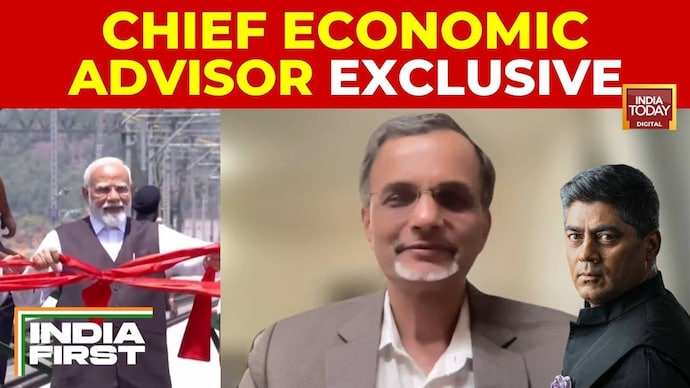
Chief Economic Advisor to the Government of India, V. Anantha Nageswaran, discussed India's path toward Viksit Bharat by 2047, macroeconomic stability, and growth drivers. Highlighting the transformation over the past twelve years, he stated that Prime Minister Narendra Modi "is the architect of the economic policy" and credited structural reforms like the Goods and Services Tax, the Insolvency and Bankruptcy Code, and large-scale infrastructure expansion for repairing balance sheets and boosting potential growth. Addressing rural incomes and employment generation, Nageswaran emphasized that economic growth must directly impact citizens' lives, detailing fiscal initiatives, deregulation, free trade agreements, and credit expansion for micro, small, and medium enterprises. He also touched upon global headwinds, including geopolitical conflicts and manufacturing competition, noting that India's domestic capital formation and manufacturing share of gross value addition continue to rise steadily.

PM Narendra Modi 76th Birthday, Seva Sankalp Abhiyan and SEMICON India Launch

As Prime Minister Narendra Modi turns 76, celebrations and public service programmes are taking place across India, from Delhi to Gujarat and his parliamentary constituency of Varanasi. The Prime Minister is launching the fifth edition of the SEMICON India event in the national capital, while the Bharatiya Janata Party has initiated the month-long Seva Sankalp Abhiyan and urged citizens to light an Ashirwad ka Diya. Key political leaders, including Union Home Minister Amit Shah and National Democratic Alliance allies, participate in major events such as the Vadnagar to Varanasi bike yatra and cleanliness drives. The broadcast highlights Prime Minister Narendra Modi's 25 years in public life since assuming office as Gujarat Chief Minister in 2001, tracing landmark governance milestones from welfare schemes and Make in India to digital infrastructure expansion and the Viksit Bharat 2047 roadmap.

The News Today: Rajnish Kumar, Bishwajit Bhattacharyya on UPI Merchant Charge Debate

A debate on The News Today examines the Modi government's gazette notification regarding merchant fees on high-value digital transactions. Under the new rules, transactions up to Rupees 2,000 on UPI and RuPay debit cards remain entirely tax-free, while payments above that threshold face a merchant discount rate of up to 0.4%. Former State Bank of India Chairman and current Mastercard India Chairman Rajnish Kumar defends the measure, clarifying, 'No, it is not a tax. That's not the right word to use. This is a fee which is payable by the merchant for the convenience.' Kumar argues the system requires massive capital for technology, cybersecurity, and fraud prevention, which cannot remain cross-subsidised indefinitely. In contrast, former Additional Solicitor General Bishwajit Bhattacharyya warns that merchants will pass the burden to consumers, effectively turning it into a destination-based consumption tax, and urges the government to continue subsidising India's digital payment ecosystem.

Markets Slip as Brent Crude Nears $100, Defence Stocks Surge on ₹1.1 Lakh Cr Nod, Primary Market Buzz

Indian benchmark equity indices extended their losses as elevated Brent crude oil prices approached nearly $100 per barrel, sparking fresh macroeconomic concerns and dragging the Indian rupee lower. The Sensex fell over 500 points towards 75,600, while the Nifty slipped below key support levels around 23,650, heavily impacted by banking, financial, and oil and gas stocks. In contrast, defence stocks rallied after the Defence Ministry approved procurement proposals worth over ₹1.1 lakh crore, with Data Patterns, BEL, HAL, and Paras Defence surging. The primary market also witnessed robust traction with twelve IPOs lined up for the week, alongside the listing pipeline of Arcil and other niche offerings. In other sectoral trends, copper and cable stocks buzzed following record commodity prices, whereas NBFCs expanded strategies in gold financing amid price volatility.

India's 7.8% GDP Debate: Trust Deficit, Economic Reality, And Job Quality

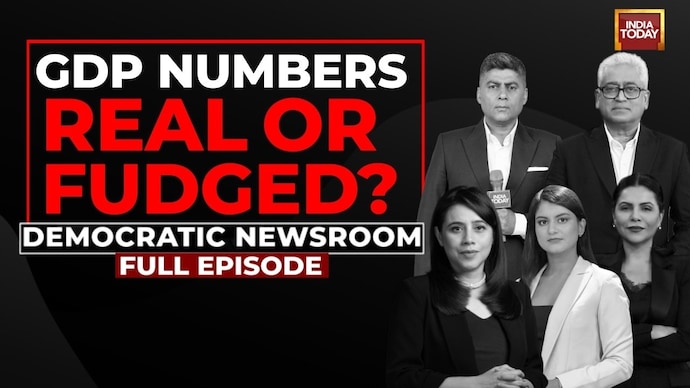
In this edition of Democratic Newsroom, editors and journalists evaluate India's recent 7.8% GDP growth figures, analyzing official statistical methodology alongside ground-level economic conditions. Panelists Rajdeep Sardesai, Gaurav Sawant, Maria Shakil, Siddharth Zarabi, and Raj Chengappa examine data transparency, public perception, graduate unemployment, inflation, and income disparity. The debate contrasts positive macroeconomic indicators—such as record vehicle sales, strong Goods and Services Tax (GST) collections, and growth endorsements from the International Monetary Fund (IMF) and the World Bank—against citizen experiences, agricultural employment quality, and per capita income metrics. The discussion addresses the scale of welfare subsidies supporting 800 million citizens, private investment levels, data lags, and proposed updates to GDP base figures. Further, the panel considers the implementation of a citizen progress report to track job creation, equitable income, and inflation dynamics across the country.

India's 7.8% GDP Growth Sparks Political War, Centre Defends Revised Base Series

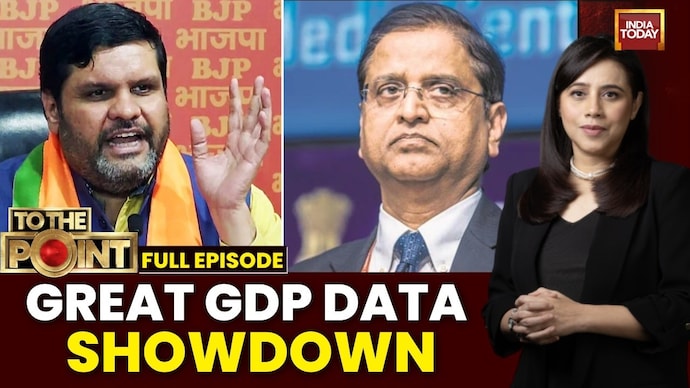
A political and economic debate has erupted over India's latest Gross Domestic Product growth figure of 7.8 per cent. Prime Minister Narendra Modi hailed the growth rate, noting that India's economy has maintained momentum despite global conflicts and supply chain disruptions. However, opposition parties, including Congress, questioned the numbers and the downward revision of previous estimates. The Centre explained that earlier calculations used the 2011-2012 base series, whereas recent figures use the 2022-2023 base year series. Union Minister Piyush Goyal defended the data, asserting that ministers do not manufacture figures and criticising opposition narratives. Saurabh Garg, Secretary of the Ministry of Statistics and Programme Implementation, dismissed allegations of data manipulation, stating the updated methodology adheres to international best practices following extensive consultations with experts, the IMF, and the United Nations. Garg emphasised that India's digital data sources like GST and UPI, alongside a 10,000-strong field survey machinery, ensure transparent and verifiable macroeconomic statistics.

7.8% GDP Growth Row, Base Year Revision Clash And Tech AI Push

A major political and economic debate has erupted over India's reported 7.8 per cent gross domestic product growth figure. Critics and opposition leaders have questioned the data, highlighting a downward revision of previous first-quarter figures from around 86 lakh crore rupees to 80 lakh crore rupees, asserting that current price growth stands at 2.6 per cent without the revision. The government has defended the numbers, stating that the latest growth rate is based on the updated base year series, constant prices, improved methodologies, and updated goods and services tax records. Officials have stated that comparing figures across different series amounts to an incorrect comparison. Meanwhile, the bulletin also covers developments in the artificial intelligence sector, where global technology leaders have noted the rapid expansion of domestic startups and enterprises taking advantage of technology platforms to build the local digital economy.

India's 7.8% GDP Growth, Opposition Allegations Of Data Fudging & Centre's Rebuttal

A political confrontation has erupted over India's 7.8 per cent GDP growth figures. The Opposition and critics, including former finance secretary Subhash Chandra Garg, have questioned the downward revision of the previous year's first-quarter GDP and alleged data fudging, arguing that nominal growth stands at only 2.6 per cent without the revision. The central government and the Ministry of Statistics and Programme Implementation have rejected these allegations, asserting that the calculations are based on the updated base year series and improved methodology. Union ministers stated that critics are comparing different GDP series and misleading the public. The government maintained that the 7.8 per cent expansion reflects India's position as the fastest-growing major economy, driven by granular data sourced through institutional mechanisms such as GST and the Public Financial Management System, with deliberations held across stakeholder groups.

Centre Defends 7.8% GDP Growth, Slams Critics Over Calculation Methodology

The central government has strongly defended India's first quarter Gross Domestic Product growth numbers, dismissing criticism from opposition leaders and former officials regarding data accuracy and calculation methodology. Addressing concerns, the government rejected claims that the economic growth was closer to 2.6 percent, describing comparisons between old and new series with different base years as comparing apples and oranges. The Ministry of Statistics and Programme Implementation maintained that the compilation process is completely transparent and verified through granular data sources, including the Goods and Services Tax framework and the Public Financial Management System. Officials highlighted that multiple deliberations with economists and statisticians preceded the final figure. Reaffirming India's economic resilience, the government stated that the 7.8 percent growth rate remains a reality, positioning the country as the fastest growing among large global economies.

India's Q1 GDP Grows 7.8%, Congress Alleges Data Fudging, Centre Defends New Base Series

India's gross domestic product registered a 7.8 percent growth rate in the first quarter, exceeding Reserve Bank of India projections and triggering political debate over economic calculation methodology. Former Finance Secretary Subhash Chandra Garg raised questions regarding base revisions that reduced previous year nominal GDP figures from 86 lakh crore rupees to 80 lakh crore rupees, contending that earlier estimates reflect lower real growth while pointing to labor market concerns. Opposition leaders cited inflation and unemployment figures, alleging data inconsistency. Defending the official figures, economists and government spokespersons, including Sanjeev Sanyal and Gaurav Vallabh, stated that updated base series integrate comprehensive GST filings, corporate financial disclosures, and expanded sectoral surveys. They highlighted indicators such as gross fixed capital formation, automobile sales, and public capital expenditure to support the reported economic trajectory.

India's 7.8% GDP Growth, Base Year Rebasing, and Market Reactions Spark BJP-Congress Clash

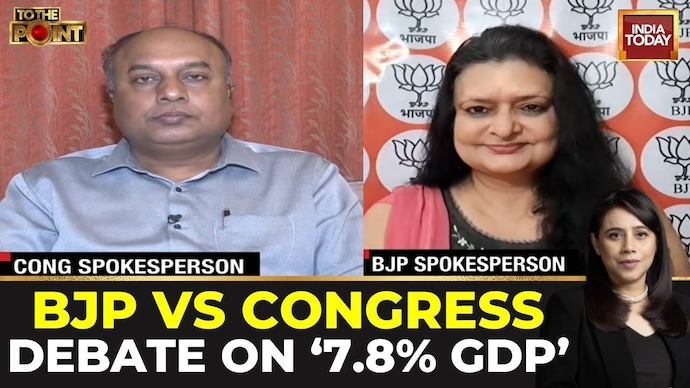
A debate on India's economic growth numbers features BJP National Spokesperson Sanju Verma and Congress National Spokesperson Brajesh Kalappa. Defending the official 7.8% real GDP growth figure for Q1 FY27, Sanju Verma dismissed claims by former finance secretary Subhash Garg regarding a 2.6% growth rate, arguing that comparing new series data with old series data is misleading. She cited strong economic indicators, including a 23.4% rise in capital expenditure, robust auto sales, credit expansion, and rising GST collections. In response, Brajesh Kalappa questioned the credibility of the numbers, pointing to negative stock market reactions, rising unemployment, falling purchasing power, and stagnant job creation. Kalappa also challenged the rationale behind changing GDP calculation parameters and questioned why public advisories against spending on gold or foreign travel were being issued if the economy was booming. The discussion concluded with heated exchanges over base year revisions, international credit ratings, and political commentary surrounding India's economic performance.

Rajiv Kumar: 'Give Credit to Where It Is Due' on Indian Economy's Growth

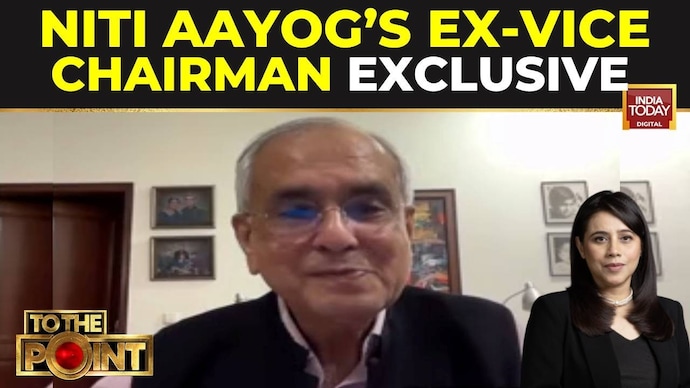
In an interview with India Today, economist and former NITI Aayog Vice Chairman Professor Rajiv Kumar defended India's latest GDP growth figures against opposition criticisms. Rejecting claims that growth benefits only the top tier, Kumar highlighted an 8-9% increase in employment-intensive exports alongside a 9.2% growth in manufacturing and 10% in services. He noted a turnaround in private investment, with gross fixed capital formation rising by 11.8% and commercial bank credit surging. Kumar remarked, "When you see a good thing, let's recognize a good thing," while underscoring that 7.8% GDP growth remains significant amid global headwinds. He cautioned that emerging inflationary pressures in food and commodity sectors require vigilance to sustain expansion.

Dr Soumya Kanti Ghosh: '7.8% Is Really A Very Creditable Number'

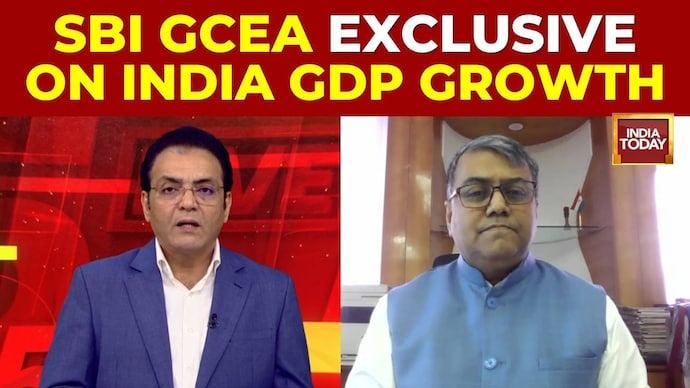
In an interview, Dr Soumya Kanti Ghosh, Group Chief Economic Advisor at the State Bank of India, evaluated India's economic performance following the first-quarter GDP print. Describing the momentum, he said, '7.8% is really a very creditable number,' noting that the expansion is being driven increasingly by manufacturing alongside resilient services. Addressing global headwinds and input price pressures, he projected a full-year GDP growth of around 7.3%. Dr Ghosh also addressed concerns over household leverage, pointing out that nearly 24% of the debt consists of productive asset creation such as housing loans. On income distribution, he highlighted that tax cuts have supported rural consumption. Furthermore, evaluating labour market dynamics through Periodic Labour Force Survey data, he noted an overall unemployment rate near 3.2%, while stressing the importance of aligning skilling initiatives with formal education.

Stock Market Slips, India's GDP Hits 7.8%, Sugar Limit Tightened

Indian stock markets experienced sharp volatility on Dalal Street as the Nifty slipped below the 24,000 mark before closing at 24,055 points, weighed down by auto and banking stocks amid rising crude oil prices past 92 dollars per barrel. Meanwhile, the central government tightened the sugar stock limit to 2,000 quintals for dealers from 15 September until 30 November. On the macroeconomic front, Prime Minister Narendra Modi and Finance Minister Nirmala Sitharaman hailed India's first-quarter GDP growth of 7.8 per cent, highlighting the nation's broad-based expansion despite global external challenges. Additionally, Mahindra and Mahindra reiterated their focus on electric vehicles, projecting EV contributions to reach 18 to 20 per cent by FY28 as demand transitions from a niche segment to the mass market. In currency trade, the Indian rupee closed 21 paise stronger against the US dollar at 94.95.

India Q1 GDP Grows 7.8% as BJP and Congress Clash Over Economic Health

India's gross domestic product grew at 7.8% in the first quarter of the 2026/27 financial year, positioning it as the fastest-growing major economy globally. Prime Minister Narendra Modi described the economic expansion as a Herculean feat achieved despite global headwinds such as West Asia geopolitical tensions, oil price volatility, US tariff pressure, and supply chain disruptions. However, the GDP figures have triggered a political confrontation. The Congress party questioned the headline numbers, calling them a distorted picture and raising concerns regarding sluggish consumer sentiment, falling rupee value, depressed private investment, educated unemployment, and trade deficit with China. Meanwhile, the Bharatiya Janata Party defended the growth trajectory, highlighting expansion in manufacturing and financial services, and sought an apology from Congress leader Rahul Gandhi over earlier remarks labelling India a dead economy.