Vietnamese crab exporter

Topic

Advertisement
TOPIC

ICSE

The Indian Certificate of Secondary Education (ICSE) is a well-known school education system in India, governed by the Council for the Indian School Certificate Examinations (CISCE).

The council was founded in 1958 with the goal to provide a top-notch, well-rounded education that adheres to Indian values while meeting international standards. Since its founding, ICSE has gained recognition for its robust academic framework and focus on English language competency.

Early on, ICSE was created to provide a broad-based curriculum as an alternative to the current school boards. Instead of rote learning, the approach was intended to promote in-depth comprehension. ICSE became known for its demanding curriculum over time, especially in courses like science, English, and the humanities.

Class 10 students take the ICSE test, and Class 12 students take the ISC (Indian School Certificate) exam. These tests encourage critical thinking and the practical application of knowledge by evaluating students through written papers, practical assignments, and internal evaluations. ICSE-affiliated schools can be found all over India and in a few other nations.

Language proficiency, critical thinking, and general personality development are all highly valued in ICSE. A broad range of courses, such as the arts, sciences, and environmental education, are studied by students, which contributes to the development of a comprehensive academic perspective. The board has updated curricula and evaluation techniques in response to evolving educational demands.
ICSE is now regarded for generating students who are articulate and have solid academic credentials.

Its long history and consistent focus on quality education have made it a preferred choice for many parents and schools across the country.

  • ALL
  • STORIES
  • VIDEOS

STORIES

An English educator, wartime letters to Indira Gandhi, and the making of a school

The idea of a dedicated girls' school in India was still relatively new in 1957, but an English woman took on that responsibility. Deeply impressed by Indian culture and its values, she helped establish a school in the Dehradun valley that would come to be known as Welham Girls' School, giving a new identity to girls' education in India.

Can parents move away from CBSE? The trust crisis fuelling India's board debate

As CBSE faces mounting criticism over transparency and evaluation controversies, many parents are looking at ICSE, IB, Cambridge and even state boards as alternatives. But while these boards offer distinct advantages, cost, availability and India's competitive exam system mean leaving CBSE is far more difficult than social media suggests.

Noida schools revise timings amid severe heatwave, students get relief

As the heatwave continues to intensify, the Gautam Buddha Nagar administration has revised school timings in Noida and Greater Noida to protect students from extreme weather conditions. The decision aims to reduce children’s exposure to harsh afternoon temperatures and rising heat levels.

ICSE Class 10 admit cards released. Board exams begin Feb 17

The CISCE has released the ICSE Class 10 Admit Card 2026. Schools can download hall tickets using official login credentials. ICSE Class 10 board exams will be held from February 17 to March 30, 2026. Students must collect admit cards from schools and carry them to the exam centre.

The Mumbai school that shaped legends from Ratan Tata to Karisma Kapoor

Cathedral and John Connon School in Mumbai has shaped leaders across science, law, business and entertainment for over 160 years. From Ratan Tata to ex-CJI DY Chandrachud and Krisma Kapoor, its legacy blends strong academics, rich culture and modern learning. Here’s what makes this iconic school a top choice for generations of parents and students.

Load More

VIDEOS

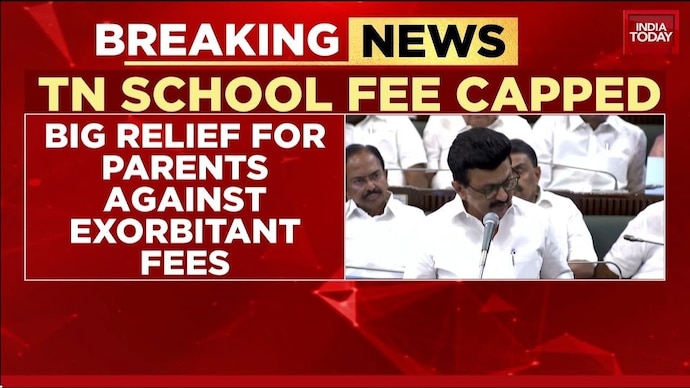
Anagha Reports: Tamil Nadu Passes Bill To Cap Private School Fees For Three Years

On this Special Report, the focus is on the Tamil Nadu government's significant move to regulate private school education costs. Reporter Anagha details the passage of the 'Tamil Nadu Schools Regulation of Collection of Fee Amendment Act 2026' in the state assembly. Anagha notes that the 'Tamil Nadu government that has imposed a cap on private school fees is coming in as a huge relief for parents'. The new legislation establishes a seven-member committee, led by a retired High Court judge, to determine mandatory fee structures valid for three academic years. Unlike the previous 2009 law, this committee includes a representative from the State Parent Teachers Association to ensure a balanced perspective. The bill aims to prevent arbitrary hikes and ensure fees remain non-exploitative. While the mandate covers most educational boards, its application to CBSE and ICSE schools remains unlikely due to sub judice status. The programme explores how this amendment seeks to protect parents from exorbitant charges across the state.