Vietnamese crab exporter

Topic

Advertisement
TOPIC

IIT Madras

IIT Madras is one of the top universities in India for engineering, science, research, and innovation. It was officially opened in 1959, and in 1961 it was designated as an Institute of National Importance. Its establishment was connected to an Indo-German pact that was signed in Bonn in 1959 following Germany's offer of technical support to India. Early on, the institute was established with the assistance of German professionals, academics, and equipment.

It is situated in Chennai. It developed from a small technical school into a significant hub for research and education. In addition to a number of speciality research centres, it has departments dedicated to engineering, science, humanities, and management.

IIT Madras has had a close relationship with Germany from its founding, which is an intriguing fact. The German collaboration includes laboratory equipment, faculty training, and academic experience in addition to finance. The early academic ethos of the institute was shaped in part by this worldwide collaboration.

IIT Madras is renowned for its environment of startups and research. Students and researchers have worked on everything from new materials and clean energy to space and healthcare technology.

  • ALL
  • STORIES
  • VIDEOS

STORIES

Meet Preeti Aghalayam, IIT Madras alumna who became first woman to lead an IIT

In 1991, Preeti Aghalayam joined IIT Madras to study chemical engineering. After higher studies in the United States and years of teaching and research, she returned to the institute in a very different role. In 2023, she became the first woman to lead an IIT, taking charge as a director of its international campus in Zanzibar.

IIT student suicides more than doubled in 10 years, Kharagpur tops 20-year list

A compilation of RTI responses and media reports records 171 student suicides and unnatural deaths across IITs in the last 20 years (between January 2006 and September 2026). The data shows 120 deaths in the last 11 years, compared with 51 in the previous decade, offering a stark look at student deaths across India’s premier institutes.

IITian recalls ‘caste system’ at IIT Madras in the 80s: JEE rank, branch, GPA

In a post on X, IIT Madras alumnus Ramesh Srivats recalled how student hierarchies in the 1980s shifted from entrance rank to branch, GPA and career plans. His account, offered in a satirical vein, describes these measures as an informal campus hierarchy, distinct from caste by birth and shaped by a student’s performance and course of study.

Load More

VIDEOS

IIT Bombay student death sparks caste row; Jamui encounter, Tata Sons row in focus

Tensions escalated at IIT Bombay following the death by suicide of 20-year-old student Sahil Wakode, leading to campus protests and counter-protests. Sahil's parents, accompanied by their legal counsel, demanded the immediate arrest of invigilator Professor Surya Narayan Dula, alleging caste-based discrimination and harassment. Mumbai Police registered an FIR under the Bharatiya Nyaya Sanhita and the SC/ST Prevention of Atrocities Act. Meanwhile, IIT Bombay faculty members, backed by faculty forums from IIT Delhi and IIT Madras, defended Professor Dula, stating that established protocol was followed after detecting exam malpractices, with faculty forum head Professor Rajkumar Pant stating the invigilator was executing his academic duties. A panel debate featuring Vanchit Bahujan Aghadi president Prakash Ambedkar and IIT Kharagpur alumnus Rajat Sethi examined caste discrimination, academic stress, and institutional support systems. Additionally, the bulletin covers a police encounter in Jamui, Bihar involving molestation accused, alongside legal arguments by Abhishek Manu Singhvi and Harish Salve regarding Tata Sons board powers, shareholder rights, and affirmative trust voting.

IIT Bombay Suicide Row: Protests Outside Campus, FIR Filed, Faculty Backs Professor

Tensions escalated at the Indian Institute of Technology Bombay following the death by suicide of student Sahil Wakhure. His parents staged protests demanding the arrest of invigilator Professor Suryanarayana Dula, alleging caste-based discrimination and harassment. In contrast, faculty forums across IIT Bombay, IIT Delhi, and IIT Madras supported the professor, asserting he followed due procedure regarding examination malpractice and warning against public vilification. Mumbai Police registered an FIR under Bharatiya Nyaya Sanhita and the SC/ST Prevention of Atrocities Act, while the Crime Branch analysed CCTV footage from the examination hall and hostel to reconstruct the sequence of events leading to the tragedy.

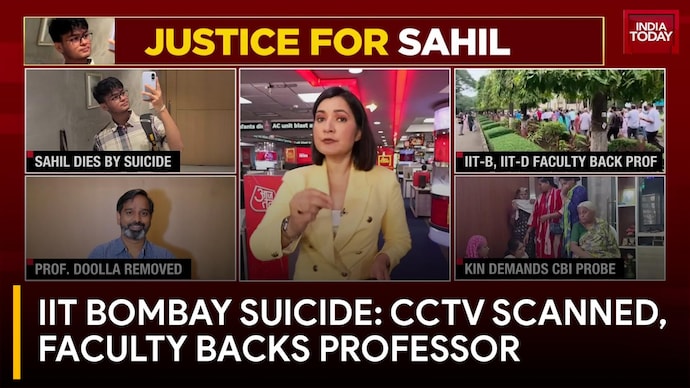
IIT Bombay Suicide Stir: Crime Branch Scans CCTV, Faculty Backs Professor

The Mumbai Police Crime Branch has launched a detailed investigation into the death of a second-year B.Tech student, Sahil, at IIT Bombay by scanning campus CCTV footage to reconstruct the sequence of events. The investigation focuses on recordings from the examination hall, campus grounds, and hostel areas from 18 September. The development comes amid intense campus unrest with opposing perspectives emerging. While protesters and the student's family demand justice along with an independent Central Bureau of Investigation probe into allegations of caste-based harassment, the IIT Bombay Faculty Forum and faculty from IIT Madras and IIT Delhi have come out in support of invigilator Professor Suryanarayan Dula. The faculty representatives maintain that prescribed examination procedures were strictly adhered to after suspected academic malpractice was observed, dismissing allegations of discrimination as baseless. Institute director Shirish Kedare continues dialogue with students to address concerns and resolve tensions on campus.

Modi & Putin Review Indigenous Defence Tech, Drones And Space Innovation

Prime Minister Narendra Modi and Russian President Vladimir Putin visited an exhibition at Bharat Mandapam showcasing India's cutting-edge science, indigenous defence technology, and space innovations. Accompanied by Commerce Minister Piyush Goyal, the leaders reviewed private optical SAR satellites built by IIT Madras innovators, battle-proven drone killers, counter-drone systems, advanced radars, and unmanned underwater submersibles. Experts discussed deepening bilateral collaboration across defence and civilian domains, noting the $100 billion bilateral trade target set for 2030. Key strategic areas of interest included potential cooperation in automobiles, critical minerals, and mass production of military and civil jet-powered drones to bolster operational capabilities and offset defence voids.

IIT Madras Alumni Build OptoSAR Satellite, Plan 30-Satellite Constellation

An exhibition at Bharat Mandapam in New Delhi highlighted India's emerging prowess in defence and space technologies, spotlighting private sector innovations developed alongside the Indian Space Research Organisation. Among the featured innovations is OptoSAR, a 190-kilogram satellite designed by IIT Madras alumni that combines optical payloads and synthetic aperture radar. The satellite simultaneously captures images through clouds, smoke, and nighttime conditions, serving defence operations, flood monitoring, and forest fire management. Following the launch of Mission Drishti in May, developers aim to build a constellation of 30 satellites within three years to cater to global requirements. The initiative reflects growing government backing and grants aimed at expanding India's private space tech sector.

Bihar suspends constable for firing AK-47 at protesters, withdraws FIRs on students

During nationwide student agitations over NEET, police action in Bihar’s Siwan sparked severe controversy after a constable fired an AK-47 during a protest. The Bihar police suspended the constable, maintaining that four aerial rounds were fired to protect lives and public property. Amid political debate and demands for judicial inquiry, the Bihar government announced a major decision to withdraw all FIRs, complaints, and cases registered against protesters up to 6:00 PM on July 26, while promising the release of detained students without retaliatory action. Simultaneously, the central government notified an Education Task Force led by Nandan Nilekani to reform the National Testing Agency and prevent paper leaks. In an exclusive interview on News Track, panel member and IIT Madras Director Professor V Kamakoti emphasised that while scale makes technology intervention essential, robust protocols and third-party oversight are necessary to ensure secure, transparent, and leak-proof examination systems across India.

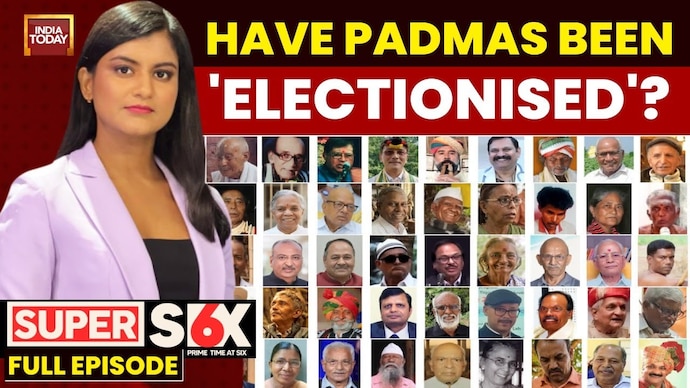
Akshita Nandagopal Examines Allegations Of Political Bias In Padma Awards For Poll-Bound States

On this Special Report, anchor Akshita Nandagopal examines the political storm ignited by the announcement of the Padma Awards. While the centre hails them as the 'People's Padma' based on merit, critics argue the selections are 'electionising' the honours, particularly in poll-bound states like Kerala, Tamil Nadu, and West Bengal. Akshita Nandagopal notes, 'this recognition of merit is being read through a political lens, with critics accusing the centre of politicising' the awards. The programme breaks down the numbers, revealing Maharashtra has the highest count, yet highlights controversial inclusions like V.S. Achuthanandan and Shibu Soren for Padma Vibhushan. Reporters Shibi Mole and Anagha Keshav join to discuss the impact in Kerala and Tamil Nadu, including the debate over Mammootty’s 'long overdue' Padma Bhushan and the recognition of IIT Madras Director V. Kamakoti. The report concludes by celebrating the immense contributions of the awardees in culture, science, and public service despite the surrounding political showdown.

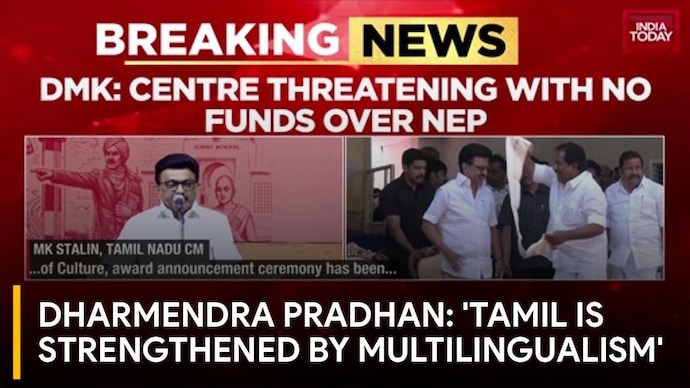
Dharmendra Pradhan Slams DMK Over Language Row: 'Tamil Strengthened By Multilingualism'

On this report, the focus is on the escalating language row in Tamil Nadu as the DMK mouthpiece, Murasoli, launched a scathing attack on Union Education Minister Dharmendra Pradhan. The publication alleged that the Bharatiya Janata Party (BJP) and RSS intend to replace English with Hindi and eventually impose Sanskrit as the official language. Responding to these allegations, Dharmendra Pradhan stated, 'Tamil is strengthened when its children are multilingual, confident, and globally competitive.' He further defended the National Education Policy (NEP) 2020, asserting that the three-language formula protects the mother tongue rather than weakening it. The controversy intensified following Pradhan's visit to IIT Madras during Pongal, where his remarks on education sparked a backlash from the DMK. The transcript also highlights the Tamil Nadu government's announcement of new national-level literary awards, the 'Semmozhi Ilakkiya Virudhu', for various Indian languages, framed as a response to alleged political interference in central cultural institutions.

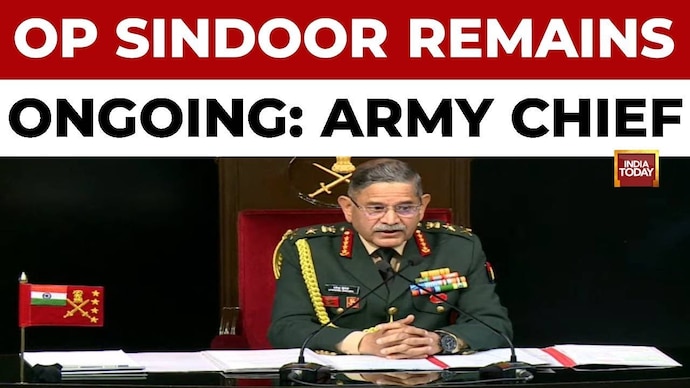
Unidentified speaker warns: 'Operation Sindoor remains ongoing' and future attacks will be hit back

An unidentified speaker, presented in the bulletin as the Army Chief, delivers a warning on terrorism and says the operation is continuing. The key line is: 'Operation Sindoor remains ongoing. Any future misadventure will be resolutely responded to.' The speaker also describes a shift towards network-enabled multi-domain operations and lists planned capabilities including BrahMos extended range, Pinaka, QR-SAM extended range, drones and munitions. The transcript mentions reduced acquisition timelines under emergency procurement, greater funding, and empowerment of commanders with procurement powers. It also details logistics modernisation with logistic drones and robotic mules, claims major progress on indigenisation of ammunition, and outlines initiatives on quantum, AI platforms, sovereign LLM development, and the secure Samba mobile phone.

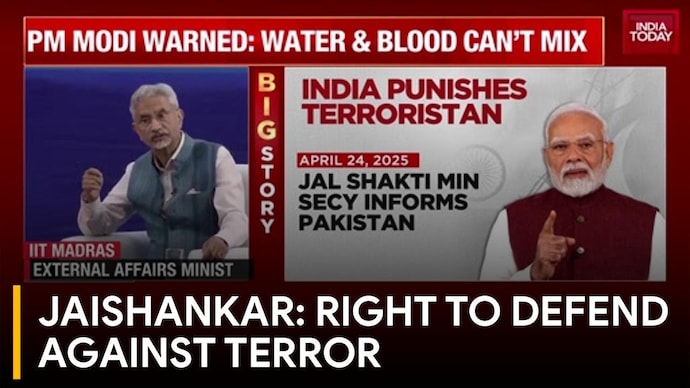
Jaishankar at IIT Madras: India Will Exercise Right to Defend Against 'Bad Neighbours' and Terror

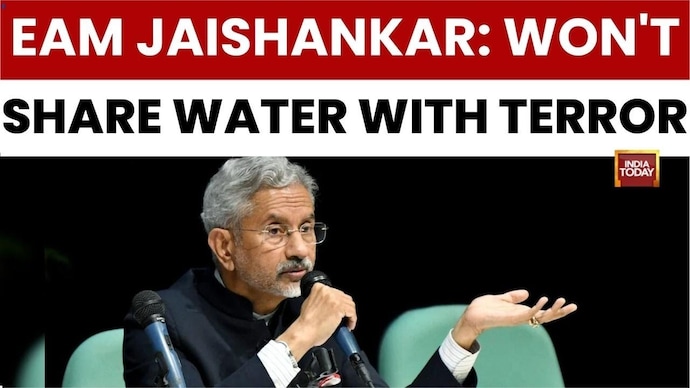
In a strong message on national security, External Affairs Minister S. Jaishankar addressed the IIT Madras team, asserting India's uncompromising stance against cross-border terrorism. Referring to 'bad neighbours', Jaishankar stated, 'If a country decides that they will deliberately, persistently, unrepentantly continue with terrorism, we have a right to defend our people against terrorism.' He emphasised that how India exercises this right is its sovereign decision. The Minister also linked water-sharing agreements to trust, warning that benefits cannot continue alongside hostility. The bulletin further highlights Prime Minister Narendra Modi's warning that 'water and blood cannot flow together' amid tensions over the Indus Water Treaty.

EAM Jaishankar Warns Pakistan: India Will Not Share Water With Continued Terrorism

External Affairs Minister S. Jaishankar has issued a stern warning to Pakistan, asserting India's right to defend itself against 'deliberately, persistently, unrepentantly' continuing terrorism. Speaking at IIT Madras, Jaishankar termed Pakistan a 'bad neighbour' and linked the future of the Indus Water Treaty to the cessation of cross-border terror. He stated, 'We will exercise that right. How we exercise that right is up to us,' emphasizing that India will take necessary measures for self-defence. The EAM also referenced his recent visit to Bangladesh for the funeral of former PM Khaleda Zia, contrasting India's supportive approach to other neighbours with its stance on Pakistan.

Op Sindoor was like a game of chess, we checkmated Pak: Army Chief

Army Chief Gen Upendra Dwivedi said Operation Sindoor was unlike any conventional mission, likening it to a game of chess where “we did not know” the enemy’s next move. Speaking at a function at IIT-Madras, he recounted the complexities of India’s decisive military strike in May on terror infrastructure, carried out in retaliation for the April 22 Pahalgam attack. Using the metaphor of the chess game, Gen Dwivedi said, "In Operation Sindoor what we did, we played chess. So, what does it mean? It means, we did not know what is the next move, the enemy is going to take, and what we are going to do. This is something, we call.. the grey zone. Grey zone is that we are not going for the conventional operations. But, we are doing something, just short of a conventional operation."

NSA Ajit Doval calls out Western media for biased reporting on Operation Sindoor

National Security Advisor Ajit Doval, addressing students at IIT Madras, has called out Western media for biased reporting on Operation Sindoor. He challenged them to show evidence of any damage to India, stating that India precisely hit 13 air bases in Pakistan within 23 minutes using indigenous technology. Doval emphasised the success of Indian-made systems like BrahMos and integrated air control. He refuted claims of collateral damage, asserting that India targeted only nine terrorist locations across Pakistan. The NSA expressed pride in India's technological advancements and the accuracy of the operation, which began at 1:05 AM and concluded at 1:28 AM.

Video: Massive 70-meter crack splits Chennai road, sparks panic among residents

A massive crack, approximately 70 meters long, has appeared on a residential road in Chennai's Perungudi area, causing panic among residents. The crack, which resembles a sinkhole, is believed to be caused by nearby construction work for a high-rise apartment building. Residents reported hearing an explosion-like sound when the crack opened up. The affected road has been barricaded, disrupting traffic and daily life in the area. Civic authorities, including the Greater Chennai Corporation (GCC) Regional Deputy Commissioner, have inspected the site. A technical team from IIT Madras and Anna University has been called in to assess the situation. Questions are being raised about the permissions granted for the construction and the safety measures in place. This incident follows recent reports of a sinkhole in the same area and an electrocution death, raising concerns about urban infrastructure safety in Chennai.