Vietnamese crab exporter

Topic

Advertisement
TOPIC

Infrastructure Sector

The Infrastructure Sector covers roads, railways, ports, airports, power, water and urban development projects that drive economic growth. Government spending in this area boosts jobs, connectivity and long-term productivity. Budget allocations and policy decisions play a key role in shaping project execution and private investment. This topic page tracks major announcements, sector-wise developments, expert views and the impact of infrastructure spending on the economy.

  • ALL
  • STORIES
  • VIDEOS

STORIES

If Gurugram were the exam, would India’s civil engineers pass?

Gurugram’s latest monsoon chaos is not proof that India has bad civil engineers, it is evidence of something more uncomfortable. A country that needs millions of engineers to build its future has still not figured out how to align engineering education, skills, jobs and public policy.

AI mega deal: Why HCLTech shares jump nearly 6% today?

At around 11 am, HCLTech was trading nearly 6% higher. The rally also helped lift the broader Nifty IT index for the second straight session, even as AI-heavy markets in South Korea and Taiwan witnessed a sharp selloff.

Load More

VIDEOS

Markets Open Range-Bound, Crude & Geopolitical Risks Rise, Tata Sons Dispute Intensifies

Indian equity markets opened range-bound amid expanding geopolitical tensions in West Asia and a busy week in the primary markets. Global crude refining dynamics face disruptions following drone attacks on Russian refineries and escalating strikes involving the Houthis. Discussion highlights that domestic liquidity is partially diverted towards numerous IPO listings, including the mega National Stock Exchange listing, even as Indian refining capacities remain vital globally. Meanwhile, the boardroom dispute at Tata Sons draws legal scrutiny as Tata Trusts questions the reappointment process of Chairman N. Chandrasekaran. Market analysts note that while elevated wholesale inflation and global rate hikes pose margin pressures for corporates, domestic credit growth and government-backed industrial infrastructure present solid opportunities across sectors such as private banks, telecom, and capital goods.

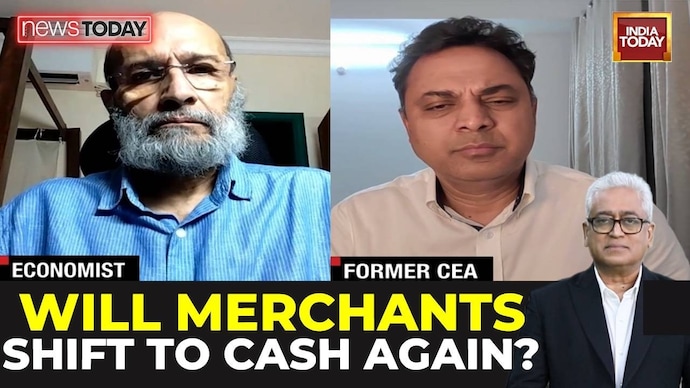
The News Today: Krishnamurthy Subramanian & Santosh Mehrotra On UPI Levy

In this edition of The News Today, anchor Rajdeep Sardesai leads a crucial discussion examining the government's UPI merchant discount rate levy. Joining the panel are Dr Krishnamurthy Subramanian, former Chief Economic Advisor to the Government of India, and Professor Santosh Mehrotra, Visiting Professor at the University of Bath. Professor Mehrotra argues against continuous taxpayer subsidies for digital payments, advocating instead that transaction costs should be fairly apportioned between banks, multinational platforms, and merchants. Meanwhile, Dr Krishnamurthy Subramanian warns that imposing an ad valorem transaction tax fails to align with UPI mechanics and risks driving small merchants back to cash transactions. He underlines that UPI should primarily serve as an engine for credit creation to generate income for banking infrastructure and technology investments rather than imposing friction on digital commerce. The panellists also assess whether merchants will ultimately pass these costs onto consumers and analyse the broader economic ramifications of altering the fee structure for digital payments.

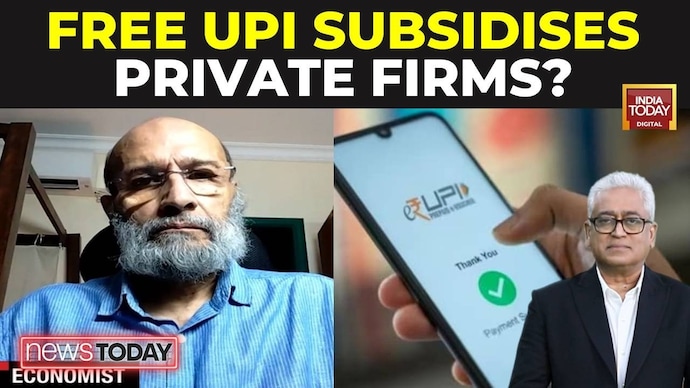
UPI Payment System: 'Someone has to bear the cost', says Santosh Mehrotra

During a discussion on the UPI payment system, economist Santosh Mehrotra addressed the debate over merchant transaction charges and government subsidies. Mehrotra noted that the government has been subsidising merchants to the tune of 2,000 crore rupees annually using taxpayer money, arguing that public funds should not cover these expenses indefinitely. He stated that the cost of UPI operations should instead be apportioned among the three primary commercial beneficiaries: banks, platform owners, and merchants, pointing out that banks generate substantial annual profits. While acknowledging the risk that merchants might eventually pass on a portion of the 0.4 per cent charge to consumers, he emphasised that small merchants alone should not carry the entire burden. Mehrotra remarked, 'Someone has to bear the cost,' urging the government to act as a regulator to distribute the financial burden across all stakeholders. Additionally, he discussed concerns regarding foreign pressure on digital payment systems and ongoing trade deal negotiations.

Rahul Gandhi Slams Centre on UPI MDR, Govt Denies Charges, Row Over Transactions Above Rs 2,000

Congress leader Rahul Gandhi has targeted the central government over digital transaction policies, alleging that a path has been opened to levy Merchant Discount Rate fees on merchant UPI transactions above 2,000 rupees. Gandhi claimed that while such transactions represent only 5 percent of the total volume, they account for roughly 65 percent of the overall transaction value. He argued that shopkeepers and business owners would not absorb the levies from their own pockets and would eventually pass the costs directly or indirectly onto consumers. Furthermore, he alleged that the Modi government is bending to pressure from American payment corporations that have historically resisted India's zero-MDR regime. While the government's gazette notification legally ensures that UPI and RuPay debit card payments up to 2,000 rupees remain entirely free with no charges for customers, ambiguity remains concerning rules for transactions above that threshold.

Gurugram Crime Spree: Woman Biker Hit & Run, Kargil War Veteran Attacked Over Parking Row

Two violent incidents in Gurugram's upscale Golf Course Road area have raised serious concerns over citizen safety and civic conditions. In the first incident, a woman rider was hit and dragged by a car whose occupants were allegedly drunk and harassing her biking group; the entire incident was recorded on her GoPro camera. While Gurugram police registered an FIR, the car's registered owner, an Indian Army soldier posted in Assam, claimed he had lent the vehicle to a friend who denied driving it. In another incident nearby at Sector 65, Kargil War veteran Group Captain Amit Kumar (Retd) was assaulted with an iron rod by a parking attendant following an argument over parking space. The retired officer sustained broken arms and ribs and underwent surgery at Medanta. The report highlights deteriorating law and order, lack of road safety, and civic issues in one of India's most expensive residential belts.

Welfare Schemes, National Security Push And Economic Growth Highlight 25-Year Governance Milestone

A comprehensive overview of governance achievements and nationwide outreach initiatives was presented during a media address. Key milestones highlighted include the lifting of millions out of multi-dimensional poverty, direct benefit transfers via bank accounts, tap water connections, free ration distribution, sanitation coverage, and housing initiatives. Significant progress in economic transformation was outlined, focusing on gross domestic product growth, digital public infrastructure, tax reforms, banking sector turnaround, and infrastructure expansion across railways, roadways, and aviation. Major policy decisions concerning national security, legislative representation for women, internal security improvements, and administrative reforms across several states were detailed. A series of community service programmes, outreach drives, innovation challenges, and governance dialogues spanning villages to representative assemblies were announced to connect with beneficiaries and promote citizen participation across the country.

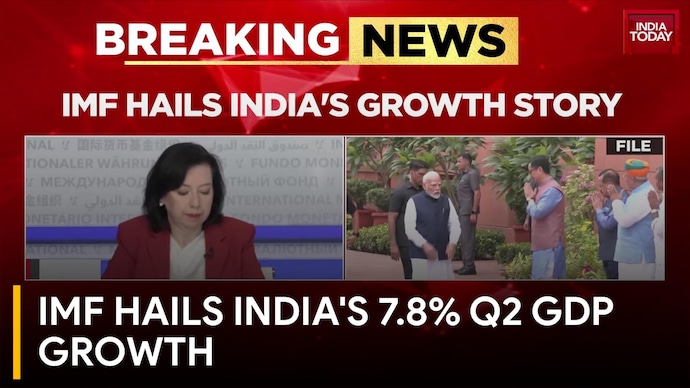
IMF Hails India's 7.8% GDP Growth, Services & Export Surge, Global Economic Resilience

The International Monetary Fund has lauded India's economic performance, highlighting that real gross domestic product grew by 7.8 per cent in the second quarter. According to the international financial institution, this growth rate exceeded initial staff projections and consensus estimates among global economic observers. The upward trend was primarily propelled by stronger than expected activity across the services sector and robust export performance. The data underscores the resilience of the Indian economy despite global energy price shocks, reinforcing the nation's position as a key growth engine for the world economy. Discussions also noted India's position as the fastest growing economy within the BRICS bloc, contrasting with growth stresses observed in other major economies. The report counters domestic debates and scepticism regarding national growth figures, which have been corroborated by both the Ministry of Statistics and Programme Implementation and international bodies.

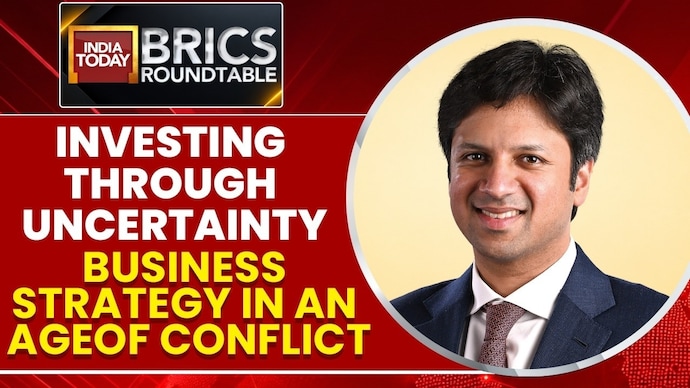
Anant Goenka: 'India Is The Oasis Today' Amid Global Chaos

In an insightful interview, Anant Goenka, Vice Chairman of the RPG Group and President of FICCI, outlined India's expanding industrial and economic strengths amidst global supply chain uncertainties. Highlighting the nation's robust macroeconomic fundamentals, Goenka stated, "India is the oasis today." He emphasized that after leading the services revolution over the past two decades, India is positioned for substantial manufacturing expansion across high-tech domains including deep tech, robotics, electronics, and space tech. Goenka urged Indian businesses to expand their global ambitions, innovate for varied international consumer requirements, and actively leverage newly established free trade agreements. Addressing emerging corporate leadership and young entrepreneurs, he advised Gen Z to focus on large-scale building aligned with national priorities.

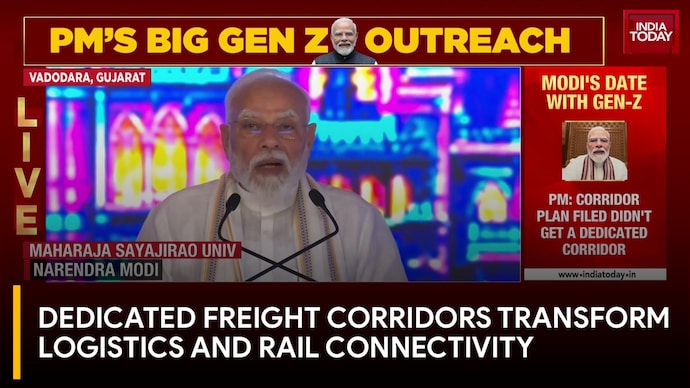
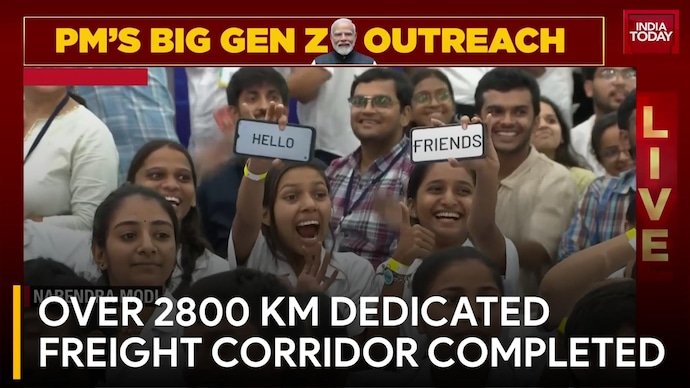
Dedicated Freight Corridor Project Completed, Manufacturing and Clean Energy Boosted in Vadodara

Over 2,800 kilometres of the Dedicated Freight Corridor project have been completed, establishing a key backbone for trade and transport across eastern and western India. Daily operations now see over 430 freight trains running on these dedicated tracks, significantly reducing travel time and operational costs while expanding connectivity for farmers and industries. Key infrastructure advancements include double-stack container operations from JNPT to Vadodara and the introduction of new rail routes connecting tribal regions across Gujarat, Madhya Pradesh, and Maharashtra. Alongside transport infrastructure, manufacturing capabilities have expanded with indigenous military transport aircraft production, over 50,000 modern rail coaches built since 2014, and floating solar projects boosting domestic renewable capacity. To support youth empowerment and future industrial demands, new initiatives focus on free online coaching for competitive exams and skill development in artificial intelligence and emerging technologies.

Dedicated Freight Corridors, Railway Expansion And Vadodara Manufacturing Push

Dedicated Freight Corridors are operating over 430 goods trains daily, reducing freight transit times by more than half compared to road transport while cutting logistics costs, fuel consumption, and emissions. The enhanced corridor network enables farmers across eastern and western India to deliver perishable produce, including fruits, vegetables, and flowers, rapidly to major wholesale markets. The operation of double-stack container trains from Mumbai's Jawaharlal Nehru Port Trust to Vadodara carries cargo equivalent to over 250 trucks in a single trip. Rail connectivity has expanded into previously underserved tribal regions across Gujarat, Madhya Pradesh, and Maharashtra, backed by a record annual railway budget exceeding 2.75 lakh crore rupees. Large-scale investments in rail, roads, metro systems, and airports continue to generate substantial employment and stimulate regional enterprise. Vadodara has advanced into a prominent manufacturing and industrial hub, progressing from textiles, petrochemicals, and small enterprises to producing the nation's first domestic C-295 military transport aircraft.

Freight Corridor Network Completed, Multi-Crore Projects Unveiled And Cleanliness Drive In Vadodara

Development projects worth thousands of crores of rupees were unveiled in Vadodara, Gujarat, marking a major milestone in national infrastructure. The Dedicated Freight Corridor project, spanning over 2,800 kilometres across Eastern and Western routes, has been completed to transform the country's logistics ecosystem and accelerate transportation. The initiative, conceived in 2004 with a dedicated company formed in 2006, faced prolonged delays before work was expedited post-2014. The operational corridor separates passenger trains from goods trains, significantly improving speed, travel efficiency, and business connectivity. Additionally, civic participation and cleanliness drives across Vadodara ahead of upcoming Ganeshotsav and Navratri festivals were highlighted alongside the focus on the Gati Shakti connectivity framework.

UP Law And Order Overhaul, Infrastructure Expansion And Economic Growth

A news report outlines the governance and development milestones of Uttar Pradesh, highlighting a transformation in law and order, economic growth, and infrastructure. The administration has focused on maintaining peace, eradicating curfews, and ensuring security for cultural and religious events across the state. Significant progress has been made in connectivity, with the expansion of expressways, domestic and international airports, metro networks in seven cities, rapid rail systems, and inland waterways. Strict action under a zero-tolerance policy has been enforced against crime and examination paper leaks, including asset confiscation and stringent prison sentences. The state has shifted from past economic challenges to becoming one of the top state economies in the country, providing government jobs to 9.5 lakh youth and fostering skill development zones in emerging technologies such as robotics and artificial intelligence. The report highlights progress across micro, small, and medium enterprises, geographical indication tagging, and youth employment initiatives.

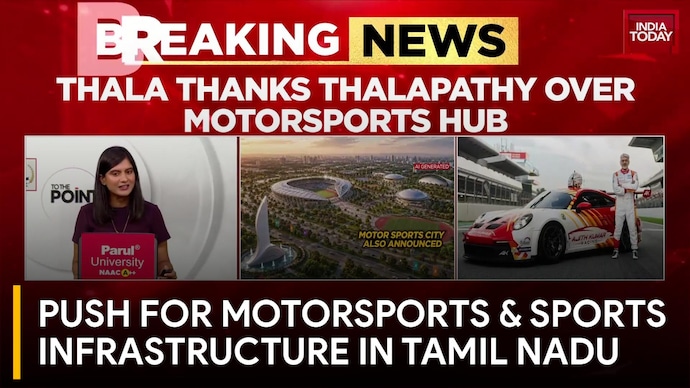
Push For Motorsports, Sports Infrastructure Development Across Tamil Nadu & Growth In India

A new initiative has been announced to develop infrastructure and promote every discipline of sports, with a particular focus on the expansion of motorsports. The announcement addresses the requirement for institutional support and dedicated infrastructure to ensure the growth of motorsports and other athletic disciplines, marking a significant step for the sports sector in the region.

Stock Market Slips, India's GDP Hits 7.8%, Sugar Limit Tightened

Indian stock markets experienced sharp volatility on Dalal Street as the Nifty slipped below the 24,000 mark before closing at 24,055 points, weighed down by auto and banking stocks amid rising crude oil prices past 92 dollars per barrel. Meanwhile, the central government tightened the sugar stock limit to 2,000 quintals for dealers from 15 September until 30 November. On the macroeconomic front, Prime Minister Narendra Modi and Finance Minister Nirmala Sitharaman hailed India's first-quarter GDP growth of 7.8 per cent, highlighting the nation's broad-based expansion despite global external challenges. Additionally, Mahindra and Mahindra reiterated their focus on electric vehicles, projecting EV contributions to reach 18 to 20 per cent by FY28 as demand transitions from a niche segment to the mass market. In currency trade, the Indian rupee closed 21 paise stronger against the US dollar at 94.95.

India's Q1 GDP Hits 7.8%, Manufacturing Surges 9.2% As PM Modi Hails Herculean Growth

Prime Minister Narendra Modi hailed India's economic growth as gross domestic product expanded by 7.8% in the first quarter of financial year 2026-27, calling it a Herculean feat. The Prime Minister stated that the collective strength of the people ensured strong growth despite global uncertainties, oil price shocks, and supply chain issues, remarking that doomsayers were doomed while India bloomed. The growth numbers surpassed projections, driven primarily by robust domestic consumption and substantial government capital expenditure in infrastructure, including railways expansion. Key industrial sectors reflected sharp upturns, with manufacturing growing at 9.2% compared to 8.3% a year earlier, and electricity recording 8.9% growth against a contraction previously. Economists noted that trickle-down impacts of past policy measures, welfare schemes, and resilient exports helped shield the domestic economy from international challenges, raising full-year growth expectations for the fiscal year toward 7%.

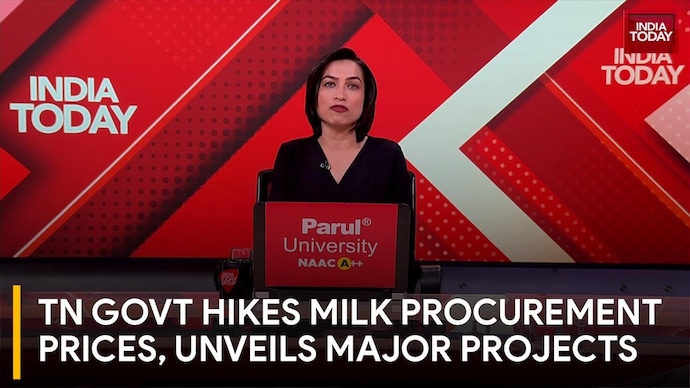
TN Government Hikes Milk Procurement Prices; Announces Infrastructure Projects

The Tamil Nadu government has announced a hike in milk procurement prices alongside several infrastructure initiatives during state assembly proceedings. Procurement prices for milk have been increased to ₹44 per litre to support milk producers following rising cattle feed costs, resulting in an additional annual expenditure of ₹770 crore for the government. Furthermore, the state announced the construction of a supercritical thermal power plant in Tuticorin district along with 15,000 kilometres of transmission line connections to address power demand. In a bid to boost investment and employment, the state plans to set up a semiconductor, electronics, and manufacturing park in Kanchipuram, expected to attract ₹2,000 crore in investment and generate 5,000 jobs. Additionally, a ₹400 crore fintech hub has been announced for Coimbatore to promote regional development.

P Chidambaram Exclusive: Why He Says India’s ‘Default’ Economic Model Falls Short On Growth & Jobs

In an interview with Business Today, former Union Finance Minister and Rajya Sabha MP P. Chidambaram shared his assessment of India's economy and manufacturing sector. He criticized the current economic trajectory, asserting, "The current economic model is a default model." Chidambaram argued that the government lacks economic expertise, stating, "there's nobody, I underline nobody, in the government today that can compare with Dr. Manmohan Singh." Evaluating key initiatives, he claimed that schemes like Make in India, Atmanirbharta, and Production Linked Incentives have failed, noting that manufacturing remains stagnant at around 13.5 to 14 percent of gross domestic product. He also characterized the current regulatory environment as a "rule and regulation raj" and questioned the effectiveness of foreign trade agreements signed with minor trading partners.