Vietnamese crab exporter

Topic

Advertisement
TOPIC

Israel

Israel, a country steeped in rich history and cultural significance, is located on the eastern shore of the Mediterranean Sea. It is recognized as the birthplace of Jewish culture and Judaism, which also played a pivotal role in the creation of Christianity and Islam. The nation is unique for being the only state in the world with a majority Jewish population, making it a significant homeland for Jews scattered globally.

Covering an area of 8550 square miles, roughly the size of New Jersey, Israel boasts a diverse topography. It features a lengthy coastal plain, highlands in the north and central regions, and the Negev desert in the south. The Great Rift Valley runs along its eastern border from north to south, marking the northern terminus of this geographical marvel.

Israel is bordered by Egypt, Jordan, Lebanon, Syria, and the Palestinian territories, including the West Bank and the Gaza Strip. It also shares maritime borders with Cyprus. Despite its small size, Israel has more museums per capita than any other country in the world, reflecting its deep appreciation for art and culture. The Dead Sea, the lowest point on earth, is another notable feature of the country.

The official languages of Israel are Hebrew and Arabic, although many Israelis also speak English, Russian, and French. About three-quarters of the population is Jewish. The country operates as a liberal democracy, the only one in the Middle East.

Israel's history is marked by conflict with its Arab neighbors and the Palestinians over land considered holy by Jews, Christians, and Muslims. Despite these challenges, Israel has evolved into a hi-tech economy, absorbing Jewish immigrants from various parts of the world. However, the conflict with the Palestinians remains a major factor in its foreign and security policy.

Today, Israel continues to be a focal point of global attention due to its unique cultural, religious, and geopolitical significance.

Follow Israel on

  • ALL
  • STORIES
  • VIDEOS

STORIES

Load More

VIDEOS

Benjamin Netanyahu: 'If We Hadn't Done It, We'd All Be Dead'

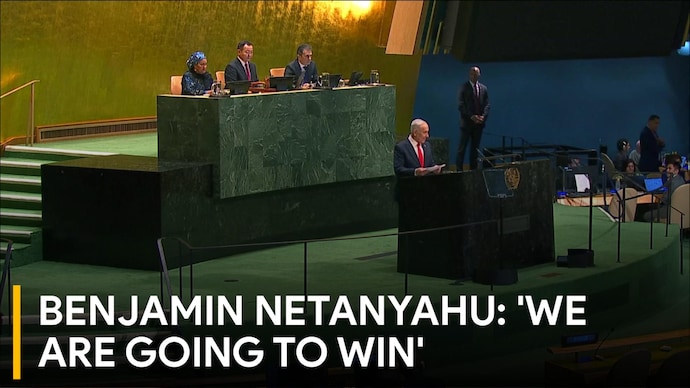
Israeli Prime Minister Benjamin Netanyahu addressed world leaders, denouncing delegates who walked out of the hall and defending military actions against Iranian nuclear installations. Netanyahu asserted that striking Iran's nuclear infrastructure was among the easiest decisions he faced as prime minister, stating, 'Because if we hadn't done it, we'd all be dead.' He claimed that several world leaders privately expressed gratitude to Israel for targeting Iran's nuclear assets despite public posturing. Reflecting on Israel's military history, Netanyahu recalled returning from high school in the United States ahead of the 1967 Six-Day War to meet his brother, Yonatan Netanyahu. He also recounted the 1976 Entebbe rescue operation, where his brother lost his life while liberating over one hundred hostages held by terrorists in Uganda. Reaffirming his brother's resolve that Israel has no choice but to win, Netanyahu stressed that this conviction remains paramount following the attacks of October 7, 2023.

Netanyahu UNGA Address, Mamdani Criticism, Security Concerns of Jews in New York

Israeli Prime Minister Benjamin Netanyahu addressed the United Nations General Assembly in New York, directing sharp criticism at New York City Mayor Zohran Mamdani. Netanyahu stated that Mamdani attempted to prevent him from attending the summit and silence him, asserting that the truth cannot be silenced. He claimed that many Jewish residents no longer feel safe in New York City since Mamdani became mayor. Netanyahu accused the mayor of praising individuals convicted of supporting Hamas, affiliating with controversial figures, hosting a Palestinian journalist who filmed Hamas actions, and repeatedly levelling false genocide allegations against Israel. News analysts noted that Netanyahu's address at the UNGA forum carried domestic political significance ahead of forthcoming elections in Israel, highlighting regional tensions across West Asia.

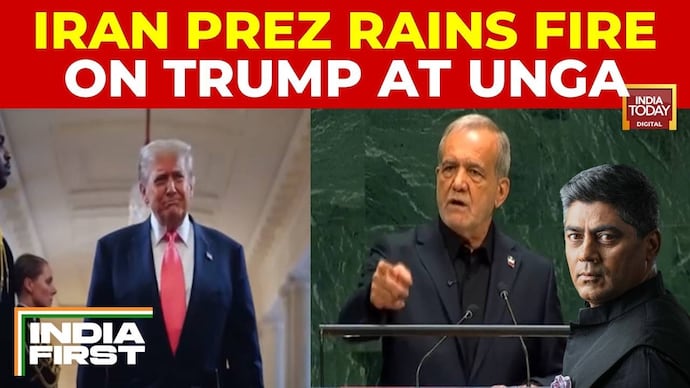
UNGA Sees US-Iran War Of Words As Pezeshkian And Trump Clash Over Nuclear Rights

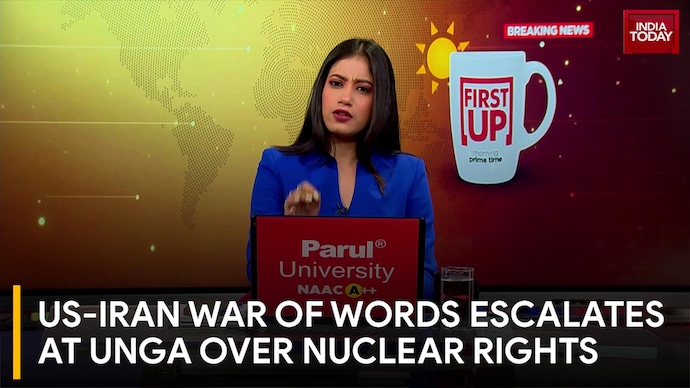
A war of words erupted between the United States and Iran at the United Nations General Assembly in New York, following three-hour-long bilateral discussions. Iranian President Masoud Pezeshkian defended Tehran's record, asserting that Iran has not attacked another nation for two centuries and maintaining that its access to peaceful nuclear technology remains non-negotiable. He also accused the US and Israel of targeting innocent civilians and causing instability. During his address, the US delegation staged a walkout from the UNGA hall. The confrontation followed remarks by Donald Trump, who issued severe warnings regarding the failure to reach an agreement, calling Iran a sponsor of terror and insisting that Tehran must never possess a nuclear weapon. Trump urged international nations to pursue economic isolation against Iran over maritime security concerns and nuclear ambitions, while Iranian leadership affirmed that Iran seeks regional cooperation and will not surrender under foreign threats.

John Sfakianakis: 'IMEC Can Help The Strait Of Hormuz, But It Cannot Replace' It

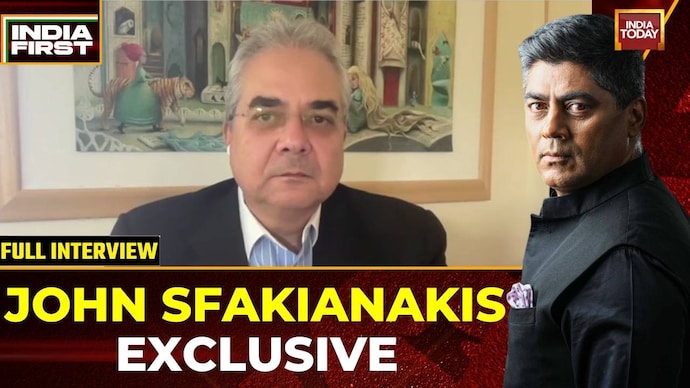
In an interview with India Today, John Sfakianakis, Chief Economist and Head of Economic Research at the Gulf Research Center and Associate Fellow at Chatham House, analyzed the feasibility of the India-Middle East-Europe Economic Corridor (IMEC) and mounting Middle East tensions. Evaluating the corridor, Sfakianakis noted, "IMEC can help the Strait of Hormuz, but it cannot replace the Strait of Hormuz." He highlighted major political, diplomatic, and infrastructural hurdles facing the project, pointing out that Saudi Arabia and Israel lack diplomatic ties and that the Arabian Peninsula currently lacks cross-border rail links. Addressing regional geopolitical friction, he explained that Saudi Arabia maintains a two-state solution for Palestine as a prerequisite for normalized ties with Israel. Sfakianakis also warned of broader economic ramifications from persistent conflicts involving Iran, Russia, and the United States, stressing that rising inflation remains the primary threat confronting global economies.

Iran Strikes Back at US & Israel at UNGA, Condemns Civilian Attacks and Denies Terrorist Labels

Iran's President Masoud Pezeshkian strongly condemned the United States and Israel during his address at the United Nations General Assembly following a military escalation. Addressing accusations of sponsoring terrorism, the Iranian President asserted that Iran has been a victim of terrorism rather than a perpetrator. He highlighted US and Israeli strikes targeting civilian infrastructure, including hospitals, universities, a sports hall in Lamert, and the Minab school bombing that claimed the lives of 120 schoolgirls. Recalling the assassination of Iran's supreme leader Ayatollah Khamenei and Hamas leader Ismail Haniyeh, Pezeshkian accused both nations of attempting to destabilise the region and the world, maintaining that Iran acted solely in self-defence against foreign aggression.

Trump at UNGA on Iran Deal, Global Diesel Crunch & India Energy Impact

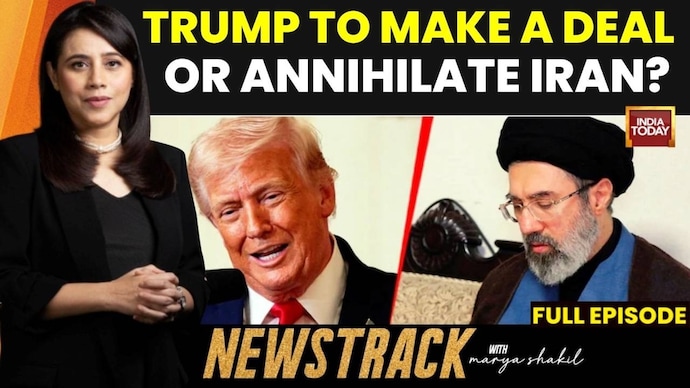
During an address at the United Nations General Assembly, US President Donald Trump issued sharp warnings against Iran, calling it the primary sponsor of terror and presenting a choice between a post-midterm deal or complete annihilation. Trump also called for global economic isolation of Tehran and advocated renaming artificial intelligence to super intelligence in official records. Evaluating the global fallout on News Track, energy expert Dr Anas Alhaj explained that crude supplies remain sufficient while refinery bottlenecks have triggered a severe international diesel and petroleum product crunch. He noted that India has managed its crude reserves effectively through discounted Russian supplies despite tariff threats. Former Indian Ambassador to the United States Meera Shankar highlighted that Trump's remarks targeted domestic US audiences, noting that India must navigate complex regional dynamics by balancing ties with Iran, Gulf nations, Israel, and the United States while accelerating its transition towards non-fossil fuel energy.

UNGA Face-Off: Iran President Masoud Pezeshkian Heads To New York To Condemn US Actions

Iranian President Masoud Pezeshkian has departed for New York to attend the United Nations General Assembly, setting up a high-stakes diplomatic face-off with the United States. During his address, Pezeshkian is expected to highlight the casualties in Minab and Lahaj, specifically condemning an apparent US missile strike that killed over 100 schoolchildren. He vowed to challenge what he described as unjust actions by the US-Israel Western alliance and address the ongoing hostility in West Asia. The assembly takes place amid heightened regional tensions as US President Donald Trump is also scheduled to deliver an address to global leaders at the UN General Assembly.

US Plans $2.8 Billion Bomb Deal With Israel, to Supply 2,000-Pound Munitions

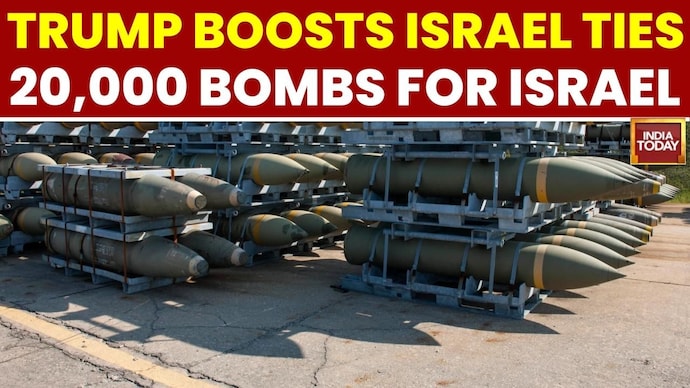
The US administration is reportedly planning a 2.8 billion dollar arms sale to Israel involving highly destructive 2,000-pound bombs, including 20,000 Mark 84s, 20,000 BLU-117s, and 2,000 penetration warheads. The proposed transaction has raised concerns over civilian destruction in areas like Gaza, alongside criticism regarding the indirect use of American taxpayer funding. Israel maintains that its use of weapon systems is strictly for self-defence and safeguarding sovereignty. The deal is described as an effort by Donald Trump to reinforce ties between the United States and Israel following earlier strategic divergences during conflicts in the region.

Houthis Seize Hanish Islands, US Tariff Threat on Russian Oil Buyers, ME Secret Talks

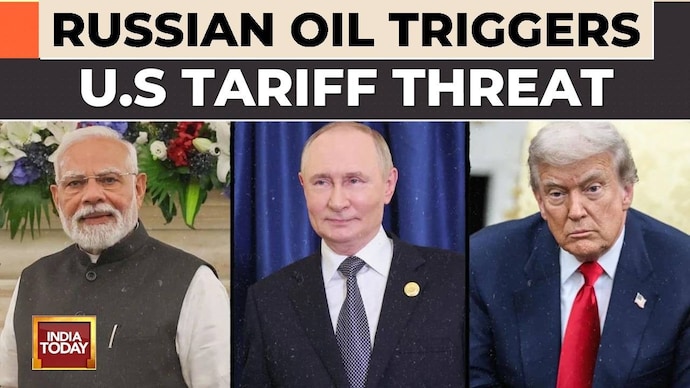
This special report examines escalating geopolitical tensions impacting global energy corridors, trade policies, and regional diplomacy. In the Red Sea, Houthi forces have seized the strategic Greater and Lesser Hanish islands near the Bab el Mandeb strait, threatening international shipping lanes and Saudi crude oil export routes. The maritime disruption coincides with drone attacks targeting Saudi Arabia's East-West pipeline, pushing Brent crude oil prices above 100 dollars per barrel and raising fears of wider supply shocks. Meanwhile, the US House of Representatives advanced the Lindsey Graham Sanctioning Russia and Iran Act of 2026, which proposes up to 100% tariffs on major purchasers of Russian energy, including India and China. In Germany, US CENTCOM convened a closed-door security conference with Israeli and Arab military commanders to coordinate responses to regional threats. The programme also highlights WHO leadership candidate Dr Hanan Balkhy discussing healthcare challenges in Gaza and introduces Germany's new Ambassador to India, Dr Philipp Ackermann's successor Dr Jasper Wyk.

India Condemns Attacks on Saudi Arabia as Riyadh Thwarts Drone Threats Near Mecca

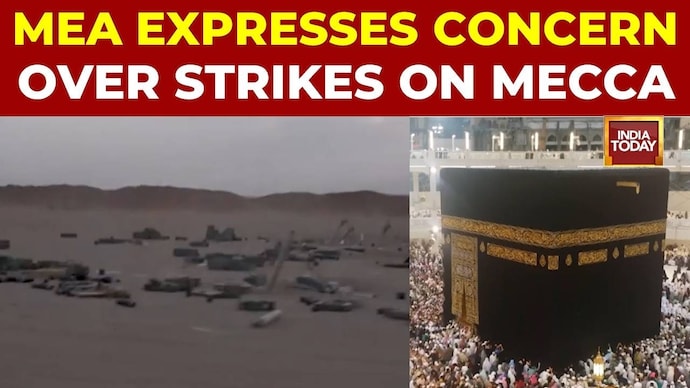
India's Ministry of External Affairs has reiterated its condemnation of attacks on the sovereign territory of the Kingdom of Saudi Arabia, expressing grave concern over actions that endanger civilian lives and critical infrastructure. The reaction follows claims by Saudi Arabia that its air defence forces intercepted and destroyed drone and projectile threats launched by Yemen's Houthi militia before they could reach areas near the holy city of Mecca. Riyadh issued emergency warnings and declared that the security of Mecca remains a strict red line. The escalation highlights widening tensions across West Asia and the Red Sea, where Houthi forces have targeted commercial shipping and energy infrastructure while tightening control over key maritime routes near the Bab el-Mandeb Strait. Although the Indian government statement condemned the strikes on Saudi territory and highlighted the city's global religious importance, it refrained from naming the Houthi militia directly.

Masoud Pezeshkian on US and Israel: 'They Are the Real Terrorists'

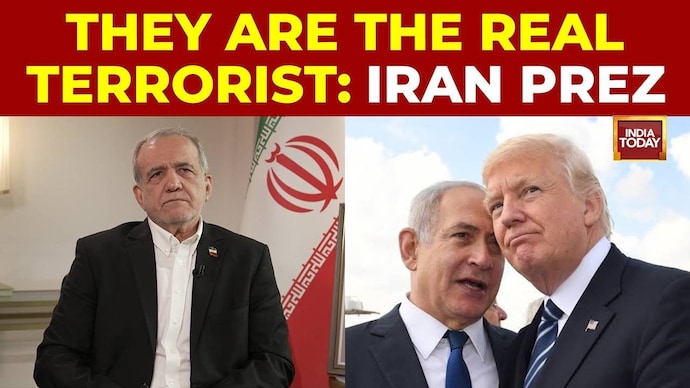
In an exclusive interview with India Today on the sidelines of the BRICS summit, Iranian President Masoud Pezeshkian condemned the United States and Israel over ongoing regional military actions, stating, "They are the real terrorists in the world." Pezeshkian accused Washington of committing state terrorism, attempting to topple Iran's government, and inciting division among Middle Eastern nations to exploit energy resources and sell weapons. Addressing speculation regarding Iran's leadership, Pezeshkian dismissed rumors concerning Supreme Leader Mojtaba Khamenei, confirming that "he is alive" and actively carrying out his constitutional responsibilities. He further noted that the United States disseminates misinformation because it cannot locate the Supreme Leader's precise whereabouts. Concluding on governance and diplomatic talks, Pezeshkian reaffirmed that the Supreme Leader remains the ultimate authority who retains the final decision-making power in Iran.

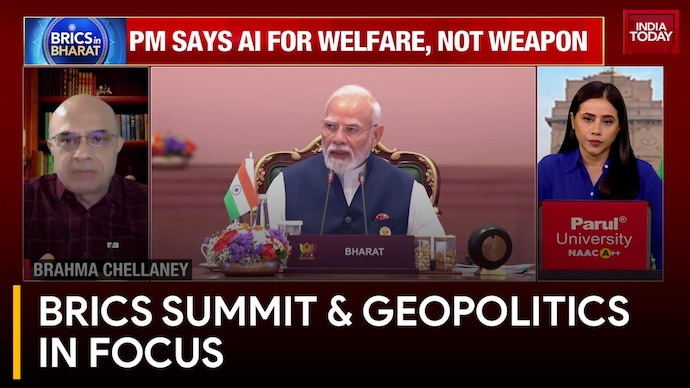
PM Modi Addresses Day 2 Of BRICS Summit In Delhi, Calls For Supply Chains And Conflict Resolution

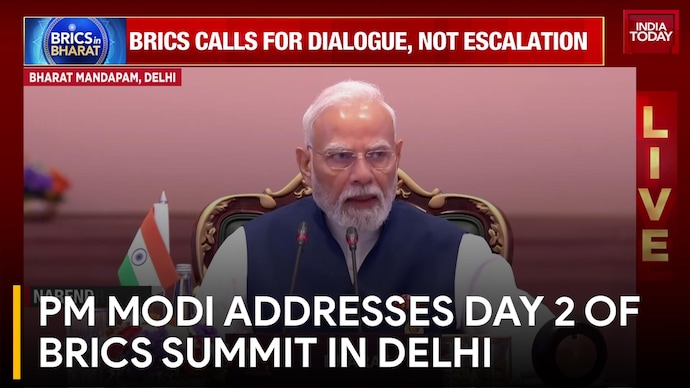
Visuals from Bharat Mandapam in New Delhi show the second and concluding day of the 18th BRICS Summit under India's presidency. During his address, Prime Minister Narendra Modi highlighted that global conflicts have far-reaching consequences and are not restricted to specific regions, urging action to limit their fallout. Emphasising that the world is undergoing a tense phase alongside global challenges like pandemics and climate change, he stressed the need for dependable supply chains, noting how crises like the West Asia conflict impact uninvolved nations. Outlining India's focus on four key pillars—resilience, innovation, cooperation, and sustainability—PM Modi stated that partner support has helped turn a shared vision into a win-win collaboration. A consensus-based joint declaration is also expected on the final day of the summit, addressing regional conflicts including the situation involving Israel in the context of Lebanon.

BRICS Summit, New Delhi Declaration & West Asia Tensions in Focus

A panel discussion evaluates the New Delhi Declaration and the strategic outcomes of the BRICS summit, analysing the grouping's role as a catalyst for reformed multilateralism and an alternative platform for non-Western nations seeking strategic autonomy. The discussion addresses global geopolitical and geoeconomic challenges, including the weaponisation of economic interdependence, unilateral coercive measures, tariffs, sanctions, and export restrictions affecting international trade and World Trade Organization norms. Experts also assess India's diplomatic engagement with China and global governance reforms, alongside escalating tensions in West Asia involving Iran, the United States, and Israel. The geopolitical significance of maritime choke points, including the Strait of Hormuz, Bab-el-Mandeb, the Red Sea, and the Suez Canal, is reviewed in relation to global trade disruption, energy security, and regional stability ahead of key diplomatic dialogues involving the Gulf Cooperation Council nations in Muscat.

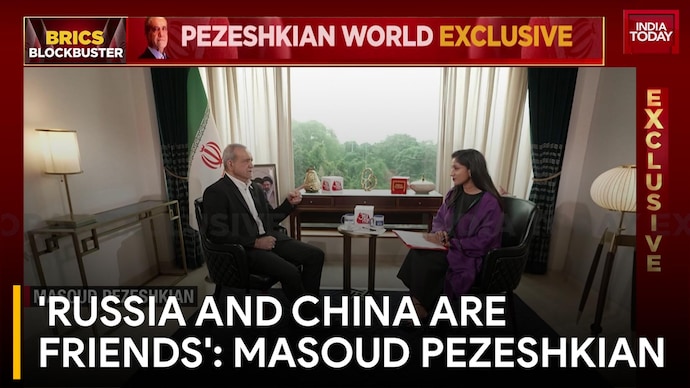
'They Assassinate Anyone They Wish': Iran Prez Pezeshkian Accuses US-Israel Of 'State Terrorism'

In an interview, Iranian President Masoud Pezeshkian addressed accusations regarding military, strategic, and technological assistance from Russia and China, stating, "Russia and China are friends," while expressing a desire to deepen relations with India. He asserted that Iran's resilience against foreign powers stems not from external technology, but from internal unity and consistency among its people. Addressing speculation regarding the health and security of Iran's supreme leader, Pezeshkian confirmed that the leader is alive and performing his duties. He accused the United States and Israel of committing state terror, remarking, "They are the real terrorists in the world," and condemned their military strikes and assassinations across the region. When questioned about the transition of authority and governance in Iran, Pezeshkian confirmed that the supreme leader retains the final say. Pezeshkian concluded by emphasizing that Iran will stand firm and resist attempts by totalitarian powers to isolate the country.

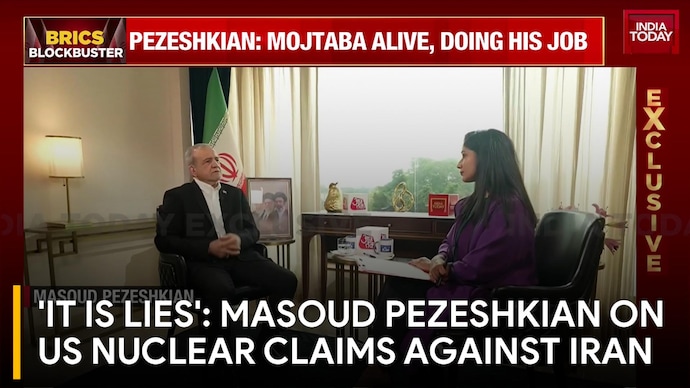
'Lies': Pezeshkian Rejects Trump's Iran Nuclear Weapon Claims, Highlights Israel's Nuclear Ambitions

In an interview with India Today, Iranian President Masoud Pezeshkian rejected US allegations regarding Iran's nuclear programme, stating, "If we were, uh, seeking nuclear weapons, we wouldn't have become a member of NPT." He affirmed that Iran works within international principles under regular monitoring and reiterated that the country's leadership has repeatedly stated Iran is not seeking nuclear weapons. Pezeshkian questioned international inaction regarding Israel's nuclear arsenal and condemned military actions in Gaza and Lebanon, highlighting civilian casualties and the blockade of essential supplies.

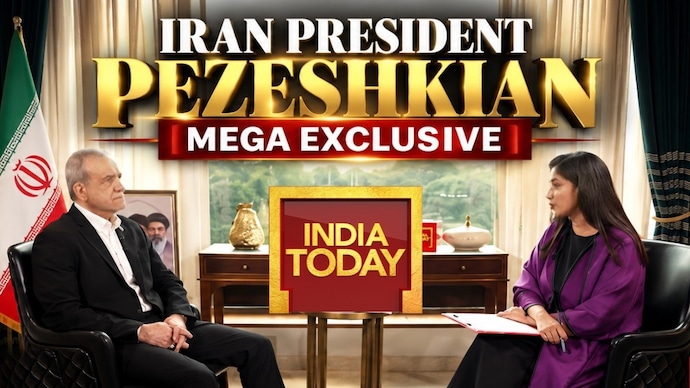
Iran President Pezeshkian Exclusive Interview | Trump, Hormuz, India Ties, Mojtaba Khamenei & BRICS

During his visit to India for the BRICS summit, Iranian President Dr. Masoud Pezeshkian addressed key geopolitical developments, bilateral relations, and regional connectivity in an exclusive interaction. Pezeshkian highlighted deep-rooted cultural ties between Iran and India while emphasizing expanded cooperation on Chabahar Port to strengthen regional trade networks. He outlined the role of the BRICS bloc in challenging unilateral sanctions, promoting a multipolar economic order, and reducing reliance on the US dollar. Addressing tensions involving the United States and Israel, Pezeshkian stated that Iran is defending itself against aggression, accusing foreign entities of state terrorism, striking regional infrastructure, and enforcing economic blockades. On nuclear policy, Pezeshkian denied allegations regarding nuclear weapons, reaffirmed Iran's compliance with the Non-Proliferation Treaty (NPT), and criticized international double standards regarding Israel's nuclear program. Furthermore, he noted diplomatic engagements with regional partners like Oman concerning maritime security in the Strait of Hormuz and asserted that external pressures will fail to weaken the nation.

'Thank God Supreme Leader Is Alive': Iran's Pezeshkian On Rumours Regarding Mojtaba Khamenei

An interviewee addressed widespread speculation regarding the supreme leader, confirming that the leader remains alive and continues his duties. The guest criticized targeted assassinations of commanders, scientists, and civilians across Syria, Lebanon, Gaza, Iraq, Qatar, and Iran. The speaker condemned these actions by the United States and Israel as state terrorism, stating that entire families, buildings, bridges, and factories are destroyed under the pretext of counter-terrorism operations.

Exclusive: Iran President on India ties, Mojtaba Khamenei's well-being, US war

In an interview with India Today, Iranian President Masoud Pezeshkian addressed questions regarding Supreme Leader Mojtaba Khamenei, stating that he is alive and performing his duties. Pezeshkian dismissed speculations, asserting that foreign adversaries spread rumours because they cannot locate the Supreme Leader. He condemned the actions of the United States and Israel across the region, accusing them of carrying out assassinations and targeting leaders, scientists, and infrastructure. Pezeshkian also discussed bilateral relations between Iran and India, noting that ties with the Prime Minister of India are strengthening continuously based on deep-rooted historical and cultural connections.