Bihar | The tone is civil, the disquiet is uniform
The UCC faces a genuine tumbling block in Bihar, as BJP seeks not to upset partners JD(U) and LJP. Muslim alienation could upset electoral equilibrium

The Janata Dal (United) (JD(U)), commonly known as JD(U), is a prominent Indian political party with a strong presence primarily in Bihar and Jharkhand. Formed on October 30, 2003, through the merger of several political factions, including the Sharad Yadav faction of the Janata Dal, the Lok Shakti Party, and the Samata Party (though initially denied by the Election Commission of India), the party draws its inspiration from veteran socialist leader George Fernandes.
Operating on the ideologies of Integral Humanism, Secularism, and Socialism, JD(U) has established a significant mass base in Bihar and Jharkhand. It is recognized as a state party in Bihar, Arunachal Pradesh, and Manipur. In the 2019 Indian general election, JD(U) secured 16 seats in the Lok Sabha, making it the seventh largest party in the lower house. Additionally, the party holds 44 out of 243 seats in the Bihar Legislative Assembly, 22 out of 75 seats in the Bihar Legislative Council, and 1 out of 60 seats in the Manipur Legislative Assembly.
Currently, JD(U) is part of the Mahagathbandhan Alliance, a political coalition in Bihar. The party's political position and electoral performance reflect its significance in regional politics, particularly in Bihar and Jharkhand, where it continues to be a key player.
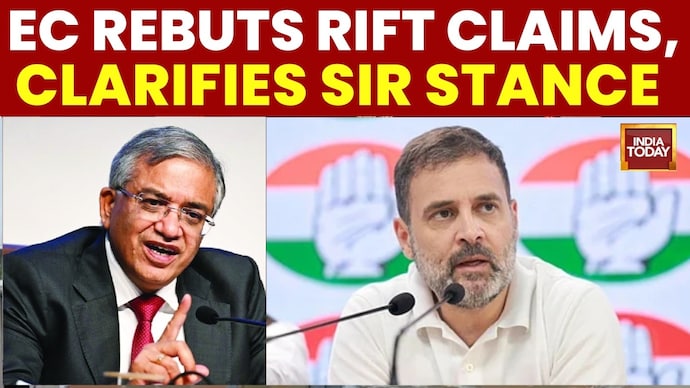
The Election Commission of India has addressed claims regarding internal rifts among its commissioners, issuing a clarification that all major decisions concerning the Special Intensive Revision (SIR) were approved unanimously by Chief Election Commissioner Gyanesh Kumar, Sukhbir Singh Sandhu, and Vivek Joshi. Following a full commission meeting, the poll body maintained that internal discussions and objections did not override final institutional decisions, confirming that statutory Form 6 remained unchanged and was merely accompanied by Annexure D. The Commission also announced deadline extensions for filing claims under SIR, setting October 30 for Delhi and October 12 for Maharashtra, alongside booth level officer house visits in Goa. While opposition parties raised concerns over Form 6 amendments and voter deletions, the Bharatiya Janata Party and National Democratic Alliance partners, including the Telugu Desam Party and Janata Dal (United), backed the poll body, stating that the clarification affirms the credibility of constitutional bodies.
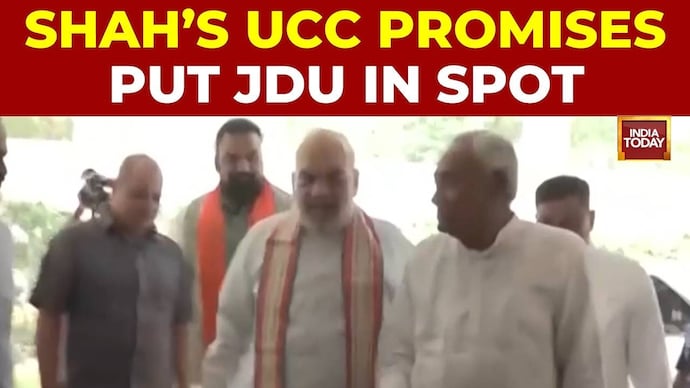
The Bharatiya Janata Party has set a 2029 deadline to roll out the Uniform Civil Code across all party and National Democratic Alliance ruled states. Positioned as a major ideological goal following the abrogation of Article 370, the proposed civil code includes common laws on marriage, divorce, inheritance, and succession across religions. However, the push has exposed internal differences within the alliance. While allies like the Telugu Desam Party, Shiv Sena, and Hindustani Awam Morcha have offered support, the Janata Dal United has opposed its rollout in Bihar, and Lok Janshakti Party leader Chirag Paswan has demanded wider public consultations before deciding.
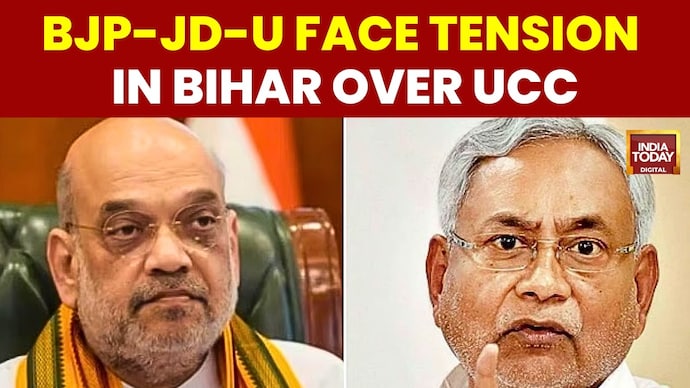
Differences have surfaced within the National Democratic Alliance over the Uniform Civil Code, particularly in Bihar, following the Union Home Minister's announcement that UCC will be implemented across all 21 NDA-ruled states by 2029. Key allies Janata Dal (United) and Lok Janshakti Party have adopted a cautious approach. JD(U) has reiterated its demand for wider consultations to ensure no community feels hurt, with working president Sanjay Jha set to convey the party's position. LJP chief Chirag Paswan has sought the public release of the UCC draft and discussions with stakeholders, citing India's diverse social fabric. Meanwhile, Bihar opposition leader Tejashwi Yadav has criticised both allies, demanding they clarify their respective positions on the issue.
The Janata Dal (United) has voiced reservations regarding the implementation of the Uniform Civil Code across NDA-ruled states before 2029. In response to Union Home Minister Amit Shah's announcement, JD(U) leaders reiterated that the party seeks extensive dialogue so that no community is hurt. As opposition party RJD demanded clarity from the ruling ally in Bihar, JD(U) Working President Sanjay Jha is scheduled to meet Home Minister Amit Shah to discuss party concerns and resolve alliance differences regarding the proposed uniform law.
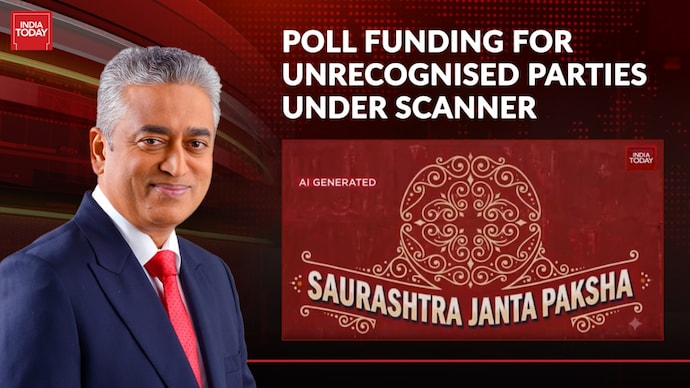
Chinese President Xi Jinping visits New Delhi on September 12 to participate in the BRICS Summit, marking his first trip to India in seven years. The multilateral gathering features key bilateral engagements involving Prime Minister Narendra Modi, President Xi, and Russian President Vladimir Putin, focusing on India-China border negotiations, trade relations, economic cooperation, and global diplomacy. Alongside summit coverage, this special report examines registered unrecognized political parties across Gujarat, Delhi, Bihar, and Madhya Pradesh that collected substantial donations while operating from residential sites and locked offices without contesting elections. Former Chief Election Commissioner Dr S.Y. Quraishi and transparency activist Anjali Bhardwaj analyze statutory income tax exemptions, regulatory loopholes, and Election Commission oversight, while also addressing widespread voter list deletions flagged during the Special Intensive Revision in Delhi and Karnataka.
Chinese President Xi Jinping visits New Delhi on September 12 to participate in the BRICS Summit, marking his first trip to India in seven years. The multilateral gathering features key bilateral engagements involving Prime Minister Narendra Modi, President Xi, and Russian President Vladimir Putin, focusing on India-China border negotiations, trade relations, economic cooperation, and global diplomacy. Alongside summit coverage, this special report examines registered unrecognized political parties across Gujarat, Delhi, Bihar, and Madhya Pradesh that collected substantial donations while operating from residential sites and locked offices without contesting elections. Former Chief Election Commissioner Dr S.Y. Quraishi and transparency activist Anjali Bhardwaj analyze statutory income tax exemptions, regulatory loopholes, and Election Commission oversight, while also addressing widespread voter list deletions flagged during the Special Intensive Revision in Delhi and Karnataka.
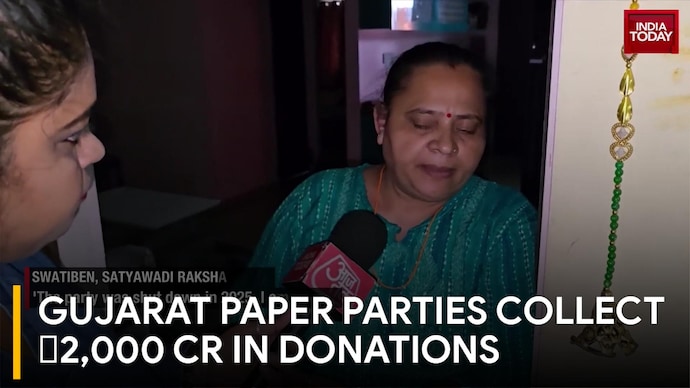
An India Today special investigation reveals that registered unrecognised political parties in Gujarat collected over two thousand crore rupees in donations between 2019 and 2024, based on data analyzed by the Association for Democratic Reforms. Ground checks across Gujarat, Delhi, Bihar, and Madhya Pradesh showed that several of these parties exist primarily on paper. The Bharatiya National Janata Dal received 957.44 crore rupees, while The New India United Party secured over 600 crore rupees, though its registered Ahmedabad office was locked without any signboard. The Satyavadi Rakshak Party, which collected over 330 crore rupees in 2023-24, fielded just one candidate in Vadodara who finished last, operating from a locked flat in Anand. Similarly, the Aam Janmat Party collected over 220 crore rupees while its registered office remained shut, and Saurashtra Janata Paksha received over 200 crore rupees. ADR noted that 90 percent of donations come from individuals and large donors despite poor electoral participation and minimal vote shares.
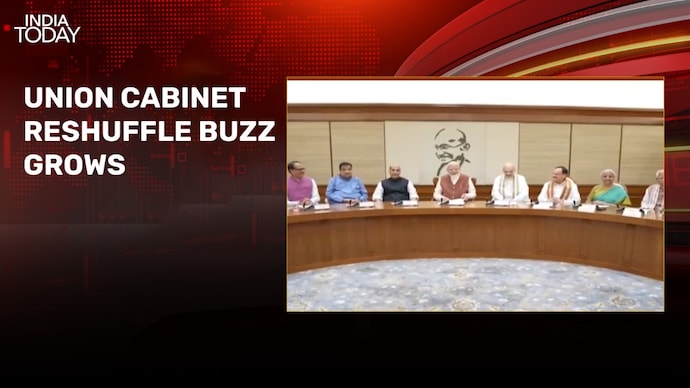
Speculation is growing over a major Union Cabinet reshuffle in the National Democratic Alliance government ahead of the upcoming monsoon session of Parliament.
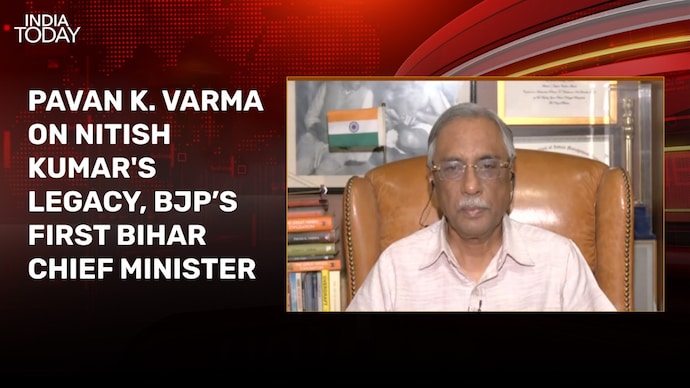
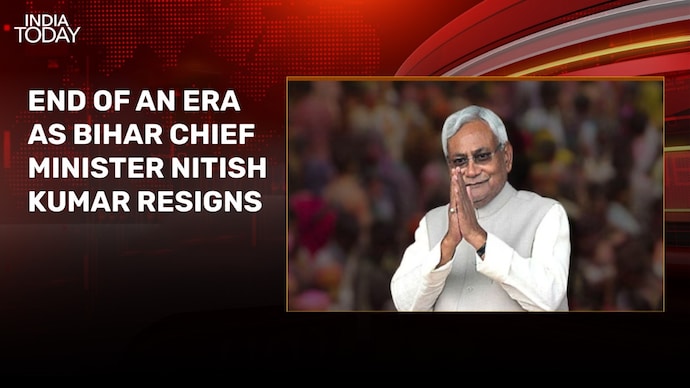
Former MP Pavan K. Varma discussed the significant political transition in Bihar following the resignation of Nitish Kumar as the state's longest-serving Chief Minister .
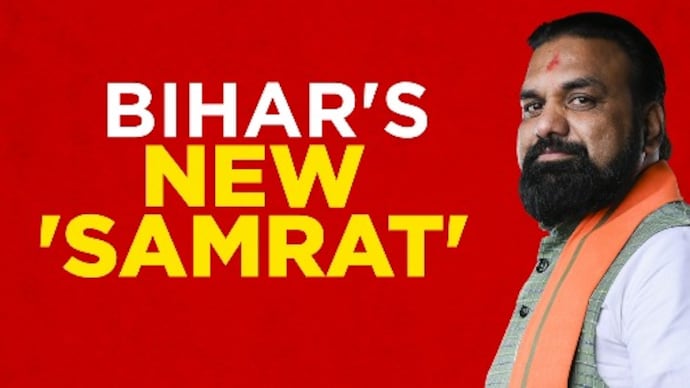
Bihar's Deputy Chief Minister Samrat Choudhary is set to become the next Chief Minister following the resignation of the outgoing Chief Minister, who moves to the Rajya Sabha.
Nitish Kumar has resigned as Bihar Chief Minister and submitted his resignation to the Governor at Raj Bhavan in Patna.
Bihar Chief Minister Nitish Kumar on Thursday filed his nomination papers for the Rajya Sabha polls, setting off intense speculation over who could succeed him.
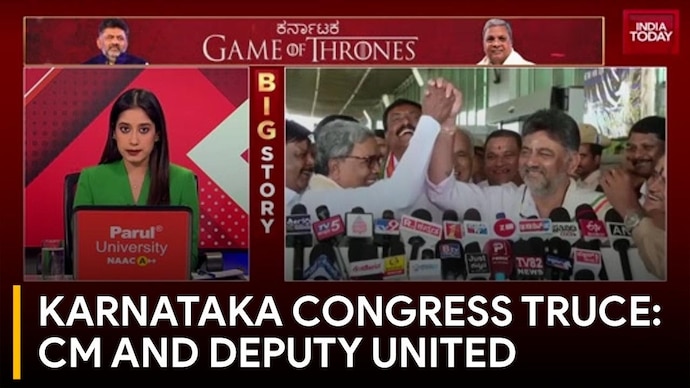
On this Special Report, the focus is on the political drama in Karnataka where Chief Minister Siddaramaiah and his deputy DK Shivakumar have called a truce. Following a "breakfast bonhomie" in Bengaluru, the leaders presented a united front against the Bharatiya Janata Party (BJP) and Janata Dal (Secular). DK Shivakumar dismissed rumors of a rift, stating, 'There was no difference with me or the chief minister.' The programme highlights the opposition's threat to bring a no-confidence motion and the Congress High Command's intervention to resolve the power-sharing tussle. Senior leader Veerappa Moily also weighs in, warning that 'negligence of the Congress leaders' could cost the party.
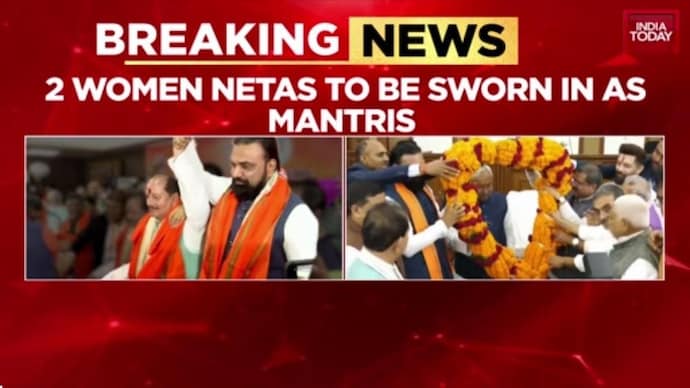
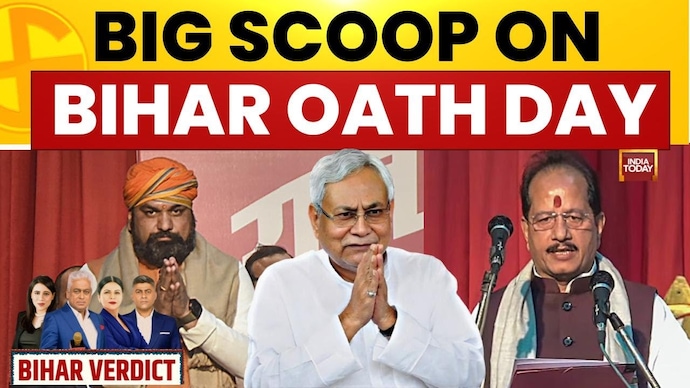
This report focuses on the cabinet expansion for the Nitish Kumar government in Bihar. The Bharatiya Janata Party (BJP) is set to have 14 ministers, while the Janata Dal (United) (JDU) will have eight. One minister each from the LJPR, HAM, and RLM will also be sworn in. According to the bulletin, 'The number seems to have gone up from the BJP camp from 7 to 14 Mantris is what we are learning at this given point who will be sworn in today.' Key figures confirmed as ministers include Samrat Chaudhary and Vijay Kumar Sinha from the BJP, who will serve as Deputy Chief Ministers. Other notable names being inducted are international shooter Shreyasi Singh and senior leader Ram Kripal Yadav from the BJP, alongside several ministers from the JDU quota.
This report covers the landslide victory of Nitish Kumar's Janata Dal (United) and the BJP in the Bihar assembly elections. It traces Kumar's 40-year political journey, from the JP movement with Lalu Prasad Yadav to his multiple alliances with the BJP and RJD, earning him the nickname 'Paltu Ram'. The bulletin includes footage of him taking an oath, stating, 'Bharat ke Sanvidhan ke prati sachi shraddha aur nishtha rakhunga'. The narrative explores his focus on 'Sushasan' (good governance) as a contrast to the RJD's era and his frequent political shifts, which have consistently kept him in a position of power in the state's politics. As he prepares for a new mandate, his leadership faces a more demanding young electorate amidst complex alliance equations.
Ahead of Nitish Kumar's tenth oath-taking ceremony as Chief Minister of Bihar, Union Home Minister Amit Shah has arrived in Patna to chair a series of meetings with top leaders from the Bharatiya Janata Party (BJP) and Janata Dal (United) (JDU). The discussions are focused on finalising the names of ministers for the new cabinet. According to my colleague Rohit Singh, 'the final round of consultations are being held to finalize the names that will be part of the new Nitish Kumar cabinet.' The swearing-in ceremony, which will be attended by Prime Minister Narendra Modi and other National Democratic Alliance (NDA) chief ministers, is scheduled for the following day.
This special report focuses on Nitish Kumar's political maneuvering in Bihar as he prepares to stake a claim to form the government and be sworn in as Chief Minister for a record-breaking tenth time. The bulletin delves into his remarkable 20-year political journey, highlighting his ability to switch alliances between parties like the RJD and BJP while consistently retaining the chief ministership. It examines how his Janata Dal (United) party has remained central to power in the state despite never winning an outright majority. An analyst on the programme notes, 'whichever side he switches to He becomes acceptable to that alliance partner'.
This special report covers the political developments in Bihar, focusing on Nitish Kumar's return as Chief Minister with the support of the National Democratic Alliance (NDA). It details the series of meetings scheduled for the Janata Dal (United), Bharatiya Janata Party, and their alliance partners to formalise the new government structure and discuss portfolio allocations, including the post of Deputy Chief Minister. Reporter Rohit Singh states, 'Nitish Kumar will be coming here at the Raj Bhavan which you can see behind me and will be tendering his resignation also and on the same time he will be also taking claim to form the government.' The transcript also mentions discussions around ministerial berths for allies like the parties led by Chirag Paswan, Jitan Ram Manjhi, and Upendra Kushwaha.
This report details the formation of the new National Democratic Alliance government in Bihar, to be led by Nitish Kumar. The bulletin outlines the schedule for meetings of the Bharatiya Janata Party and Janata Dal (United) MLAs, followed by a combined NDA legislature party meeting where Nitish Kumar is set to be formally elected as its leader. He is then expected to resign, before staking a claim to form the new government. According to the report, 'around 20 ministers are going to take oath along with Nitish Kumar and later on the cabinet extension of Bihar will happen'.
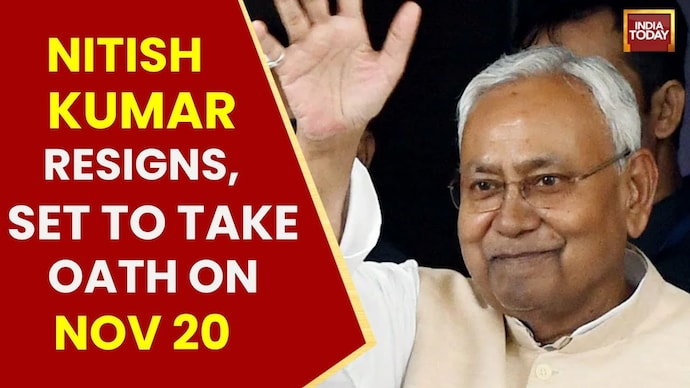
This report covers the major political shift in Bihar, where sitting Chief Minister Nitish Kumar has resigned and dissolved the state government. He is set to be sworn in for his tenth term as Chief Minister on November 20th, heading a new government backed by the National Democratic Alliance (NDA). The developments follow hectic meetings between leaders of the Janata Dal (United) and the Bharatiya Janata Party (BJP) to finalise a power-sharing formula, with other NDA partners also negotiating for ministerial roles. Reporter Piyush Mishra stated, 'Nitesh Kumar from becoming Chief Minister to resigning Chief Minister and again becoming Chief Minister has been the history of Bihar politics in the last many, many years'.