Vietnamese crab exporter

Topic

Advertisement
TOPIC

NCERT

Established in 1961 to raise the standard of instruction, curricula, and educational resources, National Council of Educational Research and Training, NCERT is India's highest educational authority.

The Indian government created it in 1961 as a separate entity under the Ministry of Education. It was created by combining a number of already-existing organisations, such as the Central Institute of Education and other organisations that dealt with curriculum and teacher preparation.

The goal was to establish a single national organisation that could direct curriculum development, research, and school education policy across state lines. Its mission was to respect regional variation while creating a shared academic foundation.

NCERT was established on July 27, 1961, and officially began operations on September 1, 1961. Its purpose was to provide school education a national character and to support the federal and state governments with issues related to curriculum and policy.

An autonomous organisation under Ministry of Education, Government of India, its headquarters is in New Delhi. 

One of its most important roles is developing the National Curriculum Framework (NCF), which shapes how subjects are taught in schools. Its textbooks for Classes I to XII are widely used not only by CBSE schools but also by many state boards. 

Additionally, it creates digital learning resources like ePathshala, teacher-training modules, and classroom materials in addition to developing the National Curriculum Framework.

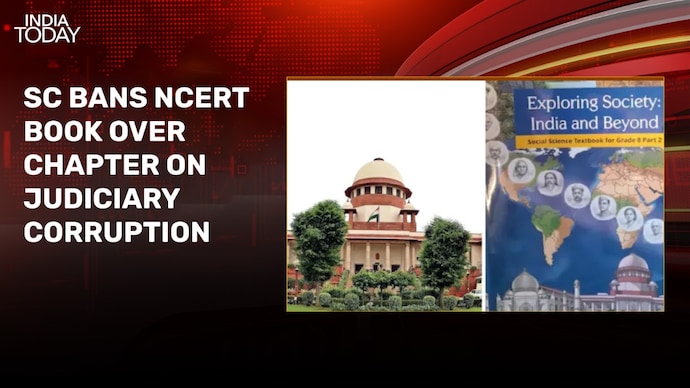
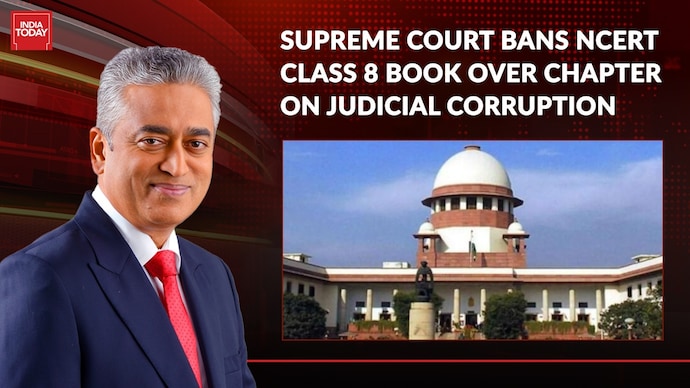
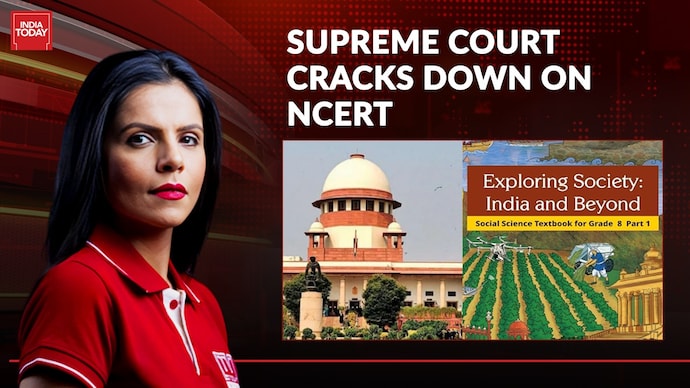
State-wide training, assessment, and educational research are supported by NCERT research units and Regional Institutes of Education. The council recently halted the distribution of a Class 8 social science chapter due to judicial concerns, demonstrating the delicate nature of curriculum work. NCERT's textbooks and curriculum modifications are frequently the subject of public discussion.

In a significant move, it has been suggested that NCERT be granted deemed-university status, allowing it to provide professional and degree programs and increase its capacity for research.

All things considered, NCERT continues to play a crucial role in influencing India's educational system and the application of policies. It still has an impact on textbooks, teacher preparation, and educational discussions.

  • ALL
  • STORIES
  • VIDEOS

STORIES

NEET-JEE exams outpace school curriculum, government panel flags major mismatch

According to a draft report reviewed by The Economic Times, NEET-UG and JEE are testing students beyond their preparedness, with NEET Physics emerging as a key concern. The report, currently under examination by the Education Ministry, calls for aligning school curricula with entrance exams and allowing more time between board exams and entrance tests to reduce dependence on coaching.

Load More

VIDEOS

Uproar Over RSS Links In NCERT Panel; Congress Alleges Saffronisation, BJP Points To UPA Era Bias

A political controversy has erupted following the formation of a new twenty-member panel by the National Council of Educational Research and Training for Class 11 and Class 12 Political Science textbooks. The dispute escalated after reports emerged that four members of the panel allegedly have ties to the Rashtriya Swayamsevak Sangh and its student affiliate, the Akhil Bharatiya Vidyarthi Parishad. Opposition parties, including the Congress and the Samajwadi Party, accused the ruling party of attempting to saffronise the education system and alter historical facts. Opposition leaders claimed that ideological influence is being injected into academic institutions and curriculum preparation panels. In response, the Bharatiya Janata Party rejected the allegations and criticized past UPA administration policies, alleging that left-leaning scholars were previously patronised to push a specific political narrative. The panel is tasked with integrating themes such as cultural rootedness and Indian knowledge systems into school textbooks.

NCERT Panel Row: Congress Alleges 'Sanghikaran' Of Education System; BJP Hits Back

A intense political war of words has erupted between the Congress and the ruling Bharatiya Janata Party over the reconstituted 20-member National Council of Educational Research and Training panel formed to revise political science textbooks for classes 11 and 12. The opposition Congress alleged that the inclusion of four members with links to the Rashtriya Swayamsevak Sangh represents a deliberate attempt at 'Sanghikaran' and a design by the BJP to inject ideological bias into school curriculums and alter history. Defending the panel, the BJP countered that RSS members are citizens and intellectuals with every right to contribute, while accusing previous Congress-led UPA governments of inducting left-leaning academics to rewrite history. The controversy escalates as political parties debate the composition of the textbook development committee.

Anjali Pandey: New NCERT Class 7 Textbook Details Mahmud Ghazni's Plunder And Killings

In this India Today broadcast, anchor Anjali Pandey reports on the new NCERT Class 7 Social Science textbook, which now includes a detailed six-page section on Mahmud of Ghazni. The updated curriculum highlights Ghazni's 17 campaigns, his plunder of wealthy cities like Mathura and Somnath, and the mass killings of civilians. Reporter Aishwarya Pallival joins the discussion to explain the shift in historical perspective, noting that the 'expansion mindset' and brutality of invaders are now described in greater detail compared to earlier editions. The segment also mentions that the textbook cites scholar Al-Biruni to underscore the impact on India's cultural heritage.

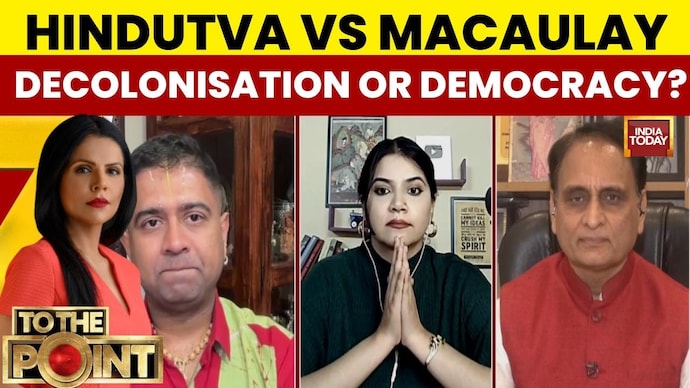
English Hegemony vs Indian Languages: Rakesh Sinha, Ruchika Sharma Debate Decolonisation & Democracy

In this Special Report, a heated debate erupts over the 'hegemony of English' versus the Indian Knowledge System. Former Rajya Sabha MP Professor Rakesh Sinha argues that the 'spirit of the mechanism' of English education suppresses Indian intellectuals, stating, 'It is not a question of rejecting or accepting Hindi, it is hegemony of the English.' Historian Dr. Ruchika Sharma counters Sinha's claims about ancient democracy, asserting that the Chola dynasty was a monarchy that 'destroyed cities and burned cities with impunity.' Senior Journalist Ashutosh questions the political disconnect, noting the BJP's 36% vote share in 2024, while commentator Tushar Gupta defends the Prime Minister's stance on cultural pride. The panel discusses decolonisation, the legacy of the Cholas, and the relevance of English in modern India.

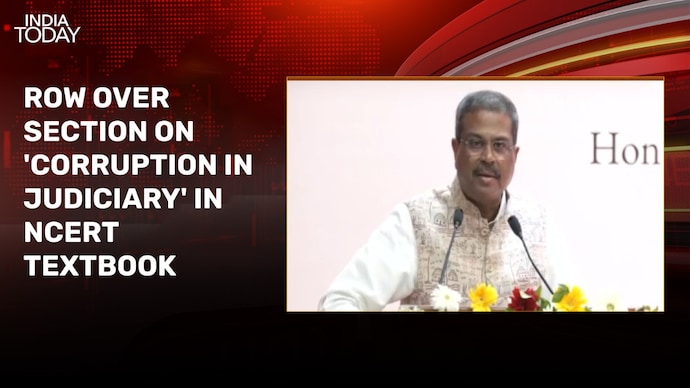
Education Minister Dharmendra Pradhan defends changes in NCERT as evidence-based

The opposition has accused the government of pushing Hindu ideology through NCERT textbook changes, citing Akbar’s portrayal as cruel. Education Minister Dharmendra Pradhan defends the revisions as evidence-based, claiming post-independence history was selectively written. He denies any BJP or Sangh agenda, saying the aim is to reconnect with India’s heritage and present the full truth.