Vietnamese crab exporter

Topic

Advertisement
TOPIC

SCO Summit

The Shanghai Cooperation Organization (SCO) is a political, economic, and security alliance founded in 2001. Initially formed by China, Russia, Kazakhstan, Kyrgyzstan, Tajikistan, and Uzbekistan, it expanded to include India and Pakistan in 2017, and Iran became a full member in 2023 and Belarus in 2024. The organization originated from the "Shanghai Five," a group created in 1996 to resolve border disputes after the dissolution of the Soviet Union.

SCO's primary objectives are promoting regional stability, countering terrorism, separatism, and extremism, enhancing economic cooperation, and fostering cultural ties among member states. Given its focus on security, the organization regularly conducts military exercises and intelligence-sharing initiatives to combat threats in the region. In recent years, the SCO has broadened its agenda to include trade, energy, and connectivity projects.

  • ALL
  • STORIES
  • VIDEOS

STORIES

Chinese chatter on PM Modi’s SCO visit

Chinese online commentary around PM Modi’s SCO visit centred on his long flight detour to Central Asia through China. The debate brought India’s transit constraints, regional frictions and the wider China-India thaw into focus.

What's behind Sergio Gor's gatecrash in Bishkek amid SCO summit?

Sergio Gor, the US Ambassador to India, appeared in Bishkek even as the Kyrgyz capital was hosting the SCO Summit, being attended by several leaders, including Russia's Putin and China's Xi. Gor said he went to cheer Team USA for the Nomad Games, but his companion and meetings reveal there was more to his visit.

Load More

VIDEOS

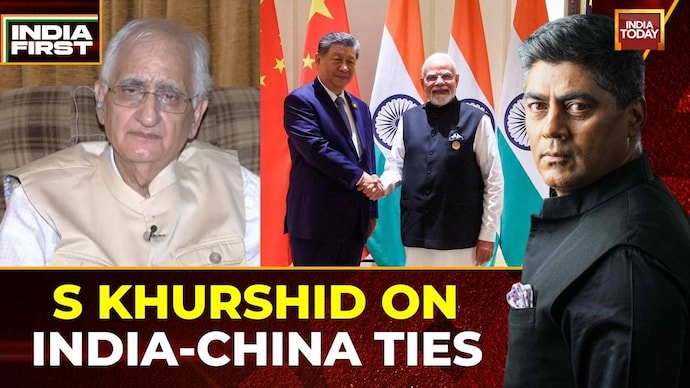
Salman Khurshid on China: 'We have to trust each other first'

In an interview with India Today, former External Affairs Minister Salman Khurshid shared his analysis of the BRICS summit outcomes and India-China relations. Discussing the New Delhi Declaration, Khurshid noted that while the condemnation of cross-border terrorism represents positive movement, India needs to continue broader diplomatic outreach beyond the multilateral grouping. Reflecting on India's bilateral ties with China and recent high-level engagements, he stressed the need for transparency, stating, "We have to trust each other first, and the trust will come only with sharing of information." Khurshid urged the government to take the opposition into confidence regarding developments on the border issue. Furthermore, addressing the trade imbalance between the two countries, he pointed out that India must formulate concrete domestic plans alongside bilateral talks to reduce the trade deficit effectively.

Chinese President Arrives in India, Bilateral Ties Reset, Focus on Global Diplomacy

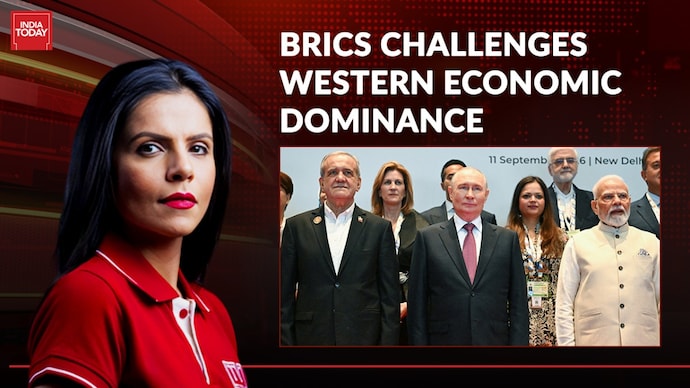
Chinese President Xi Jinping has arrived in New Delhi for his first visit to India since the 2019 Mamallapuram summit and the 2020 Galwan clashes. The visit follows discussions between National Security Advisor Ajit Doval and Chinese Foreign Minister Wang Yi, who established a seven-point consensus charter to serve as the framework for high-level bilateral talks. Discussions centre on border stability, trade dynamics, and market access, with bilateral imports reaching record levels. The visit coincides with the presence of international leaders, including Russian President Vladimir Putin and Iranian President Masoud Pezeshkian, in the capital. The engagements highlight diplomatic efforts to navigate bilateral ties, foster economic cooperation, and work towards a consensus declaration during the multilateral summit in New Delhi.

Xi Jinping Lands in Delhi; Pezeshkian Speaks to India Today Ahead of BRICS Talks

Chinese President Xi Jinping is arriving in New Delhi for the BRICS Summit 2026, marking his first visit to Indian soil in seven years. His aircraft, CA-11 from Beijing, entered Indian airspace en route to Palam Air Force Station amid multi-layered security cordons across the national capital. A high-stakes bilateral meeting is scheduled between Prime Minister Narendra Modi and President Xi this evening to address bilateral ties and regional issues. Meanwhile, India Today secures an exclusive interview with Iranian President Masoud Pezeshkian on his first visit to India, where he addresses Iran's plan of action amidst sanctions, Western tensions, and the West Asia conflict. The summit brings together top world leaders in New Delhi, including Russian President Vladimir Putin, as India hosts major diplomatic engagements at Bharat Mandapam.

PM Modi To Meet Xi Jinping At 18th BRICS Summit In Delhi Amid Border And Trade Focus

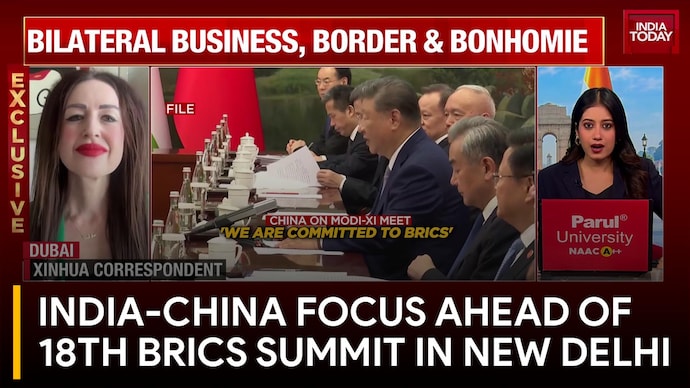
Chinese President Xi Jinping arrived in New Delhi for the 18th BRICS Summit hosted by India, marking his first visit to the country in seven years following the 2020 Galwan Valley border clashes. Prime Minister Narendra Modi held a bilateral meeting with President Xi Jinping on the sidelines of the summit to review border disengagement implementation along the Line of Actual Control following military and national security advisor level talks. The leaders also addressed bilateral economic relations and the growing trade deficit. The 18th BRICS Summit brought together representatives from the expanded 11-member bloc under the theme of resilience, innovation, connectivity, and sustainability. Key initiatives discussed include the BRICS Economic Partnership 2030, supply chain resilience, expanded trade in services, and micro, small, and medium enterprise financing. Prime Minister Modi also conducted bilateral discussions with other attending world leaders, including Russian President Vladimir Putin, focusing on regional stability and global trade cooperation.

India-China Bilateral Talks, BRICS Summit And Border Relations Ahead

Chinese President Xi Jinping is set to visit India for the BRICS Summit, marking his first visit to the country in seven years. The visit follows brief greetings at the Bishkek SCO Summit and a bilateral meeting in Tianjin in August 2025. Bilateral discussions are expected to focus on the border, trade, investment, and the broader relationship following the 2020 Galwan clash. Past diplomatic engagements between Prime Minister Narendra Modi and President Xi Jinping include the 2014 Ahmedabad visit, the 2015 Xi'an meeting, the 2018 Wuhan informal summit, and the 2019 Mamallapuram summit. The upcoming talks assess whether diplomatic relations can move towards stabilization.

PM Modi-Xi Jinping Talks, Trade Imbalance And Global South Focus Ahead Of 18th BRICS Summit

India is hosting the 18th BRICS summit in New Delhi, bringing focus to key bilateral and multilateral dynamics. Ahead of the summit meetings, discussions highlight the significance of the engagement between Prime Minister Narendra Modi and Chinese President Xi Jinping following their border tensions. Key topics include managing border disputes, addressing the widening trade deficit where China remains India's largest trading partner, and securing greater market access for strategic sectors like batteries and clean energy infrastructure. The analysis covers the geopolitical role of the Russia-China-India triad, India's strategic multi-alignment, and the broader push for a multipolar global order. Representing nearly 2.8 billion people and 40 per cent of the global population, India and China continue to play a central role in shaping the Global South through platforms like BRICS, the G20, and the SCO, supported by long-standing civilisational ties.

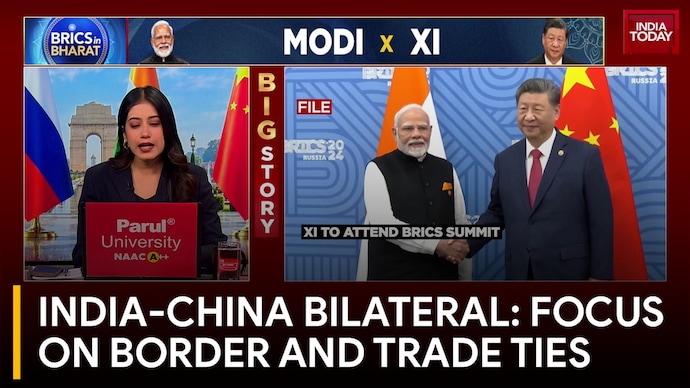
PM Modi To Meet Xi Jinping In Delhi; LAC Disengagement And Trade Imbalance On Agenda

Chinese President Xi Jinping is arriving in New Delhi to attend the 18th BRICS Summit, marking his first visit to India in seven years and the first since the Galwan clashes. Prime Minister Narendra Modi and President Xi Jinping are scheduled to hold a crucial bilateral meeting on the sidelines of the summit in the national capital. The talks are expected to review the phased disengagement implementation along the Line of Actual Control, following previous discussions during the 2024 Kazan and 2025 Tianjin summits, corps commander-level meetings, and the Special Representatives' boundary process involving National Security Advisor Ajit Doval. Key agenda points include border security, defining the status of the Line of Actual Control, and addressing bilateral economic ties, with bilateral goods trade exceeding 155 billion dollars in 2025 amid a heavy trade deficit.

Modi-Putin Meet at BRICS: Trade Target of $100 Billion by 2030 and Tirukkural Gift

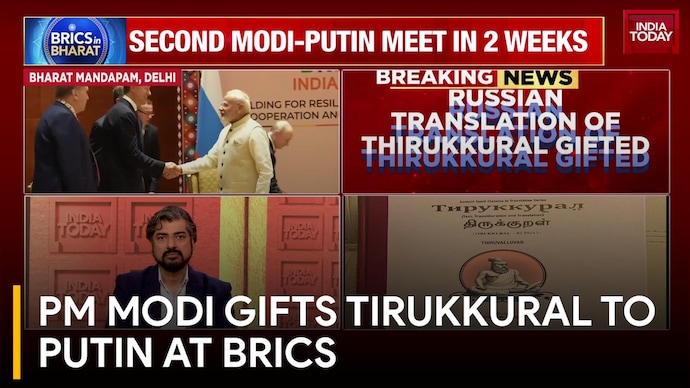
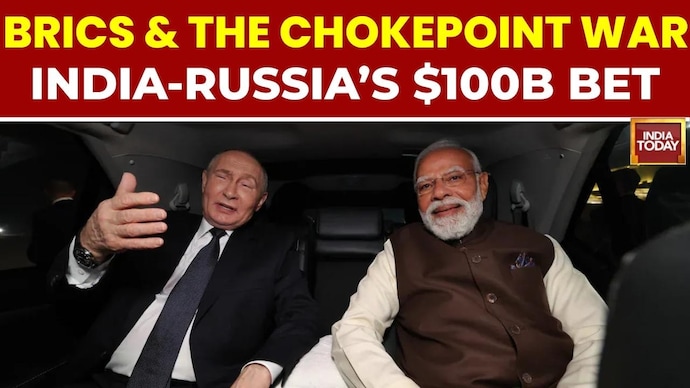
Prime Minister Narendra Modi met Russian President Vladimir Putin on the sidelines of the BRICS Summit, highlighting their strong personal equation and strategic bilateral relationship. Discussions between both sides focus on multiple agenda items, including taking India-Russia trade to 100 billion dollars by 2030, alongside ongoing conversations regarding oil payments and defence procurements. During the bilateral engagement, Prime Minister Modi presented President Putin with a copy of the ancient Tamil text Tirukkural composed by Tiruvalluvar. The gift carries historic literary connections, as Russian author Leo Tolstoy was deeply inspired by the translated Tirukkural and its core philosophy of non-violence and ahimsa, which he subsequently recommended to Mahatma Gandhi. The exchange carries symbolic significance amid global conflicts, reflecting India's consistent push for diplomacy, negotiation, and peaceful resolution of disputes.

PM Modi Meets Vladimir Putin In Delhi: Defence Deals, Trade And Energy On Agenda

Prime Minister Narendra Modi and Russian President Vladimir Putin are scheduled to hold a crucial bilateral meeting on the sidelines of the 18th BRICS summit at Bharat Mandapam in New Delhi. Defence co-production, trade, crude purchases, energy security, cross-border payments in local currencies, nuclear power, connectivity, and pharmaceuticals are featured prominently on the bilateral agenda. Russia has also proposed the sale and India-specific customization of its Su-57 fifth-generation stealth fighter jet alongside showcasing civilian aircraft and jet engines, such as the SJ-100, MC-21, and IL-114-300, for the Indian aviation market. Bilateral trade between the two nations reached a record 68.69 billion dollars in financial year 2025-26. Prime Minister Modi is hosting global leaders at Bharat Mandapam, which serves as the venue for the summit meetings, bilateral interactions, and the BRICS Business Forum. President Droupadi Murmu is also slated to host the visiting heads of state.

Iranian President In Delhi, BRICS Summit 2026, Bilateral Talks Focus On West Asia Crisis

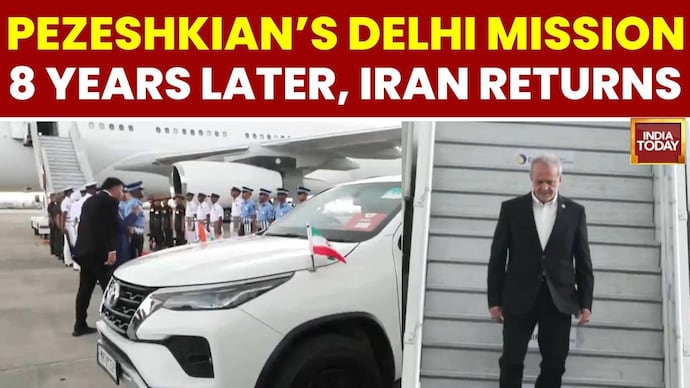
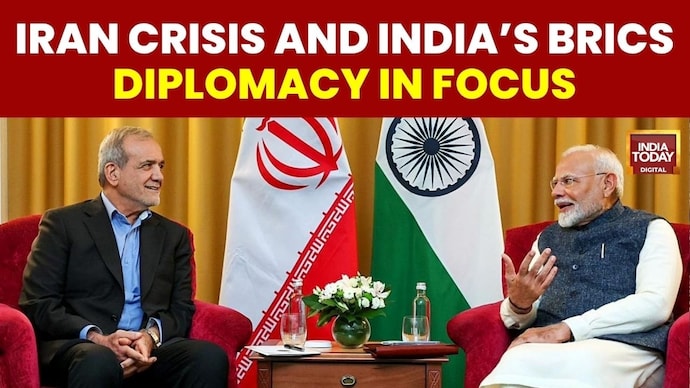
Iranian President Masoud Pezeshkian has arrived in New Delhi to attend the BRICS Summit 2026, marking the first visit by an Iranian head of state to India in eight years. The visit comes amid heightened tensions in West Asia, ongoing conflicts involving Israel and the United States, and security concerns over trade routes in the Strait of Hormuz that have affected global energy markets. A bilateral meeting is scheduled between Prime Minister Narendra Modi and President Pezeshkian at Bharat Mandapam, following their recent interaction at the SCO summit in Bishkek. Talks are expected to cover bilateral trade, energy stability, regional security, and the safety of commercial shipping. With other world leaders, including Russian President Vladimir Putin, also in the national capital for the multilateral summit, Delhi Police has implemented extensive security measures across designated routes and venues. The summit platform aims to facilitate high-level diplomatic deliberations on international trade, regional stability, and global peace.

Iran President Lands In Delhi For Summit; Modi-Pezeshkian Bilateral, Chabahar Port On Focus

Iranian President Masoud Pezeshkian has arrived at the Palam Air Force Station in New Delhi ahead of the summit. This marks the first visit by an Iranian president to India in eight years, following Hassan Rouhani's trip in 2018. Prime Minister Narendra Modi and President Pezeshkian are scheduled to hold bilateral talks focusing on crucial issues, including the Chabahar port project, regional connectivity to Afghanistan and Central Asia, and energy security. The discussions also come amid global shipping security concerns regarding the Strait of Hormuz, the Red Sea, and the Suez Canal. The two leaders previously met in Bishkek on the sidelines of the Shanghai Cooperation Organisation summit, where discussions centred on trade diversification and regional stability through dialogue and diplomacy. India aims to navigate multilateral groupings such as BRICS and facilitate consensus among member nations.

Pezeshkian Lands in Delhi, Xi Jinping India Visit & BRICS Summit in Focus

Iranian President Masoud Pezeshkian's aircraft entered Indian airspace ahead of his scheduled landing at Delhi's Palam Air Base. Meanwhile, Chinese President Xi Jinping is set to visit India, marking his first trip in seven years since the Galwan clash. Xi Jinping will arrive in New Delhi at 12:25 PM and hold bilateral talks with Prime Minister Narendra Modi at 5:45 PM at Bharat Mandapam on the sidelines of the BRICS summit. The bilateral meeting is expected to focus on high-level political engagement, border stabilization along the 3,488-kilometre Line of Actual Control following disengagement in Depsang and Demchok, and economic ties. Diplomatic progress has also seen the resumption of direct flights and the Kailash Mansarovar Yatra. However, significant challenges persist, including China's claims on Arunachal Pradesh, growing military cooperation with Pakistan, a widening trade deficit in Beijing's favour, Chinese naval provocations in the Indian Ocean, and export controls on rare earth elements. World leaders continue gathering in New Delhi as the BRICS summit commences.

Iranian President Departs For BRICS Summit, Bilateral With PM Modi Scheduled

Iranian President Masoud Pezeshkian has departed from Tehran to attend the BRICS Summit. A crucial bilateral meeting between Prime Minister Narendra Modi and President Pezeshkian is scheduled to take place at 6:15 PM this evening. During the discussion, Prime Minister Modi is expected to reiterate the need for peace in West Asia. This follows a previous interaction between both leaders two weeks ago on the sidelines of the Shanghai Cooperation Organisation summit, where India articulated a message advocating for peace and emphasizing that ongoing conflict cannot persist.

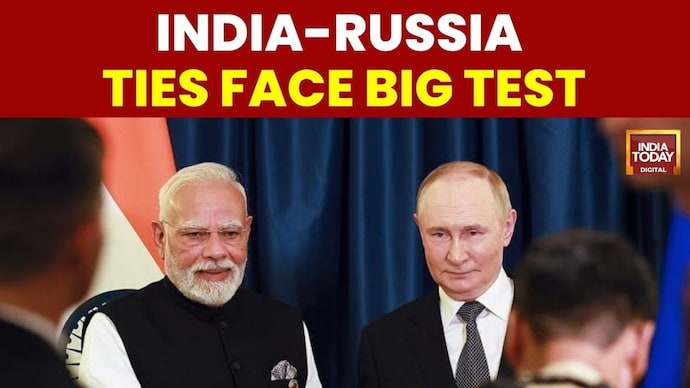
India-Russia Ties, Bilateral Trade Targets, Maritime Security And BRICS Summit

India and Russia continue to strengthen bilateral ties across key sectors including energy, nuclear power, trade, and space technology, with a mutual bilateral trade target of 100 billion dollars set for 2030. Ahead of the BRICS summit, bilateral deliberations focus on critical geopolitical developments, including the safety of seafarers in conflict zones across the Black Sea and the Strait of Hormuz. Heightened security concerns regarding strategic maritime choke points, particularly around the Bab-el-Mandeb strait, Gulf of Aden, and the Suez Canal, pose serious risks to international commerce and energy exports. Furthermore, global economic shifts demonstrate the emergence of rapidly developing power centres across the Global South, particularly in South Asia, Southeast Asia, and Africa. Amid regional conflicts, diplomatic engagements highlight the necessity of dialogue, peaceful resolution, resilient supply chains, and the protection of international sea lanes of communication.

18th BRICS Summit In Delhi, Crucial Bilaterals & High-Level Business Forum

Preparations are complete at Bharat Mandapam in New Delhi as India hosts the 18th BRICS Summit alongside a series of high-profile bilateral engagements and the BRICS Business Forum. Diplomatic discussions kick off with key bilateral talks scheduled throughout the evening, setting the stage for wider multilateral deliberations with world leaders representing the Global South. Concurrently, the BRICS Business Forum and industrial exhibitions are underway to boost economic partnerships, enhance bilateral trade cooperation, and address trade deficits. With hundreds of preparatory meetings held and multiple outcome documents formulated under the chairship, the summit focuses on collective growth, strategic dialogue, industrial collaboration, and long-term economic engagement among participating nations.

Xi Jinping's India Visit, Border Security Along LAC & Medog Dam Concerns

Chinese President Xi Jinping's visit to India is being viewed as a significant opportunity to provide a fresh boost to bilateral relations following his last visit in 2019. The upcoming engagements build upon diplomatic progress and recent Special Representative-level discussions aimed at resolving boundary disputes. While bilateral cooperation within multilateral frameworks like BRICS continues on global governance and Global South development, India maintains cautious optimism across trade and investment. Key priorities for India include safeguarding peace and tranquility along the border, sustaining robust military deployment and infrastructure buildup across Ladakh and Arunachal Pradesh post-Galwan, and addressing regional concerns regarding the Medog infrastructure project on the Brahmaputra River to ensure downstream hydrological security.

PM Modi To Hold Bilaterals With Putin, Pezeshkian Ahead Of BRICS Summit In Delhi

India is set to drive the diplomatic agenda ahead of the BRICS Summit in Delhi, with Prime Minister Narendra Modi holding a series of high-level bilateral meetings. Russian President Vladimir Putin arrived in Delhi, with talks focusing on defence, energy, and trade partnerships following their earlier meeting in Bishkek. Chinese President Xi Jinping is scheduled to arrive ahead of the summit. Iranian President Masoud Pezeshkian is also arriving in Delhi for bilateral discussions amid escalations in West Asia and threats to maritime energy chokepoints, including the Strait of Hormuz and Bab el-Mandeb. Prime Minister Modi will additionally hold bilateral talks with United Nations Secretary-General António Guterres and Indonesian President Prabowo Subianto. As the summit approaches, discussions highlight India's diplomatic position in engaging global leaders, supporting peace, and representing the Global South in an evolving multipolar world order.

18th BRICS Summit: PM Modi-Putin Bilateral Talks, Lavrov Arrival & Key Geopolitics

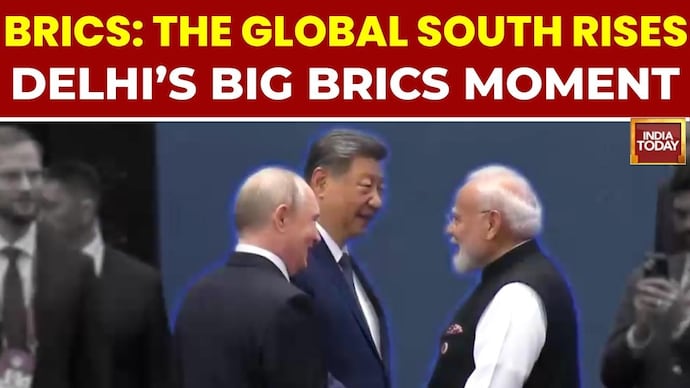
India is hosting the 18th BRICS Summit, welcoming world leaders including Russian President Vladimir Putin and Russian Foreign Affairs Minister Sergei Lavrov. Prime Minister Narendra Modi and President Putin are scheduled to hold their 22nd face-to-face bilateral meeting, marking their third interaction in less than a year. The key discussions focus on bilateral trade, which stands at around 60 billion dollars with a target of reaching 100 billion dollars by 2030, alongside defence ties involving S-400 missile deliveries and fifth-generation fighter aircraft considerations. The meeting takes place amid evolving geopolitical dynamics, including Western pressure, energy trade, and regional tensions in West Asia. India continues to emphasize diplomacy, dialogue, and peaceful solutions regarding the conflict in Ukraine while safeguarding its strategic and economic interests.

18th BRICS Summit In Delhi: Modi-Putin Bilateral Talks To Focus On Trade, Defence & Oil

India is hosting the 18th BRICS summit in New Delhi, marking the fourth time the country has hosted the bloc's summit. Ahead of the summit's official commencement, Prime Minister Narendra Modi and Russian President Vladimir Putin are scheduled to hold a bilateral meeting at Bharat Mandapam. The agenda for the high-level talks includes bilateral trade, energy supplies, defence cooperation, nuclear partnership, and escalating tensions in West Asia. The leaders aim to increase bilateral trade from the current 60 billion dollars to 100 billion dollars by 2030, while also addressing concerns regarding the trade deficit beyond government-to-government sales. The meeting is the third bilateral interaction between the two leaders in less than a year, following previous engagements including the Shanghai Cooperation Organisation summit in Bishkek. The summit highlights India's strategic role in multipolar diplomacy and its position as a voice of the Global South.