Vietnamese crab exporter

Topic

Advertisement
TOPIC

Shehbaz Sharif

Shehbaz Sharif is Pakistan's second-term prime minister, who took office on 3 March 2024 after being elected by the newly elected parliament following a tightly fought national election that resulted in a coalition government.

His return to the premiership was amidst an extended economic crisis which started in 2022, characterised by high inflation, poor growth and external financing needs.

Right from the beginning, his government sought IMF assistance and fiscal consolidation, indicating privatisation of unprofitable state enterprises (including measures regarding PIA), tariff and tax reforms, and taxing expansion.

In mid-2024 to 2025, Pakistan arranged a bigger-size IMF programme (a 37-month Extended Fund Facility) of some $7 billion, after a shorter crisis-prevention arrangement in the previous year.

The government marketed the new programme as a bridge towards structural reforms while cautioning citizens on difficult measures, such as increased energy tariffs and higher taxation, to stabilise public finances.

Financial media and multilateral reports positioned the agreement as Pakistan's newest effort to prevent a balance-of-payments crisis, subject to politically challenging reforms.

Locally, Sharif established himself as a micro-manager of macro-stability and investment recovery, chairing specialist sessions on reforming and assuring targeted youth-jobs and entrepreneurship packages.

His party's coalition maths and civilian-military dynamics still determine manoeuvering space on law-and-order and foreign affairs. On the economic front, as of mid-2025, the situation exhibits signs of improvement in inflation and reserves with ongoing risks related to growth, energy prices and revenue mobilisation—areas addressed by the IMF program with specificity.

 

Follow Shehbaz Sharif on

  • ALL
  • STORIES
  • VIDEOS

STORIES

Wasim Akram worried over Imran Khan’s health in prison: I miss him a lot

Wasim Akram has expressed concern over Imran Khan’s health, stressing that there can be no compromise despite the former Pakistan captain’s imprisonment. Javed Miandad, Pat Cummins, Brian Lara and 22 former international captains have also raised concerns over Imran’s treatment and medical care.

Load More

VIDEOS

Netanyahu's UNGA Speech, Trump-Xi Summit Truce, and Italy's School Ban

In this edition of Statecraft, anchor Geeta Mohan analyses key geopolitical developments across the globe. At the United Nations General Assembly, Israeli Prime Minister Benjamin Netanyahu defended strikes on Iran and displayed a Starlink terminal alongside references to pager explosions, amid a walkout by delegates and a cancelled meeting with Elon Musk. Meanwhile in Washington, US President Donald Trump welcomed Chinese President Xi Jinping with full ceremonial honours, agreeing to extend the bilateral trade truce by two months while strategic disagreements over Taiwan, artificial intelligence, and rare earths persisted. The broadcast examines the regional implications of potential US-China rapprochement for India and the wider Indo-Pacific. Additionally, the programme covers Pakistani Prime Minister Shehbaz Sharif evading questions on Lashkar-e-Taiba founder Hafiz Saeed at the UN, as well as Italian Prime Minister Giorgia Meloni's new cabinet decree prohibiting face coverings in schools and capping non-Italian speakers at 30% per classroom.

Pak PM Shehbaz Sharif Evades Terror Questions at UNGA, Walks Away

Pakistan Prime Minister Shehbaz Sharif was confronted by an Indian journalist at the United Nations General Assembly and was seen evading questions regarding cross-border terrorism. The reporter questioned the Pakistani leader on when Pakistan would stop terror and prosecute Lashkar-e-Taiba founder Hafiz Saeed. Sharif chose to ignore the inquiries and walked away without answering. The discussion highlights that Pakistan continues to harbour United Nations-designated terrorists, including Hafiz Saeed and Masood Azhar, while evading accountability on international platforms regarding state-sponsored terrorism.

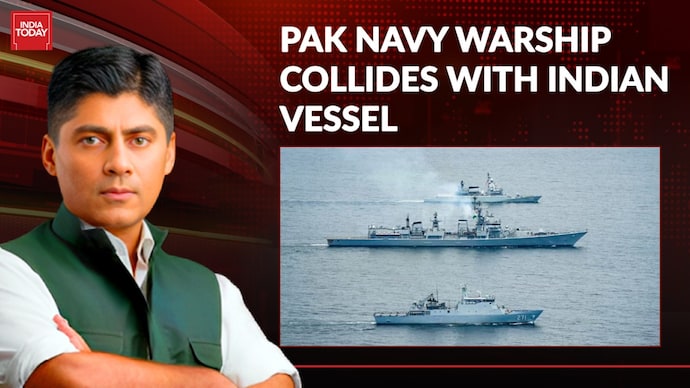
Pak Navy warship hits Indian vessel in Arabian Sea. Provocation or recklessness?

This special broadcast covers major national security, geopolitical, and cultural developments. The programme details the maritime incident in international waters near the Gulf of Oman, where Pakistan Navy offshore patrol vessel PNS Hunain executed an unsafe manoeuvre and collided with a frontline Indian Navy warship, prompting India to lodge formal diplomatic protests citing the 1991 bilateral military agreement.

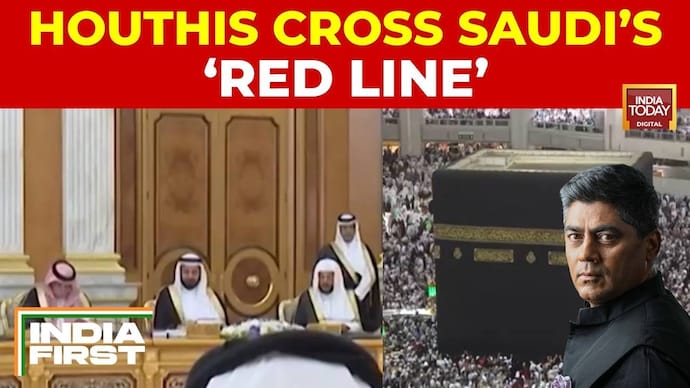
Saudi Intercepts Houthi Drone Near Mecca; Pakistan Skips Military Action Despite Pact

Saudi Arabia announced that its air defences intercepted and destroyed a Houthi drone south of the holy city of Mecca before it entered prohibited airspace. Emergency alerts were sounded across Mecca, Jeddah, and Taif following the incident. While the Houthis denied targeting Mecca and claimed operations were directed at Saudi military bases and oil infrastructure, the attempted strike drew global criticism. Meanwhile, Pakistan Prime Minister Shehbaz Sharif condemned the attack as heinous and expressed solidarity with Saudi Arabia, but Pakistan stopped short of announcing any direct military involvement despite being part of the Mecca joint defence agreement.

Houthi Drone Intercepted: 'Houthis Have Crossed Saudi Arabia Red Line'

A major geopolitical escalation unfolded after Saudi Arabia announced that its air defence forces intercepted and destroyed a Houthi drone south of the holy city of Mecca before it could enter prohibited airspace. While Saudi authorities issued emergency alerts across Mecca, Jeddah, and Taif, the Houthi forces denied targeting the holy site, asserting that their operations were focused exclusively on Saudi military bases and oil installations. Analysts and defence experts discuss the broader ramifications across the Islamic world, the viability of the Mecca joint defence agreement, and Pakistan's reluctance to commit troops. The panel also examines the Houthis' strategic control over key Red Sea islands and the critical Bab-el-Mandeb Strait, warning that disruptions to shipping routes around the Cape of Good Hope could inflict multi-billion-dollar shocks on global supply chains and the Global South.

US Strikes Iran, India's Javelin Deal & Mohsin Naqvi's Rising Clout in Pakistan

This edition covers the escalating military confrontation between the United States and Iran, following an alleged US strike on a residence in southern Iran during a wedding gathering. It examines the co-production agreement between Tata Advanced Systems and the Raytheon-Lockheed Martin joint venture to assemble Javelin anti-tank guided missiles in India, analyzing the strategic balance between foreign assembly, indigenous systems like the DRDO MPATGM, and evolving drone warfare economics. The broadcast also assesses the growing political influence of Pakistan Interior Minister Mohsin Naqvi alongside army chief Asim Munir amid calls for systemic restructuring and new provinces. Additionally, it details the arrival of the nuclear-powered aircraft carrier USS Abraham Lincoln in Pattaya, Thailand, for crew shore leave after spending 250 days deployed at sea, concluding with a culinary tribute in Argentina celebrating soccer star Lionel Messi.

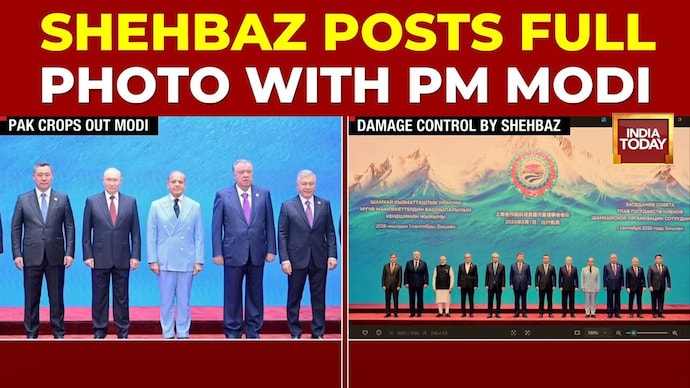
India roars, Pakistan embarrassed at SCO Summit

Pakistan cropped PM Modi and several leaders out of an SCO group photo, placing Shehbaz Sharif at the centre. On India First, Gaurav Sawant discusses the social media controversy and the larger takeaways from the SCO Summit.

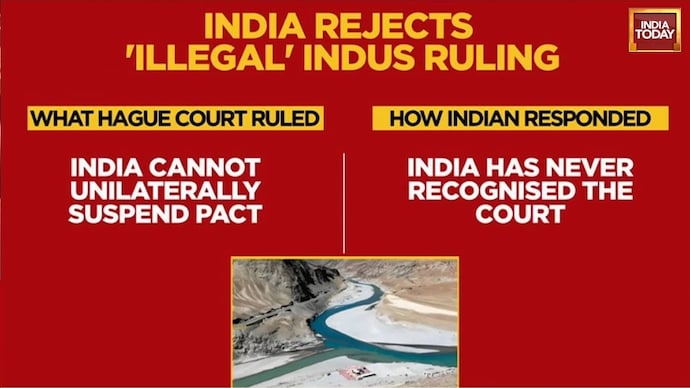
India Rejects Indus Ruling; Ladakh Diverts Glacier Water; Pakistan's PM Crops SCO Photo

At the Shanghai Cooperation Organisation summit in Bishkek, Prime Minister Narendra Modi outlined regional priorities focusing on security, connectivity, and opportunity, demanding zero tolerance for cross-border terrorism. Following state-sponsored attacks, including the Pahalgam terror attack, India held the Indus Waters Treaty in abeyance and categorically rejected a ruling by the Court of Arbitration in The Hague regarding hydroelectric projects, citing lack of jurisdiction. Meanwhile, Pakistan Prime Minister Shehbaz Sharif faced scrutiny for sharing an edited SCO group photograph that cropped out Modi and Iranian President Masoud Pezeshkian, before re-uploading the original. Footage of Modi interacting with Russian President Vladimir Putin and Chinese President Xi Jinping gained international attention. On the ground in Ladakh, local authorities created two diversions at Stok Nala using JCB machines, redirecting approximately 90 million litres of glacier water daily into the Igoo-Phay Canal to irrigate over 1,000 acres across 12 villages. In domestic developments, ABVP candidate Ankit Bidhan secured victory in the Panjab University student union elections for the president's post.

PM Modi at SCO, Indus Waters Treaty Row and India Rejecting Hague Ruling

At the Shanghai Cooperation Organisation summit, Prime Minister Narendra Modi emphasised a world free of terror, scientific temper, innovation, and mutual cooperation. Meanwhile, Pakistan raised the Indus Waters Treaty dispute, with Pakistani Prime Minister Shehbaz Sharif claiming water must never be weaponised or used for political leverage. India previously put the treaty in abeyance following the Pahalgam terror attack, maintaining that renegotiation requires an end to cross-border terrorism. Furthermore, India categorically rejected a ruling by the Hague-based Court of Arbitration concerning hydroelectric projects like Ratle, stating the tribunal was illegally constituted, has no jurisdiction over sovereign decisions, and that India neither recognises nor participates in its proceedings.

SCO Summit Row: Shehbaz Sharif Shares Full Photo With PM Modi After Backlash Over Cropped Frame

Pakistan Prime Minister Shehbaz Sharif has entered damage control mode following widespread backlash for editing out Prime Minister Narendra Modi from an SCO group photograph. The Pakistan PMO had earlier shared a cropped version of the multilateral photo op that excluded the Indian Prime Minister. Facing intense criticism over the gesture, Shehbaz Sharif initiated a course correction by posting the complete photograph featuring all world leaders, including PM Modi, on his personal social media handle. Analysts observed that the official Pakistani Prime Minister handle had retained the edited image, while the personal handle reflected the complete line-up. The move raised questions regarding Pakistan's attitude and hospitality as an SCO host on an international multilateral stage.

PM Modi at SCO Summit: Dismantle Terror Ecosystem, End Double Standards

At the Shanghai Cooperation Organisation summit, Prime Minister Narendra Modi called upon member states to dismantle the entire ecosystem of terrorism, including terror financing, recruitment, radicalisation, and safe havens. Highlighting the need to move beyond an action-reaction mindset, he stressed that there can be no room for double standards on terrorism and that no nation should use terror as an instrument of state policy or consider it a strategic asset. The Prime Minister underscored that tackling terrorism and transnational crimes such as narcotics trafficking is essential for regional security, Eurasian connectivity, and economic opportunity. He also addressed the West Asia crisis, advocating for dialogue and diplomacy as the way forward. Emphasising a long-term vision for the organisation, he urged member nations to work together transparently to build a secure environment across the Eurasian landmass over the coming decades.

SCO Summit: PM Modi Greets Xi Jinping, Vladimir Putin; Cold Vibe With Shehbaz Sharif

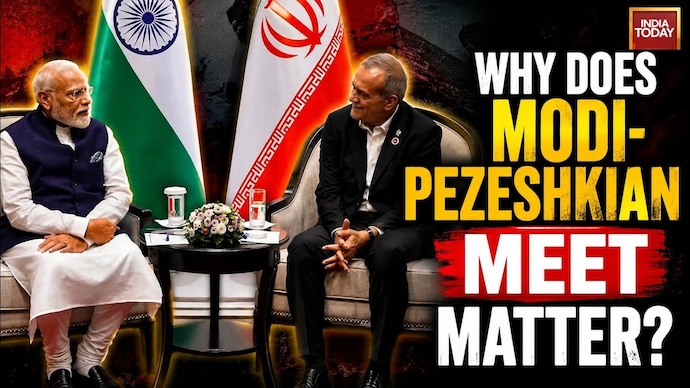
At the SCO Summit in Bishkek, Prime Minister Narendra Modi engaged in brief exchanges with key world leaders, greeting Chinese President Xi Jinping and Russian President Vladimir Putin at the summit venue. PM Modi also met Iranian Foreign Minister Saeed Abbas Araqchi, Iranian President Masoud Pezeshkian, and shared a hug with UN Secretary-General António Guterres. In contrast, there was no interaction or handshake between PM Modi and Pakistani Prime Minister Shehbaz Sharif, with both leaders seated at opposite ends of the round table. The summit agenda features the expected signing of 27 documents focusing on regional connectivity, artificial intelligence, and anti-terror cooperation under the Regional Anti-Terrorist Structure. India emphasised counter-terrorism, counter-radicalisation, and territorial integrity, while looking ahead to hosting the upcoming BRICS Summit in New Delhi.

SCO Summit: PM Modi Holds Bilaterals In Bishkek As West Watches Optics

Prime Minister Narendra Modi attended the Shanghai Cooperation Organisation summit in Bishkek, Kyrgyzstan, holding key bilateral discussions on the sidelines. The Prime Minister met Iranian President Masoud Pezeshkian to discuss energy supplies, the safety of Indian seafarers, the Strait of Hormuz situation, and the ongoing crisis in West Asia. The Iranian leadership is set to brief India on security matters and negotiations regarding the region. Modi is also scheduled to hold bilateral meetings with the President of the Kyrgyz Republic and Russian President Vladimir Putin. With Russia, China, and India sharing the platform, the West and the White House are closely watching the diplomatic optics and the final joint declaration. Discussions also focused on India's diplomatic balancing act amid American sanctions, upcoming engagements ahead of the BRICS summit, and regional dynamics involving China and Pakistan.

PM Modi Central Asia Visit: Focus On SCO Summit, Regional Connectivity & Trade

Prime Minister Narendra Modi has embarked on a visit to Central Asia to attend the Shanghai Cooperation Organisation summit in Kyrgyzstan and conduct bilateral engagements in Uzbekistan. The visit aims to strengthen strategic partnerships, deepen civilizational links, and advance regional peace, stability, and economic ties. Key focus areas include enhancing Eurasian connectivity through the International North-South Transport Corridor and Chabahar port, expanding market access for Indian pharmaceutical products, and boosting investment opportunities. On the sidelines of the summit, discussions are expected to touch upon counter-terrorism, separatism, and extremism, alongside potential multilateral interactions involving global leaders including Russian President Vladimir Putin and Chinese President Xi Jinping. The engagements reflect India's efforts to shape a multipolar global order and promote Eurasian integration.

Pakistan's Foreign Policy Under Scrutiny As Asim Munir Visits Iran Amid US Tensions

Pakistan faces a diplomatic dilemma as Army Chief Asim Munir visits Tehran amid ongoing tensions involving Iran, the United States, and Israel. Iran has expressed a lack of trust in Washington, demanding a change in American behavior and informing Pakistani leadership that verbal assurances are insufficient. Meanwhile, Pakistan continues efforts to reassure Tehran of security cooperation and bilateral brotherhood. Analysts highlight that Pakistan is leveraging its strategic location to act as a messenger for the United States while extracting financial benefits from the West Asian conflict, mirroring its past handling of the Afghan crisis. Despite multiple visits to Iran by Pakistani officials, including Army Chief Asim Munir, Prime Minister Shehbaz Sharif, and Minister Mohsin Naqvi, Pakistan has achieved no concrete progress in facilitating peace talks or resolving deep differences between Washington and Tehran. Questions remain over the direction and effectiveness of Islamabad's foreign policy as the regional crisis lingers.

Revanth US Visit Row, Parandur Airport Halted & Cricket Legends' Plea For Imran Khan

This episode of The News Today details key national and international events. The Maharashtra Food and Drug Administration suspended licenses for nine Mumbai eateries, including five affiliated with the Mumbai Cricket Association, over hygiene violations. Sugar prices increased 30 to 40 percent to 62 rupees per kilogram ahead of the festive season, as agricultural economist Professor Ashok Gulati outlined factors including lower production, ethanol diversion, and import duties. Telangana Chief Minister Revanth Reddy criticized the Ministry of External Affairs for denying clearance for his United States tour, with former diplomat K.C. Singh and Congress leader Srinivas Reddy analyzing the federalism aspects. In Tamil Nadu, Chief Minister Vijay placed the proposed Parandur airport project on hold due to Airport Authority of India findings regarding wetlands and runway feasibility. Internationally, twenty-one former cricket captains, including Sunil Gavaskar and Kapil Dev, wrote to Pakistan Prime Minister Shehbaz Sharif requesting medical care for jailed former Prime Minister Imran Khan. Additionally, three newborns died following a fire at the Amravati District Women's Hospital neonatal intensive care unit.

'He's Fine': Najam Sethi On Imran Khan's Health In Prison

In an interview with India Today, former Pakistan Cricket Board chairperson and senior journalist Najam Sethi discussed the situation surrounding former Pakistan Prime Minister Imran Khan's imprisonment and medical condition. Reacting to a letter by 21 former international cricket captains requesting proper medical care for Imran Khan, Sethi stated, "He's fine." Sethi noted that Khan's sister confirmed there is no major issue and that Khan has access to quarters, walks, and workouts inside prison. Sethi highlighted that while Khan's party faces restrictions on family and legal visits, rumors of severe health deterioration are political propaganda. Addressing whether a political compromise is possible, Sethi remarked that neither Imran Khan nor the military establishment is prepared to make a deal or concede ground at present.

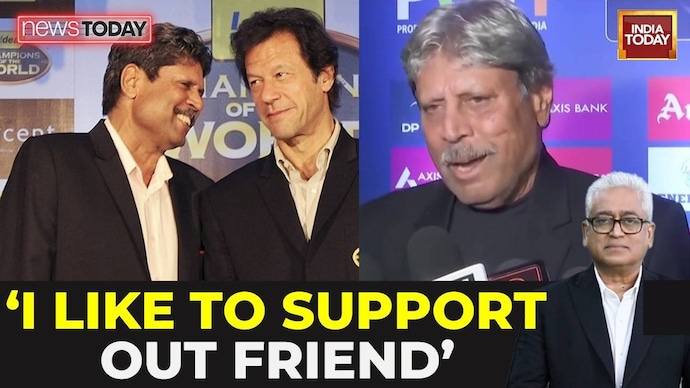
Kapil Dev: 'I like to support our friend' on Letter for Jailed Imran Khan

Former Indian cricket captain Kapil Dev commented on the joint letter written by 21 international cricket captains to Pakistan Prime Minister Shehbaz Sharif concerning jailed former cricketer and Prime Minister Imran Khan. Dev stated that international players are supporting a friend whose cricketing skills they admired. He emphasized that they do not know the law of Pakistan, but are appealing on humanitarian grounds for proper facilities and medical care for a prisoner who served as a top cricketer and prime minister. Dev remarked, "We want he should get the best treatment what as we are asking for," clarifying that they are making a request rather than demanding a reply.

21 Former Cricket Captains Write To Pakistan PM Shehbaz Sharif Over Imran Khan's Medical Care

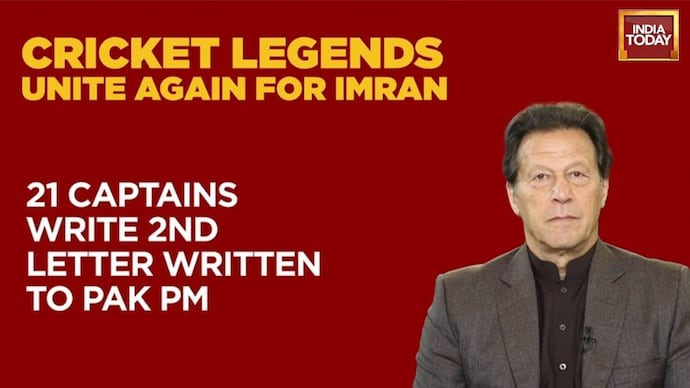
A group of 21 former international cricket captains, including Sunil Gavaskar, Kapil Dev, Greg Chappell, Allan Border, Andrew Strauss, Alastair Cook, and Clive Lloyd, have written a renewed appeal to Pakistan Prime Minister Shehbaz Sharif regarding the medical treatment and welfare of former Prime Minister Imran Khan. The letter follows a Supreme Court order directing a hospital examination, from which Khan was returned to prison after a few hours. The former captains made three key demands: allowing the court-directed medical board to complete an independent assessment, ensuring uninterrupted weekly family visits, and providing recommended medical treatment without delay. The appeal comes amid allegations from Imran Khan's son that he is being held in a death cell and subjected to psychological torture.