Vietnamese crab exporter

Topic

Advertisement
TOPIC

Smog

Smog is a form of air pollution that develops when dangerous gases and microscopic particles combine in the lower atmosphere to form a thick, hazy layer that significantly lowers visibility and deteriorates air quality. In urban and industrial regions with high traffic, factories, power plants, and seasonal agricultural burning, it is especially prevalent.

Due to climatic circumstances that trap pollutants near the ground, pollution in northern India, particularly around Delhi and the NCR, gets worse throughout the winter. 

When emissions from cars, factories, burning coal, and burning crop residue react chemically with sunlight and other elements in the air, smog is created.

This produces a cocktail of pollutants, including sulphur dioxide, nitrogen oxides, and particulate matter (PM2.5 and PM10), which linger in the atmosphere and generate the visual haze known as smog. Wintertime low temperatures and feeble breezes make it difficult for these pollutants to spread, which deteriorates the quality of the air. 

Smog has serious negative effects on health. Chronic or recurrent exposure can aggravate asthma and bronchitis, irritate the respiratory system, produce coughing and wheezing, and raise the risk of lung and heart disease. Heavy smog has been connected to headaches, decreased oxygen delivery, inflammation of the brain, increases in eye irritation, and other health problems in India during smog seasons.

Beyond health, smog has an impact on day-to-day living. It impairs visibility, making it difficult to travel on highways and at airports, and it contaminates water and air sources, harming plant and animal life. 

Authorities use strategies including Graded Response Action Plans (GRAP), prohibitions on construction and cars during periods of extreme pollution, and initiatives to cut back on major sources of pollution like industrial emissions and agricultural burning in order to combat smog.

  • ALL
  • STORIES
  • VIDEOS

STORIES

The fire count collapsed. The smog did not

This is the second of a three-part story. Punjab's crop-fire detections fell 93 per cent in five seasons. Delhi's worst days eased; its everyday autumn air did not. And the counted burning moved to the states next door.

Load More

VIDEOS

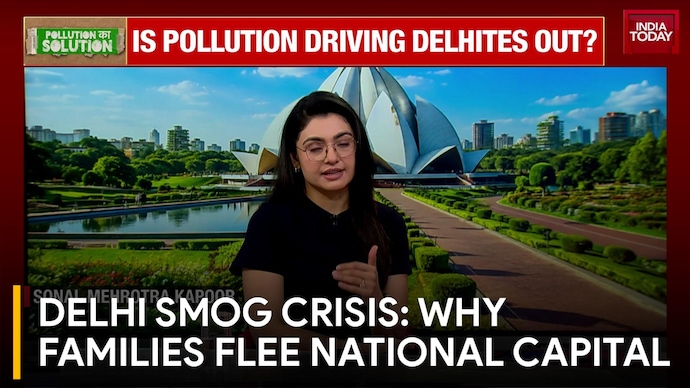
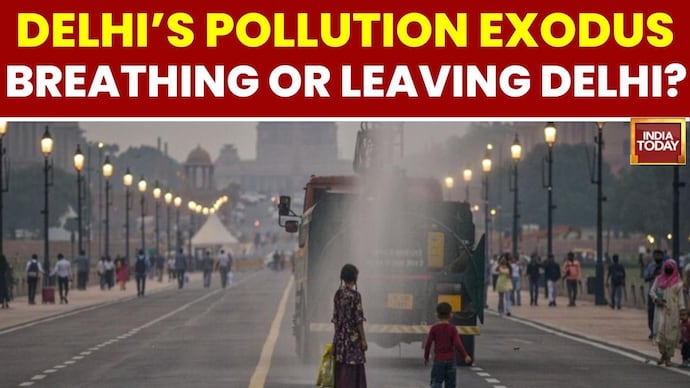
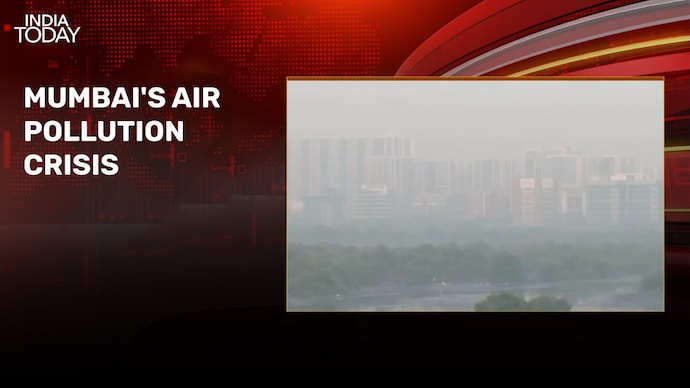
Delhi Air Quality Crisis: Pollution Refugees Relocate, Swap Careers to Escape Smog

A special broadcast of Pollution Ka Solution examines the escalating air pollution crisis across major urban centres, focusing on Delhi NCR and Mumbai, where hazardous Air Quality Index levels and winter toxic smog are creating an influx of pollution refugees. Residents and professionals, including Bharat Singh Kanwal, former advocate Prashant Kalra, and fashion designer Anuradha Prasad Dhawan, detail abandoning their careers and homes to relocate to destinations like Bengaluru and Goa after severe pediatric respiratory emergencies, persistent asthma, and health complications forced their departure. The discussion highlights broader urban systemic issues such as deficient waste management, unchecked deforestation, and rising cancer and respiratory burdens among children and senior citizens, with lifestyle expert Luke Coutinho noting that dietary adjustments cannot reverse cellular lung damage caused by toxic exposure. Panellists address policy implementation challenges surrounding the National Clean Air Programme and Graded Response Action Plan, calling for year-round interstate governance, strict environmental compliance accountability, and civic participation to counter urban air quality deterioration.

Delhi Air Quality Crisis: Pollution Refugees Relocate As Severe AQI Triggers Health Woes

A special broadcast of Pollution Ka Solution focuses on India's escalating air pollution crisis, examining the emerging phenomenon of pollution refugees leaving major urban centres such as Delhi NCR and Mumbai due to severe winter air quality and hazardous air quality index levels. Former residents share firsthand accounts of relocating to cities like Bengaluru and Goa to protect their families from toxic smog, chronic breathlessness, pediatric respiratory issues, and severe sinusitis. The panel discusses persistent governance and environmental challenges, including inter-agency coordination gaps, administrative lapses, tree felling, and ineffective waste management, particularly landfill emissions and the absence of waste segregation at source. In the health discussion, lifestyle coach Luke Coutinho details the physiological toll of prolonged exposure to toxic air, warning about irreversible cellular damage, compromised lung capacity in newborns and senior citizens, and heightened risks of severe conditions like COPD. The programme emphasizes the urgency of transparent environmental audits, strict regulatory enforcement, and sustained public policy interventions to tackle hazardous air pollution and safeguard public health.

Delhi Air Crisis, German Filter Cubes and Tech Innovations to Tackle Smog

A special episode of 'Pollution Ka Solution' explores innovations designed to combat severe air pollution in Delhi's hotspots. The report highlights the German-engineered Filter Cube technology developed by Mann+Hummel and introduced in India through MRH Technologies Private Limited. According to MRH Technologies Director Rajan Handa, the solution uses forced air circulation and specialized multi-layered filtration to capture road dust, particulate matter, and hazardous gases like NO2 and SO2. Validated in testing at IIT Delhi, the system achieved a 60 to 70 percent reduction in localized pollution levels. Priyanka Manocha of MRH Technologies explains that each intelligent unit delivers approximately 17,500 cubic metres of clean air per hour, equivalent to the volume of a cricket stadium. The automated devices feature rain sensors, customizable night modes, and centralized dashboards to monitor air quality performance across multiple urban zones.

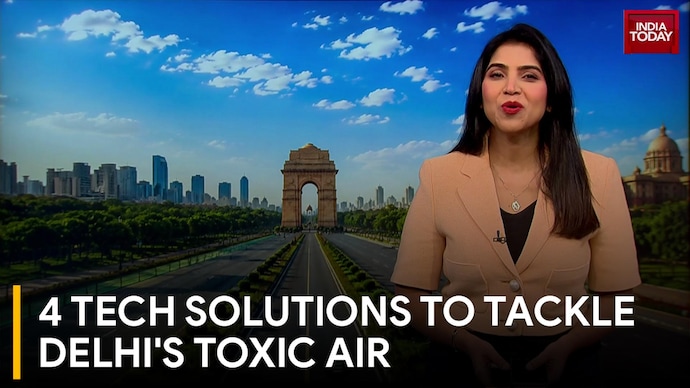
Delhi Air Crisis: Filter Cubes, Vehicle Purifiers & Wind Panels Tested

A special report examines four technological innovations aimed at tackling severe air pollution in Delhi's hotspots. The first solution features Mann+Hummel's Filter Cube technology, brought to India by MRH Technologies, which claims a 60 to 70 percent reduction in particulate matter and harmful gases. The second innovation is Human Technologies' Ambient Purification System, an outdoor filterless wind-tunnel design built to settle heavier particulate matter without frequent maintenance. The third system, developed by Shudh Vayu Technology, is a vehicle-mounted retrofit air purifier that harnesses kinetic energy while driving to capture particulate matter without using electricity. Lastly, Aeroboz, in partnership with IIT Kanpur, presents a bus rooftop 'wind panel' combining electrostatic filtration with solar and wind energy generation. Together, these technologies offer scalable outdoor interventions to mitigate toxic air exposure across urban transport, schools, and crowded public zones.

Delhi Pollution Solutions: German Filter Cubes, Outdoor Purifiers & Innovations Tested

A special broadcast of 'Pollution ka Solution' explores innovative technologies to combat air quality crises across Delhi's pollution hotspots. The episode highlights tested solutions, including German filtration giant Mann+Hummel's Filter Cube, brought to India via MRH Technologies. Tested previously in Stuttgart, Germany, and validated by IIT Delhi during peak pollution months, the forced air circulation device filters road dust, smoke, NO2, and SO2, achieving a 60 to 70 percent reduction in localized pollution. The system delivers approximately 17,500 cubic metres of clean air per hour to establish clean air zones, featuring automated rain sensors, night mode energy conservation, and centralised dashboard monitoring. Representatives emphasized the necessity of public-private participation and deployable, real-world solutions over theoretical experiments to safeguard citizen health, protect children from severe toxic exposure, and address development-induced particulate emissions across high-risk urban areas.

Delhi Air Pollution Crisis: MRH Technologies Unveils German Tech Filter Cube for Clean Air Zones

MRH Technologies Private Limited, in partnership with German multinational Mann+Hummel, has introduced the Filter Cube air filtration technology in India to tackle severe air pollution. According to company representatives, infrastructure development contributes significantly to air pollution, requiring active public-private participation rather than relying solely on government action. The Filter Cube operates via forced air circulation, capturing road dust, smoke, and harmful gases such as nitrogen dioxide and sulphur dioxide. Validated during a trial by IIT Delhi between September and November 2024, the equipment demonstrated a 60 to 70 percent reduction in pollution levels. Designed in Germany and manufactured and assembled in India, each unit delivers approximately 17,500 cubic metres of clean air per hour. The automated system features weather sensors that turn off the device during rain, an energy-saving night mode, and a centralised dashboard providing real-time performance data across city zones.

Delhi Air Crisis: Lessons from London, LA, Paris & Beijing | Pollution Ka Solution

A special report analyses Delhi's persistent air quality crisis by comparing it with international clean air transformations in London, Los Angeles, Paris, and Beijing. While London tackled coal emissions through landmark legislation, Los Angeles tightened vehicular and industrial norms, Paris reshaped urban mobility, and Beijing enforced strict industrial mandates, Delhi faces a distinct, multi-source challenge. Factors including vehicular emissions, regional stubble burning, year-round construction dust, and geographic trapping complicate the capital's crisis. Unlike temporary interventions such as the odd-even scheme or seasonal Graded Response Action Plan measures, experts emphasise the need for permanent, year-round infrastructure and solutions designed specifically for Delhi's unique environmental and socioeconomic landscape.

Punjab Drug Storm, Satya Niketan PG Crisis, SC Heat on Food Warning Labels

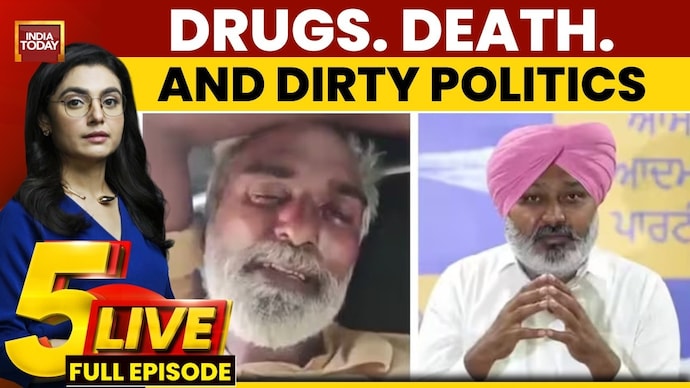
This news bulletin reports on major political, civic, legal, technology, and environmental developments across India. In Punjab, a political controversy has unfolded following the death of Gulzar Singh after his confrontation with Finance Minister Harpal Cheema over the state's drug crisis, leading opposition parties to demand Cheema's resignation and the BJP to announce its Nasha Mukt Punjab Yatra. In Delhi's Satya Niketan, student residents face disruptions following a fatal building collapse as accommodation operators fled the area. Meanwhile, the Supreme Court is hearing petitions regarding mandatory front-of-package nutritional labelling for packaged foods high in sugar, salt, and saturated fat, with advocate Rajiv Shankar Dwivedi citing international regulatory standards. The broadcast also covers the launch, specifications, and public response to Apple's foldable iPhone Duo, an artificial intelligence recreation of a 1980s newsroom, and medical warnings under the Pollution Ka Solution campaign regarding Delhi air quality.

Delhi Gets 'Pawan 3' Device to Fight Air Pollution; Innovators Target 40% AQI Cut

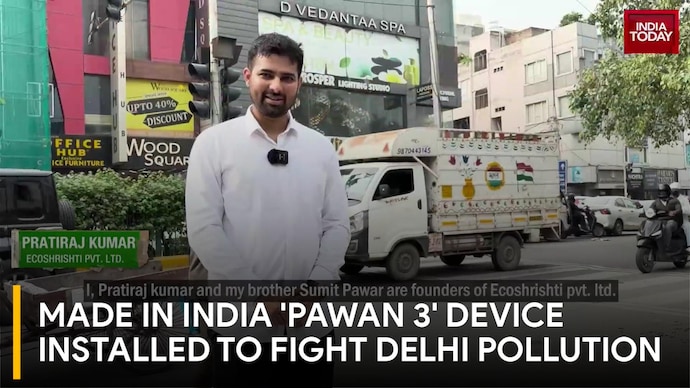
Ecosystem Private Limited founders Pratiraj Kumar and Sumit Pawar have introduced 'Pawan 3', an on-ground air purification innovation designed to combat outdoor air pollution at hotspots and roadside dividers. Developed as a 'Made in India and Made for India' solution, the device is built to withstand Indian climate conditions, featuring anti-theft and weather-resistant designs. The system utilises a high suction mechanism, multilayer filtration, HEPA filters, and an integrated cooling and heating unit to purify air, reducing AQI, PM 2.5, and PM 10 levels. While the earlier 'Pawan 1' device demonstrated over a 29 percent reduction in Kolhapur, Maharashtra, the founders project that 'Pawan 3' could achieve more than a 40 percent reduction. Currently installed in Kirti Nagar, Delhi, the electricity-powered unit has been operating for three months. The initiative was highlighted as part of the 'Pollution Ka Solution' campaign launched by the India Today network and the Delhi government to scale innovative ground-level anti-pollution solutions.

Delhi Air Crisis: Multi-Function Solar Air Purifying Poles Deployed At Rajghat To Tackle Pollution

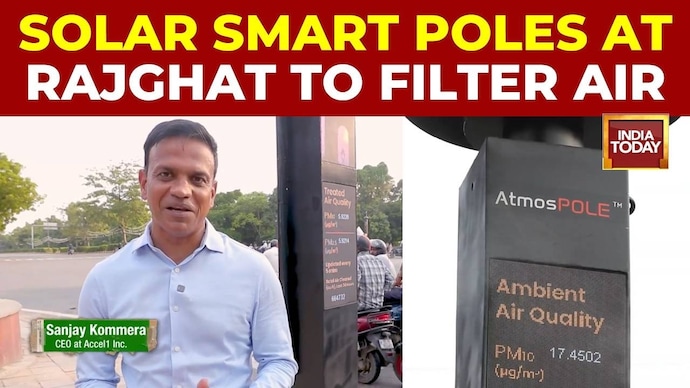
To tackle air pollution in Delhi, climate engineering company Axelone has deployed multi-functional climate environmental nodes on a pilot basis at Rajghat. Axelone Chief Executive Officer Sanjay Kumara stated that 23 solar-powered smart poles have been installed over the last four weeks. The technology converts traditional streetlights into four-in-one nodes featuring direct air capture filtration to process ambient air and release clean air, alongside a misting system designed to lower particulate matter PM10 and PM2.5 levels. The smart poles also feature security surveillance cameras, public Wi-Fi, and real-time environmental sensors providing pollution metrics every five minutes. Based on mathematical airflow calculations, each pole is estimated to provide clean air for up to two thousand people per day while moving towards a net-zero energy design using renewable power.

Delhi Innovator Develops Device To Tackle Vehicular Pollution, Tyre Dust And Emissions

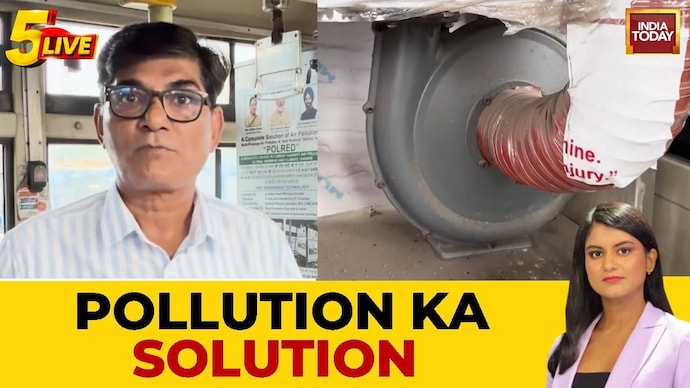
The India Today Group campaign 'Pollution ka Solution' highlights an innovation designed to combat vehicular pollution in Delhi. A city-based innovator has introduced 'Poll Red', a multipurpose air pollution and heat reduction device developed to be mounted on public transport buses. The system captures particulate matter, non-exhaust emissions, road dust, tyre wear debris, and greenhouse gases through multiple filtration layers without releasing captured pollutants back into the environment. Designed with an internal water mechanism and multi-stage layered filters, the unit traps solid particles while releasing filtered air to passengers. Operating continuously on public transit vehicles, the innovation aims to purify millions of litres of ambient air daily during routine bus journeys across the national capital.

India Today Unveils Expert Jury For 'Solution For Pollution' Campaign To Tackle Delhi Air Crisis

The India Today Group has launched its 'Solution for Pollution' initiative, introducing an expert jury panel dedicated to finding scalable, cost-effective, and practical solutions for Delhi's severe air pollution. India Today Group Vice Chairperson Kalli Purie highlighted the campaign's evolution from merely reporting on pollution every winter to becoming an active part of the solution, urging young minds and Gen Z to submit innovative ideas. She emphasized the ambition to reduce Delhi's Air Quality Index (AQI) to manageable levels and restore the city's winter charm. The panel includes IIT Kanpur Director Manendra Agarwal, who stressed that viable solutions must perform at scale and remain affordable to succeed outside laboratory settings. DPCC official Naresh Priyadarshini noted a significant shift from passive reporting to actionable ground solutions backed by active government drive. Additionally, Indian Academy of Pediatrics President Dr. Neela Mohan called for turning air quality awareness into a public movement while offering health guidance to parents.

Delhi-NCR Air Quality Improves: GRAP 4 Restrictions Lifted, AQI Still Very Poor

On this news bulletin, the focus is on the improving air quality in the National Capital Region. India Today correspondent Sushant Mehra reports that the Commission for Air Quality Management (CAQM) has revoked Stage 4 of the Graded Response Action Plan (GRAP) across Delhi-NCR. Sushant Mehra notes that 'the air quality index in Delhi right now is around 375, in the very poor category', leading to the decision to ease the strictest curbs. While Stage 4 measures, which were imposed when the AQI breached the 400 mark, have been removed, restrictions under Stages 1, 2, and 3 will remain in force to manage pollution levels. The report highlights that the slight improvement in air quality is attributed to better weather conditions, including sunlight and wind movement, providing much-needed relief to the residents of the national capital.

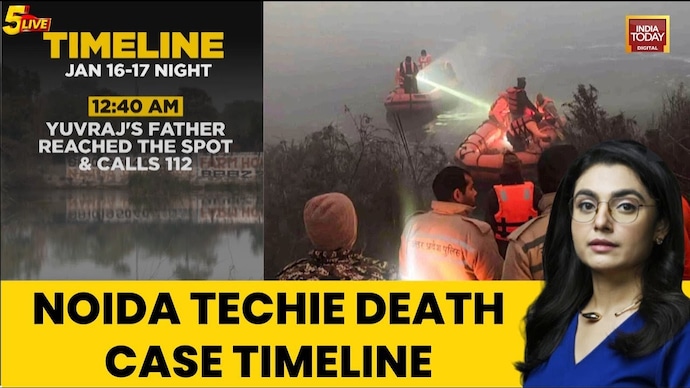
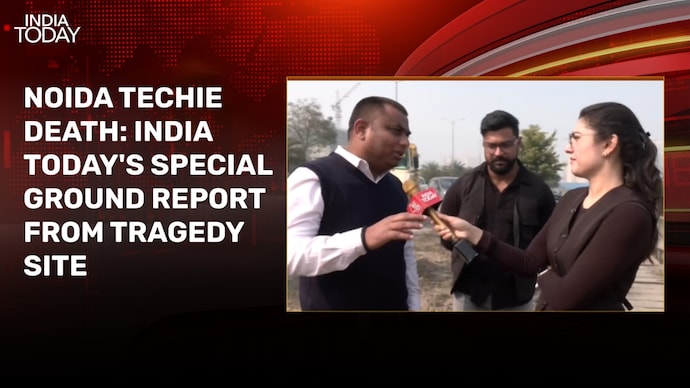
Noida Techie Death: 27-Year-Old Drowns In Ditch After Six-Hour Rescue Delay | Timeline Explained

This report details the tragic death of a 27-year-old man in Noida's Sector 115 after his car plunged into a water-filled ditch during a night of heavy smog and zero visibility. The victim made a final, desperate call to his father at 12:10 am, stating, 'he's about to die and that he's drowning in a ditch.' Despite the father arriving nearby, the rescue was severely hampered by poor visibility and a lack of coordination between departments. Eyewitnesses alleged that the fire department hesitated to enter the water, citing cold temperatures and construction debris, eventually waiting for the State Disaster Response Force (SDRF). The SDRF reportedly arrived at 3:30 am without boats, and the first rescue boat was only deployed at 6 am, six hours after the initial incident. By the time help reached the vehicle, the young man had already drowned, raising serious questions about the efficiency of emergency response protocols in the region.

Nikhil Naz Discusses Impact Of Delhi's Toxic Air On India's Global Sporting Image

On this Special Report, Sonal Mehrotra Kapoor and Nikhil Naz discuss the alarming impact of air pollution on India's status as a global sporting hub. The discussion follows reports of Danish shuttler Mia Blichfeldt withdrawing from the India Open and paying a heavy fine to avoid Delhi's toxic air. Indian chess grandmaster Vidit Gujrathi is also quoted, stating that 'People are slowly being poisoned in Delhi and nobody seems to care.' The programme highlights how environmental conditions and poor hygiene at venues are deterring international athletes and affecting the training of budding domestic sportspersons. Nikhil Naz points out that while international players voice concerns, Indian athletes often remain silent due to fear of social media trolling or administrative backlash. The report raises critical questions about India's preparedness for major upcoming events like the World Championships and the Olympics.