The Tatas | The battle for control
How a clash over Tata Sons’ leadership has sparked bigger questions about governance and the future of the 158-year-old conglomerate

The Tata Group is a global business conglomerate operating in over 100 countries across 5 continents with a strong presence in diverse industries such as agrochemicals, automotive, chemicals, construction, finance, consumer products, and hospitality. In 2019-20, the revenue of Tata companies, taken together, was $106 billion (INR 7.5 trillion). These companies collectively employ over 750,000 people. Cutting-edge innovation, a stringent focus on quality, sustainable operations, and business excellence are the hallmarks of the trust the Tata name is best recognized for.
Sir Dorabji Tata and his cousin RD Tata took Jamsetji Tata's dream of a fully Indian steel company to fruition. Tata Steel came into being in 1907 and holds the distinction of being Asia’s first integrated steel company.
Tata Steel group is among the top global steel companies with an annual crude steel capacity of 27 million tonnes per annum (MnTPA). It is one of the world's most geographically diversified steel producers, with operations and commercial presence across the world. A Great Place to Work-Certified™ organisation, Tata Steel, together with its subsidiaries, associates, and joint ventures, is spread across five continents with an employee base of over
65,000.
Focusing on Innovation, Technology, Sustainability & People, the Company strives to be the global steel industry benchmark for value creation and corporate citizenship and become the most admired brand in the metals and minerals space.
Tata Steel completed the acquisition of Bhushan Steel Limited (now renamed as Tata Steel BSL), the first to acquire a major stressed asset under the Insolvency and Bankruptcy Code process. The acquisition (with capacity - 5.6 MnTPA) has significantly expanded Tata Steel's footprint in India and will be value-accretive going forward.
A major boardroom dispute has emerged at the Tata Group between Tata Sons Chairman N. Chandrasekaran and Tata Trusts Chairman Noel Tata over leadership and control. On September 17, the Tata Sons board approved a five-year extension for Chandrasekaran and initiated steps toward a potential public listing, both of which Noel Tata opposed. Tata Trusts, holding a 66 percent stake in Tata Sons, argues that under the Articles of Association, board resolutions require the affirmative vote of a majority of trust-nominated directors. While nominee Venu Srinivasan voted in favour, Noel Tata dissented, leading the Trusts to assert the reappointment is invalid without both nominees agreeing. Conversely, Tata Sons maintains the decision was validly carried by a 4-1 board majority with the chairman's casting vote. The rift is further compounded by listing pressures following the RBI's rejection of Tata Sons' application to surrender its core investment company status, setting off a wider conflict over conglomerate governance.
A major boardroom conflict has emerged within the Tata Group over corporate governance, leadership, and the proposed stock market listing of Tata Sons. Tata Trusts Chairman Noel Tata opposed the Tata Sons board's four-to-one resolution to reappoint N. Chandrasekaran as chairman for another five-year term from February 2027, and also rejected the proposed listing. In contrast, trust nominee Venu Srinivasan backed the board's decision, while the Shapoorji Pallonji Group favored a listing to unlock share value. The conflict involves regulatory scrutiny after the Reserve Bank of India rejected Tata Sons' request to exit its core investment company status. Amid the escalating corporate dispute heading for legal evaluation, Finance Minister Nirmala Sitharaman highlighted the necessity of professionalisation and separating ownership from management in businesses, while veteran politician Sharad Pawar advocated for dialogue, due process, and upholding the affirmative rights and ownership role of Tata Trusts under its articles of association.
A report details the intensifying leadership succession dispute within the Tata Group following a contentious board decision regarding N. Chandrasekaran continuing as chairman over Noel Tata. Legal camps are preparing defenses as the issue heads toward potential court litigation. Finance Minister Nirmala Sitharaman highlighted the need to separate ownership from management in family businesses, while NCP SP leader Sharad Pawar defended the trust-nominated affirmative voting rights. Senior advocate Harish Salve addressed the dispute over converting Tata Sons into a public company and the application of a chairman's casting vote amid trustee disagreements.
In an interview with India Today, Senior Advocate and parliamentarian Abhishek Manu Singhvi defended the legal stance of Noel Tata and Tata Trusts in the ongoing boardroom conflict with Tata Sons. Singhvi argued that under Article 121 of the Articles of Association, no matter can be considered or decided by the board without the affirmative vote of a majority of Tata Trust nominees. He stressed that a majority out of two nominees requires both to agree, noting, "Mr. Noel Tata is one of the two who differed. That's it." Singhvi cited paragraph 219 of the Supreme Court's Cyrus Mistry verdict, affirming that trust veto rights are legally valid and non-oppressive. He further dismissed the Reserve Bank of India listing debate as a red herring, arguing it does not override statutory corporate governance and shareholder rights.
On The Business Today Show, anchor Sakshi Batra details closing market developments as the Nifty and Sensex rebound following six consecutive weeks of losses, with the Nifty closing above 23,400 points supported by gains in FMCG, real estate, and pharmaceutical stocks. ICICI Direct Head of Research Pankaj Pandey provides analysis on crude oil pricing trends, banking sector valuations, and pharmaceutical Schedule M compliance. The report reviews India's 15% export growth over the initial five months of the fiscal year amid geopolitical tensions, pending free trade agreements with the UK and EU, and potential adjustments to Russian crude oil imports under US sanctions. Additionally, the broadcast highlights Starbucks signing an MoU to open its first overseas Global Capability Centre in Chennai to create 800 technology jobs, opposition by the All India Organisation of Chemists and Druggists to mandatory pharmacy CCTV surveillance, and primary market forecasts estimating 1.5 trillion dollars in IPO market capitalization additions.
This news broadcast covers key national and corporate developments, starting with the Food Safety and Standards Authority of India (FSSAI) initiating legal adjudication against Nestle India over promotional claims for infant formulas such as NAN EXELA Pro Stage 1 and Lactogen Pro 1 under the Infant Milk Substitutes (IMS) Act.
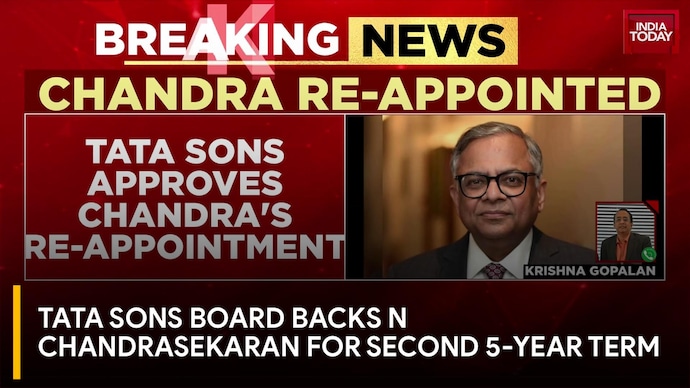
The Tata Sons board has approved the reappointment of N. Chandrasekaran as chairman of the Tata Group for another five-year term. All board members voted in favor of the resolution except Noel Tata, who serves as the chairman of Tata Trusts. The reappointment requires ratification at the upcoming annual general meeting of Tata Sons. The disagreement between the two stems from concerns regarding the financial performance of key entities such as Air India, Tata Digital, and Tata Electronics, alongside high capital expenditure levels. Tata Trusts holds a two-thirds stake in Tata Sons.
The Tata Sons board has approved the reappointment of N Chandrasekaran as chairman of the Tata Group for another five-year term during a meeting held in Mumbai. While board members voted in favor of Chandrasekaran continuing at the helm, Noel Tata voted against the resolution. The reappointment now awaits formal approval at the upcoming Annual General Meeting, as dissent from Noel Tata brings boardroom dynamics into focus ahead of the final confirmation.
Indian equity benchmarks reversed early gains to trade sharply lower as elevated crude oil prices and rising global bond yields weighed on market sentiment. The Nifty slipped below the 23,200 mark while the Sensex registered steep losses, with real estate and metal stocks leading the downturn even as select information technology shares bucked the trend. Meanwhile, the National Payments Corporation of India held discussions regarding Merchant Discount Rate charges on merchant UPI transactions above 2,000 rupees following a Finance Ministry notification. In the corporate domain, the Reserve Bank of India filed a caveat in the Bombay High Court ahead of an anticipated appeal by Tata Sons seeking exemption from mandatory listing norms, triggering a rally in several Tata Group shares including Tata Chemicals and Tata Investment Corporation. The bulletin also examined market trends, crude oil volatility, and the upcoming National Stock Exchange initial public offering.
The Indian rupee strengthened to 94.39 against the US dollar amid bullish commentary from Goldman Sachs, which projected the currency to outperform Asian peers due to Reserve Bank of India policy measures, reduced Russian oil imports, and improved trade discussions with the United States. Meanwhile, benchmark equity indices traded range-bound, opening flat around 23,888, with IT stocks facing downward pressure while broader market counters showed resilience. Tata Motors launched an all-cash voluntary offer worth 3.82 billion euros to acquire full ownership of Italian vehicle manufacturer Iveco Group through its Dutch arm TML CV Holdings. On retail data, August vehicle registrations grew 18% year-on-year, driven by robust non-tractor segments. Separately, the Supreme Court took up a petition demanding restrictions on unpredictable airfares and ancillary charges alongside the establishment of an independent aviation regulatory body, as the central government works on framed rules under the Bharatiya Vayuyan Vidheyak framework.
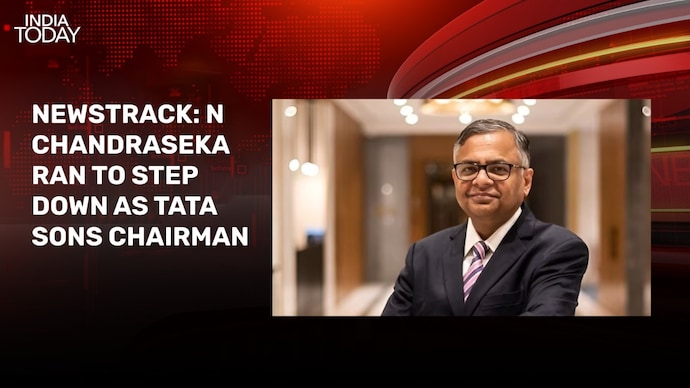
N Chandrasekaran has announced he will step down as chairman of Tata Sons when his tenure ends in February 2027, prompting the Tata Trust to initiate a selection process for his successor.
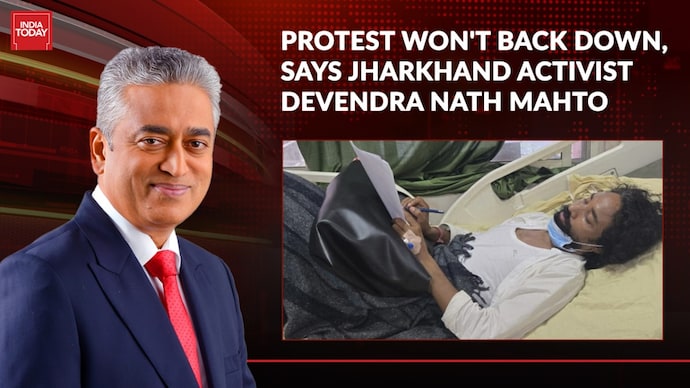
In this video, anchor Rajdeep Sardesai spoke with Devendra Nath Mahto, the Jharkhand student activist, who has been on an indefinite hunger strike over the alleged irregularities in the public service examination.
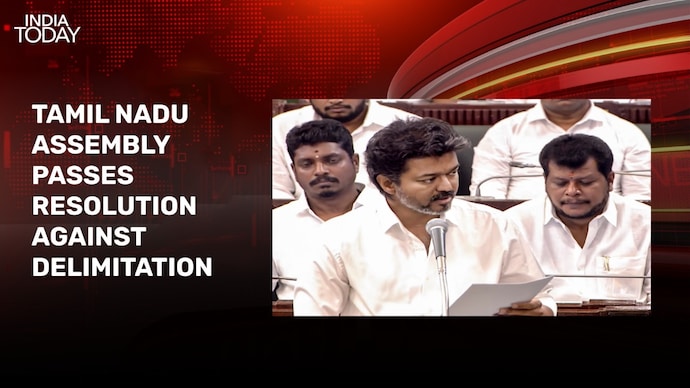
In this video, anchor Akshita Nandagopal brings you the top political, legislative, corporate and law enforcement developments from across India, from Tamil Nadu’s delimitation resolution and the Parliament chaos to Karnataka’s cabinet portfolios, pilot dope-test failures and a major prison security lapse.
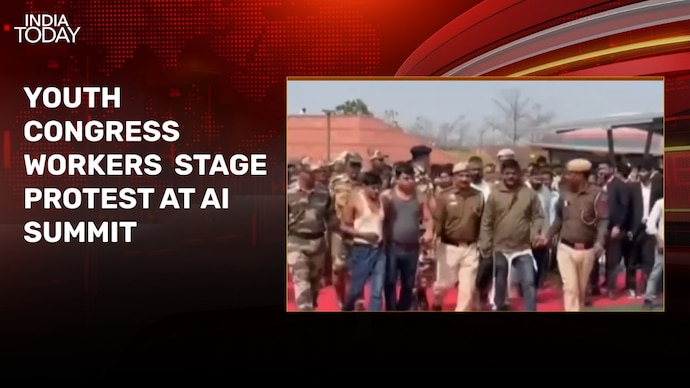
The BJP launched a scathing attack on Congress on Friday after its youth wing at the ongoing India AI Impact Summit in Delhi and raised slogans against Prime Minister Narendra Modi. They were whisked away by security personnel and later arrested.
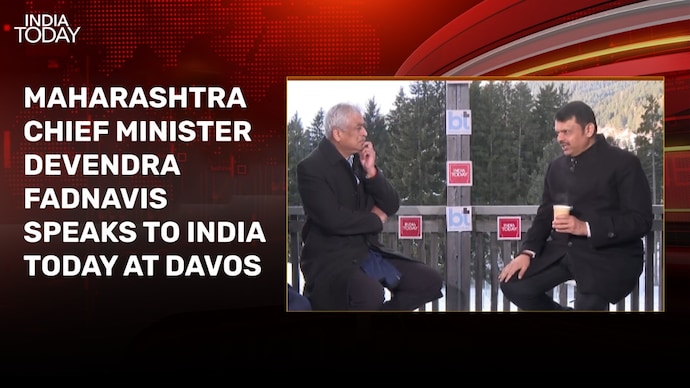
In an exclusive interview with India Today at Davos, Chief Minister Devendra Fadnavis discusses his ambitious economic roadmap for Maharashtra and also talked about the power tussle over Mumbai mayor's post between the BJP and Eknath Shinde-led Shiv Sena.
On this Special Report, Assam Chief Minister Himanta Biswa Sarma discusses the state's economic transformation at the World Economic Forum in Davos. Highlighting the shift from a history of insurgency to a future of high-tech industry, Sarma stated, 'The semiconductor story of India is getting, gaining ground from Assam.' He detailed how the state is moving beyond its traditional tea and oil economy to embrace green energy, AI, and rare earth materials. Sarma explained the 'grand design' behind the Tata Group’s semiconductor investment in Assam, attributing the strategic push to Prime Minister Narendra Modi. Addressing critics of his Davos visit, the Chief Minister emphasized the importance of understanding global geopolitical and economic trends firsthand. He also touched upon the ease of doing business in Assam, noting that the state provides 'royal treatment' to investors with rapid clearances. The discussion underscores Assam's emerging role as a crucial economic gateway to Southeast Asia and its progress in grounding major investment projects.
This news bulletin highlights the upcoming meeting between several top Indian CEOs and US President Donald Trump at the World Economic Forum in Davos. A select group of business leaders from companies such as Tata Sons, Bharti Enterprises, Wipro, Infosys, Mahindra Group, and FinServ will participate. The session will focus on ongoing trade negotiations and tariff issues, as Indian leaders aim to emphasise the adversarial effects of tariffs on US-India relations and seek a collaborative solution. The event also sets the stage for President Trump’s keynote address, where his rationale on recent tariff policy will be closely watched. All information is based strictly on the transcript and verified as current.
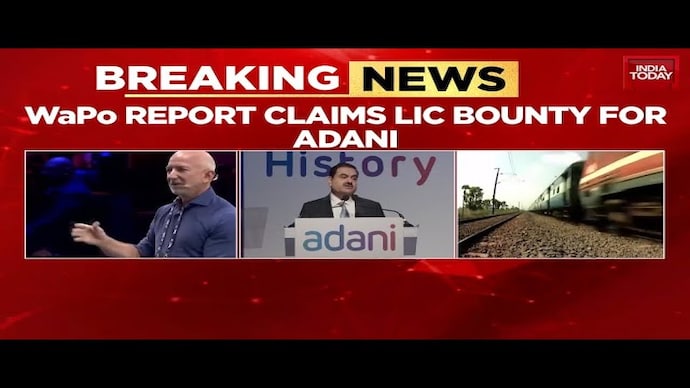
A major controversy has erupted over a Washington Post report alleging Indian officials directed the Life Insurance Corporation (LIC) to invest $3.9 billion in the Adani Group, drawing a sharp response from the BJP. BJP leader K. Annamalai stated that 'after failing to weaken the Indian stock market with targeted propaganda against the Adani Group, the so-called ‘Deep State’, has now shifted its focus to India's largest domestic institution'. LIC has vehemently denied the report, calling the claims "false, baseless, and far from truth" and affirming that its investment decisions are independent and follow due diligence. The BJP has defended the 'blue chip' insurer, providing figures that LIC's exposure to the Adani group is a small fraction of its total portfolio, which includes much larger holdings in groups like Tata and Reliance.
This special report examines a major feud inside Tata Trusts, involving Chairman Noel Tata and four opposing trustees, including Mehli Mistry, over the governance of Tata Sons. The bulletin states, 'What started as a disagreement over the reappointment of a board member has now turned into a governance tussle.' This internal power struggle was sparked by a new rule affecting the tenure of nominee directors over 75, specifically impacting long-standing member Vijay Singh. The conflict is complicated by Mehli Mistry's links to the Shapoorji Pallonji group, echoing the historic 2016 ouster of Cyrus Mistry. With pleas for government intervention, the stability of India's largest conglomerate, which holds a 66% stake in Tata Sons, hangs in the balance, threatening its diverse interests from tech to automobiles.
The Centre has blamed the Tamil Nadu government for cough syrup deaths. Sources have said that the Centre has blamed the Tamil Nadu FDA.