Vietnamese crab exporter

Topic

Advertisement
TOPIC

UPI

The Unified Payments Interface (UPI), developed by the National Payments Corporation of India (NPCI), has become the backbone of India’s digital payments ecosystem. 
 

Launched in 2016 with 21 banks, UPI has transformed how individuals, businesses and government entities make payments by enabling instant, round-the-clock bank-to-bank transactions through a single mobile interface.


Over the years, services such as UPI AutoPay, UPI Lite, UPI 123PAY, Credit Line on UPI and UPI Circle have expanded its reach and use cases. UPI has also moved beyond India, with the real-time payment platform now accepted in 11 countries.


Its growth has been striking. Annual transactions rose from 2 crore in FY2016-17 to more than 24,162 crore in FY2025-26. In July 2026 alone, UPI processed 2,365.8 crore transactions worth Rs 29.87 lakh crore through 741 live banks, underlining its central role in India’s digital economy.

  • ALL
  • STORIES
  • VIDEOS

STORIES

Digital payments | The UPI gambit

India is putting a price on the payment rail it made free even as it takes that model to the world. The economics may hold up. What happens at the counter is the test

Govt to monitor UPI MDR rollout, ensure merchants do not pass charges to consumers

The government will closely monitor the implementation of UPI MDR and work with payment aggregators to plug enforcement gaps and ensure merchants do not pass the additional cost on to consumers, government sources said, adding that the move is unlikely to trigger a significant rise in cash transactions or a decline in UPI usage.

UPI MDR row: Govt cites no dissent, Congress says specific proposal never discussed

The government and Congress MPs are at odds over what the Parliamentary Standing Committee on Finance discussed on UPI MDR. The government says the panel recommended a tiered MDR framework and no formal dissent was recorded. Congress, however, says the specific MDR proposal later announced by the government was never discussed by the panel.

Load More

VIDEOS

UPI MDR Exemption Clarification, Tata Sons Boardroom Row And Stock Markets

A morning business bulletin covers key financial developments, policy updates, and corporate events. The central government has clarified that there is no proposal to rethink Merchant Discount Rate on the Unified Payments Interface, nor is there any proposal to exempt fuel from it, while efforts with the Indian Banks' Association are being explored to ensure costs are not passed to consumers. In corporate updates, Tata Sons has rejected Noel Tata's objections to the reappointment of N. Chandrasekaran, citing majority board validity and legal opinions from former Chief Justice of India U. U. Lalit and former Supreme Court Judge B. N. Srikrishna ahead of shareholder ratification. Meanwhile, domestic stock indices opened mildly lower with the Nifty near 23,054, amid fluctuations in IT and banking shares alongside commentary on Insurance Regulatory and Development Authority of India consultation proposals. Additionally, the bulletin touches upon Union Commerce Minister Piyush Goyal's remarks on trade pact negotiations and a high-profile dinner hosted in Washington.

PSU Banks May Be Shut For 5 Days Straight As Unions Call For Strike Over 5-Day Work Week Demand

Public Sector Undertaking (PSU) banks in India may remain shut for five consecutive days from September 26 to September 30 due to a three-day nationwide strike called by bank employee unions, combined with the regular weekend closure on fourth Saturday and Sunday. The key demands raised by the bank unions include the implementation of a five-day working week and the complete withdrawal of the Performance-Linked Incentive (PLI) scheme. Customers have been advised to complete essential branch-related work, including cash deposits, cash withdrawals, cheque clearances, and loan processing, before September 25 to avoid disruptions. While physical bank branches will remain closed during the strike period, digital channels such as ATMs, UPI transactions, internet banking, and mobile banking services are expected to remain functional. The government is currently holding discussions with stakeholder associations, urging them to reconsider the proposed strike.

MP Petrol Pumps Oppose MDR Fee On UPI Payments Above Rs 2000, Demand Cash

Petrol pump owners in Madhya Pradesh have opposed the new Merchant Discount Rate mechanism on Unified Payments Interface payments. Under the new fee structure starting in mid-October, merchant transactions above Rs 2,000 will attract a 0.4% charge. Fuel pump dealers stated that existing profit margins are already low and the additional levy would increase monthly operational costs by approximately Rs 17,700 per fuel station. In response, petrol pump operators are seeking the withdrawal of these charges and have indicated that they will stop accepting digital UPI payments above Rs 2,000, seeking cash payments instead.

Rajeev Chandrasekhar: 'CPM Model Was A Very, Very Dysfunctional Model'

In an interview, Kerala BJP Chief and Nemom MLA Rajeev Chandrasekhar discusses Kerala's political landscape, governance, and economic challenges. Criticizing the past decade under the CPM, he states, "It was not a Kerala model, it was a CPM model. And that model was a very, very dysfunctional model." Chandrasekhar evaluates the state's financial crisis, emphasizing that severe debt and lack of investment pose major headwinds for Chief Minister VD Satheesan's administration. He addresses controversies surrounding UPI merchant discount rates, terming opposition criticism manufactured and affirming that consumer transactions remain unaffected. He also comments on the Vande Mataram controversy, asserting that constitutional laws must be upheld uniformly across all states.

PM Modi 76th Birthday, 25 Years in Public Life, Global Wishes and Key Milestones

A special broadcast reviews Prime Minister Narendra Modi's journey as he turns 76, marking 25 years in public life and his tenure as India's longest-serving elected Prime Minister. The report highlights India's economic ascent from the tenth to the fifth largest economy, structural reforms including the Goods and Services Tax, digital public infrastructure under the JAM trinity, and expansion in manufacturing through Production Linked Incentive schemes. Key welfare programs, such as the PM Awas Yojana, Jal Jeevan Mission, and Direct Benefit Transfer mechanism, are detailed alongside rapid infrastructural growth spanning Vande Bharat trains, national highways, and aviation under the UDAN scheme. The bulletin examines India's foreign policy approach, space milestones including Chandrayaan and Gaganyaan, and traditional service-oriented birthday initiatives, culminating in the launch of healthcare programs in Dhar, Madhya Pradesh. Global leaders, including Russian President Vladimir Putin and Italian Prime Minister Giorgia Meloni, extended birthday greetings commending India's rising international profile.

PM Narendra Modi Turns 76: 25 Years in Public Office, Global Impact & Vision for Viksit Bharat

Prime Minister Narendra Modi marked his 76th birthday, completing 25 years in public life as an elected leader. Taking office as Prime Minister in May 2014 after serving as Gujarat Chief Minister, his administration oversaw significant economic and policy transformations. India's economy expanded from tenth to fifth largest globally, supported by initiatives including the Goods and Services Tax, the JAM trinity, Unified Payments Interface, and production-linked incentives. Social welfare delivery expanded through direct benefit transfers alongside schemes such as PM Awas Yojana, Jal Jeevan Mission, Swachh Bharat Mission, and Ayushman Bharat. In infrastructure, the government rolled out Vande Bharat trains, expanded airports under the UDAN scheme, and developed the PM GatiShakti platform. On foreign policy, India hosted the G20 presidency, advanced space exploration through the Chandrayaan and Gaganyaan missions, and deepened ties across the Global South. Entering his third term, the administration addresses domestic coalition management, youth employment, and global trade dynamics while pursuing the Viksit Bharat framework.

PM Modi Turns 76: A Look at 25 Years in Public Life, 2014 Mandate, Economic Boom

Prime Minister Narendra Modi turned 76, marking 25 years in public life and his tenure as the longest-serving elected prime minister. From his 2014 victory where the BJP secured 282 seats and the NDA won 336 seats, Modi pledged the Gujarat development model for the country under the vision of 'Bharat ki vijay. Achhe din aane wale hain.' Over his tenure, India expanded from the tenth to the fifth largest global economy. Significant policy reforms include the Goods and Services Tax, the JAM trinity, UPI, and the PM Jan Dhan Yojana bringing over 50 crore citizens into formal banking. Welfare initiatives like PM Awas Yojana, Jal Jeevan Mission, Swachh Bharat Mission, and Ayushman Bharat alongside infrastructure drives like PM Gati Shakti, UDAN, and Vande Bharat trains spurred modernisation. Internationally, India showcased vaccine diplomacy, hosted the G20 presidency, and engaged at BRICS. Advances in space research include Chandrayaan and preparations for Gaganyaan with astronaut Shubhanshu Shukla.

Vadnagar to 7 Lok Kalyan Marg: 12-Year Tenure, Key Schemes & Viksit Bharat 2047 Vision

A special broadcast reviews the political journey of the Prime Minister from selling tea at Vadnagar railway station in Gujarat to leading the nation for over twelve consecutive years. The report outlines major governance initiatives undertaken during this tenure, including Jan Dhan, Swachh Bharat, UPI, and Ayushman Bharat. It further highlights the roadmap focused on self-reliance through Atmanirbhar Bharat, alongside long-term national development goals set for Viksit Bharat by 2047.

Political Row Over UPI MDR Fee Escalates; Opposition Attacks Move As NITI Aayog Defends Cost Model

A political faceoff has intensified over the Merchant Discount Rate charges on Unified Payments Interface transactions exceeding 2,000 rupees. The Bharatiya Janata Party accused the Congress of hypocrisy, noting the Parliamentary Standing Committee on Finance pushed for a tiered fee framework without dissent from its members. Meanwhile, the opposition labelled the charge a 'Modi Tax', claiming external pressure behind the decision. Defending the move, NITI Aayog Vice Chairman Ashok Kumar Lahiri stated that running the digital payment system incurs costs and the government cannot subsidise everything indefinitely. Authorities maintain that charges will only apply to high-volume merchants, leaving consumers and person-to-person transfers entirely exempt.

BJP Slams Congress Over UPI MDR Charge; Row Erupts Over Proposed Digital Payment Fee

A political confrontation has escalated between the Bharatiya Janata Party and the Congress party over the proposed Merchant Discount Rate (MDR) framework for high-value Unified Payments Interface (UPI) transactions. The BJP accused the Congress of hypocrisy, stating that Congress members on the Parliamentary Standing Committee on Finance, including former Finance Minister P. Chidambaram and Manish Tewari, did not record dissent when tiered MDR implementation was recommended. The Congress had previously termed the proposed charge a 'Modi Tax', alleging government pressure. Meanwhile, experts and stakeholders discussed transaction thresholds, merchant cost bearing, and the long-term sustainability of the digital payments ecosystem.

PM Narendra Modi 76th Birthday, Seva Sankalp Abhiyan and SEMICON India Launch

As Prime Minister Narendra Modi turns 76, celebrations and public service programmes are taking place across India, from Delhi to Gujarat and his parliamentary constituency of Varanasi. The Prime Minister is launching the fifth edition of the SEMICON India event in the national capital, while the Bharatiya Janata Party has initiated the month-long Seva Sankalp Abhiyan and urged citizens to light an Ashirwad ka Diya. Key political leaders, including Union Home Minister Amit Shah and National Democratic Alliance allies, participate in major events such as the Vadnagar to Varanasi bike yatra and cleanliness drives. The broadcast highlights Prime Minister Narendra Modi's 25 years in public life since assuming office as Gujarat Chief Minister in 2001, tracing landmark governance milestones from welfare schemes and Make in India to digital infrastructure expansion and the Viksit Bharat 2047 roadmap.

Row Over UPI MDR Framework Escalates as BJP Targets Rahul Gandhi Over Parliamentary Panel Backing

A political row has escalated over the UPI merchant discount rate (MDR) framework, with the BJP targeting Lok Sabha Leader of Opposition Rahul Gandhi. The BJP highlighted that the Parliamentary Standing Committee on Finance that approved the MDR revenue framework included five Congress MPs: P. Chidambaram, Manish Tewari, Gaurav Gogoi, Kishori Lal, and K. Gopinath. All five MPs were present on 12 August when the report was adopted without any recorded dissent in the published minutes. The parliamentary committee had noted that delaying the framework would leave payment service providers reliant on inadequate subsidies, potentially impacting investments in cybersecurity, fraud prevention, and network infrastructure.

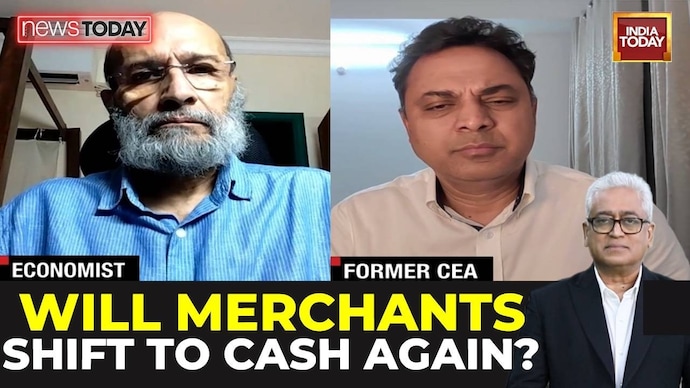
The News Today: Krishnamurthy Subramanian & Santosh Mehrotra On UPI Levy

In this edition of The News Today, anchor Rajdeep Sardesai leads a crucial discussion examining the government's UPI merchant discount rate levy. Joining the panel are Dr Krishnamurthy Subramanian, former Chief Economic Advisor to the Government of India, and Professor Santosh Mehrotra, Visiting Professor at the University of Bath. Professor Mehrotra argues against continuous taxpayer subsidies for digital payments, advocating instead that transaction costs should be fairly apportioned between banks, multinational platforms, and merchants. Meanwhile, Dr Krishnamurthy Subramanian warns that imposing an ad valorem transaction tax fails to align with UPI mechanics and risks driving small merchants back to cash transactions. He underlines that UPI should primarily serve as an engine for credit creation to generate income for banking infrastructure and technology investments rather than imposing friction on digital commerce. The panellists also assess whether merchants will ultimately pass these costs onto consumers and analyse the broader economic ramifications of altering the fee structure for digital payments.

UPI Payment System: 'Someone has to bear the cost', says Santosh Mehrotra

During a discussion on the UPI payment system, economist Santosh Mehrotra addressed the debate over merchant transaction charges and government subsidies. Mehrotra noted that the government has been subsidising merchants to the tune of 2,000 crore rupees annually using taxpayer money, arguing that public funds should not cover these expenses indefinitely. He stated that the cost of UPI operations should instead be apportioned among the three primary commercial beneficiaries: banks, platform owners, and merchants, pointing out that banks generate substantial annual profits. While acknowledging the risk that merchants might eventually pass on a portion of the 0.4 per cent charge to consumers, he emphasised that small merchants alone should not carry the entire burden. Mehrotra remarked, 'Someone has to bear the cost,' urging the government to act as a regulator to distribute the financial burden across all stakeholders. Additionally, he discussed concerns regarding foreign pressure on digital payment systems and ongoing trade deal negotiations.

MDR on UPI Payments: Krishnamurthy Subramanian

Former Chief Economic Advisor Krishnamurthy Subramanian shares his perspective on the government's merchant discount rate (MDR) policy for UPI payments. Discussing UPI's role as a sovereign public good, he cautions against ad valorem transaction taxes and notes that merchants might shift back to cash transactions, incurring implicit opportunity costs. Instead of taxing transactions, he emphasizes utilizing the platform to drive credit creation in the economy. Subramanian points out that India's private credit-to-GDP ratio is around 60%, compared to the global average of 150%, offering massive scope for expansion. 'Utilize this for credit creation,' he asserts, explaining that interest income can sustainably fund infrastructure, technology, and cybersecurity needs.

Sameer Nigam on UPI MDR: 'We Don't Want Subsidies From The Government'

In an interview with Rajdeep Sardesai, PhonePe Co-founder and CEO Sameer Nigam shared his perspective on the government's decision to introduce a 0.4% Merchant Discount Rate (MDR) on UPI transactions above Rs 2,000. Defending the move, Nigam stated, "We don't want subsidies from the government. We stand on our own feet." He explained that the notion that digital payments cannot expand with an MDR is unfounded, remarking, "It was a myth to begin with that MDR had to be free for payments to take off." Nigam highlighted that 95% to 96% of peer-to-merchant transactions fall below the Rs 2,000 threshold and essential categories such as petrol, utilities, and insurance have flat fee caps. He dismissed concerns that merchants will pass charges onto consumers, emphasizing that UPI still offers the lowest MDR globally.

Row Over 0.4% UPI Levy on Transactions Above ₹2,000 as Opposition and BJP Clash

A political controversy has erupted following the National Payments Corporation of India's announcement of a 0.4% merchant discount rate levy on Unified Payments Interface transactions exceeding 2,000 rupees. The opposition has criticised the decision, alleging that the move surrenders to American pressure and benefits digital payment companies with significant foreign shareholding. In response, the ruling Bharatiya Janata Party rejected the allegations, clarifying that the merchant discount rate charge will be borne exclusively by merchants rather than consumers. The government maintained that 96% of transactions remain unaffected, stating the charge ensures platform robustness without impacting the public.

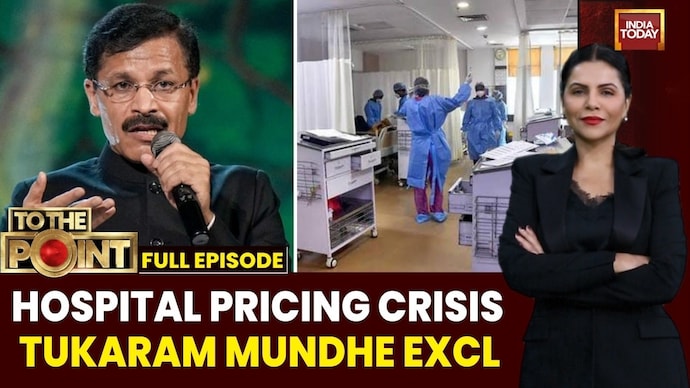
Hospital Consumable Markups Inexplicable, NPPA Must Review: Tukaram Mundhe

A Maharashtra Food and Drug Administration survey reveals markups of up to 2,854 per cent on medical and hospital consumables, prompting Maharashtra FDA Commissioner Tukaram Mundhe to submit recommendations to the National Pharmaceutical Pricing Authority and the Department of Pharmaceuticals for trade margin rationalisation and stricter price monitoring. Experts and consumer rights advocates call for regulatory price caps on surgical items such as IV infusion sets, syringes, and catheters. The news report also features the Union Finance Ministry's clarification rejecting opposition claims of foreign pressure regarding a proposed 0.4 per cent Merchant Discount Rate on UPI transactions above 2,000 rupees, reaffirming the independence of India's digital payments framework. Additionally, the broadcast addresses discussions surrounding online trolling and body shaming targeting actor Katrina Kaif following a public appearance during Ganesh Chaturthi celebrations.