Vietnamese crab exporter

Topic

Advertisement
TOPIC

Vladimir Putin

Vladimir Vladimirovich Putin (born 7 October 1952 in Leningrad, now St. Petersburg) is a former KGB officer and the long-time paramount leader of Russia. He first became prime minister in 1999 and soon after assumed the presidency, serving as president from 1999–2008, prime minister from 2008–2012, and president again from 2012 onward, winning a fifth presidential term in March 2024. 


Educated in law at Leningrad State University, Putin joined the Soviet KGB in 1975, serving in foreign intelligence, including a posting in East Germany, before entering local politics in the early 1990s. He rose rapidly in Moscow, becoming head of the Federal Security Service (FSB) and then prime minister.

Follow Vladimir Putin on

  • ALL
  • STORIES
  • VIDEOS

STORIES

B2 for Putin, B1 for Xi: Does US tease visiting rivals with stealth bombers?

US President Donald Trump has rolled out the red carpet for two of America's biggest strategic rivals, with US bombers roaring overhead. A B-2 for Vladimir Putin in 2025, B-1B Lancers for Xi Jinping in 2026. Were these flyovers ceremonial? Or was Washington sending a message about American military might?

Europe is preparing for its worst crisis. Will Russia attack Nato countries?

Europe is preparing for a security crisis it has feared for years, with growing concerns that Russia could test Nato's resolve beyond Ukraine. Warnings of possible drone and missile strikes coinciding with fears over sabotage, cyberattacks and a potential reduction in US troops, have fuelled panic in the region.

Load More

VIDEOS

Russia-Ukraine Escalation, War Clouds Over Iran, 81st UNGA Session Underway

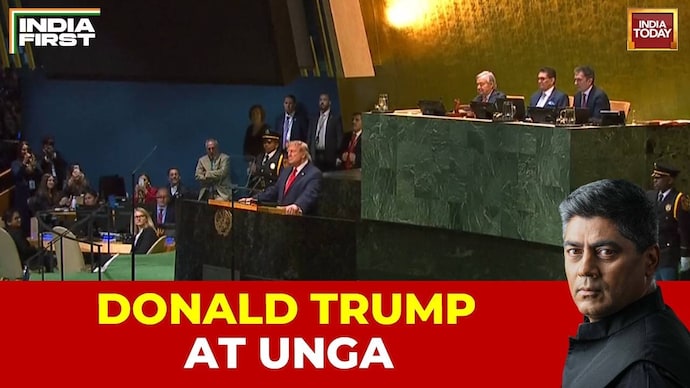
The 81st session of the United Nations General Assembly is underway in New York amid intense global conflicts, including a massive escalation in the Russia-Ukraine war and rising war clouds over Iran. European states and the NATO alliance face growing concerns over the conflict expanding beyond Ukraine. US President Donald Trump arrived at the United Nations headquarters to address the gathering, delivering a direct message to Russian President Vladimir Putin to end and settle the war. Meanwhile, Russia maintains that weapon supplies by multiple nations to Ukraine remain unacceptable as global leaders convene to address security and economic concerns.

2,000 Drones Target Moscow, Wildberries Hubs Struck, Energy Facilities Hit

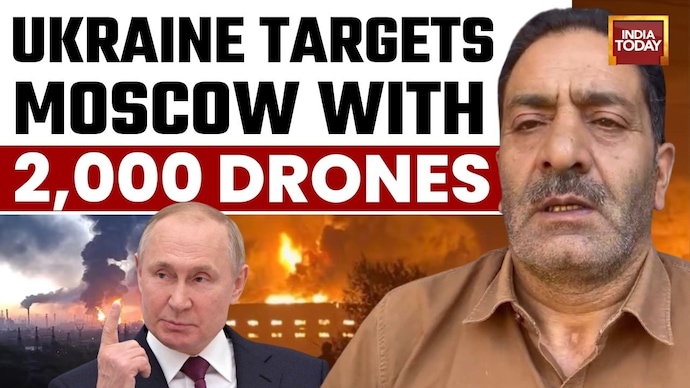
Russian security officials stated that Ukraine launched 2,000 long-range drones over a 48-hour period targeting military, logistics, and civilian infrastructure across the Moscow district during Russian elections, leaving two people dead and many injured. The strikes, travelling over 2,000 kilometres, hit military assets and more than 100 Wildberries logistics warehouses, which Ukraine alleges support Russian army logistics. Despite US President Donald Trump announcing a mutual agreement to halt attacks on energy infrastructure, strikes against energy sectors continue, intensifying pressure on global supplies alongside Middle East conflicts. Experts anticipate a larger retaliatory response from Russia.

PM Modi 76th Birthday, 25 Years in Public Life, Global Wishes and Key Milestones

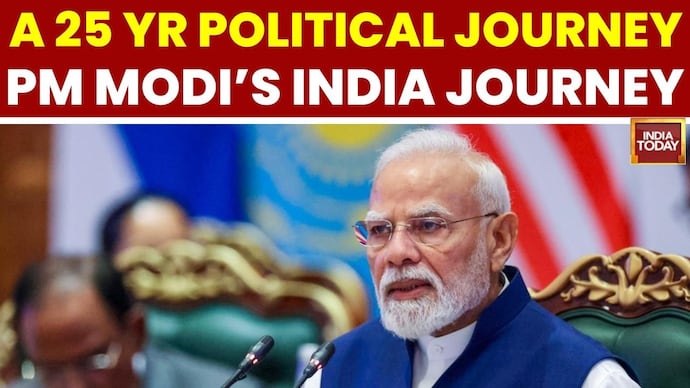
A special broadcast reviews Prime Minister Narendra Modi's journey as he turns 76, marking 25 years in public life and his tenure as India's longest-serving elected Prime Minister. The report highlights India's economic ascent from the tenth to the fifth largest economy, structural reforms including the Goods and Services Tax, digital public infrastructure under the JAM trinity, and expansion in manufacturing through Production Linked Incentive schemes. Key welfare programs, such as the PM Awas Yojana, Jal Jeevan Mission, and Direct Benefit Transfer mechanism, are detailed alongside rapid infrastructural growth spanning Vande Bharat trains, national highways, and aviation under the UDAN scheme. The bulletin examines India's foreign policy approach, space milestones including Chandrayaan and Gaganyaan, and traditional service-oriented birthday initiatives, culminating in the launch of healthcare programs in Dhar, Madhya Pradesh. Global leaders, including Russian President Vladimir Putin and Italian Prime Minister Giorgia Meloni, extended birthday greetings commending India's rising international profile.

PM Narendra Modi Turns 76: 25 Years in Public Office, Global Impact & Vision for Viksit Bharat

Prime Minister Narendra Modi marked his 76th birthday, completing 25 years in public life as an elected leader. Taking office as Prime Minister in May 2014 after serving as Gujarat Chief Minister, his administration oversaw significant economic and policy transformations. India's economy expanded from tenth to fifth largest globally, supported by initiatives including the Goods and Services Tax, the JAM trinity, Unified Payments Interface, and production-linked incentives. Social welfare delivery expanded through direct benefit transfers alongside schemes such as PM Awas Yojana, Jal Jeevan Mission, Swachh Bharat Mission, and Ayushman Bharat. In infrastructure, the government rolled out Vande Bharat trains, expanded airports under the UDAN scheme, and developed the PM GatiShakti platform. On foreign policy, India hosted the G20 presidency, advanced space exploration through the Chandrayaan and Gaganyaan missions, and deepened ties across the Global South. Entering his third term, the administration addresses domestic coalition management, youth employment, and global trade dynamics while pursuing the Viksit Bharat framework.

US 100% Tariff Threat on Russian Oil, Canada-EU Pivot & BRICS Power Shift

The US House of Representatives has passed the Lindsey Graham Sanctioning Russia and Iran Act of 2026, granting President Donald Trump authority to impose tariffs of up to 100% on nations purchasing Russian oil and gas. The move directly exposes major buyers like India and China, following the recent BRICS Summit in New Delhi where leaders opposed unilateral coercive measures. Russian crude accounted for 30.3% of India's oil imports in fiscal 2026, making energy security vital for the nation. Simultaneously, rising tensions between Washington and Ottawa have led Canada to explore unprecedented associate membership with the European Union to diversify trade and strategic partnerships beyond North America. Additionally, social media rumours regarding Chinese President Xi Jinping suffering a medical emergency in New Delhi were debunked, while Pakistan Tehreek-e-Insaf prepares for its planned march to Islamabad amidst heightened administrative security.

US House Passes Russia-Iran Sanctions Bill; 100% Tariff Threat on India Crude; New Delhi Reacts

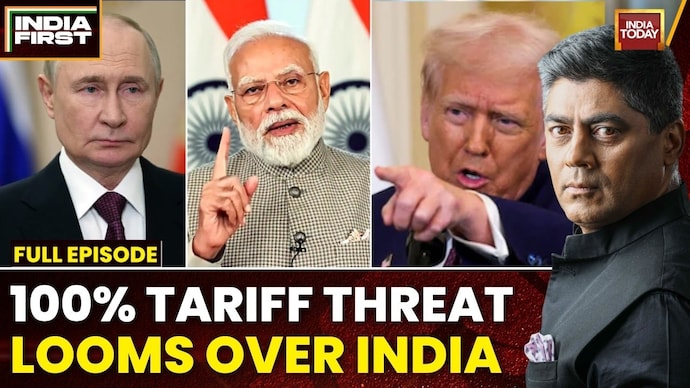
The United States House of Representatives has passed the Lindsey Graham Sanctioning Russia and Iran Act of 2026, sending legislation to President Donald Trump that enables tariffs of up to 100 percent on major buyers of Russian crude oil and natural gas, including India and China. In response, the Ministry of External Affairs affirmed India's commitment to securing energy supplies through diversified sources while communicating bilateral and market implications to US interlocutors. Amid geopolitical developments and Russian crude accounting for 51.1 percent of Indian oil imports in July 2026, Chief Economic Advisor Dr V Ananth Nageswaran and Union Minister Kiren Rijiju examined India's economic trajectory and governance roadmap toward Viksit Bharat by 2047. Discussion points included banking sector balance sheet reforms, capital expenditure expansion, the Production Linked Incentive scheme, trade agreements, and administrative strategies under Prime Minister Narendra Modi.

PM Narendra Modi Turns 76: Global Leaders Send Birthday Wishes Across Borders

As Prime Minister Narendra Modi celebrates his 76th birthday, wishes have poured in from world leaders across the globe. Russian President Vladimir Putin praised Modi's political wisdom and his role in strengthening the India-Russia strategic partnership. Birthday greetings also arrived from the United States on behalf of President Donald Trump, as well as from Italian Prime Minister Giorgia Meloni, who highlighted the deepening India-Italy friendship. Leaders from Nepal, Sri Lanka, Vietnam, Switzerland, and the Netherlands also extended warm greetings, commending India's leadership and its expanding presence on the global stage.

US Passes Russia Sanctions Bill; 100% Tariff Threat Looms Over India & China

The US House of Representatives has passed the Lindsey O'Graham Sanctioning Russia and Iran Act of 2026, granting the US President authority to impose tariffs of up to 100% on countries purchasing Russian crude oil and gas, including India and China. The legislation, cleared in a 262-159 vote following Senate passage, targets Russia's leadership, energy sector, and shadow fleet to curb sanctions evasion. Countries importing under 15% of Russia's gas exports while reducing purchases may qualify for exemptions. The move introduces fresh uncertainty into ongoing India-US trade negotiations, as India remains a major importer of discounted Russian crude. While the legislation awaits presidential signature before enforcement, observers note that tariff powers could provide leverage ahead of major diplomatic engagements, even as provisions exist for waivers and congressional notification regarding duty adjustments.

US House Clears Russia Sanctions Bill; 100% Tariff Threat Looms Over India and China

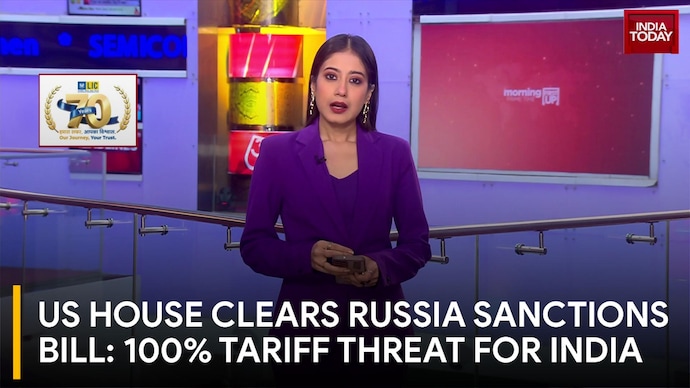
The US House of Representatives has passed the Lindsey Graham Sanctioning Russia and Iran Act of 2026 by a vote of 262 to 159, sending the bill to President Donald Trump for final approval. The legislation targets Russia's energy sector and leadership, authorising tariffs of up to 100% on the top five importers of Russian crude oil and natural gas, placing major buyers like India and China at risk. Countries importing under 15% of Russia's gas exports while actively cutting purchases may seek exemptions. The bill further permits up to a 500% tariff on Russian goods entering the United States. With India importing nearly 85% of its oil requirement and navigating supply bottlenecks amid Middle East tensions, the move adds new friction to India-US trade talks as New Delhi evaluates long-term import diversification.

US House Passes 100% Tariff Bill Over Russian Trade Amid India-US Trade Talks

The United States House of Representatives has passed a bill proposing 100 percent tariffs on countries trading oil and energy with Russia, passing with a 262 to 159 vote. The legislation now awaits the signature of United States President Donald Trump. US lawmakers stated the bill aims to target enablers helping Russia evade sanctions and to cut off funding for the war in Ukraine. The development comes at a critical juncture as India and the United States work on a trade deal. India has maintained that it will not compromise on its national energy security, prioritising domestic requirements and pricing over external pressure. The bill, previously introduced in the Senate, also provides leverage ahead of upcoming international diplomatic engagements and US midterm elections. Indian Commerce Minister Piyush Goyal had noted that trade deal announcements would consider upcoming tariff findings, making this new congressional legislation a significant variable in bilateral discussions.

Salman Khurshid: 'Non-Alignment Gives You Freedom'

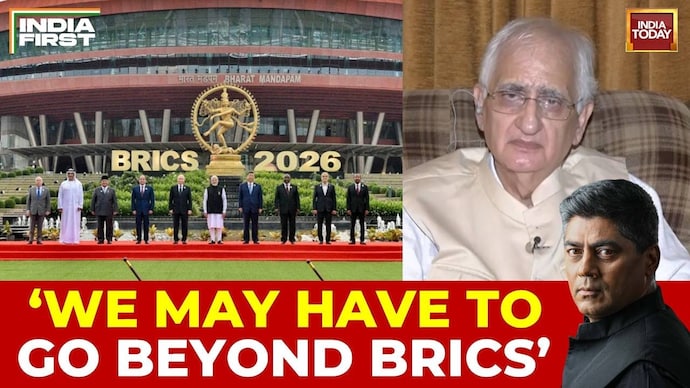
In an interview, former External Affairs Minister Salman Khurshid analyzed the outcomes of the BRICS Summit and the unanimous adoption of the New Delhi Declaration. He noted that while progress has been made, India might have to look further, stating, "We may have to go beyond the declaration. We may have to go beyond BRICS to the larger diplomatic, diplomatic outreach that we have to continue." Khurshid addressed concerns over Pakistan not being named in the terror condemnation, explaining that multilateral declarations often work through consensus and diplomacy. Regarding foreign policy and global power dynamics, he questioned the concept of multi-alignment and emphasized that non-alignment provides nations the strategic freedom to engage as needed. He also stressed the importance of strengthening multilateral institutions by ensuring the voice of the Global South is represented in global platforms like the United Nations, IMF, and World Bank.

BRICS Summit: Jaishankar Meets Russia, China, Iran Counterparts; India Leads Global South

Following the conclusion of the BRICS summit, External Affairs Minister S Jaishankar shared photographs with his counterparts from Russia, China, and Iran. This followed photographs shared earlier by the Prime Minister alongside Iranian President Masoud Pezeshkian, Russian President Vladimir Putin, and Chinese President Xi Jinping. The summit highlighted BRICS emerging as a powerful bloc driving the transition towards a multipolar global order. Furthermore, the declaration adopted at the summit underscored India's pivotal position as a voice of the Global South, guiding diverse nations to forge consensus despite differing geopolitical interests.

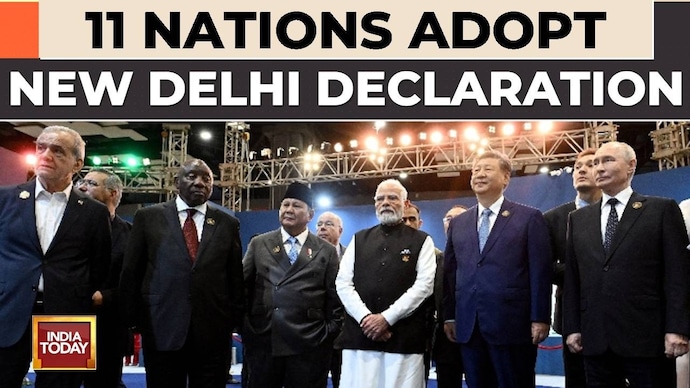
BRICS Adopts New Delhi Declaration, Backs UNSC Reforms And Urges West Asia De-Escalation

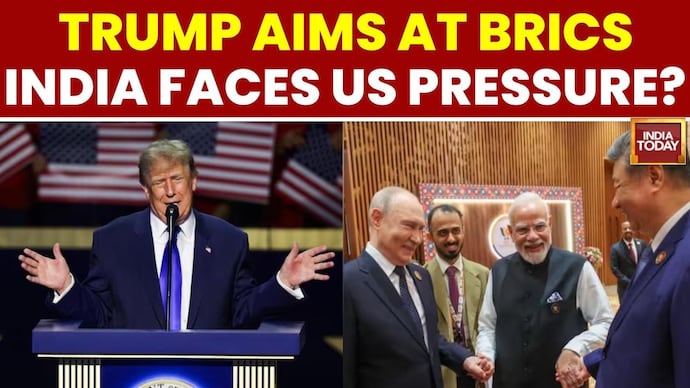
The 2026 BRICS Summit in New Delhi concluded with the adoption of the New Delhi Declaration by all 11 member nations. Hosted by Prime Minister Narendra Modi, the summit brought together world leaders, including Xi Jinping and Vladimir Putin. The joint declaration called for structural reforms of multilateral institutions like the UNSC, strongly condemned terrorism, and denounced unilateral acts of war. It further urged restraint, de-escalation, and dialogue amid ongoing military aggression in West Asia, following a consensus between Iran and the UAE on the text. PM Modi highlighted the pillars of resilience, innovation, cooperation, and sustainability, while cautioning against the weaponisation of technology and critical minerals. The BRICS presidency was handed over to China.

Salman Khurshid on China: 'We have to trust each other first'

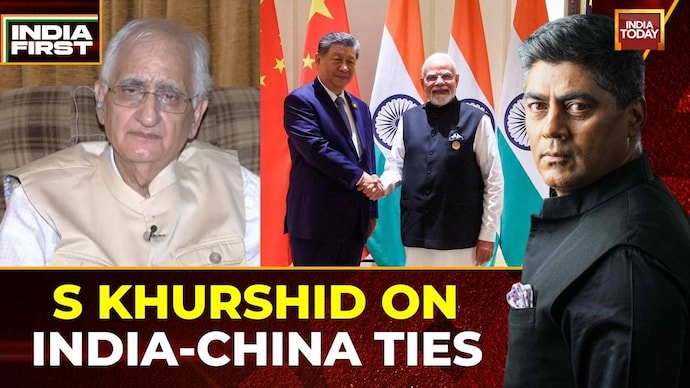
In an interview with India Today, former External Affairs Minister Salman Khurshid shared his analysis of the BRICS summit outcomes and India-China relations. Discussing the New Delhi Declaration, Khurshid noted that while the condemnation of cross-border terrorism represents positive movement, India needs to continue broader diplomatic outreach beyond the multilateral grouping. Reflecting on India's bilateral ties with China and recent high-level engagements, he stressed the need for transparency, stating, "We have to trust each other first, and the trust will come only with sharing of information." Khurshid urged the government to take the opposition into confidence regarding developments on the border issue. Furthermore, addressing the trade imbalance between the two countries, he pointed out that India must formulate concrete domestic plans alongside bilateral talks to reduce the trade deficit effectively.

PM Modi at BRICS: Inclusivity, Unilateral Tariffs & Stand Against Terror

At the conclusion of the two-day BRICS summit in India, Prime Minister Narendra Modi emphasised inclusivity and cautioned against the weaponisation of technology and critical minerals. In the presence of Russian President Vladimir Putin and Chinese President Xi Jinping, member nations adopted the New Delhi Declaration, expressing serious concern over unilateral tariffs and non-tariff trade measures violating World Trade Organization rules. The summit strongly condemned the Pahalgam attack, reaffirming zero tolerance for terrorism and rejecting double standards. Addressing the West Asia conflict, BRICS urged restraint and advocated dialogue and diplomacy. The grouping also agreed on initiatives including an early warning system for infectious diseases, disaster management guidelines, and proposed a BRICS Startup Innovation Fund.

BRICS Summit Concludes, Delhi Declaration Adopted, Presidency Handed To China

The two-day BRICS Summit in India has concluded with the adoption of the Delhi joint declaration, bringing member nations together on a shared platform to call for global peace, multilateralism, and disaster data sharing. The presidency of the grouping has been handed over to China, which will host the 19th BRICS Summit in 2027. High-level bilateral discussions were held during the summit, including meetings between India and the leaders of Russia and China, as well as sideline discussions between the Crown Prince of Abu Dhabi and the Iranian President. Additional bilateral meetings are scheduled with leaders from Kazakhstan, Egypt, Nigeria, and South Africa. The summit focused on addressing the concerns of the Global South, promoting economic cooperation, and navigating global geopolitical conflicts through diplomatic consensus.

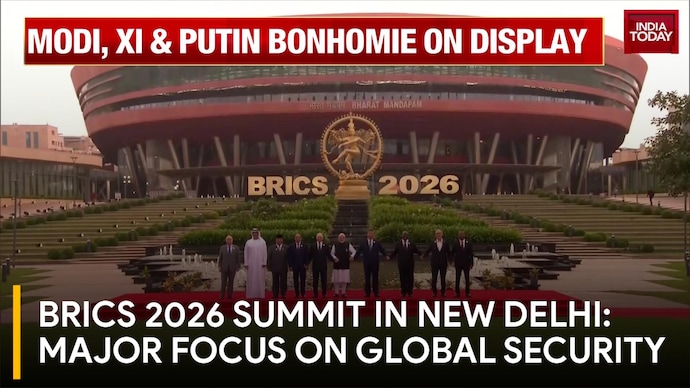
BRICS 2026 Summit in New Delhi: Family Photo Unveiled | PM Modi | Xi Jinping | Vladimir Putin

The BRICS 2026 Summit in New Delhi brings together global leaders at Bharat Mandapam, marking two decades of the grouping's expansion from five members to a broader multilateral forum. Discussions highlight a push for a comprehensive convention on terrorism and the necessity of establishing a single, unified global definition of terrorism. Emphasising a shift towards addressing security challenges in an era of fractured multilateralism, the forum underscores diplomatic engagement to prevent threats. Leaders participated in a tree-planting ceremony symbolizing international cooperation and friendship alongside official group photographs showcasing cultural heritage backdrops, including references to ancient Indian civilization. The gathering convenes representatives from member countries, including Russia, China, India, South Africa, Egypt, and Ethiopia, representing a significant portion of the global population. Amid ongoing global and regional tensions, the summit focuses on economic cooperation, connectivity corridors, trade partnerships, and multilateral diplomacy to promote regional stability and peaceful dialogue across Eurasia and beyond.

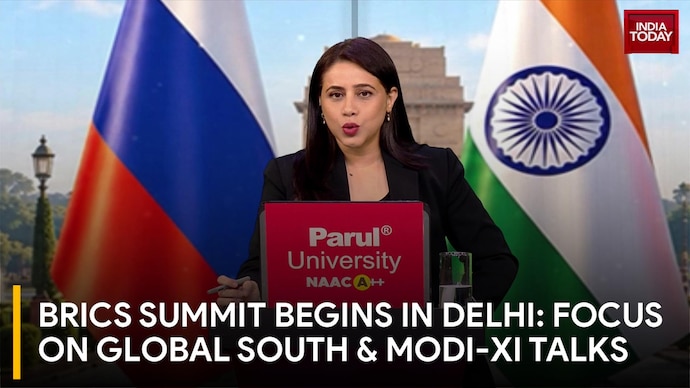
BRICS Summit Begins in New Delhi, Focus on Global South & Crucial Modi-Xi Bilateral

India is hosting world leaders at Bharat Mandapam in New Delhi for the BRICS Summit, positioning itself as a voice for the Global South. With the theme of inclusive global governance and strengthening multilateralism, the summit opens with closed-door sessions featuring leaders from member nations. High-level discussions focus on global governance, economic resilience, innovation, and counter-terrorism solidarity amid regional tensions in West Asia involving Iran, Saudi Arabia, and the United Arab Emirates. A massive security grid comprising 25,000 personnel, SWAT teams, snipers, and extensive surveillance has been deployed across the national capital. Crucial bilateral meetings are also scheduled, including an engagement between Prime Minister Narendra Modi and Chinese President Xi Jinping, with focus on trade, development partnerships, and maintaining peace and tranquility along the Line of Actual Control.

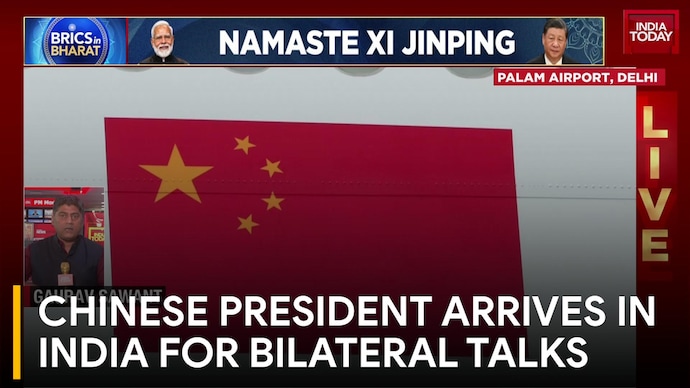
Chinese President Arrives in India, Bilateral Ties Reset, Focus on Global Diplomacy

Chinese President Xi Jinping has arrived in New Delhi for his first visit to India since the 2019 Mamallapuram summit and the 2020 Galwan clashes. The visit follows discussions between National Security Advisor Ajit Doval and Chinese Foreign Minister Wang Yi, who established a seven-point consensus charter to serve as the framework for high-level bilateral talks. Discussions centre on border stability, trade dynamics, and market access, with bilateral imports reaching record levels. The visit coincides with the presence of international leaders, including Russian President Vladimir Putin and Iranian President Masoud Pezeshkian, in the capital. The engagements highlight diplomatic efforts to navigate bilateral ties, foster economic cooperation, and work towards a consensus declaration during the multilateral summit in New Delhi.