Vietnamese crab exporter

Topic

Advertisement
TOPIC

White House

The White House serves as both the official residence and workplace of the President of the United States. Situated at 1600 Pennsylvania Avenue NW in Washington, D.C., the White House has been the residence and workplace of every U.S. president since 1800, when the capital relocated from Philadelphia. 


Irish-born architect James Hoban designed the White House in a neoclassical style, inspired by Dublin's Leinster House. Constructed between 1792 and 1800, the building used white-painted Aquia Creek sandstone. During the War of 1812, British troops set fire to the mansion in 1814, destroying much of the interior and damaging the exterior. Reconstruction began almost immediately, with President James Monroe moving back in October 1817. Exterior work continued with the addition of the semi-circular South Portico in 1824 and the North Portico in 1829.


The White House complex includes several office buildings – the West Wing, East Wing, Eisenhower Executive Office Building (originally the State Department), a guest residence, and Blair House. The main residence has six levels: Ground Floor, State Floor, Second Floor, and Third Floor, plus a two-story basement.


While the White House is open to public tours, visitors must submit requests in advance. U.S. citizens need to contact their congressional representatives to arrange tours, while foreign visitors must apply through their country's embassy in Washington. 

  • ALL
  • STORIES
  • VIDEOS

STORIES

Trump taxpayer-funded ad sparks bipartisan criticism in US

The Trump administration is airing taxpayer-funded television spots that closely mirror Donald Trump’s 2024 campaign ads. The move has triggered bipartisan criticism and renewed questions about where government messaging ends and political promotion begins.

Xi says US visit adds new substance to China-US ties

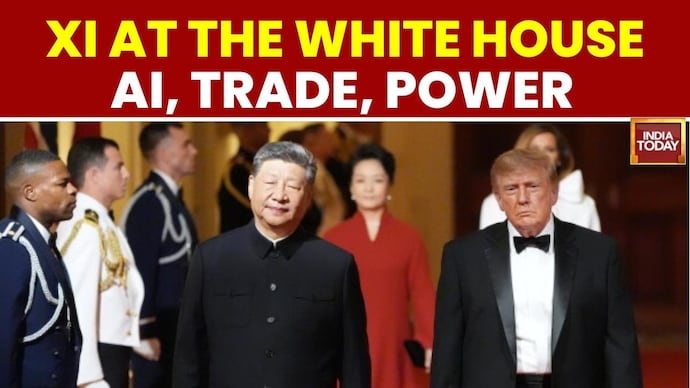
Xi wrapped up his Washington visit after extended talks with Trump and a symbolic White House programme. Both sides signalled limited trade progress and a willingness to keep competition manageable through dialogue.

B2 for Putin, B1 for Xi: Does US tease visiting rivals with stealth bombers?

US President Donald Trump has rolled out the red carpet for two of America's biggest strategic rivals, with US bombers roaring overhead. A B-2 for Vladimir Putin in 2025, B-1B Lancers for Xi Jinping in 2026. Were these flyovers ceremonial? Or was Washington sending a message about American military might?

Load More

VIDEOS

Netanyahu's UNGA Speech, Trump-Xi Summit Truce, and Italy's School Ban

In this edition of Statecraft, anchor Geeta Mohan analyses key geopolitical developments across the globe. At the United Nations General Assembly, Israeli Prime Minister Benjamin Netanyahu defended strikes on Iran and displayed a Starlink terminal alongside references to pager explosions, amid a walkout by delegates and a cancelled meeting with Elon Musk. Meanwhile in Washington, US President Donald Trump welcomed Chinese President Xi Jinping with full ceremonial honours, agreeing to extend the bilateral trade truce by two months while strategic disagreements over Taiwan, artificial intelligence, and rare earths persisted. The broadcast examines the regional implications of potential US-China rapprochement for India and the wider Indo-Pacific. Additionally, the programme covers Pakistani Prime Minister Shehbaz Sharif evading questions on Lashkar-e-Taiba founder Hafiz Saeed at the UN, as well as Italian Prime Minister Giorgia Meloni's new cabinet decree prohibiting face coverings in schools and capping non-Italian speakers at 30% per classroom.

Trump Hosts Xi at White House; Tech CEOs Attend State Dinner as Trade Talks End Without Joint Text

US President Donald Trump hosted Chinese President Xi Jinping at the White House for bilateral talks lasting approximately an hour and a half, followed by a state dinner. Key business figures, including Amazon founder Jeff Bezos, OpenAI CEO Sam Altman, Nvidia CEO Jensen Huang, Google CEO Sundar Pichai, Microsoft CEO Satya Nadella, and former Apple CEO Tim Cook, attended the dinner. Trump presented Xi with a crafted bald eagle sculpture, while both leaders addressed the gathering, emphasizing mutual respect, bilateral ties, and future trade relations. Xi emphasized that competition should remain healthy, bilateral cooperation should benefit both nations, and artificial intelligence must develop under human control. Despite discussions on trade and bilateral ties, no official joint statement was released following the bilateral talks, indicating contentious matters remain unresolved. During the visit, Trump also led Xi on a tour of the White House Presidential Walk of Fame.

Trump-Xi Bilateral Talks, Tariff Truce Extension And New AI Dialogue

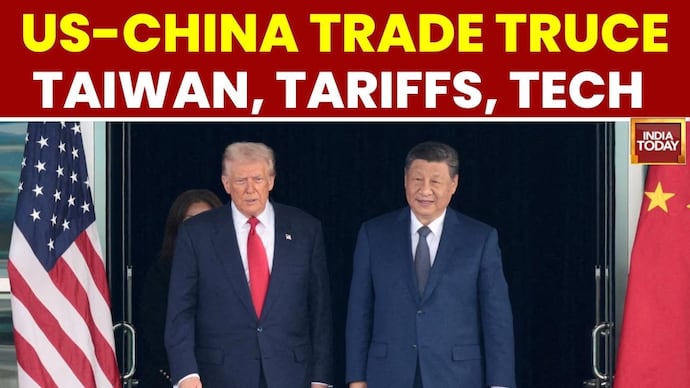
United States President Donald Trump and Chinese President Xi Jinping held a crucial bilateral meeting lasting around one and a half hours at the White House. The two leaders emphasised mutual respect, cooperation, and the historical ties between their nations, while acknowledging the need to build a balanced trade relationship. During the visit, the two countries agreed to extend their tariff truce until 10 January, granting negotiators additional time to pursue a broader economic agreement. An artificial intelligence dialogue was also announced, with both sides noting the necessity for artificial intelligence to develop under human control. Despite positive optics, no joint press conference or joint statement was issued following the talks. Key issues including tariffs, rare earth supplies, agricultural purchases, market access, technology, and geopolitical tensions surrounding Taiwan and sanctions remain critical sticking points between Washington and Beijing.

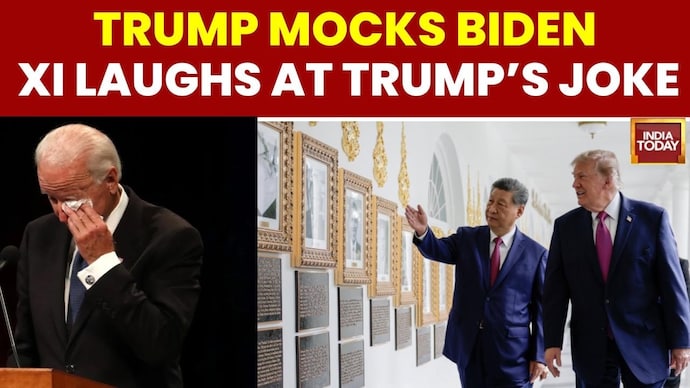
Trump Mocks Biden During White House Walk With Xi Jinping, Chinese President Seen Laughing

Donald Trump and Chinese President Xi Jinping shared a lighthearted moment during a walk through a White House presidential display. Trump mocked former US President Joe Biden with an autopen joke while pointing at presidential portraits. Trump displayed his own photographs with Biden positioned in between, referring to the former president as autopen. The interaction drew notable laughter from President Xi, presenting unusual optics during a high-profile diplomatic visit.

US-China Bilateral: Trump And Xi Jinping Meet In Washington Amid Calls For Co-operation

United States President Donald Trump and Chinese President Xi Jinping held a crucial 1.5-hour bilateral meeting in Washington on September 24. Addressing the gathering, President Trump referenced historical co-operation during World War II, stating that both nations can achieve much by focusing on common interests to forge a better future. President Xi expressed gratitude for the hospitality shown to him and his wife Madame Peng, calling for both sides to move forward together and write a new chapter in friendly ties. The meeting took place against a backdrop of continuing issues between the two nations, including differences over Taiwan, artificial intelligence, sanctions, and global conflicts. While the leadership projected positive diplomatic optics, no joint press conference was held, and no joint statements or big-ticket policy announcements were released immediately following the discussions. Protests and clashes involving media personnel were also observed outside the venue as experts and lawmakers continue to watch for concrete diplomatic outcomes from the visit.

Trump And Xi Jinping Hold Bilateral Talks At White House On Trade, Wars

US President Donald Trump hosted Chinese President Xi Jinping at the White House for a bilateral meeting in the Oval Office during a two-day state visit. The meeting commenced following a ceremonial military review held in the Rose Garden. Discussions between the two leaders covered a wide range of critical topics, including bilateral trade, the economy, supply chains, rare earth elements, artificial intelligence competition, and energy security. Regional and international security concerns were also on the agenda, specifically Taiwan, the Indo-Pacific, and ongoing conflicts involving Russia, Ukraine, and Iran. Following the one-and-a-half-hour discussion, President Trump gave President Xi a brief tour of the newly constructed helipad and ballroom before seeing him off. While no joint press conference took place, separate readouts and statements are expected from Washington and Beijing detailing the discussions, ahead of an official state dinner scheduled for the evening.

Trump Welcomes Xi Jinping in US: Historic State Visit, Trade Ties & Key Bilateral Talks

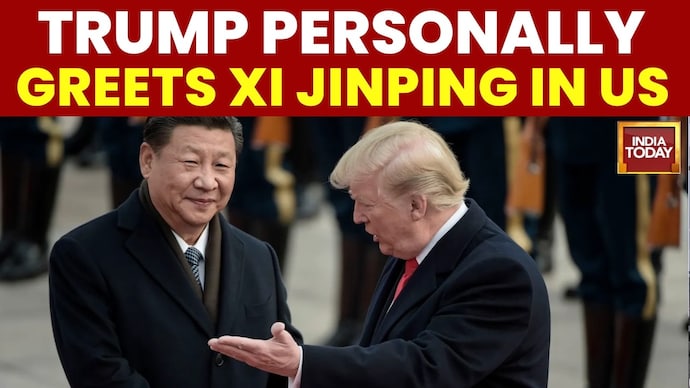
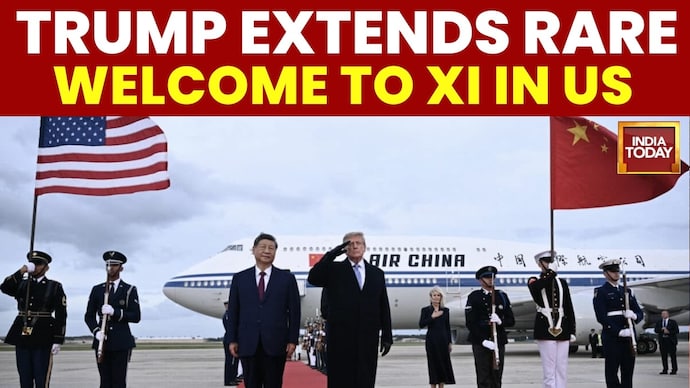
Chinese President Xi Jinping has arrived in the United States for a high-profile state visit, marking a notable bilateral engagement with US President Donald Trump. In a rare diplomatic gesture not seen in over six decades, President Trump personally welcomed the Chinese leader upon arrival at the air base outside Washington. The visit sets the stage for extensive bilateral meetings at the White House and delegation-level discussions focusing on trade, artificial intelligence, critical minerals, and supply chain frictions. While contentious issues regarding technology, tariffs, and geopolitical disputes remain prominent, both nations aim to maintain strategic stability and prevent escalation into open confrontation. Pre-summit discussions between economic officials have also addressed trade truces and upcoming state dinner engagements featuring leading technology industry leaders.

Trump Welcomes Xi Jinping in US Amid High-Stakes Summit on Trade and Global Tensions

Chinese President Xi Jinping has arrived in the United States on a three-day official visit, marking his second summit meeting with US President Donald Trump in less than six months. In a rare diplomatic gesture not seen since 1962, President Donald Trump and First Lady Melania Trump received Xi Jinping and Chinese First Lady Peng Liyuan directly at Joint Base Andrews in Maryland. The arrival featured a red carpet reception, a 21-person honour cordon, and ceremonial cannon fire. Highlighting the agenda, bilateral discussions are set to address critical areas of friction, including trade, technology, supply chains, semiconductors, artificial intelligence, and geopolitical developments concerning Iran and Russia. Analysts note that while deep disagreements persist, the high-level engagement reflects an effort to establish guardrails, manage strategic competition, and stabilise diplomatic ties between the world's two largest economies.

UNGA Address: Warning on Iran Nuclear Deal, Russian Oil Tariffs & Global Security

A speech delivered at the United Nations General Assembly addressed major international foreign policy challenges, focusing primarily on the Islamic Republic of Iran, the Russia-Ukraine conflict, and broader geopolitical developments. The address called for the complete economic isolation of Iran until it abandons its nuclear ambitions and ceases regional hostility, while leaving open the possibility of a negotiated agreement following the United States midterm elections. The speech also outlined potential enforcement actions concerning Russian energy exports, specifically mentioning the possible use of the Lindsey Graham sanctions bill to impose significant tariffs on countries importing oil from Russia, including India and China. Additionally, the address covered global security concerns, categorising Western hemisphere cartels alongside terror outfits, highlighting strategic interests in Greenland, and noting upcoming bilateral meetings at the White House.

'It Has Been My Great Honor to Settle Eight Wars': Donald Trump

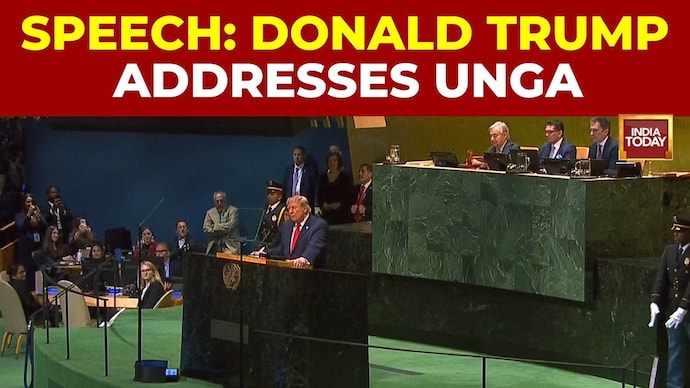
Addressing the United Nations General Assembly and marking the 250th anniversary of American independence, United States President Donald Trump detailed his administration's domestic and international policy agenda. Domestically, Trump highlighted United States economic metrics, poverty reduction, and border security enforcement. In foreign affairs, Trump reiterated that Iran will not be permitted to obtain a nuclear weapon, referencing military strikes on Iranian nuclear sites, the destruction of Iranian naval vessels, and United States naval escorts in the Strait of Hormuz. Trump reviewed the cessation of hostilities in Gaza, the release of hostages, and the formation of a multilateral Board of Peace backed by the United Nations Security Council. He outlined diplomatic mediation across international disputes, including India and Pakistan, Cambodia and Thailand, Kosovo and Serbia, the Democratic Republic of the Congo and Rwanda, Armenia and Azerbaijan, as well as ongoing negotiations between Russia and Ukraine. Additionally, Trump detailed United States military operations in Venezuela, the apprehension of Nicolás Maduro, and an agreement involving 65 billion barrels of oil. He announced an accord with Denmark regarding Greenland to construct two military bases for Arctic defense. On technological policy, Trump stated that the United States government will prioritize super intelligence over traditional artificial intelligence terminology. The address concluded with calls for United Nations structural reforms, spending reductions, opposition to international carbon taxation, and the rejection of International Criminal Court jurisdiction.

White House Media Ban Row: Trump Restricts Outlets, NYC Mayor Backs Full Press Access

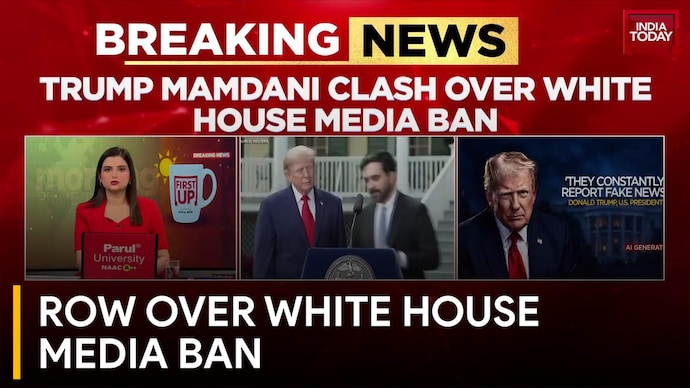
A clash has emerged regarding the White House media ban, with US President Donald Trump restricting several media outlets including CNN, MSNBC, and Politico, while New York City Mayor Zohran Mamdani stated that all media members should be present. Mamdani conveyed to the president during their meeting that all press members would be welcomed on the lawn, regardless of differing opinions or critiques. The decision to restrict media outlets has raised questions about whether it serves as a distraction from issues surrounding the Iran war and rising gas prices, highlighting opposing stances on press freedom and media access.

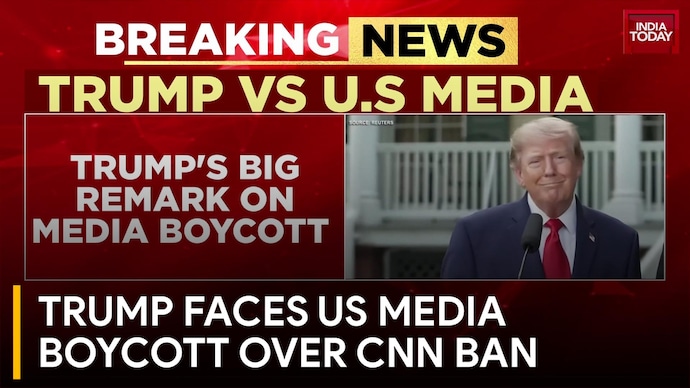
Donald Trump Dismisses Media Boycott As US Networks Stand In Solidarity With CNN

US President Donald Trump asserted that the media cannot boycott him after major news organisations staged a boycott following his decision to ban CNN. Speaking at a ribbon-cutting ceremony for the new White House helipad, Trump's remarks without the regular press TV pool ended in silence on air, as loud engine noise from Marine One overwhelmed the event. News networks including Fox, CBS, and ABC refused to replace CNN, while print outlets like the Associated Press and The Washington Post declined to publish photographs of the event to demonstrate solidarity. Despite the stand-off, Trump maintained that the press has an obligation to provide coverage, claiming significant economic achievements and foreign policy settlements while criticising media coverage of his administration. White House Correspondents' Association President Jacqui Henrich stated that CNN should not be barred.

US TV Networks Halt Trump Pool Coverage After White House Bans Outlets

A major showdown has unfolded between the Donald Trump White House and American media organisations. Major television networks have suspended their shared presidential pool coverage after the White House barred CNN, MS Now, and Politico from its grounds. The decision follows CNN being prevented from undertaking its scheduled pool duties, which are usually rotated among ABC, CBS, NBC, Fox News, and CNN. Rather than replacing CNN, the networks suspended the presidential TV pool, halting shared feeds for key presidential events, including Donald Trump's trip to New York for the UN General Assembly. Meanwhile, the three excluded outlets have filed a lawsuit against the administration, alleging violations of First Amendment protections and due process.

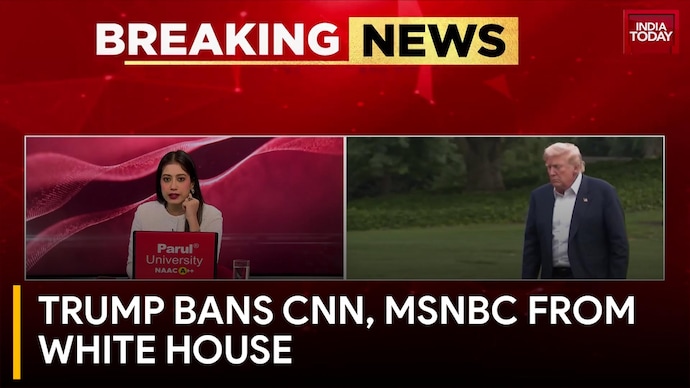
Donald Trump Bans CNN, MSNBC, Politico from White House, Alleges 'Fake News'

United States President Donald Trump has banned major news outlets CNN, MSNBC, and Politico from the White House, accusing them of one-sided reporting and fake news. Announcing that the media ban is effective immediately, Trump stated that the country must have honest news and demanded fair press coverage, while threatening that more bans could follow. The decision has sparked widespread concerns regarding the First Amendment and free press in the United States, following long-drawn narrative battles where Trump repeatedly condemned reports from these media organisations as false and propaganda-based, setting off alarm across the American press community.

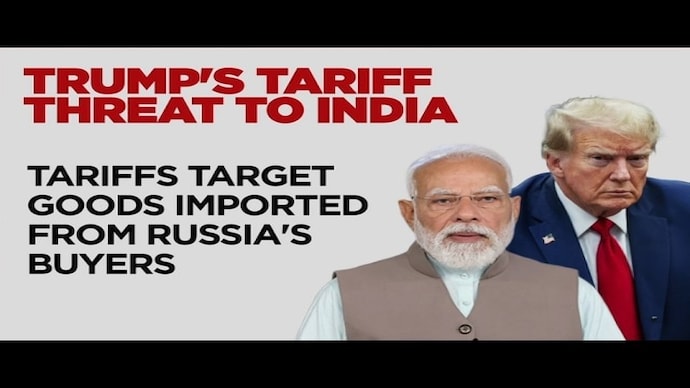
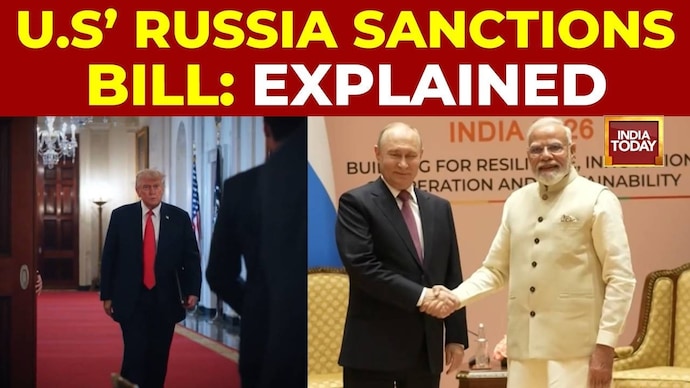
US Law on Russian Oil Tariffs, 100% Import Levies Risk, Impact on India-US Trade Talks

United States President Donald Trump has signed a new Russia sanctions bill into law, granting the administration authority to impose tariffs of up to 100% on goods imported from the top five buyers of Russian crude oil and natural gas within 30 days. The legislation covers major importers such as India and China, as well as countries aiding sanctions evasion. While the law grants significant executive discretion regarding implementation, the White House must notify Congress prior to removing any tariffs. The move comes ahead of high-level diplomatic engagements, including planned talks with Chinese President Xi Jinping and Ukrainian President Volodymyr Zelenskyy, aiming to exert pressure regarding the Russia-Ukraine war. For India, a leading purchaser of Russian crude, the law introduces new variables amid ongoing bilateral trade negotiations, where officials indicate substantial progress on an agreement ahead of scheduled ministerial discussions.

US Tightens H-1B Visa Rules, Probes Layoffs and Extends $100,000 Employer Fee

The US administration has moved to tighten H-1B visa regulations to prioritise American workers and address alleged visa abuse by employers. Under a new executive order, US agencies including the Department of State, the Department of Labor, and Homeland Security have been instructed to coordinate probes and review labour conditions. The investigation focuses on employers and sponsors that have laid off US workers between 2022 and 2026 while hiring lower-paid foreign replacements, including through third-party placement groups and outsourcing firms. The administration has also extended a 100,000-dollar visa fee requirement by one year. The scrutiny particularly impacts sectors such as information technology, where Indian professionals constitute a significant portion of the workforce. The measures reflect an America First policy approach to protect domestic employment.

Trump Signs Sanctions Law Targeting Russian Oil Buyers; India And China In Focus

United States President Donald Trump has signed into law a new sanctions measure targeting Russia and Iran, which allows the imposition of tariffs of up to 100 per cent on the top five buyers of Russian oil and gas. While the legislation does not explicitly name India and China, both countries remain among the largest purchasers of Russian energy. The law grants the US president full authority after 30 days to issue decrees determining tariff scope, exemptions, or product-specific duties. The development introduces a new variable amid ongoing bilateral trade negotiations between India and the United States, where discussions around a potential trade deal are reported to be near completion. The law is also viewed as an instrument to increase pressure regarding the Russia-Ukraine conflict.

US Announces Greenland Deal To Block China, Russia Bases And Secure Rare Earths

The United States has announced an agreement concerning Greenland, aimed at securing long-term defence control and preventing adversaries from establishing military bases or making sensitive investments in the territory. The pact explicitly bars non-NATO nations from setting up military installations, directly countering potential security and commercial interests from Russia and China. Geographically situated close to Russia, Greenland offers strategic forward-basing advantages for American defence. Additionally, the arrangement permits US companies to invest in the territory and mine critical rare earth minerals, addressing international competition over essential natural resources. The White House and the US State Department outlined that the agreement provides permanent security capabilities in Greenland, ensuring no foreign adversary military presence and protecting regional interests without adding security costs to the United States.

US Congress Passes 100% Tariff Bill on Russian Oil Buyers as Midterms & China Summit Near

The US Congress has fast-tracked a bill granting the president authority to impose 100% tariffs on countries purchasing oil and gas from Russia, including India, China, Turkey, and Japan. Originally proposed by the late Senator Lindsey Graham, the revised legislation moved through the Senate and the House Freedom Caucus ahead of the midterm elections. Analysts note the move provides diplomatic leverage ahead of the Chinese president's visit to Washington, DC, to negotiate trade, artificial intelligence, and semiconductor issues. The measure also signals congressional intent to address ongoing conflicts in Ukraine and West Asia. Discussion highlighted concerns regarding the economic impact on India amid ongoing bilateral trade negotiations and global energy vulnerabilities. The legislation permits presidential waivers, with experts emphasizing the objective of restricting revenues funding Russia's military campaign in Ukraine.