Vietnamese crab exporter

Topic

Advertisement
TOPIC

Women Reservation Bill

The Women’s Reservation Bill, first introduced in September 1996 by the H.D. Deve Gowda government, marked a long-standing effort to improve women’s representation in Indian politics. Despite repeated attempts by successive governments, the bill remained pending for nearly 27 years. It was finally cleared in September 2023 during a special session of Parliament, signaling a major step toward gender inclusion.
 

Currently, women’s representation in India’s Parliament remains limited. The Lok Sabha has 78 women MPs, accounting for just about 14% of the total strength, while the Rajya Sabha has only 32 women members. In several state legislative assemblies, women’s participation is even lower, often falling below 10%.


The bill had earlier seen partial success in 2010, when the UPA government managed to pass it in the Rajya Sabha, but it failed to secure approval in the Lok Sabha. Initially introduced as a proposed Constitutional Amendment, it also faced political resistance and was referred to a joint parliamentary committee.


Globally, many countries have adopted reservation or quota systems to enhance women’s political participation. Nations like Pakistan, Bangladesh, Nepal, and the UAE have reserved seats for women, aiming to ensure more inclusive and balanced governance.

  • ALL
  • STORIES
  • VIDEOS

STORIES

Anti-reform mindset: PM Modi blasts Congress for derailing women's quota bill

PM Modi's attack on the Congress came a day after a Constitutional Amendment to implement 33 per cent reservation for women in the Lok Sabha and state Assemblies failed to pass in the lower House of the Parliament. While the Bill required the support of at least 352 out of the 528 MPs present in the Lok Sabha, it could only garner 298 votes in its favour.

Load More

VIDEOS

PM Modi Pushed '33% Reservation For Women': Smriti Irani

In an interview with India Today, Bharatiya Janata Party National General Secretary and former Union Minister Smriti Irani reflected on Prime Minister Narendra Modi's 25 years of public service in governance. Discussing his leadership and policy initiatives, she highlighted key achievements such as the Pradhan Mantri Jan Dhan Yojana, Mission Mangalam, Ujjwala Yojana, and Vaccine Maitri during the COVID-19 pandemic. Irani emphasized Modi's commitment to women's empowerment, pointing out the landmark 33% parliamentary and legislative reservation for women. She remarked, "The greatest strength, what I perceive it to be of the Prime Minister is that he's so focused on achieving national goals," noting his work ethic centered around Seva, Sambad, and Samanvaya, and his determination in steering the country toward Viksit Bharat by 2047.

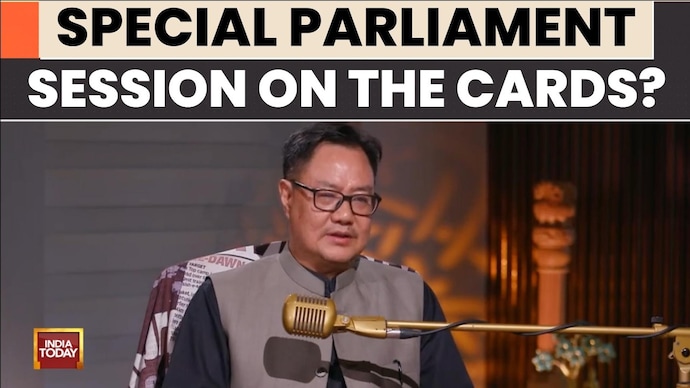
Special Parliament Session? Delimitation, Women’s Quota Trigger Fresh Political Buzz

Following an interview with the parliamentary affairs minister, speculation has arisen regarding the possibility of a special session of parliament as the monsoon session has not been officially prorogued. The leader of opposition in the upper house has written to the prime minister requesting an all-party meeting to allow opposition parties, state governments, and political stakeholders to examine the delimitation proposal before any legislative action is taken. The discussion highlights that a parliamentary session can be reconvened when not prorogued. Furthermore, details emerged regarding the implementation of women's reservation in parliament, known as the Nari Shakti Vandan Adhinayam. The government clarified that women's reservation is constitutionally tied to the delimitation process, which will be conducted based on the census available after 2026. Consequently, opposition leaders continue to seek clarity on the timeline for delimitation and the potential summoning of a parliamentary session.

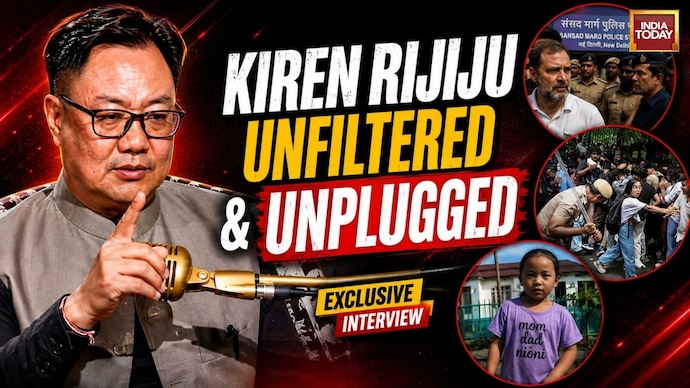
Kiren Rijiju Hits Back At Trolls Over River Swim, Questions Rahul Gandhi's Patriarchy Pitch

In an exclusive interview on India Today, Union Minister for Parliamentary Affairs and Minority Affairs Kiren Rijiju addressed key national political issues, parliamentary proceedings, and border security. Commenting on his viral video swimming in an Arunachal Pradesh river, Rijiju dismissed comparisons with Leader of Opposition Rahul Gandhi, stating he has swum in mountain waters since childhood. He responded to Rahul Gandhi's remarks on patriarchy, questioning Congress' stance on issues affecting Muslim women, including triple talaq and polygamy. Rijiju asserted that India is governed by the Constitution rather than religious texts and noted that Hinduism permits internal debate. Regarding the parliamentary monsoon session disruptions, he emphasized the need for constructive debate over repeated washouts. On national security, Rijiju detailed border infrastructure development in Arunachal Pradesh since 2014, addressing undemarcated frontier stretches, psychological naming tactics by neighboring nations, and force deployment along the border. He also commented on freedom of expression regarding Kangana Ranaut, government responses to Gen Z protests, and Prime Minister Narendra Modi's focus on governance over narrative creation.

Women Reservation Post Delimitation, Outreach To Opposition And Dynamics In Parliament

During a discussion on parliament operations and legislation, the Parliamentary Affairs Minister addressed questions regarding the implementation of the Nari Shakti Vandan Adhiniyam and women reservation. The minister stated that the reservation is tied to census data and delimitation conducted after 2026 as per the provisions of the 2023 law, precluding implementation on the current Lok Sabha strength of 543 seats. The minister also outlined the responsibility of reaching out to opposition leaders to ensure legislative coordination, citing informal interactions and discussions on fitness and political matters while maintaining political rivalry with opposition members.

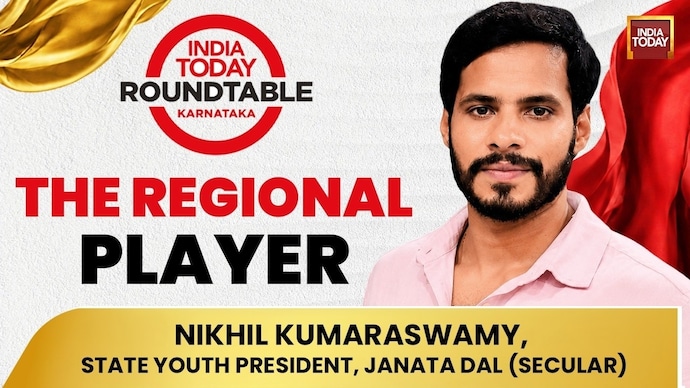
DK Shivakumar Like Real Estate CEO; Will Contest Ramanagara: Nikhil Kumaraswamy On Bidadi, Dynasty

Speaking at the India Today Roundtable, Janata Dal (Secular) Youth President Nikhil Kumaraswamy addressed key political developments in Karnataka and his party's stance. Criticizing Chief Minister D.K. Shivakumar, Kumaraswamy alleged that the Karnataka Congress government functions like a mafia and described Shivakumar as resembling the chief executive officer of a real estate firm. He raised concerns regarding land acquisition for the proposed artificial intelligence city in Bidadi, questioning why fertile agricultural land is being forcefully acquired despite ongoing farmer protests. On the NICE project issue, he questioned the government's delay in acting on High Court directives. Addressing allegations of dynastic politics within JDS, Kumaraswamy asserted that regional parties often operate under family leadership while highlighting opportunities provided to non-family workers by founder H.D. Deve Gowda. Confirming his political plans, he declared that he will contest the 2028 Karnataka Assembly elections from his home constituency of Ramanagara.

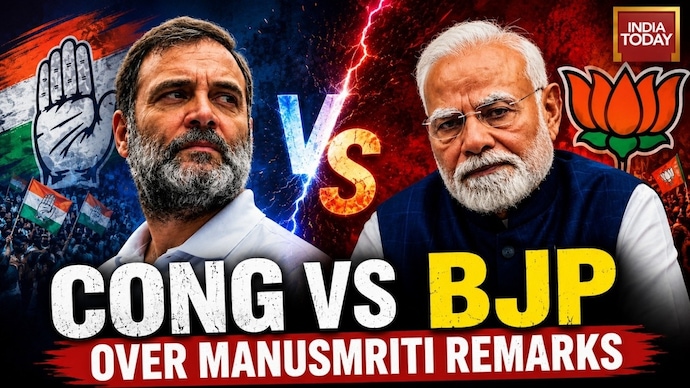
Rahul Gandhi's 'Smash Patriarchy' Pitch Triggers BJP-Congress Clash Over Women's Rights & Record

At the 'Chhatro Ki Goonj' event in Pune, Leader of Opposition Rahul Gandhi called on women to 'smash the patriarchy', describing them as the foundation and future of India while criticizing the Manusmriti, BJP, and RSS for promoting an anti-women mindset. The remarks sparked a political showdown, with the Bharatiya Janata Party urging Gandhi to support Prime Minister Narendra Modi's 33% women's reservation bill in Parliament. Uttar Pradesh Chief Minister Yogi Adityanath accused Rahul Gandhi of insulting India's traditions and heritage, advising him to read the Vedas to understand Manusmriti. The bulletin also highlights scrutiny over the Congress party's own record on women's political representation across state cabinets, alongside recent controversial political remarks, questioning whether the party's stance on women's empowerment will lead to concrete action.

Political Clash Over Women Empowerment, Manusmriti Remarks and Women Reservation Bill

The political confrontation over women empowerment has intensified between political parties following remarks citing traditional texts. Critics accused the opposition of promoting selective narratives while questioning its stance on the women reservation bill, known as the Nari Shakti Vandan Adhiniyam. Arguments were also raised regarding political representation, highlighting the number of women chief ministers and Union ministers in governance. Furthermore, unfulfilled electoral promises, such as the monthly financial assistance of fifteen hundred rupees for women, were cited as evidence of governance failure.

Political War Over Women's Rights, Manusmriti Remarks & Women's Reservation Bill

A political confrontation has erupted between the opposition and the ruling party over women's rights, ancient scriptures, and patriarchal mindsets. The dispute intensified following remarks citing ancient texts to criticize societal attitudes toward women and demanding an end to patriarchy. The ruling party launched a counterattack, questioning the opposition's stance on the women's reservation law and accusing them of opposing legislation aimed at granting thirty-three percent reservation to women in parliament. Leaders from the ruling party challenged the opposition to support the immediate implementation of the law to enhance female representation in governance. Furthermore, arguments were raised regarding women's safety, equality, and the need to dismantle discriminatory mindsets. In response, opposition representatives defended their record on women leadership while accusing the ruling party of creating internal rifts. The debate highlights ongoing political friction surrounding female empowerment, legislative representation, and societal reform.

Smriti Irani Challenges Rahul Gandhi Over Women's Quota Bill Amid BJP-Congress Nari Shakti Showdown

A political showdown over Nari Shakti has erupted between the BJP and the Congress following remarks by Rahul Gandhi at the Chhatro Ki Goonj event in Pune, where he accused the BJP of denying women empowerment. In response, BJP leader Smriti Irani challenged Rahul Gandhi and urged him to support the 33 percent women's reservation bill. Smriti Irani highlighted Prime Minister Narendra Modi's appeal to all political parties to cooperate in implementing women's leadership in Parliament. The BJP has questioned why opposition parties, including Congress, are not backing the bill despite speaking on women's empowerment, raising the prospect of the issue becoming a key bone of contention.

Anupriya Patel: 'Political Parties Are Reluctant To A Great Extent To Give Tickets To Women'

At the India Today Women's Summit 2026, Union Minister of State and Apna Dal (Soneylal) President Anupriya Patel addressed key socio-political issues, including female labor force participation, student concerns regarding paper leaks, and women's political representation in India. Highlighting that women hold 13.6 percent of Lok Sabha seats compared to the global average of 27.4 percent, Patel discussed structural barriers in politics, such as party reluctance to nominate female candidates without political backgrounds. She addressed male parliamentarians' anxieties regarding constituency seat loss under the Women's Reservation Bill and advocated for expanding total parliamentary seats to accommodate seat reservations and growing electorate sizes. Patel detailed government initiatives aimed at economic empowerment, including Jan Dhan, Lakhpati Didi, and Mudra loans, framing the strategy as a shift toward women-led development. Additionally, she outlined her party's internal 33 percent quota for women candidates, addressed the moral responsibility of governments to resolve student paper leak grievances, and shared insights on her personal political journey.

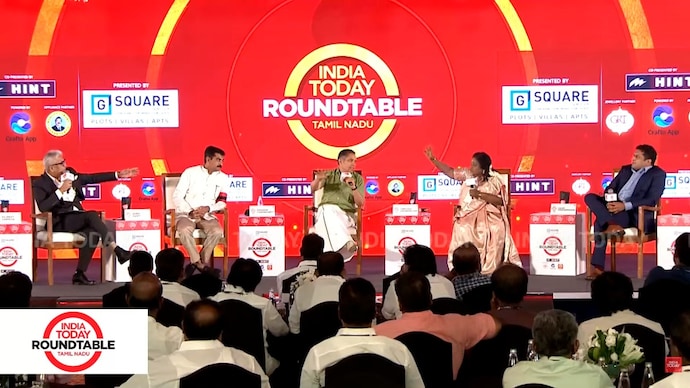
Setback for South: BJP, Opposition clash over delimitation at India Today Roundtable

At the India Today Roundtable in Chennai, the proposed delimitation of Lok Sabha seats triggered a sharp clash over the future of South India’s political influence, with Opposition leaders warning that a population-based formula would punish the state for successfully controlling population growth. The BJP countered, arguing that the South would not be disadvantaged. MDMK leader Durai Vaiko, Congress leader Praveen Chakravarthy and DMK representative Salem Dharanidharan questioned the fairness of linking representation solely to population, citing Tamil Nadu’s contribution to the national economy and its success in family planning. BJP leader Tamilisai Soundararajan, however, defended the Centre’s approach, saying the proposed expansion of Parliament would ensure that southern states retain their political weight while also enabling women’s reservation.