Wild witch hunt: Delhi HC junks plea for CBI probe in Yashwant Varma cash case
The petitioner termed the matter 'extraordinary', but the court questioned his locus and directed him to approach the Delhi Police and the competent magistrate.

Justice Yashwant Varma, born on January 6, 1969, is a judge of the Allahabad High Court, where he took the oath of office on April 5, 2025, after being transferred from the Delhi High Court. He attended Rewa University from where he graduated in law in the year 1992, and later admitted as an advocate on August 8 the same year. His practice leaned towards the civil side where he handled a kaleidoscopic range of constitutional law, industrial disputes, corporate law, taxation, and environmental law sociologically related to law.
In 2006, Justice Varma received a new appointment as Special Counsel to the Allahabad High Court, and continued to practice until he was appointed to the bench. He was appointed Chief Standing Counsel for the State of Uttar Pradesh from 2012 until August 2013, where he was actively engaged for the State in important legal issues. For the same reason, he was appointed a Senior Advocate by Allahabad High Court in August 2013, in appreciation for the advocate s activities and services.
He got the title of Additional Judge of the Allahabad High Court on October 13, 2014 and became a Permanent Judge on Febraury 1 2016. He served on the Delhi High Court from October 11, 2021, and returned to the Allahabad High Court in April 2025.
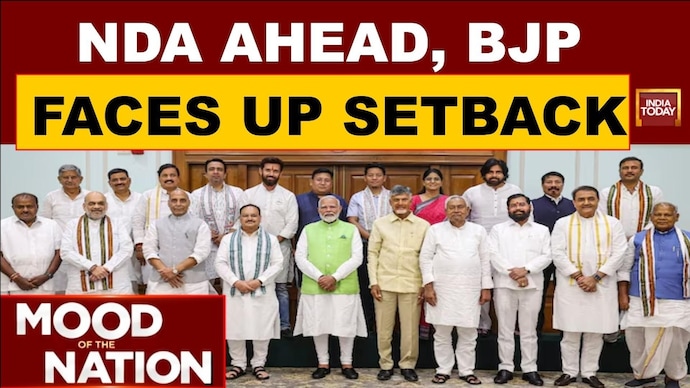
The latest India Today C-Voter Mood of the Nation (MOTN) poll projects the National Democratic Alliance (NDA) to secure 326 seats with a 45 percent vote share if Lok Sabha general elections were held today. Based on a survey of over one lakh respondents, the Bharatiya Janata Party (BJP) is projected to win 261 seats, placing it below the majority mark independently. The Congress rises to 106 seats, bringing the total projection for the INDIA alliance to 185 seats. In Uttar Pradesh, the INDIA alliance leads with 41 seats compared to 38 for the NDA, driven by voter concerns over youth unemployment, examination transparency, and University Grants Commission (UGC) policies. Conversely, the NDA shows gains in West Bengal. National leadership ratings indicate Prime Minister Narendra Modi holds a 58 percent approval rating, with political stability cited as a key strength while inflation and joblessness remain primary public concerns. Within the opposition, Rahul Gandhi leads preference ratings as panelists analyze regional dynamics across states.
In the latest Mood of the Nation (MOTN) poll discussion hosted by Rajdeep Sardesai on India Today, BJP spokesperson Sanju Varma, Congress leader Brajesh Kalappa, and C-Voter founder Yashwant Deshmukh debate the political numbers and shifting seat projections. Sanju Varma argues that the BJP's 39% standalone vote share arithmetically translates to 289 seats based on recent state election trajectories, asserting that the party efficiently converts vote share into winnable seats. Brajesh Kalappa counters that public perception is shifting against the government among youth aged 18 to 35 due to economic and political grievances. C-Voter's Yashwant Deshmukh highlights that removing BJP's gains in West Bengal reveals a broader decline across other states, stating, 'As per my experience, Rajdeep, this arguably is the biggest crisis time that the BJP is facing in the last 12 years of being in power.' Panelists evaluate whether seat drops signal a warning or temporary turbulence for the ruling party.
The latest India Today C-Voter Mood of the Nation (MOTN) poll projects the National Democratic Alliance (NDA) to secure 326 seats with a 45 percent vote share if Lok Sabha general elections were held today.
In this India Today video, anchor Marya Shakil looks at the three-week Parliament logjam that cost taxpayers over Rs 216 crore, with the government and Opposition locked in a bitter standoff. She also tracks the Justice Yashwant Varma cash case, as a parliamentary panel finds the charges against him proven.
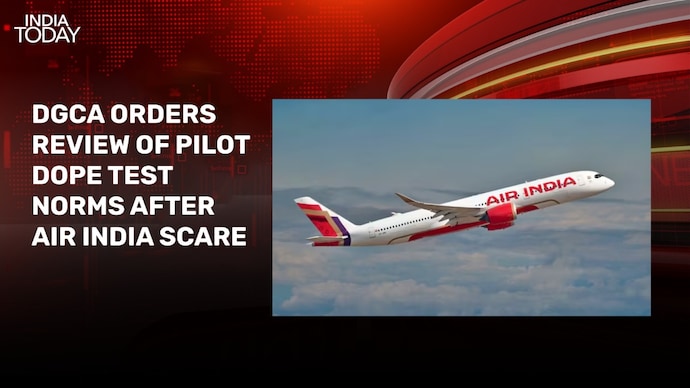
In this India Today programme video, aviation safety concerns, youth-led protests over education and civic issues, and the political impact of growing youth activism are discussed. The programme also highlights waterlogging at the newly inaugurated Noida International Airport after heavy rain, raising questions over its drainage infrastructure.
As the probe into the Ram Mandir donation scam intensifies, CVoter survey indicate that the scandal has impacted the credibility of the BJP and public faith in the temple trust.
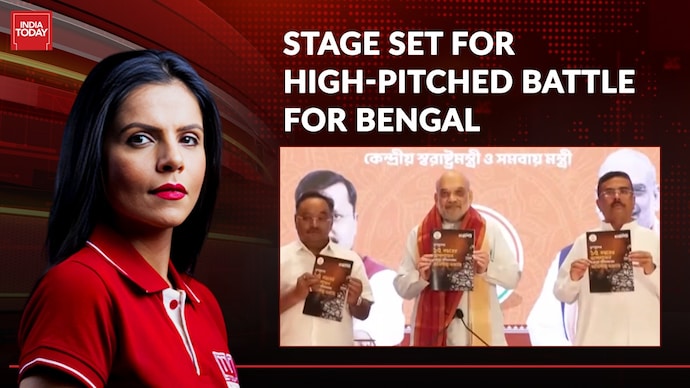
Union Home Minister Amit Shah released the BJP's 'Sankalp Patra' for the West Bengal elections, promising the Uniform Civil Code, the 7th Pay Commission, and a monthly cash transfer of Rs 3,000 for women.
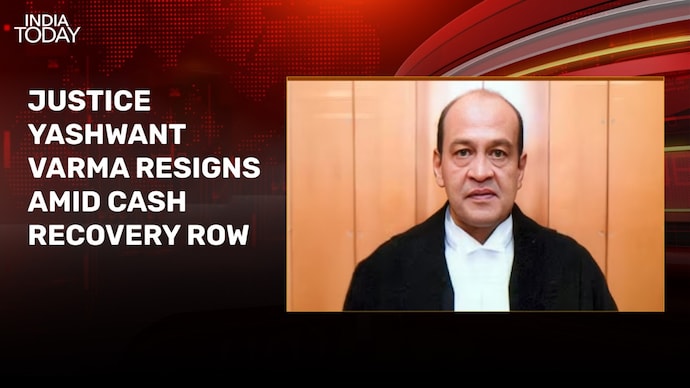
Justice Yashwant Varma of the Allahabad High Court has submitted his resignation to the President of India, citing 'deep anguish' in his official letter.
In this India Today exclusive, the focus is on the latest developments in the 'Judge Cash Case' involving Justice Yashwant Verma. Reporting on the impeachment proceedings under the Judges (Inquiry) Act, Srishti Ojha reveals that Justice Verma has filed a formal reply before the Parliamentary Committee. In his defence, Justice Verma stated, 'He was not the first responder' and questioned why he should face impeachment when officials failed to secure the site. The judge has claimed that no cash was actually recovered and passed the responsibility to the Delhi Police, fire officials, and CRPF for failing to follow standard procedures during the incident. Justice Verma argued that the authorities present at the site did not comply with their duties regarding suspicion of arson or fire. This report explores the legal stand taken by the judge as the inquiry continues in Parliament and the Supreme Court.
In an exclusive interview with India Today TV, former Chief Justice of India DY Chandrachud spoke on the ‘bail, not jail' principle, Justice Yashwant Varma cash row and other issues.
A three-member panel has been set up in the Lok Sabha to begin the impeachment process of a judge. This development is considered unprecedented and historic for India's judiciary. The Lok Sabha speaker announced the formation of this panel. The issue was brought forward by the opposition a few days ago. Parliamentarians have shown significant support for the impeachment, with over 145 members signing the notice in the Lok Sabha and overwhelming support in the Rajya Sabha. The committee has been asked to submit its report as soon as possible. The judge has denied all charges and is challenging the process in the Supreme Court. The process requires a majority vote in both the Lok Sabha and the Rajya Sabha. The impeachment motion could come into effect in the next Parliament session.
The Vice President of India is elected through an indirect election. According to Article 66 of the Constitution, the Vice President is elected by an electoral college made up of members from both Houses of Parliament, the Lok Sabha and the Rajya Sabha, including nominated members.
The Supreme Court has agreed to hear a plea from Justice Yashwant Varma challenging an internal committee's report related to a cash haul at his residence.
In this episode of News Today, the focus is on the unexpected resignation of Vice President Jagdeep Dhankhar, who cited health reasons for stepping down two years before his term's end.
This edition of India First covers the sudden resignation of Jagdeep Dhankhar as the Vice President of India and Chairman of the Rajya Sabha, citing health reasons.
A motion for the impeachment of Justice Yashwant Varma has been initiated, with 145 Members of Parliament signing the plea submitted to the Speaker. The move, supported by MPs from parties including Congress, TDP, JDU, JDS, and CPM, is in connection with a 'cash haul case' and a report that was before the Supreme Court.
In a significant development, Justice Yashwant Verma has approached the Supreme Court with a writ petition challenging the findings of a three-judge in-house inquiry panel against him in the 'Cash Hall case'. The petition seeks to quash the panel's report, which found strong inferential evidence, and also challenges the subsequent recommendation for his impeachment made by then Chief Justice of India, Sanjeev Khanna. Justice Verma contends that the inquiry violated the principles of natural justice, alleging he was denied a fair hearing and the opportunity to cross-examine witnesses. He states, "Inquiring committee erroneously shifted the burden of proof on him, requiring him to disprove a fact that the committee presumed fantasy to be true." The move is strategically timed ahead of the Parliament's monsoon session, where an impeachment motion was anticipated.
A Supreme Court probe has confirmed misconduct in the Judge Cash Hall case, recommending the removal of Justice Yashwant Varma. The enquiry committee found evidence of burnt cash at the Judge's official residence and rejected the conspiracy claim. The probe also revealed that the Judge's staff and family members had access to the site where cash was found burning. The committee's report is based on 55 testimonies, including that of the Judge's daughter.
The government is preparing to initiate impeachment proceedings against High Court Judge Justice Yashwant Varma following allegations of corruption. Parliamentary Affairs Minister Kiren Rijiju is reaching out to opposition parties for a joint motion.
The government is mulling to bring an impeachment motion against former Delhi High Court judge Justice Yashwant Varma.