
He stood out: Flight school recalls Indian pilot Captain Smit after flydubai attack

As Captain Smit Machchhar recovers from the flydubai cockpit attack, his New Zealand flight school has recalled him as a standout trainee. The recollection comes as investigators piece together the emergency that ended with passengers restraining the co-pilot and the aircraft landing in Saudi Arabia.
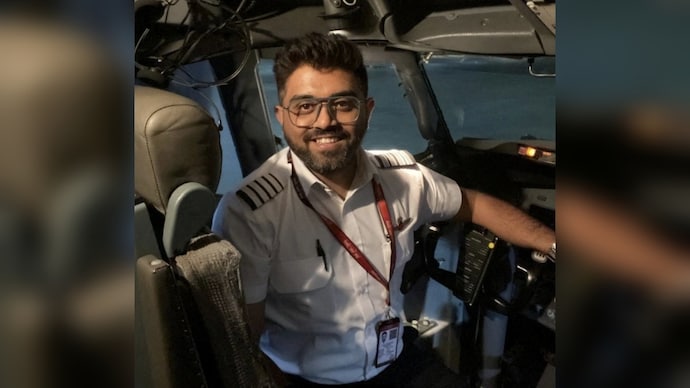


Captain Smit Machchhar, the Indian pilot who survived a stabbing inside the cockpit of a flydubai flight and helped avert a possible disaster, has now been remembered by the New Zealand flight school where he trained nearly two decades ago as a student who "stood out".
Machchhar was at the controls of flydubai flight FZ1073 from Dubai to Tel Aviv on Wednesday when his co-pilot attacked him inside the cockpit. Seriously injured and bleeding heavily, Machchhar managed to open the cockpit door, allowing passengers to rush in and overpower the attacker. The aircraft later made an emergency landing in Saudi Arabia.
As Machchhar recovers from his injuries, Philip Kean, chief executive of Mainland Air in Dunedin, New Zealand, has recalled the Indian pilot's time at the flight school. Kean said Machchhar trained there for 18 months from 2008 and was among the leading students in his batch.
"He was obviously a leading type student, out in front, did very well," Kean told 1News.
Machchhar later returned to India to continue his aviation career. According to Kean, he stayed in touch with Mainland Air over the years and also worked as a recruiter for the school in India.
'HE STOOD OUT AMONGST THEM'
Recalling Machchhar's training, Kean said there were many students at the school at the time, but the Indian pilot stood out.
"You see the photo, there's a lot of students here at the time, but he sort of stood out amongst them, and he did well," Kean said.
Kean said Machchhar successfully completed his training, passing both his examinations and flight tests before returning to India.
"Anybody who gets through the course is a good pilot," he said. "He passed all his exams, passed his flight tests, and then headed back to India after that."
The flight school chief said Machchhar's connection with Mainland Air continued even after he left New Zealand, with the pilot later helping recruit students for the school in India.
'WE'RE ALL VERY PROUD OF HIM'
Kean said the school was following Machchhar's recovery after the dramatic incident aboard the flydubai flight.
"I wrote to him very early morning this and wished him all the best from Mainland, but no, I let the poor man rest," he said.
Reflecting on how Machchhar survived the incident, Kean said the pilot appeared to have "good survival instincts."
He also described the aircraft's survival during its steep descent as "miraculous", saying the plane was not designed to withstand such a dive and yet did not completely break apart.
"No, we're just very proud of him here and wish him a speedy recovery," Kean said.
WHAT HAPPENED ABOARD THE FLYDUBAI FLIGHT?
The incident unfolded on flydubai flight FZ1073, which was travelling from Dubai to Tel Aviv with around 180 people on board.
Nearly two hours into the flight, the aircraft transmitted squawk code 7700, the standard international signal for a general emergency. Seconds later, it transmitted code 7500, indicating unlawful interference with an aircraft, including a possible hijacking.
Flight tracking data showed the Boeing 737 MAX 8 descended about 17,400 feet, from around 34,000 feet to 16,600 feet, in just over two minutes. The aircraft crossed into Jordanian airspace before making a U-turn towards Saudi Arabia, while Israel scrambled fighter jets amid fears of a hijacking.
Israeli officials told Reuters that the co-pilot, an Omani national, allegedly stabbed Machchhar and attempted to take control of the aircraft, possibly with the intention of crashing it.
As the struggle unfolded, passengers heard screams from the cockpit. Machchhar, who was seriously injured, managed to open the cockpit door. Passengers then entered, overpowered the co-pilot and helped secure the situation.
Among those who rushed to help was dentist Dr Shota Musaev, who treated the injured captain. Musaev told CNN that Machchhar had suffered severe cuts and lost a large amount of blood, with his blood pressure dropping sharply.
Two off-duty flydubai pilots who were travelling as passengers subsequently took control of the aircraft and carried out an emergency landing at Tabuk in northwestern Saudi Arabia.
Machchhar was taken to hospital and was reported to be in stable condition. The Indian Embassy in Riyadh said it was in contact with his family and Saudi authorities.
WHY MACHCHHAR OPENED THE COCKPIT DOOR
The cockpit door is designed to prevent unauthorised access from the passenger cabin and was reinforced following the September 11 attacks. It is built to resist forced entry and is normally controlled from inside the cockpit.
Aircraft such as the Boeing 737 also have an emergency access mechanism that allows flight crew to enter a code when pilots are in danger or incapacitated, while retaining safeguards against unauthorised entry.
In the flydubai incident, however, the threat was already inside the cockpit. Machchhar's decision to open the door from inside allowed passengers to enter and restrain the co-pilot.
The incident has since drawn international attention, with US President Donald Trump among those who praised Machchhar's actions and described him as a hero for opening the cockpit door despite his injuries.
The exact sequence of events inside the cockpit remains under investigation. Israeli officials have described the co-pilot's actions as an apparent attempt to hijack the aircraft and crash it.