
Pakistan eyes cheaper Iran oil, gas imports after US sanctions waiver
Pakistan's Minister for Petroleum, Ali Pervaiz Malik, said the government was examining the possibility after oil markets stabilised following the end of direct hostilities in the Gulf.

Pakistan is considering importing cheaper oil and gas from neighbouring Iran after the United States temporarily eased sanctions on Tehran, opening a limited window for crude exports under a 60-day waiver.
It comes as Islamabad looks to ease pressure on consumers after weeks of volatile energy prices triggered by the recent US-Iran conflict. Officials say any decision will remain in line with Pakistan's international commitments, while lower global oil prices could translate into further relief for consumers.
According to PTI, Pakistan's Minister for Petroleum, Ali Pervaiz Malik, said the government was examining the possibility after oil markets stabilised following the end of direct hostilities in the Gulf.
PAKISTAN MULLS IRAN ENERGY IMPORTS
Speaking at a press conference in Lahore, Malik said Pakistan was exploring the option of purchasing oil and gas from Iran at lower prices.
"We are considering the option of importing cheaper oil and gas from Iran," he said.
The minister stressed that any future imports would comply with Pakistan's international obligations and existing agreements.
The US recently granted Iran a temporary 60-day sanctions waiver, allowing it to export crude oil and petroleum products under specific conditions while negotiations between Washington and Tehran continue. The waiver can be extended or withdrawn depending on the progress of those talks.
Malik said the government had already passed on greater relief to consumers than the recent decline in international crude oil prices.
"If prices decline again in the international market, we will also reduce domestic prices accordingly," he said.
He also accused some groups of spreading misleading information about petroleum prices.
"Prime Minister Shehbaz Sharif has ensured that the benefit of lower international prices will be immediately passed on to the people," Malik added.
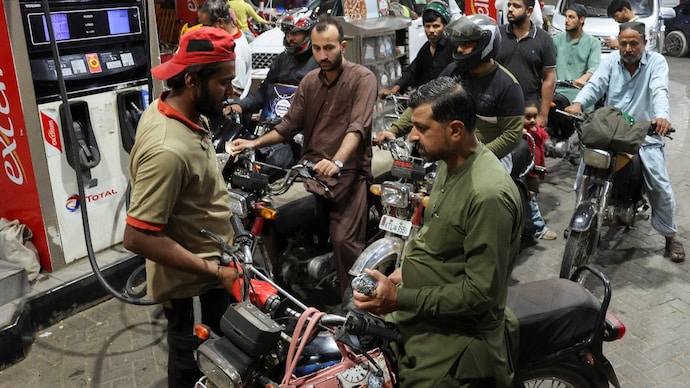
Fuel prices in Pakistan surged during the height of the US-Iran conflict, with petrol reaching PKR 414 (Rs 141) per litre. Since tensions eased and oil prices fell, petrol prices have dropped to around PKR 300 (Rs 102) per litre.
GAS SHORTAGE ADDS TO PRESSURE
The prospect of importing Iranian gas also comes as Pakistan continues to grapple with an energy shortage.
Economist Mahmood Rasool said many parts of the country are facing an acute shortage of natural gas. According to him, consumers in several areas, particularly in Punjab, are receiving gas supplies for only a few hours each day because of limited availability.
The shortage has increased pressure on the government to secure affordable and reliable energy supplies ahead of higher seasonal demand.
Iran, which shares a long border with Pakistan, has some of the world's largest natural gas reserves. However, US sanctions have long prevented Islamabad from pursuing large-scale energy imports from its western neighbour.
US WAIVER OPENS LIMITED WINDOW
The US decision does not amount to a permanent lifting of sanctions. Instead, it provides a temporary exemption allowing Iran to export crude oil and petroleum products under specific conditions for 60 days.
The waiver remains tied to ongoing US-Iran negotiations and could be renewed, modified or revoked depending on diplomatic progress.