Vietnamese crab exporter
Advertisement

BRICS New Delhi Declaration: Trade Tariffs, Anti-Terror Stance And West Ties

The BRICS summit concluded with the adoption of the New Delhi Declaration, focusing on economic cooperation, resilience, innovation, and sustainability while balancing the interests of an expanded membership. The declaration highlights concerns over unilateral tariff and non-tariff measures that distort international commerce and run contrary to multilateral trading rules. It further addresses counter-terrorism priorities, emphasising zero tolerance and the rejection of double standards following cross-border terror attacks. The framework aims to maintain developing nations' policy autonomy amid global geopolitical turbulence without positioning the bloc as an antagonistic entity against the West. In addition to multilateral consensus on international trade and security, the summit facilitated sideline engagements between regional powers, including bilateral discussions between Iranian and United Arab Emirates leadership aimed at addressing regional stability and the continuity of trade and energy corridors across strategic maritime routes.

Read More

VIDEOS FROM OTHER SECTIONS

LATEST VIDEOS

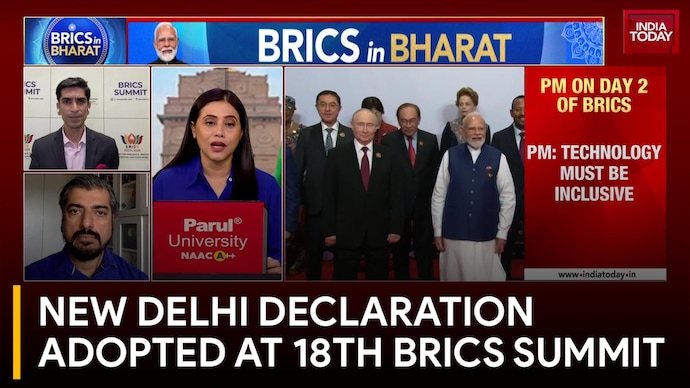
BRICS Summit: New Delhi Declaration Adopted, Global Architecture in Focus

On day two of the 18th BRICS Summit, the adoption of the New Delhi Declaration marked a significant diplomatic milestone for India. During the opening session titled 'Innovation, Cooperation, Resilience', Prime Minister Narendra Modi emphasised inclusivity, a humanity-first approach, and an alternative global architecture spanning space to undersea cooperation. Analysts and experts highlighted the 140-point declaration as a breakthrough reflecting an independent voice for BRICS amid evolving geopolitical realities and questioning of legacy institutions such as the United Nations Security Council, the World Bank, and the IMF. Discussions also noted key sideline engagements brokered in New Delhi, including interactions between Iran's President Masoud Pezeshkian and the Crown Prince of the UAE. The summit underscored India's sustained push for multipolarity, reform in global decision-making bodies, and enhanced collaboration among member nations and dialogue partners.
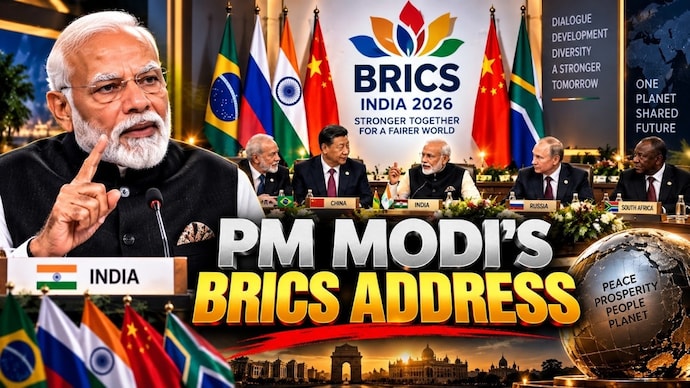
BRICS Focuses On Resilience, Startup Fund And Inclusive Global Growth

Key initiatives under the BRICS framework focus on four central pillars: resilience, innovation, cooperation, and sustainability. To tackle global disruptions, pandemics, and climate disasters, measures include the BRICS Integrated Early Warning System for infectious disease prevention, Early Warning Data Integration Guidelines for disaster management, and a Logistics Supply Chain Cooperation Framework. Innovation initiatives comprise the BRICS Incubator Network, a proposed BRICS Startup Innovation Fund, and a digital agriculture network integrating geospatial technology and artificial intelligence. Additional cooperation platforms include the BRICS MSME Cooperation Portal, the BRICS Urban Mobility Hub, and BRICS Connect to boost workforce participation and skills. Sustainable development measures include the BRICS Digital Centre of Excellence for smart grids, clean energy storage, and centres for agroecology and regenerative agriculture. These efforts aim to support inclusive global growth and make adaptable solutions accessible for the Global South.

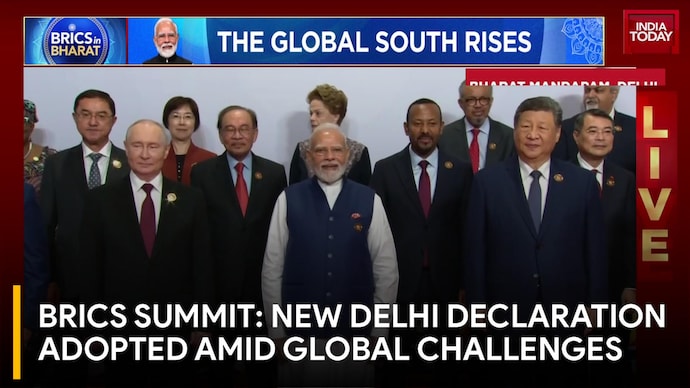
BRICS Adopts New Delhi Declaration, Backs Local Currency Trade & Calls for Peace in West Asia

The extended session of the BRICS Summit convened in New Delhi under the theme of resilience, innovation, cooperation, and sustainability for inclusive global growth. Member nations adopted a consensus joint declaration, reaching agreement on key paragraphs concerning the situation in West Asia despite regional tensions. The declaration prioritised dialogue and diplomacy while addressing the smooth flow of global trade, supply chains, and energy security. Deliberations highlighted concerns over unilateral tariff measures inconsistent with international trade norms and underscored the promotion of cross-border settlements in local currencies. Leaders and invited nations attended the plenary session following day one negotiations to reinforce multilateral cooperation and discuss evolving international payment mechanisms.

advertisement

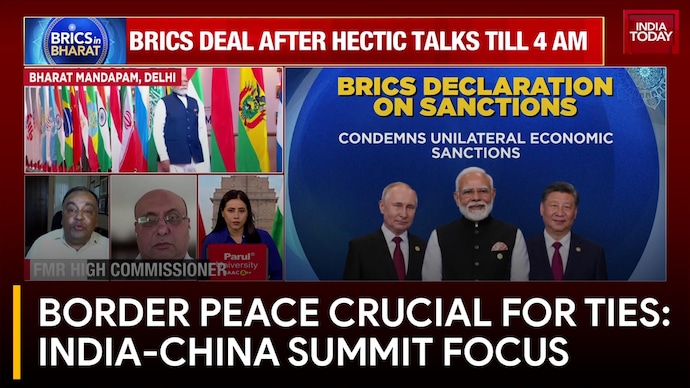
Iran Conflict Impact, Modi-Xi Bilateral & India-China LAC Border Dispute

A news broadcast discusses key geopolitical challenges facing India, focusing on the Gulf conflict and the India-China bilateral engagement. The panel highlights the escalating war involving Iran, the blockade of vital energy routes including the Strait of Hormuz and Bab el-Mandeb, and the resulting economic implications such as rising fuel prices despite India recording 7.8% GDP growth in the first quarter. The discussion also covers the high-level meeting between Prime Minister Narendra Modi and Chinese President Xi Jinping. Key issues between New Delhi and Beijing include the long-standing Line of Actual Control border dispute, troop deployments at super high altitudes, and a bilateral trade deficit exceeding 100 billion dollars. The analysis emphasises border peace, confidence-building measures, and India's rapid infrastructure construction across high-altitude frontier areas to maintain deterrence.