Vietnamese crab exporter
Advertisement

Iran-UAE Diplomatic Meeting, PM Modi's Global Outreach And West Asia Dynamics

Diplomatic discussions between UAE Crown Prince Sheikh Khaled bin Mohamed bin Zayed Al Nahyan and Iranian President Masoud Pezeshkian highlight regional dynamics in West Asia. In an interview, Iranian President Masoud Pezeshkian reflected on bilateral relations between India and Iran, noting that ties with Prime Minister Narendra Modi have been developing consistently based on historical and cultural foundations. The talks also focused on broader regional engagement, including upcoming deliberations involving GCC member nations and Iran in Oman. Strategic experts and diplomats analysed the multilateral context of the meeting, discussing sovereignty, the United Nations Charter, and diplomatic engagement. The panel assessed the scope of providing platforms for bilateral dialogue, the dynamics of regional conflict resolution, and the strategic positioning of partner nations amid evolving diplomatic alignments in the Middle East.

Read More

VIDEOS FROM OTHER SECTIONS

LATEST VIDEOS

India Achieves BRICS Consensus, New Delhi Declaration Adopted Amid Iran-UAE Thaw

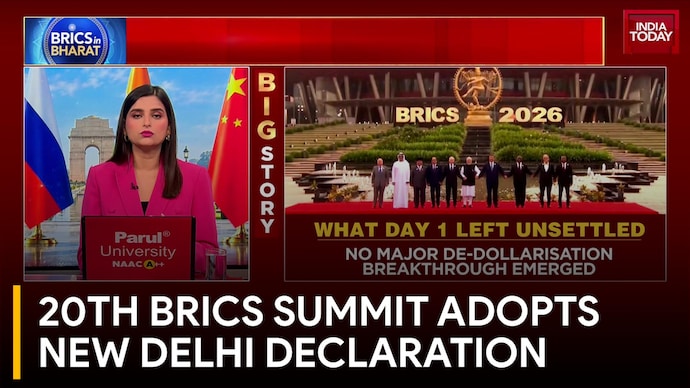
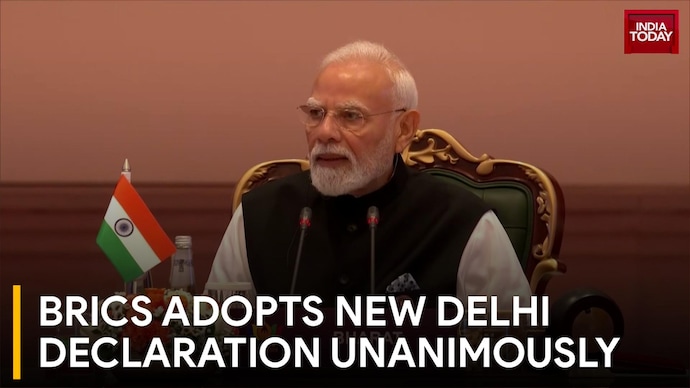
At the 2026 BRICS summit in New Delhi, India secured the unanimous adoption of the New Delhi Declaration following overnight negotiations to resolve geopolitical gridlock between Iran and the United Arab Emirates. The final declaration voiced serious concern over tensions in West Asia and urged restraint without naming specific nations. India also facilitated a sideline meeting between Iranian President Masoud Pezeshkian and Crown Prince of Abu Dhabi Sheikh Khaled bin Mohammed bin Zayed Al Nahyan. The declaration prioritised conflict prevention, peaceful dispute resolution, multilateralism, and adherence to international law. It raised concerns regarding unilateral tariff barriers violating World Trade Organization regulations, the risk of nuclear confrontation, and advocated for cross-border trade settlements in local BRICS currencies. The BRICS chair underscored the necessity of institutional reform in representation, responsiveness, and rule-making, calling for equal Global South participation in future technology regulation. Former diplomat Anil Trigunayat highlighted India's established capacity as a diplomatic bridge builder.
West Asia War, Trump Midterm Strategy, Iran Conflict: Key Takeaways

US President Donald Trump stated that the West Asia war will conclude very soon, indicating it may end right after the midterm elections in the United States. Speaking on the ongoing conflict, he claimed that Tehran is attempting to prolong the situation to complicate the upcoming electoral process. He also reiterated that Iran cannot be permitted to possess nuclear weapons and projected that global oil prices would decrease following the cessation of hostilities. Meanwhile, Iranian President Masoud Pezeshkian, in an exclusive conversation with India Today, blamed Washington for driving the conflict, accusing the United States of targeting civilian infrastructure inside Iran. Channel reporters highlighted that US domestic political concerns ahead of the midterms, damage to American naval assets, and escalating confrontations involving regional groups such as the Houthis are influencing the current strategic outlook and presidential rhetoric.

Border Peace, Boundary Settlement And Trade Ties Focus In India-China Bilateral Talks

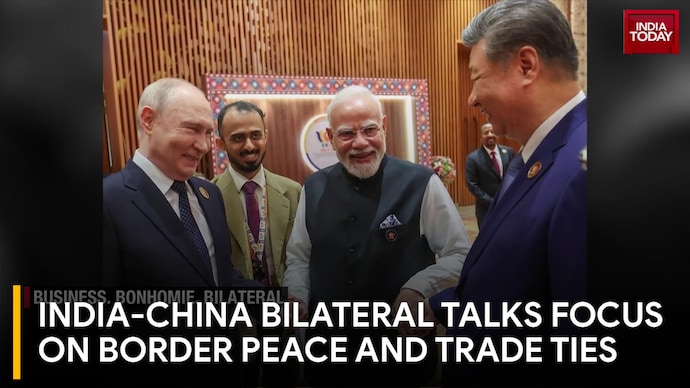
Delegation-level bilateral talks between India and China took place on the sidelines of the BRICS summit in New Delhi, marking the first such bilateral meeting held on Indian soil in seven years. The discussions focused on reviewing bilateral ties following the 2020 border clashes. Both sides welcomed steady progress in relations and called for a strategic long-term perspective, agreeing that differences should not become disputes. Key discussions centered on the three mutual principles of mutual respect, mutual sensitivity, and mutual interest. Both nations emphasized that maintaining peace and tranquility along border areas remains essential for stable ties, backing efforts towards a fair and mutually acceptable boundary settlement. The meeting also addressed structural trade imbalances, supply chain disruptions, and the need for predictable market access. In addition, the two nations agreed to expand people-to-people exchanges, enhance cultural and business cooperation, and widen common ground on regional, global, and multilateral issues.

advertisement

BRICS Adopts Delhi Declaration, Targets Unilateral Tariffs And Backs UN Security Council Reforms

The 20th BRICS Summit in New Delhi concluded with member nations unanimously adopting the New Delhi Declaration. The declaration highlights conflict prevention, peaceful resolution of international disputes, respect for international law, and strengthened multilateralism. On international trade, the grouping expressed concern over unilateral tariff barriers and non-tariff measures, urging adherence to World Trade Organization rules. The declaration condemned terrorism, opposing double standards in counter-terror efforts, and called on Israeli forces to withdraw from Lebanese territories while urging restraint in West Asia. Discussions also focused on easing cross-border payments using local currencies, though no single BRICS currency was announced. The summit supported expanded representation for developing nations in global governance and called for reforms in the United Nations Security Council and international financial institutions. Additionally, maritime security was addressed with proposals to enhance safety for seafarers and safeguard freedom of navigation.