Vietnamese crab exporter
Advertisement

Modi-Putin Meet at BRICS: Trade Target of $100 Billion by 2030 and Tirukkural Gift

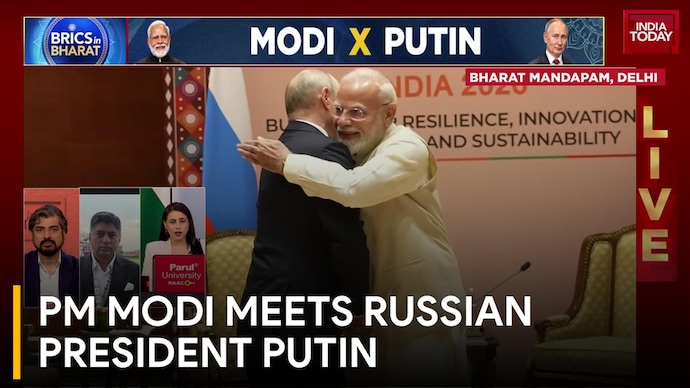
Prime Minister Narendra Modi met Russian President Vladimir Putin on the sidelines of the BRICS Summit, highlighting their strong personal equation and strategic bilateral relationship. Discussions between both sides focus on multiple agenda items, including taking India-Russia trade to 100 billion dollars by 2030, alongside ongoing conversations regarding oil payments and defence procurements. During the bilateral engagement, Prime Minister Modi presented President Putin with a copy of the ancient Tamil text Tirukkural composed by Tiruvalluvar. The gift carries historic literary connections, as Russian author Leo Tolstoy was deeply inspired by the translated Tirukkural and its core philosophy of non-violence and ahimsa, which he subsequently recommended to Mahatma Gandhi. The exchange carries symbolic significance amid global conflicts, reflecting India's consistent push for diplomacy, negotiation, and peaceful resolution of disputes.

Read More

VIDEOS FROM OTHER SECTIONS

LATEST VIDEOS

India-Russia Ties, PM Modi-Putin Bilateral Talks And Thirukkural Gift In Focus

Prime Minister Narendra Modi held a bilateral meeting with Russian President Vladimir Putin, accompanied by a high-level Indian delegation including External Affairs Minister Dr S Jaishankar, Foreign Secretary Vikram Misri, Ajit Doval, and senior Prime Minister's Office officials. The discussions highlight the full spectrum of India-Russia strategic relations across defence, economy, energy, and national security, building on longstanding cooperation such as the BrahMos missile and nuclear submarine projects. Business-to-business cooperation in infrastructure areas like tunnel boring machines and steel usage was noted as critical to economic expansion. Prime Minister Modi also presented President Putin with a Russian translation of the ancient Tamil classic Thirukkural by saint-poet Thiruvalluvar, published under the Central Institute of Classical Tamil translation series.
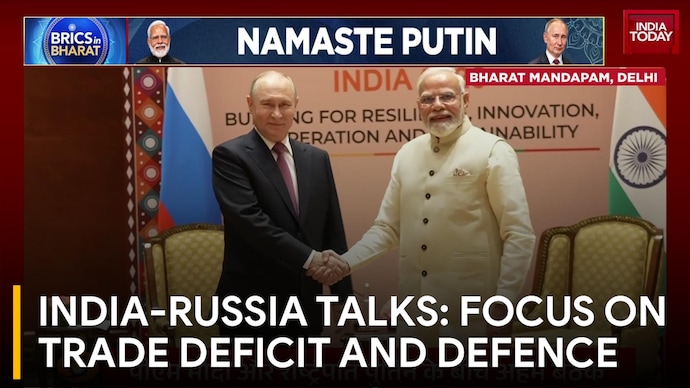
PM Modi Meets Vladimir Putin for Bilateral Talks on Trade Deficit, Energy and Defence

Prime Minister Narendra Modi and Russian President Vladimir Putin met for a bilateral meeting alongside key delegates, including External Affairs Minister Dr S Jaishankar, National Security Advisor Ajit Doval, and Foreign Secretary Vikram Misri. The bilateral discussions focus on advancing strategic ties, reaching a hundred billion dollars in bilateral trade, and addressing the trade deficit between India and Russia. Key agenda items for the leaders also include defence and energy cooperation, building on their long-standing strategic partnership.

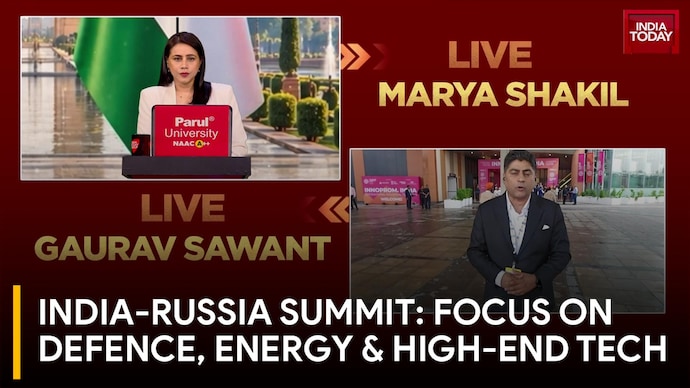
India-Russia Ties in Focus as Vladimir Putin Arrives in New Delhi for Bilateral Talks

A report outlines the strategic agenda of Russian President Vladimir Putin's visit to India for bilateral discussions and forum talks. The engagement highlights deep diplomatic ties, growing energy trade, and defense cooperation, including discussions on fighter jet engine technology, S-400 systems, and indigenous defense production. The discussion also reflects on India's economic trajectory and self-reliance in science and technology.

advertisement

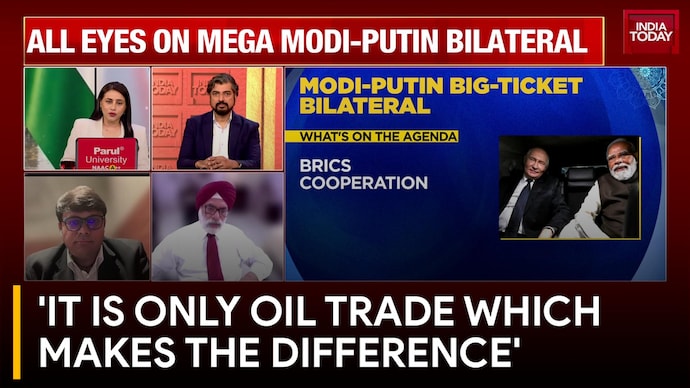
India-Russia Relationship and BRICS Summit: Gurjit Singh, Sandeep Unnithan, Deepanshu Mohan

Ahead of the high-stakes bilateral meeting between India and Russia at Bharat Mandapam, a panel of experts analysed key diplomatic, economic, and strategic dimensions. Former Ambassador to Germany Gurjit Singh highlighted the dynamics of energy dependency, remarking that 'it is only oil trade which makes the difference' while urging diplomatic engagement on Iranian oil disruptions. Sandeep Unnithan evaluated decades of bilateral defence collaboration, pointing to joint hardware acquisitions, nuclear-powered attack submarines, and the economic fallout of crude oil crossing $100 a barrel amid US pressure. Professor Deepanshu Mohan focused on the BRICS framework, the New Development Bank's role in local currency bond issuance, and the critical importance of digital commerce, MSMEs, and alternative supply chains to uphold India's strategic autonomy.