Vietnamese crab exporter
Advertisement

Netanyahu UNGA Address, Mamdani Criticism, Security Concerns of Jews in New York

Israeli Prime Minister Benjamin Netanyahu addressed the United Nations General Assembly in New York, directing sharp criticism at New York City Mayor Zohran Mamdani. Netanyahu stated that Mamdani attempted to prevent him from attending the summit and silence him, asserting that the truth cannot be silenced. He claimed that many Jewish residents no longer feel safe in New York City since Mamdani became mayor. Netanyahu accused the mayor of praising individuals convicted of supporting Hamas, affiliating with controversial figures, hosting a Palestinian journalist who filmed Hamas actions, and repeatedly levelling false genocide allegations against Israel. News analysts noted that Netanyahu's address at the UNGA forum carried domestic political significance ahead of forthcoming elections in Israel, highlighting regional tensions across West Asia.

Read More

VIDEOS FROM OTHER SECTIONS

LATEST VIDEOS

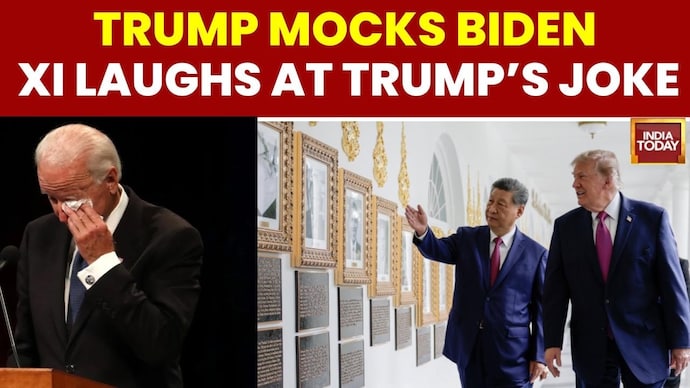
Trump Mocks Biden During White House Walk With Xi Jinping, Chinese President Seen Laughing

Donald Trump and Chinese President Xi Jinping shared a lighthearted moment during a walk through a White House presidential display. Trump mocked former US President Joe Biden with an autopen joke while pointing at presidential portraits. Trump displayed his own photographs with Biden positioned in between, referring to the former president as autopen. The interaction drew notable laughter from President Xi, presenting unusual optics during a high-profile diplomatic visit.
US-China Bilateral: Trump And Xi Jinping Meet In Washington Amid Calls For Co-operation

United States President Donald Trump and Chinese President Xi Jinping held a crucial 1.5-hour bilateral meeting in Washington on September 24. Addressing the gathering, President Trump referenced historical co-operation during World War II, stating that both nations can achieve much by focusing on common interests to forge a better future. President Xi expressed gratitude for the hospitality shown to him and his wife Madame Peng, calling for both sides to move forward together and write a new chapter in friendly ties. The meeting took place against a backdrop of continuing issues between the two nations, including differences over Taiwan, artificial intelligence, sanctions, and global conflicts. While the leadership projected positive diplomatic optics, no joint press conference was held, and no joint statements or big-ticket policy announcements were released immediately following the discussions. Protests and clashes involving media personnel were also observed outside the venue as experts and lawmakers continue to watch for concrete diplomatic outcomes from the visit.

Trump And Xi Jinping Hold Bilateral Talks At White House On Trade, Wars

US President Donald Trump hosted Chinese President Xi Jinping at the White House for a bilateral meeting in the Oval Office during a two-day state visit. The meeting commenced following a ceremonial military review held in the Rose Garden. Discussions between the two leaders covered a wide range of critical topics, including bilateral trade, the economy, supply chains, rare earth elements, artificial intelligence competition, and energy security. Regional and international security concerns were also on the agenda, specifically Taiwan, the Indo-Pacific, and ongoing conflicts involving Russia, Ukraine, and Iran. Following the one-and-a-half-hour discussion, President Trump gave President Xi a brief tour of the newly constructed helipad and ballroom before seeing him off. While no joint press conference took place, separate readouts and statements are expected from Washington and Beijing detailing the discussions, ahead of an official state dinner scheduled for the evening.

advertisement

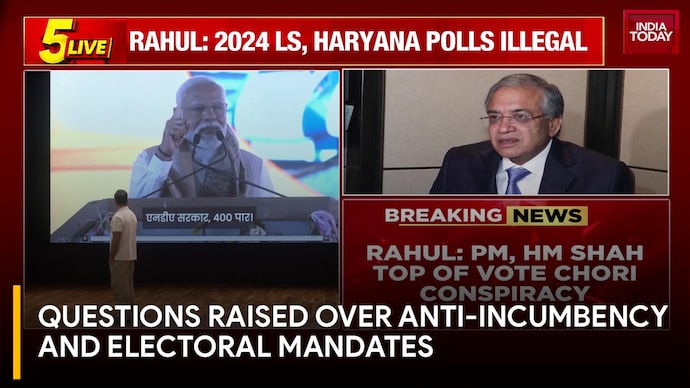
Opposition Leader Questions Anti-Incumbency Trends, Poll Fairness And Election Mandates

A political leader addressed a press briefing raising questions over recurring electoral victories, the phenomenon of anti-incumbency, and the foundational integrity of the voting process in India. Highlighting historical precedents of political shifts witnessed by past prime ministers and various regional governments across states like Tamil Nadu, Uttar Pradesh, and Haryana, the speaker pointed out the unusual absence of anti-incumbency for the ruling dispensation across multiple state and national elections. The address focused on the critical role of voting as the cornerstone of the Constitution, state institutions, and parliamentary legislation. The speaker further claimed that undermining the sanctity of votes compromises the legitimacy of statutory laws, the judiciary, bureaucracy, and public institutions, asserting that electoral manipulation has systematically disrupted established constitutional checks and balances.