Maruti Suzuki Brezza facelift review, first drive: Can turbo boost its appeal?
The Brezza has always been among the easiest sub-4m compact SUVs to recommend. Now armed with turbocharged performance, has Maruti Suzuki finally turned good enough into genuinely desirable?
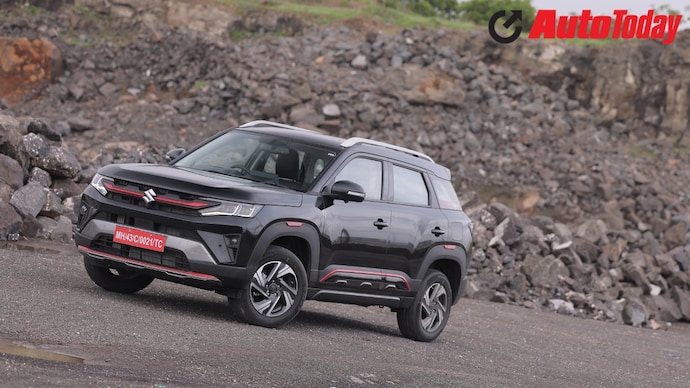
The first half of 2026 has painted an interesting picture of India’s passenger vehicle market. Maruti Suzuki occupies nine places in the top 15 best-selling cars, reaffirming its dominance across segments. However, one statistic stands out. The Tata Nexon comfortably sits in third place, while the Brezza, once among the undisputed heavyweights of this segment, finds itself down in 11th. That’s hardly a poor showing, but in a segment where fortunes change as quickly as feature lists, it suggests the Brezza was beginning to lose some momentum. It wasn’t because the Brezza had suddenly become a bad car. Quite the opposite, in fact. Since the second-generation model arrived in 2022, it has remained one of the most sensible compact SUVs on sale. It looked mature, rode well, offered dependable mechanicals and backed everything up with Maruti Suzuki’s vast sales and service network. It was the kind of SUV you could recommend to almost anyone without a second thought.
But there was one caveat. The Brezza never really stirred the soul. Rivals like the Nexon, XUV 3XO and Kia Sonet gradually began offering more exciting engines, richer cabins and a stronger sense of occasion behind the wheel. The Brezza continued to excel with its rational strengths, but emotion was never really part of the equation. This facelift is Maruti Suzuki’s attempt to change that. The cosmetic updates are welcome, the cabin gets a healthy dose of new technology and safety takes another step forward. The headline act, although, is undoubtedly the arrival of the 1.0-litre Boosterjet turbo-petrol engine paired with a six-speed manual gearbox. It isn’t just another engine option. It fundamentally changes the Brezza’s personality.
What’s new in this facelift?
Maruti Suzuki has wisely resisted the temptation to redesign the Brezza from scratch. The proportions remain unchanged, and that’s no bad thing because the SUV still looks handsome four years after its debut. Instead, the facelift focuses on refining what was already a clean design. The revised smoked chrome grille lends the front end a sharper appearance, while the redesigned bumper and chunkier skid plate add more visual presence.
Fresh alloy wheels with a geometric pattern and updated side cladding inject some freshness without making the Brezza look overstyled.
Around the back, the changes are subtle, but together they give the SUV a more contemporary stance.
There are ‘Turbo Boosterjet’ badges on the rear three-quarter glasses and at the back as well. The cabin receives more meaningful upgrades.
A larger 10.1-inch SmartPlay Pro X infotainment system finally brings the Brezza in line with rivals, offering wireless Android Auto and Apple CarPlay, built-in connectivity and over-the-air updates.
The new brown-and-black cabin theme also feels richer than before, while the metallic accents do a good job of breaking up what was previously a rather plain dashboard.
There are thoughtful additions too. Ventilated front seats remain a welcome inclusion in our climate; the 64-colour ambient lighting adds some theatre during night drives, and the cooled wireless charger is genuinely useful rather than simply ticking a box on the features list. Moreover, it’s got the AC controls from the Victoris. That said, I couldn’t help feeling Maruti Suzuki missed an opportunity here.
At this price point, powered adjustment for the front seats would have elevated the premium experience further, especially when several rivals are pushing harder on perceived luxury. Another area where I’d have liked to see an update is the steering wheel. The current unit is perfectly functional, but the newer design seen on the Victoris simply looks more modern and would have lifted the cabin’s visual appeal without requiring a complete redesign.
Safety, meanwhile, has taken a significant leap. A five-star Bharat NCAP rating gives buyers added confidence, while features such as Blind Spot Warning, Rear Cross Traffic Alert, TPMS, Exit Support Warning and a 360-degree camera make every day driving that little bit easier. Perhaps the smartest change, however, is hidden beneath the floor. The factory-fitted CNG variant now gets an underbody-mounted tank, freeing up the boot entirely. It’s the sort of engineering solution owners will appreciate every single day, making the CNG Brezza far more practical than before.
Does it feel any different to drive?
Let’s address the biggest talking point straight away because this is where the facelift genuinely separates itself from its predecessor. The new 1.0-litre Boosterjet turbo-petrol develops 110.2bhp and 170Nm of torque. Those numbers don’t tell the whole story. What transforms the Brezza is how accessible that torque feels. Peak power arrives from just 2,000rpm and stays around until 3,500rpm, giving the SUV a much stronger mid-range than the naturally aspirated 1.5-litre ever could.
In everyday driving, the difference is immediately apparent. The turbo takes a brief moment to spool, but once it does, the Brezza surges forward with an enthusiasm that simply didn’t exist before. Overtaking slower traffic requires less planning, climbing gradients feels effortless, and highway cruising becomes considerably more relaxed.
The six-speed manual deserves equal praise. Shift quality remains light and positive, exactly what you’d expect from a Maruti Suzuki gearbox, while the clutch is progressive enough to make bumper-to-bumper traffic far less stressful than many turbocharged rivals.
Its ratios are generally well judged too. At 80kmph in sixth gear, the engine is turning over at roughly 2,000rpm, placing it right in the heart of its torque band. That’s ideal because a simple squeeze of the throttle is often enough to dispatch slower traffic without needing an immediate downshift. Things change slightly as speeds rise. At 100kmph, the engine is spinning at around 2,500rpm, while an indicated 120kmph sees the tachometer hovering close to 3,000rpm. Personally, I would have preferred a taller sixth gear. It would have reduced engine speed during long highway journeys and improved overall refinement, particularly for buyers who regularly cover serious distances.
Speaking of refinement, the engine itself is impressively well insulated. Three-cylinder turbo-petrol engines can sometimes sound coarse under acceleration, but the Boosterjet avoids that trap remarkably well. There’s a pleasant growl when worked hard, yet it settles into the background once cruising. Where the Brezza doesn’t quite match the segment’s best is overall cabin insulation. At highway speeds, road noise, tyre roar and some outside sounds find their way into the cabin more than I’d like. The engine remains quiet, but the surrounding environment isn’t filtered quite as effectively, preventing the Brezza from feeling as hushed as it otherwise could have.
Ride quality, on the other hand, continues to be among the Brezza’s strongest attributes. Broken city roads, expansion joints and potholes are dispatched with impressive composure. The suspension absorbs sharp impacts without crashing through them, while maintaining enough body control to keep passengers comfortable on faster roads. It’s a setup that feels thoroughly Indian in its tuning, prioritising comfort without becoming excessively soft. The chassis has always been fundamentally capable, and the extra performance finally allows it to show its strengths. Turn into a corner, and the Brezza responds predictably, with tidy body control and reassuring balance. It isn’t trying to be a hot hatch on stilts, nor should it. Instead, it feels planted, progressive and confidence-inspiring.
The steering itself is light, accurate and perfectly suited to urban driving. It could certainly communicate more through your fingertips, but my bigger gripe is aesthetic rather than dynamic. The newer steering wheel from the Victoris would have added a welcome touch of freshness to an otherwise significantly improved cabin. Most importantly, the Boosterjet never feels like an engine squeezed into a chassis that can’t cope. The Brezza finally has the performance to match the competence its suspension and platform have always possessed. It’s not dramatically quicker than everything else in the segment, but it is undeniably more engaging than the Brezza has ever been.
Verdict
Priced from Rs 7.39 lakh (introductory, ex-showroom), the Brezza facelift feels like one of the most meaningful mid-cycle updates we’ve seen in recent years. The design is cleaner, the cabin is better equipped, safety has moved up another notch and practical touches like the underbody-mounted CNG tank show genuine thought. Most importantly, the turbocharged engine and six-speed manual inject the excitement the Brezza had always been missing. It isn’t flawless, but it is undoubtedly the most complete Brezza to date. And when Maruti Suzuki strengthens an already proven formula, rivals usually have plenty to worry about, and that is the case with this latest iteration.
Subscribe to Auto Today Magazine
The first half of 2026 has painted an interesting picture of India’s passenger vehicle market. Maruti Suzuki occupies nine places in the top 15 best-selling cars, reaffirming its dominance across segments. However, one statistic stands out. The Tata Nexon comfortably sits in third place, while the Brezza, once among the undisputed heavyweights of this segment, finds itself down in 11th. That’s hardly a poor showing, but in a segment where fortunes change as quickly as feature lists, it suggests the Brezza was beginning to lose some momentum. It wasn’t because the Brezza had suddenly become a bad car. Quite the opposite, in fact. Since the second-generation model arrived in 2022, it has remained one of the most sensible compact SUVs on sale. It looked mature, rode well, offered dependable mechanicals and backed everything up with Maruti Suzuki’s vast sales and service network. It was the kind of SUV you could recommend to almost anyone without a second thought.
But there was one caveat. The Brezza never really stirred the soul. Rivals like the Nexon, XUV 3XO and Kia Sonet gradually began offering more exciting engines, richer cabins and a stronger sense of occasion behind the wheel. The Brezza continued to excel with its rational strengths, but emotion was never really part of the equation. This facelift is Maruti Suzuki’s attempt to change that. The cosmetic updates are welcome, the cabin gets a healthy dose of new technology and safety takes another step forward. The headline act, although, is undoubtedly the arrival of the 1.0-litre Boosterjet turbo-petrol engine paired with a six-speed manual gearbox. It isn’t just another engine option. It fundamentally changes the Brezza’s personality.
What’s new in this facelift?
Maruti Suzuki has wisely resisted the temptation to redesign the Brezza from scratch. The proportions remain unchanged, and that’s no bad thing because the SUV still looks handsome four years after its debut. Instead, the facelift focuses on refining what was already a clean design. The revised smoked chrome grille lends the front end a sharper appearance, while the redesigned bumper and chunkier skid plate add more visual presence.
Fresh alloy wheels with a geometric pattern and updated side cladding inject some freshness without making the Brezza look overstyled.
Around the back, the changes are subtle, but together they give the SUV a more contemporary stance.
There are ‘Turbo Boosterjet’ badges on the rear three-quarter glasses and at the back as well. The cabin receives more meaningful upgrades.
A larger 10.1-inch SmartPlay Pro X infotainment system finally brings the Brezza in line with rivals, offering wireless Android Auto and Apple CarPlay, built-in connectivity and over-the-air updates.
The new brown-and-black cabin theme also feels richer than before, while the metallic accents do a good job of breaking up what was previously a rather plain dashboard.
There are thoughtful additions too. Ventilated front seats remain a welcome inclusion in our climate; the 64-colour ambient lighting adds some theatre during night drives, and the cooled wireless charger is genuinely useful rather than simply ticking a box on the features list. Moreover, it’s got the AC controls from the Victoris. That said, I couldn’t help feeling Maruti Suzuki missed an opportunity here.
At this price point, powered adjustment for the front seats would have elevated the premium experience further, especially when several rivals are pushing harder on perceived luxury. Another area where I’d have liked to see an update is the steering wheel. The current unit is perfectly functional, but the newer design seen on the Victoris simply looks more modern and would have lifted the cabin’s visual appeal without requiring a complete redesign.
Safety, meanwhile, has taken a significant leap. A five-star Bharat NCAP rating gives buyers added confidence, while features such as Blind Spot Warning, Rear Cross Traffic Alert, TPMS, Exit Support Warning and a 360-degree camera make every day driving that little bit easier. Perhaps the smartest change, however, is hidden beneath the floor. The factory-fitted CNG variant now gets an underbody-mounted tank, freeing up the boot entirely. It’s the sort of engineering solution owners will appreciate every single day, making the CNG Brezza far more practical than before.
Does it feel any different to drive?
Let’s address the biggest talking point straight away because this is where the facelift genuinely separates itself from its predecessor. The new 1.0-litre Boosterjet turbo-petrol develops 110.2bhp and 170Nm of torque. Those numbers don’t tell the whole story. What transforms the Brezza is how accessible that torque feels. Peak power arrives from just 2,000rpm and stays around until 3,500rpm, giving the SUV a much stronger mid-range than the naturally aspirated 1.5-litre ever could.
In everyday driving, the difference is immediately apparent. The turbo takes a brief moment to spool, but once it does, the Brezza surges forward with an enthusiasm that simply didn’t exist before. Overtaking slower traffic requires less planning, climbing gradients feels effortless, and highway cruising becomes considerably more relaxed.
The six-speed manual deserves equal praise. Shift quality remains light and positive, exactly what you’d expect from a Maruti Suzuki gearbox, while the clutch is progressive enough to make bumper-to-bumper traffic far less stressful than many turbocharged rivals.
Its ratios are generally well judged too. At 80kmph in sixth gear, the engine is turning over at roughly 2,000rpm, placing it right in the heart of its torque band. That’s ideal because a simple squeeze of the throttle is often enough to dispatch slower traffic without needing an immediate downshift. Things change slightly as speeds rise. At 100kmph, the engine is spinning at around 2,500rpm, while an indicated 120kmph sees the tachometer hovering close to 3,000rpm. Personally, I would have preferred a taller sixth gear. It would have reduced engine speed during long highway journeys and improved overall refinement, particularly for buyers who regularly cover serious distances.
Speaking of refinement, the engine itself is impressively well insulated. Three-cylinder turbo-petrol engines can sometimes sound coarse under acceleration, but the Boosterjet avoids that trap remarkably well. There’s a pleasant growl when worked hard, yet it settles into the background once cruising. Where the Brezza doesn’t quite match the segment’s best is overall cabin insulation. At highway speeds, road noise, tyre roar and some outside sounds find their way into the cabin more than I’d like. The engine remains quiet, but the surrounding environment isn’t filtered quite as effectively, preventing the Brezza from feeling as hushed as it otherwise could have.
Ride quality, on the other hand, continues to be among the Brezza’s strongest attributes. Broken city roads, expansion joints and potholes are dispatched with impressive composure. The suspension absorbs sharp impacts without crashing through them, while maintaining enough body control to keep passengers comfortable on faster roads. It’s a setup that feels thoroughly Indian in its tuning, prioritising comfort without becoming excessively soft. The chassis has always been fundamentally capable, and the extra performance finally allows it to show its strengths. Turn into a corner, and the Brezza responds predictably, with tidy body control and reassuring balance. It isn’t trying to be a hot hatch on stilts, nor should it. Instead, it feels planted, progressive and confidence-inspiring.
The steering itself is light, accurate and perfectly suited to urban driving. It could certainly communicate more through your fingertips, but my bigger gripe is aesthetic rather than dynamic. The newer steering wheel from the Victoris would have added a welcome touch of freshness to an otherwise significantly improved cabin. Most importantly, the Boosterjet never feels like an engine squeezed into a chassis that can’t cope. The Brezza finally has the performance to match the competence its suspension and platform have always possessed. It’s not dramatically quicker than everything else in the segment, but it is undeniably more engaging than the Brezza has ever been.
Verdict
Priced from Rs 7.39 lakh (introductory, ex-showroom), the Brezza facelift feels like one of the most meaningful mid-cycle updates we’ve seen in recent years. The design is cleaner, the cabin is better equipped, safety has moved up another notch and practical touches like the underbody-mounted CNG tank show genuine thought. Most importantly, the turbocharged engine and six-speed manual inject the excitement the Brezza had always been missing. It isn’t flawless, but it is undoubtedly the most complete Brezza to date. And when Maruti Suzuki strengthens an already proven formula, rivals usually have plenty to worry about, and that is the case with this latest iteration.
Subscribe to Auto Today Magazine
The first half of 2026 has painted an interesting picture of India’s passenger vehicle market. Maruti Suzuki occupies nine places in the top 15 best-selling cars, reaffirming its dominance across segments. However, one statistic stands out. The Tata Nexon comfortably sits in third place, while the Brezza, once among the undisputed heavyweights of this segment, finds itself down in 11th. That’s hardly a poor showing, but in a segment where fortunes change as quickly as feature lists, it suggests the Brezza was beginning to lose some momentum. It wasn’t because the Brezza had suddenly become a bad car. Quite the opposite, in fact. Since the second-generation model arrived in 2022, it has remained one of the most sensible compact SUVs on sale. It looked mature, rode well, offered dependable mechanicals and backed everything up with Maruti Suzuki’s vast sales and service network. It was the kind of SUV you could recommend to almost anyone without a second thought.
But there was one caveat. The Brezza never really stirred the soul. Rivals like the Nexon, XUV 3XO and Kia Sonet gradually began offering more exciting engines, richer cabins and a stronger sense of occasion behind the wheel. The Brezza continued to excel with its rational strengths, but emotion was never really part of the equation. This facelift is Maruti Suzuki’s attempt to change that. The cosmetic updates are welcome, the cabin gets a healthy dose of new technology and safety takes another step forward. The headline act, although, is undoubtedly the arrival of the 1.0-litre Boosterjet turbo-petrol engine paired with a six-speed manual gearbox. It isn’t just another engine option. It fundamentally changes the Brezza’s personality.
What’s new in this facelift?
Maruti Suzuki has wisely resisted the temptation to redesign the Brezza from scratch. The proportions remain unchanged, and that’s no bad thing because the SUV still looks handsome four years after its debut. Instead, the facelift focuses on refining what was already a clean design. The revised smoked chrome grille lends the front end a sharper appearance, while the redesigned bumper and chunkier skid plate add more visual presence.
Fresh alloy wheels with a geometric pattern and updated side cladding inject some freshness without making the Brezza look overstyled.
Around the back, the changes are subtle, but together they give the SUV a more contemporary stance.
There are ‘Turbo Boosterjet’ badges on the rear three-quarter glasses and at the back as well. The cabin receives more meaningful upgrades.
A larger 10.1-inch SmartPlay Pro X infotainment system finally brings the Brezza in line with rivals, offering wireless Android Auto and Apple CarPlay, built-in connectivity and over-the-air updates.
The new brown-and-black cabin theme also feels richer than before, while the metallic accents do a good job of breaking up what was previously a rather plain dashboard.
There are thoughtful additions too. Ventilated front seats remain a welcome inclusion in our climate; the 64-colour ambient lighting adds some theatre during night drives, and the cooled wireless charger is genuinely useful rather than simply ticking a box on the features list. Moreover, it’s got the AC controls from the Victoris. That said, I couldn’t help feeling Maruti Suzuki missed an opportunity here.
At this price point, powered adjustment for the front seats would have elevated the premium experience further, especially when several rivals are pushing harder on perceived luxury. Another area where I’d have liked to see an update is the steering wheel. The current unit is perfectly functional, but the newer design seen on the Victoris simply looks more modern and would have lifted the cabin’s visual appeal without requiring a complete redesign.
Safety, meanwhile, has taken a significant leap. A five-star Bharat NCAP rating gives buyers added confidence, while features such as Blind Spot Warning, Rear Cross Traffic Alert, TPMS, Exit Support Warning and a 360-degree camera make every day driving that little bit easier. Perhaps the smartest change, however, is hidden beneath the floor. The factory-fitted CNG variant now gets an underbody-mounted tank, freeing up the boot entirely. It’s the sort of engineering solution owners will appreciate every single day, making the CNG Brezza far more practical than before.
Does it feel any different to drive?
Let’s address the biggest talking point straight away because this is where the facelift genuinely separates itself from its predecessor. The new 1.0-litre Boosterjet turbo-petrol develops 110.2bhp and 170Nm of torque. Those numbers don’t tell the whole story. What transforms the Brezza is how accessible that torque feels. Peak power arrives from just 2,000rpm and stays around until 3,500rpm, giving the SUV a much stronger mid-range than the naturally aspirated 1.5-litre ever could.
In everyday driving, the difference is immediately apparent. The turbo takes a brief moment to spool, but once it does, the Brezza surges forward with an enthusiasm that simply didn’t exist before. Overtaking slower traffic requires less planning, climbing gradients feels effortless, and highway cruising becomes considerably more relaxed.
The six-speed manual deserves equal praise. Shift quality remains light and positive, exactly what you’d expect from a Maruti Suzuki gearbox, while the clutch is progressive enough to make bumper-to-bumper traffic far less stressful than many turbocharged rivals.
Its ratios are generally well judged too. At 80kmph in sixth gear, the engine is turning over at roughly 2,000rpm, placing it right in the heart of its torque band. That’s ideal because a simple squeeze of the throttle is often enough to dispatch slower traffic without needing an immediate downshift. Things change slightly as speeds rise. At 100kmph, the engine is spinning at around 2,500rpm, while an indicated 120kmph sees the tachometer hovering close to 3,000rpm. Personally, I would have preferred a taller sixth gear. It would have reduced engine speed during long highway journeys and improved overall refinement, particularly for buyers who regularly cover serious distances.
Speaking of refinement, the engine itself is impressively well insulated. Three-cylinder turbo-petrol engines can sometimes sound coarse under acceleration, but the Boosterjet avoids that trap remarkably well. There’s a pleasant growl when worked hard, yet it settles into the background once cruising. Where the Brezza doesn’t quite match the segment’s best is overall cabin insulation. At highway speeds, road noise, tyre roar and some outside sounds find their way into the cabin more than I’d like. The engine remains quiet, but the surrounding environment isn’t filtered quite as effectively, preventing the Brezza from feeling as hushed as it otherwise could have.
Ride quality, on the other hand, continues to be among the Brezza’s strongest attributes. Broken city roads, expansion joints and potholes are dispatched with impressive composure. The suspension absorbs sharp impacts without crashing through them, while maintaining enough body control to keep passengers comfortable on faster roads. It’s a setup that feels thoroughly Indian in its tuning, prioritising comfort without becoming excessively soft. The chassis has always been fundamentally capable, and the extra performance finally allows it to show its strengths. Turn into a corner, and the Brezza responds predictably, with tidy body control and reassuring balance. It isn’t trying to be a hot hatch on stilts, nor should it. Instead, it feels planted, progressive and confidence-inspiring.
The steering itself is light, accurate and perfectly suited to urban driving. It could certainly communicate more through your fingertips, but my bigger gripe is aesthetic rather than dynamic. The newer steering wheel from the Victoris would have added a welcome touch of freshness to an otherwise significantly improved cabin. Most importantly, the Boosterjet never feels like an engine squeezed into a chassis that can’t cope. The Brezza finally has the performance to match the competence its suspension and platform have always possessed. It’s not dramatically quicker than everything else in the segment, but it is undeniably more engaging than the Brezza has ever been.
Verdict
Priced from Rs 7.39 lakh (introductory, ex-showroom), the Brezza facelift feels like one of the most meaningful mid-cycle updates we’ve seen in recent years. The design is cleaner, the cabin is better equipped, safety has moved up another notch and practical touches like the underbody-mounted CNG tank show genuine thought. Most importantly, the turbocharged engine and six-speed manual inject the excitement the Brezza had always been missing. It isn’t flawless, but it is undoubtedly the most complete Brezza to date. And when Maruti Suzuki strengthens an already proven formula, rivals usually have plenty to worry about, and that is the case with this latest iteration.
Subscribe to Auto Today Magazine

