Inflation fears return: Will Indians have to spend more on everyday items?
Rising global oil prices and stronger US inflation are reviving concerns over India's household costs. Economists and the RBI say risks are building even without an immediate inflation shock.
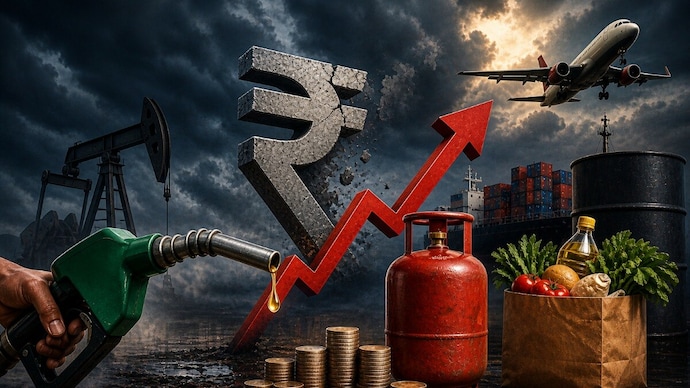
After months of relief from high prices, Indian households may once again have a reason to keep a close eye on their monthly budgets.
A fresh warning has come from the United States, where consumer inflation climbed to 4.2% in May, the highest level in nearly three years, as the conflict in West Asia pushed up gasoline and other energy prices. The rise marked the third consecutive month of strong inflation, highlighting how higher energy costs can quickly start affecting household expenses.
For India, the message is not that a similar inflation shock is immediately around the corner. However, as a country that imports most of its crude oil needs, rising global energy prices can slowly seep into everyday costs, from transport and packaged foods to services.
With FMCG companies already increasing prices due to higher input costs, economists believe the comfort zone on inflation is narrowing.
HOW GLOBAL OIL PRICES CAN REACH YOUR KITCHEN
Dr. Manoranjan Sharma, Chief Economist at Infomerics Ratings, said India’s inflation situation remains relatively stable compared with the post-pandemic period, but the risks are beginning to build.
“Despite renewed inflationary pressures, there is no broad-based inflation. CPI inflation dipped significantly from the post-pandemic peaks, supported by easing food prices and prudent monetary policy,” he said.
However, he warned that higher prices of edible oils, packaging materials, transportation and global energy could gradually spread across the economy.
“Rising global energy prices raise production and logistics costs across sectors. These cost increases can become generalized and sticky. India’s inflation outlook is relatively benign, but food-price shocks, higher crude oil prices and supply-chain disruptions could gradually trigger an inflationary spiral,” Sharma said.
The impact of crude oil is especially important for India because the country relies heavily on imports.
“India is highly dependent on imported crude oil, making energy a major transmission channel for global inflation,” Sharma said.
He explained that while the government can sometimes soften the impact through excise duty adjustments and oil marketing companies may absorb a part of the increase, the effect eventually travels through the economy.
“Historically, surging crude prices affect transportation, logistics, aviation, chemicals, fertilizers, plastics and manufacturing first. Higher freight costs eventually spread across consumer goods, food distribution and services. The indirect impact is often larger than the direct fuel effect,” he added.
WHY FMCG PRICE HIKES ARE A WARNING SIGN
The first signs of pressure are already visible in everyday products.
FMCG companies are facing rising costs of key raw materials such as edible oils, packaging inputs and transportation. Companies often absorb some of these increases initially, but persistent cost pressure eventually leads to higher prices for consumers.
This means households may not only feel the impact at fuel stations but also while buying daily essentials like packaged foods, personal care products and other household items.
RBI ALSO SEES INFLATION RISKS AHEAD
The Reserve Bank of India has also flagged a less comfortable inflation outlook.
The RBI’s Monetary Policy Committee has revised its CPI inflation forecast for FY27 upwards to 5.1%, which is 50 basis points higher than earlier estimates due to concerns around global energy prices, elevated input costs and geopolitical uncertainty.
Its quarterly projections suggest inflationary pressures could become stronger in the second half of the fiscal year, with CPI inflation expected at 4.2% in Q1 FY27, 5.1% in Q2, 5.9% in Q3 and 5.4% in Q4.
The central bank has kept the repo rate unchanged at 5.25% while maintaining a neutral stance, indicating that the inflation battle may not be completely over.
SHOULD INDIAN HOUSEHOLDS BE WORRIED?
Economists say there is no immediate reason to panic, but the period of falling prices may be behind us.
“The biggest risks are elevated crude oil prices, geopolitical tensions in West Asia, weather-related disruptions affecting food production, and global supply-chain disturbances,” Sharma said.
He added that a weaker rupee could make the problem worse by increasing the cost of imported fuel, fertilizers and industrial inputs.
“While current macroeconomic conditions are not symptomatic of an imminent inflation spike, the margin of safety has narrowed. Some increase in expenses related to transport, energy and consumer goods is plausible,” Sharma said.
For Indian families, the biggest takeaway is simple: a rise in global oil prices does not immediately translate into expensive groceries or higher household bills, but if energy costs remain elevated for a prolonged period, the impact can gradually reach almost every part of their monthly budget.
(Disclaimer: The views, opinions, recommendations, and suggestions expressed by experts/brokerages in this article are their own and do not reflect the views of the India Today Group. It is advisable to consult a qualified broker or financial advisor before making any actual investment or trading choices.)
After months of relief from high prices, Indian households may once again have a reason to keep a close eye on their monthly budgets.
A fresh warning has come from the United States, where consumer inflation climbed to 4.2% in May, the highest level in nearly three years, as the conflict in West Asia pushed up gasoline and other energy prices. The rise marked the third consecutive month of strong inflation, highlighting how higher energy costs can quickly start affecting household expenses.
For India, the message is not that a similar inflation shock is immediately around the corner. However, as a country that imports most of its crude oil needs, rising global energy prices can slowly seep into everyday costs, from transport and packaged foods to services.
With FMCG companies already increasing prices due to higher input costs, economists believe the comfort zone on inflation is narrowing.
HOW GLOBAL OIL PRICES CAN REACH YOUR KITCHEN
Dr. Manoranjan Sharma, Chief Economist at Infomerics Ratings, said India’s inflation situation remains relatively stable compared with the post-pandemic period, but the risks are beginning to build.
“Despite renewed inflationary pressures, there is no broad-based inflation. CPI inflation dipped significantly from the post-pandemic peaks, supported by easing food prices and prudent monetary policy,” he said.
However, he warned that higher prices of edible oils, packaging materials, transportation and global energy could gradually spread across the economy.
“Rising global energy prices raise production and logistics costs across sectors. These cost increases can become generalized and sticky. India’s inflation outlook is relatively benign, but food-price shocks, higher crude oil prices and supply-chain disruptions could gradually trigger an inflationary spiral,” Sharma said.
The impact of crude oil is especially important for India because the country relies heavily on imports.
“India is highly dependent on imported crude oil, making energy a major transmission channel for global inflation,” Sharma said.
He explained that while the government can sometimes soften the impact through excise duty adjustments and oil marketing companies may absorb a part of the increase, the effect eventually travels through the economy.
“Historically, surging crude prices affect transportation, logistics, aviation, chemicals, fertilizers, plastics and manufacturing first. Higher freight costs eventually spread across consumer goods, food distribution and services. The indirect impact is often larger than the direct fuel effect,” he added.
WHY FMCG PRICE HIKES ARE A WARNING SIGN
The first signs of pressure are already visible in everyday products.
FMCG companies are facing rising costs of key raw materials such as edible oils, packaging inputs and transportation. Companies often absorb some of these increases initially, but persistent cost pressure eventually leads to higher prices for consumers.
This means households may not only feel the impact at fuel stations but also while buying daily essentials like packaged foods, personal care products and other household items.
RBI ALSO SEES INFLATION RISKS AHEAD
The Reserve Bank of India has also flagged a less comfortable inflation outlook.
The RBI’s Monetary Policy Committee has revised its CPI inflation forecast for FY27 upwards to 5.1%, which is 50 basis points higher than earlier estimates due to concerns around global energy prices, elevated input costs and geopolitical uncertainty.
Its quarterly projections suggest inflationary pressures could become stronger in the second half of the fiscal year, with CPI inflation expected at 4.2% in Q1 FY27, 5.1% in Q2, 5.9% in Q3 and 5.4% in Q4.
The central bank has kept the repo rate unchanged at 5.25% while maintaining a neutral stance, indicating that the inflation battle may not be completely over.
SHOULD INDIAN HOUSEHOLDS BE WORRIED?
Economists say there is no immediate reason to panic, but the period of falling prices may be behind us.
“The biggest risks are elevated crude oil prices, geopolitical tensions in West Asia, weather-related disruptions affecting food production, and global supply-chain disturbances,” Sharma said.
He added that a weaker rupee could make the problem worse by increasing the cost of imported fuel, fertilizers and industrial inputs.
“While current macroeconomic conditions are not symptomatic of an imminent inflation spike, the margin of safety has narrowed. Some increase in expenses related to transport, energy and consumer goods is plausible,” Sharma said.
For Indian families, the biggest takeaway is simple: a rise in global oil prices does not immediately translate into expensive groceries or higher household bills, but if energy costs remain elevated for a prolonged period, the impact can gradually reach almost every part of their monthly budget.
(Disclaimer: The views, opinions, recommendations, and suggestions expressed by experts/brokerages in this article are their own and do not reflect the views of the India Today Group. It is advisable to consult a qualified broker or financial advisor before making any actual investment or trading choices.)

