Swiggy and Zomato target next 100 million users amid rising competition
Swiggy and Zomato have enjoyed market dominance, taking up the majority of users. But, with market growth now cooling off and fresh challengers failing to make a mark, both giants have shifted their focus to guarding their market share.
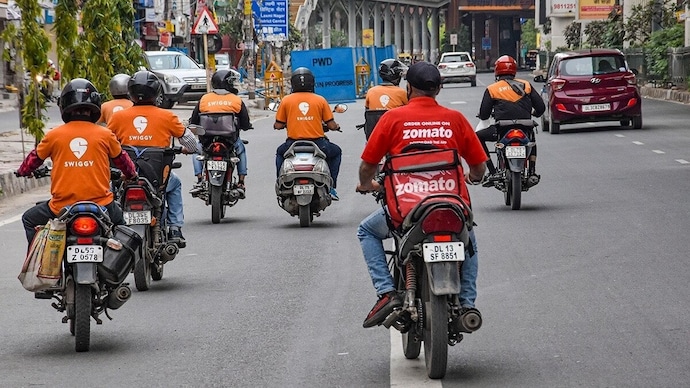
Swiggy and Zomato have been the poster boys of the food delivering business in India, but a fresh crop of competition is emerging, set to challenge the duopoly.
Swiggy and Zomato have enjoyed market dominance, taking up the majority of users. But, with market growth now cooling off and fresh challengers failing to make a mark, both giants have shifted their focus to guarding their market share.
Newer platforms have challenged their dominance. For instance, one of these is Rapido's newly launched platform, Ownly, which has already captured a 7% market share in Bengaluru by processing over 40,000 daily orders, reported Moneycontrol.
Flipkart also plans to enter the race with an ONDC-powered food delivery service, first launched in Bengaluru. These new players could soon challenge the market leaders' value play. Swiggy is expanding its budget-focused Toing, while Zomato parent Eternal pushes its Bistro option.
Despite this, there still remains a fundamental difference in competition in the sector as was seen in earlier years. Together, the bigger companies have not tried to persuade each other’s customers. Their narrative underscores the larger question of unexplored potential in India's food delivery market. The overarching goal for them is to collectively bring as many first-time users online as possible.
NEW ENTRANTS IN THE RACE
Studies have shown that there exist over 700 million internet users in India. Even if the basis of transacting users is considered, the active users of any payment app are about 200 million. On that basis, only 20–30 million users order food online, implying that there is scope for a 4–5x increase, as per the report.
“The number of people ordering online is very small,” Rapido co-founder and CEO Aravind Sanka had told Moneycontrol in an interview earlier.
He believes that ordering food should be more than being a luxury. He argued that companies should rather strive for affordable ranges to increase the overall base of users who order food.
"If the number of people ordering food online doesn't reach 100 million in three years, there is no reason for Rapido to exist," Sanka said, outlining the thinking behind Ownly.
In addition, Flipkart has long been preparing to enter food delivery through ONDC, and is taking a rather measured approach for its debut.
"We will launch food delivery first, test the value proposition with customers, take feedback and continue improving the product until it really appeals to the customer," Group CEO Kalyan Krishnamurthy told Moneycontrol. His remark signals that the company first plans to refine the service before scaling it nationally.
"When we launch a product, we launch it because we believe we actually can innovate and bring something new to the table," he said.
This shows that Flipkart considers customer value as selection, service, reliability and the overall experience. "We will do our best to innovate across all of these vectors of value proposition. We will scale it pan India once we believe we actually have something across these," Krishnamurthy added.
Meanwhile, newer players like Swish are securing fresh funding to rapidly expand their footprints. Relying on alternative food delivery frameworks, Swish has managed its own cloud kitchens in high-density hubs to drop order wait times down to just 10–20 minutes.
A RUN FOR MONEY
While new challengers focus strictly on low prices, established players are taking a more sophisticated approach. For example, Swiggy launched Toing, a dedicated budget-meal app with lower commissions for restaurants.
This has positioned it against the upcoming services offered by Flipkart and Rapido.
However, Swiggy has been avoiding the zero-commission model for now, doubting its long-term financial viability. The company maintains that without commission revenue, platforms may not cover essential operational costs such as rider payouts, tech infrastructure, and customer acquisition. This could make the model unsustainable once initial investor subsidies run out.
“'Zero commission' sounds attractive, but there are a few fundamental questions. Who pays for the cost of the platform? In the medium term, there will be charges, whether it is called commission or something else. Even if it is done initially, at some point it will need to be recovered," Swiggy Food Marketplace CEO Rohit Kapoor said during the company's Q1FY27 earnings call.
In line with this, Eternal also believes that affordability alone may not be able to expand the category of food delivery. The company has pointed out that rivals are using lower commissions as a temporary growth hack, without changing how food is actually prepared.
“If you want to make food delivery work at Rs 50–150 price points, you can't do it without supply chain innovation. We're rethinking kitchen operations from first principles here – designing custom equipment, workflows, and automation purpose-built for high-volume, limited-menu formats,” Deepinder Goyal, founder of Eternal said in the company’s shareholder letter in Q1FY27.
“This isn't a restaurant. It's closer to a food manufacturing system optimised for freshness, speed, and consistency. It's a different segment, a different occasion, and a genuinely new market,” Goyal said.
Eternal has shown its keenness on prioritising its in-house and hyper-fast food delivery service, Bistro. It has integrated budget-friendly options directly into the main Zomato app, thereby coming to the decision of not launching a standalone value platform.
This pivot shows a fundamental split in the industry's approach to expansion. While every major player agrees that India's food delivery ecosystem has a long way ahead for its bloom, they remain sharply divided on the exact catalyst needed to convert the next wave of price-sensitive consumers.
WHO COMES OUT ON TOP?
Industry analysts believe the answer to be the restaurants themselves.
For years, local eateries and major chains alike have felt squeezed by the Swiggy-Zomato duopoly. They have frequently complained about high platform commissions, hidden ad costs, and forced customer discounts imposed on them.
Now, with the new entrants offering zero-commission options and incumbents cutting rates to compete, restaurants finally have the leverage to negotiate better terms. These terms would help them improve their margins and diversify their digital storefronts.
"There has never really been any competition. It has always been a duopoly where they've jointly dictated terms. Any new entrant coming in will hopefully make a dent and eat up some market share. At least we'll have some room for negotiation because right now the terms of trade are very unfair," Pranav Rungta, founder of Mumbai-based Churchgate Hospitality, told Moneycontrol.
For restaurant owners, commission fees are just the tip of the iceberg. The true cost of surviving on modern food delivery platforms includes an added layer of hidden expenses.
"It's not only commissions now. Everything else other than commissions is becoming expensive – cost of ads, cost of discounts, cost of visibility," Rungta said.
While it remains unclear if these factors of affordability, lightning-fast logistics, and improved restaurant economics will ultimately win the day, the core objective of the sector is already seeing a shift.
India's next digital food delivery battle is no longer a simple zero-sum game of stealing active users from competitors. Instead, the real challenge lies in expanding the market by convincing the nation's next 100 million consumers that ordering online should become a regular household habit.
As platforms including Swiggy, Zomato, Rapido, and Flipkart experiment with different operational models, the company that successfully diversifies digital commerce for the users will ultimately dominate India's next consumer internet wave.
Swiggy and Zomato have been the poster boys of the food delivering business in India, but a fresh crop of competition is emerging, set to challenge the duopoly.
Swiggy and Zomato have enjoyed market dominance, taking up the majority of users. But, with market growth now cooling off and fresh challengers failing to make a mark, both giants have shifted their focus to guarding their market share.
Newer platforms have challenged their dominance. For instance, one of these is Rapido's newly launched platform, Ownly, which has already captured a 7% market share in Bengaluru by processing over 40,000 daily orders, reported Moneycontrol.
Flipkart also plans to enter the race with an ONDC-powered food delivery service, first launched in Bengaluru. These new players could soon challenge the market leaders' value play. Swiggy is expanding its budget-focused Toing, while Zomato parent Eternal pushes its Bistro option.
Despite this, there still remains a fundamental difference in competition in the sector as was seen in earlier years. Together, the bigger companies have not tried to persuade each other’s customers. Their narrative underscores the larger question of unexplored potential in India's food delivery market. The overarching goal for them is to collectively bring as many first-time users online as possible.
NEW ENTRANTS IN THE RACE
Studies have shown that there exist over 700 million internet users in India. Even if the basis of transacting users is considered, the active users of any payment app are about 200 million. On that basis, only 20–30 million users order food online, implying that there is scope for a 4–5x increase, as per the report.
“The number of people ordering online is very small,” Rapido co-founder and CEO Aravind Sanka had told Moneycontrol in an interview earlier.
He believes that ordering food should be more than being a luxury. He argued that companies should rather strive for affordable ranges to increase the overall base of users who order food.
"If the number of people ordering food online doesn't reach 100 million in three years, there is no reason for Rapido to exist," Sanka said, outlining the thinking behind Ownly.
In addition, Flipkart has long been preparing to enter food delivery through ONDC, and is taking a rather measured approach for its debut.
"We will launch food delivery first, test the value proposition with customers, take feedback and continue improving the product until it really appeals to the customer," Group CEO Kalyan Krishnamurthy told Moneycontrol. His remark signals that the company first plans to refine the service before scaling it nationally.
"When we launch a product, we launch it because we believe we actually can innovate and bring something new to the table," he said.
This shows that Flipkart considers customer value as selection, service, reliability and the overall experience. "We will do our best to innovate across all of these vectors of value proposition. We will scale it pan India once we believe we actually have something across these," Krishnamurthy added.
Meanwhile, newer players like Swish are securing fresh funding to rapidly expand their footprints. Relying on alternative food delivery frameworks, Swish has managed its own cloud kitchens in high-density hubs to drop order wait times down to just 10–20 minutes.
A RUN FOR MONEY
While new challengers focus strictly on low prices, established players are taking a more sophisticated approach. For example, Swiggy launched Toing, a dedicated budget-meal app with lower commissions for restaurants.
This has positioned it against the upcoming services offered by Flipkart and Rapido.
However, Swiggy has been avoiding the zero-commission model for now, doubting its long-term financial viability. The company maintains that without commission revenue, platforms may not cover essential operational costs such as rider payouts, tech infrastructure, and customer acquisition. This could make the model unsustainable once initial investor subsidies run out.
“'Zero commission' sounds attractive, but there are a few fundamental questions. Who pays for the cost of the platform? In the medium term, there will be charges, whether it is called commission or something else. Even if it is done initially, at some point it will need to be recovered," Swiggy Food Marketplace CEO Rohit Kapoor said during the company's Q1FY27 earnings call.
In line with this, Eternal also believes that affordability alone may not be able to expand the category of food delivery. The company has pointed out that rivals are using lower commissions as a temporary growth hack, without changing how food is actually prepared.
“If you want to make food delivery work at Rs 50–150 price points, you can't do it without supply chain innovation. We're rethinking kitchen operations from first principles here – designing custom equipment, workflows, and automation purpose-built for high-volume, limited-menu formats,” Deepinder Goyal, founder of Eternal said in the company’s shareholder letter in Q1FY27.
“This isn't a restaurant. It's closer to a food manufacturing system optimised for freshness, speed, and consistency. It's a different segment, a different occasion, and a genuinely new market,” Goyal said.
Eternal has shown its keenness on prioritising its in-house and hyper-fast food delivery service, Bistro. It has integrated budget-friendly options directly into the main Zomato app, thereby coming to the decision of not launching a standalone value platform.
This pivot shows a fundamental split in the industry's approach to expansion. While every major player agrees that India's food delivery ecosystem has a long way ahead for its bloom, they remain sharply divided on the exact catalyst needed to convert the next wave of price-sensitive consumers.
WHO COMES OUT ON TOP?
Industry analysts believe the answer to be the restaurants themselves.
For years, local eateries and major chains alike have felt squeezed by the Swiggy-Zomato duopoly. They have frequently complained about high platform commissions, hidden ad costs, and forced customer discounts imposed on them.
Now, with the new entrants offering zero-commission options and incumbents cutting rates to compete, restaurants finally have the leverage to negotiate better terms. These terms would help them improve their margins and diversify their digital storefronts.
"There has never really been any competition. It has always been a duopoly where they've jointly dictated terms. Any new entrant coming in will hopefully make a dent and eat up some market share. At least we'll have some room for negotiation because right now the terms of trade are very unfair," Pranav Rungta, founder of Mumbai-based Churchgate Hospitality, told Moneycontrol.
For restaurant owners, commission fees are just the tip of the iceberg. The true cost of surviving on modern food delivery platforms includes an added layer of hidden expenses.
"It's not only commissions now. Everything else other than commissions is becoming expensive – cost of ads, cost of discounts, cost of visibility," Rungta said.
While it remains unclear if these factors of affordability, lightning-fast logistics, and improved restaurant economics will ultimately win the day, the core objective of the sector is already seeing a shift.
India's next digital food delivery battle is no longer a simple zero-sum game of stealing active users from competitors. Instead, the real challenge lies in expanding the market by convincing the nation's next 100 million consumers that ordering online should become a regular household habit.
As platforms including Swiggy, Zomato, Rapido, and Flipkart experiment with different operational models, the company that successfully diversifies digital commerce for the users will ultimately dominate India's next consumer internet wave.
Swiggy and Zomato have been the poster boys of the food delivering business in India, but a fresh crop of competition is emerging, set to challenge the duopoly.
Swiggy and Zomato have enjoyed market dominance, taking up the majority of users. But, with market growth now cooling off and fresh challengers failing to make a mark, both giants have shifted their focus to guarding their market share.
Newer platforms have challenged their dominance. For instance, one of these is Rapido's newly launched platform, Ownly, which has already captured a 7% market share in Bengaluru by processing over 40,000 daily orders, reported Moneycontrol.
Flipkart also plans to enter the race with an ONDC-powered food delivery service, first launched in Bengaluru. These new players could soon challenge the market leaders' value play. Swiggy is expanding its budget-focused Toing, while Zomato parent Eternal pushes its Bistro option.
Despite this, there still remains a fundamental difference in competition in the sector as was seen in earlier years. Together, the bigger companies have not tried to persuade each other’s customers. Their narrative underscores the larger question of unexplored potential in India's food delivery market. The overarching goal for them is to collectively bring as many first-time users online as possible.
NEW ENTRANTS IN THE RACE
Studies have shown that there exist over 700 million internet users in India. Even if the basis of transacting users is considered, the active users of any payment app are about 200 million. On that basis, only 20–30 million users order food online, implying that there is scope for a 4–5x increase, as per the report.
“The number of people ordering online is very small,” Rapido co-founder and CEO Aravind Sanka had told Moneycontrol in an interview earlier.
He believes that ordering food should be more than being a luxury. He argued that companies should rather strive for affordable ranges to increase the overall base of users who order food.
"If the number of people ordering food online doesn't reach 100 million in three years, there is no reason for Rapido to exist," Sanka said, outlining the thinking behind Ownly.
In addition, Flipkart has long been preparing to enter food delivery through ONDC, and is taking a rather measured approach for its debut.
"We will launch food delivery first, test the value proposition with customers, take feedback and continue improving the product until it really appeals to the customer," Group CEO Kalyan Krishnamurthy told Moneycontrol. His remark signals that the company first plans to refine the service before scaling it nationally.
"When we launch a product, we launch it because we believe we actually can innovate and bring something new to the table," he said.
This shows that Flipkart considers customer value as selection, service, reliability and the overall experience. "We will do our best to innovate across all of these vectors of value proposition. We will scale it pan India once we believe we actually have something across these," Krishnamurthy added.
Meanwhile, newer players like Swish are securing fresh funding to rapidly expand their footprints. Relying on alternative food delivery frameworks, Swish has managed its own cloud kitchens in high-density hubs to drop order wait times down to just 10–20 minutes.
A RUN FOR MONEY
While new challengers focus strictly on low prices, established players are taking a more sophisticated approach. For example, Swiggy launched Toing, a dedicated budget-meal app with lower commissions for restaurants.
This has positioned it against the upcoming services offered by Flipkart and Rapido.
However, Swiggy has been avoiding the zero-commission model for now, doubting its long-term financial viability. The company maintains that without commission revenue, platforms may not cover essential operational costs such as rider payouts, tech infrastructure, and customer acquisition. This could make the model unsustainable once initial investor subsidies run out.
“'Zero commission' sounds attractive, but there are a few fundamental questions. Who pays for the cost of the platform? In the medium term, there will be charges, whether it is called commission or something else. Even if it is done initially, at some point it will need to be recovered," Swiggy Food Marketplace CEO Rohit Kapoor said during the company's Q1FY27 earnings call.
In line with this, Eternal also believes that affordability alone may not be able to expand the category of food delivery. The company has pointed out that rivals are using lower commissions as a temporary growth hack, without changing how food is actually prepared.
“If you want to make food delivery work at Rs 50–150 price points, you can't do it without supply chain innovation. We're rethinking kitchen operations from first principles here – designing custom equipment, workflows, and automation purpose-built for high-volume, limited-menu formats,” Deepinder Goyal, founder of Eternal said in the company’s shareholder letter in Q1FY27.
“This isn't a restaurant. It's closer to a food manufacturing system optimised for freshness, speed, and consistency. It's a different segment, a different occasion, and a genuinely new market,” Goyal said.
Eternal has shown its keenness on prioritising its in-house and hyper-fast food delivery service, Bistro. It has integrated budget-friendly options directly into the main Zomato app, thereby coming to the decision of not launching a standalone value platform.
This pivot shows a fundamental split in the industry's approach to expansion. While every major player agrees that India's food delivery ecosystem has a long way ahead for its bloom, they remain sharply divided on the exact catalyst needed to convert the next wave of price-sensitive consumers.
WHO COMES OUT ON TOP?
Industry analysts believe the answer to be the restaurants themselves.
For years, local eateries and major chains alike have felt squeezed by the Swiggy-Zomato duopoly. They have frequently complained about high platform commissions, hidden ad costs, and forced customer discounts imposed on them.
Now, with the new entrants offering zero-commission options and incumbents cutting rates to compete, restaurants finally have the leverage to negotiate better terms. These terms would help them improve their margins and diversify their digital storefronts.
"There has never really been any competition. It has always been a duopoly where they've jointly dictated terms. Any new entrant coming in will hopefully make a dent and eat up some market share. At least we'll have some room for negotiation because right now the terms of trade are very unfair," Pranav Rungta, founder of Mumbai-based Churchgate Hospitality, told Moneycontrol.
For restaurant owners, commission fees are just the tip of the iceberg. The true cost of surviving on modern food delivery platforms includes an added layer of hidden expenses.
"It's not only commissions now. Everything else other than commissions is becoming expensive – cost of ads, cost of discounts, cost of visibility," Rungta said.
While it remains unclear if these factors of affordability, lightning-fast logistics, and improved restaurant economics will ultimately win the day, the core objective of the sector is already seeing a shift.
India's next digital food delivery battle is no longer a simple zero-sum game of stealing active users from competitors. Instead, the real challenge lies in expanding the market by convincing the nation's next 100 million consumers that ordering online should become a regular household habit.
As platforms including Swiggy, Zomato, Rapido, and Flipkart experiment with different operational models, the company that successfully diversifies digital commerce for the users will ultimately dominate India's next consumer internet wave.

